


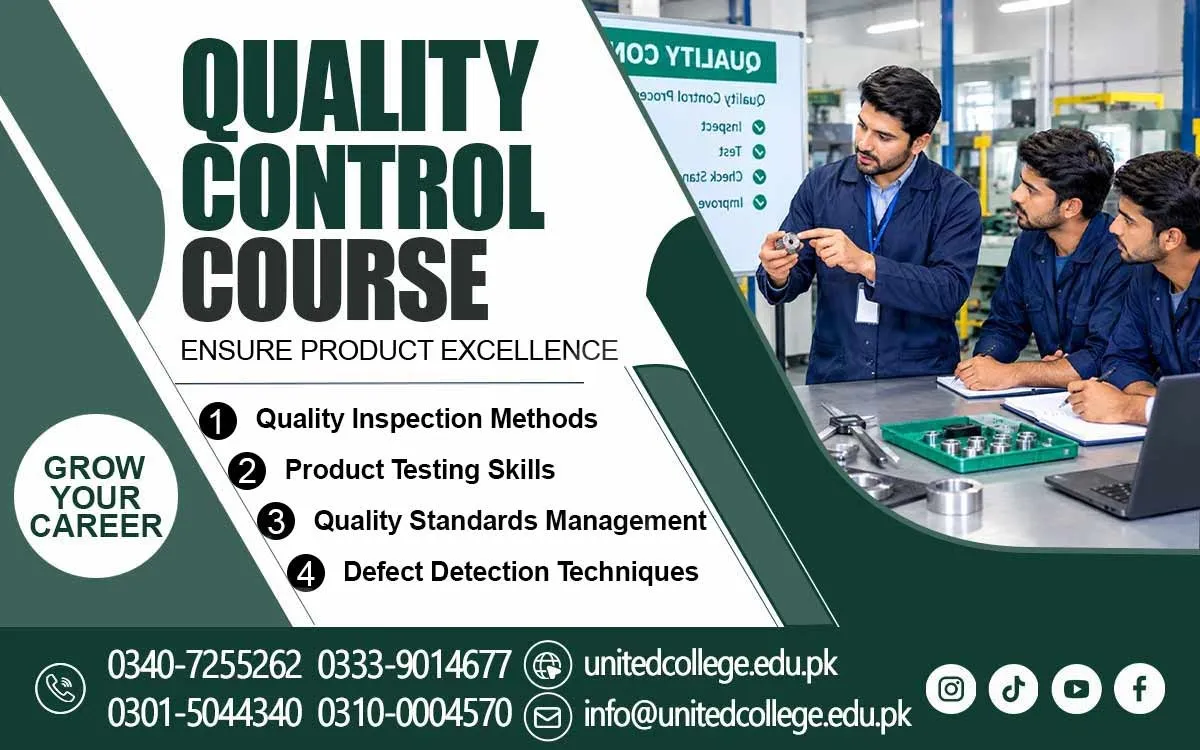

Quality Control Course in Haripur for Career Development
Developing Professional Quality Control Skills for Industrial Excellence
A small manufacturing defect can create a major problem for a business. Imagine a factory producing hundreds of metal parts, but some of them do not match the required measurements. If these defective parts are not identified before delivery, they may cause equipment problems, customer complaints, production delays, and additional expenses. Similar issues can occur at construction sites when materials do not meet the required quality standards. These situations show why quality control is an important part of modern industries. Businesses need trained individuals who can inspect products, identify defects, check measurements, maintain records, and help ensure that work meets the required standards.
For students and fresh learners in Haripur, developing these skills can provide useful technical knowledge for different industrial environments. The Quality Control Course in Haripur, offered by United College of Technology (UCT), introduces learners to important quality inspection methods, testing procedures, measurement techniques, and quality management practices. It is designed to help beginners understand how quality control works in practical workplaces and why careful inspection is necessary for maintaining product quality.
The Importance of Quality Control in Industrial Operations
A product may look perfect from the outside, but a small problem in its material, size, strength, or performance can affect its overall quality. This is why factories, construction companies, manufacturing units, and production businesses follow quality control procedures before accepting or delivering their products. Quality control is the process of checking materials, products, and completed work to make sure they meet specific requirements. It helps identify mistakes during production instead of allowing defective items to reach customers. For example, a manufacturing company producing electrical components needs to check their measurements, material condition, and working performance before packaging.
Similarly, construction projects require proper inspection of cement, steel, concrete, and other building materials. Industrial quality control also helps businesses reduce waste, avoid unnecessary repairs, improve production processes, and maintain customer satisfaction. During quality control training, learners can understand the responsibilities involved in maintaining product standards and following workplace procedures. The Quality Control Course in Haripur introduces students to these important concepts through industry-related examples. This knowledge can help beginners understand the connection between product quality, business performance, and customer trust while developing an interest in technical and industrial work.
Product Inspection and Defect Identification in Workplaces
A production line can continue operating for several hours while producing items with the same defect. If nobody checks the products during manufacturing, the company may discover the problem only after completing a large order. This can result in wasted materials, additional production costs, and customer dissatisfaction. Product quality inspection helps prevent such situations by checking items at different stages of production. A quality inspector examines products to identify visible damage, incorrect measurements, weak materials, finishing problems, and other differences from the required specifications. For example, an inspector working in a metal workshop may check whether a manufactured pipe has the correct diameter and whether its surface contains cracks or unwanted damage.
In a construction environment, inspection may involve checking the condition of building materials before they are used. Defect identification is another important part of this process because learners need to understand the difference between acceptable and unacceptable products. Some defects are easy to notice, such as scratches, broken edges, and uneven surfaces, while others require measuring instruments or testing procedures. Students studying quality inspection methods can develop an understanding of product checking, defect reporting, and inspection records. These activities help businesses maintain consistent quality and reduce the chances of defective products reaching customers or being used in important projects.
Technical Skills for Quality Inspection and Testing
A quality control professional needs more than the ability to look at a product and decide whether it appears suitable. Proper inspection requires observation, measurement, basic technical knowledge, and the ability to follow instructions carefully. For example, if a metal component is slightly larger than its approved size, an inspector must use the correct measuring instrument instead of relying on visual judgment. This is why quality control training introduces learners to different technical skills used in industrial environments. Students can develop knowledge of measurement techniques, material inspection, product testing, defect identification, and checking product specifications.
Attention to detail is particularly important because small differences can sometimes affect the performance of a product or the quality of completed work. Problem-solving is another useful skill because inspectors may need to understand why a particular defect keeps appearing during production. Communication also matters, as inspection findings must be shared clearly with supervisors, production workers, and other team members. Learners should understand how to record observations and explain problems without creating confusion. The Quality Control Course in Haripur can help beginners build a foundation in these areas through relevant technical concepts and practical workplace examples. Developing these abilities can make learners more familiar with the responsibilities involved in quality inspection and industrial quality management.
Quality Assurance and Quality Control Practices
A company may inspect every finished product, but checking the final items alone does not always prevent production problems. If the same mistake occurs during every stage of manufacturing, the business needs to examine its working process rather than only rejecting defective products. This is where the difference between quality assurance and quality control becomes important. Quality assurance focuses on the processes and procedures used to prevent mistakes, while quality control focuses on checking products or completed work to identify problems. Both activities support the overall quality management system of an organisation.
Quality control activities may then involve inspecting finished products to confirm that they meet the required measurements and specifications. Quality Assurance and Quality Control (QA/QC) are commonly used together in manufacturing, construction, and other technical industries. Learners can also become familiar with inspection checklists, standard operating procedures, corrective actions, and quality documentation. These practices help organisations maintain consistency and identify areas that need improvement. Understanding QA/QC procedures gives beginners a clearer picture of how businesses manage quality from the beginning of a process until the final product is ready for use or delivery.
Practical Quality Inspection Methods Across Different Industries
A construction project may experience delays because the supplied steel does not match the required specifications, while a manufacturing company may receive customer complaints about products that fail during use. Both situations require proper inspection methods to identify the source of the problem. Quality inspection is not limited to one industry because different workplaces have different materials, products, and performance requirements. In manufacturing units, inspectors may examine raw materials, machine-produced components, product dimensions, and finishing quality. In construction, inspection can involve checking concrete quality, reinforcement placement, building materials, and completed work against approved drawings and specifications.
Food production environments also use quality checks to monitor cleanliness, packaging, storage conditions, and product requirements. During quality control training, learners can study visual inspection, dimensional inspection, sampling, basic functional testing, and material checking. Sampling means selecting a certain number of items from a larger group for inspection instead of checking every item individually, where the approved procedure allows it. Students should also understand that testing methods depend on the product and industry requirements. The Quality Control Course in Haripur introduces learners to the importance of choosing suitable inspection methods and following workplace instructions.
Measuring Instruments and Essential Quality Control Tools
Imagine a workshop manufacturing hundreds of metal components for a machine. If even a few parts have incorrect dimensions, they may not fit properly during assembly. Accurate measurement is therefore an important responsibility in quality inspection. Different measuring instruments are used depending on the material, product, and level of accuracy required. A vernier caliper is commonly used to measure internal dimensions, external dimensions, and depths. A micrometer is designed for measuring small thicknesses or diameters with greater precision, while measuring gauges help check specific sizes, gaps, and clearances. Learners can also become familiar with basic quality control tools used to organise inspection information and identify repeated problems.
A flowchart presents the steps of a process so that workers can understand how different activities are connected. A histogram displays measurement information in a graphical form, making it easier to observe patterns in collected data. A cause-and-effect diagram helps organise possible reasons behind a particular quality problem. These tools support better decision-making and help organisations investigate production issues. Students should also learn that measuring instruments need proper handling, suitable storage, and regular calibration according to their intended use. Calibration means comparing an instrument with a known reference to check its measurement accuracy.
Quality Standards and Documentation in Industrial Environments
A company may manufacture a product that looks acceptable, but appearance alone cannot confirm that it meets all the required quality standards. Different industries follow specific requirements related to materials, measurements, safety, production methods, and product performance. These standards provide a clear reference for checking whether work has been completed correctly. One recognised example is the ISO 9001 quality management standard, which provides requirements for establishing and maintaining a quality management system. It focuses on consistent processes, customer requirements, performance evaluation, and continuous improvement.
Documentation is equally important because inspection activities need to be recorded properly. A quality inspector may prepare reports containing product details, inspection dates, measurements, identified defects, and the final inspection results. These records help supervisors understand whether products meet the required specifications and whether corrective action is necessary. For example, if a construction company discovers that a particular batch of material does not meet its approved requirements, inspection records can help identify the affected materials and prevent their use without proper review. Students should also understand the importance of clear reporting, accurate information, and organised record-keeping.
Career-Relevant Knowledge for Quality Control Learners
This is why quality control professionals need continuous learning, careful observation, and an understanding of industrial processes. Their responsibilities can vary according to the workplace, product type, and level of experience. In some organisations, quality inspectors check raw materials and finished products, while quality control assistants help maintain inspection records and organise testing activities. Other roles may involve supporting quality assurance procedures, monitoring production activities, and reporting defects to supervisors. Industries such as construction, manufacturing, engineering workshops, packaging, and production can require different types of quality-related knowledge.
Students interested in these fields should understand that employers may look for relevant education, practical experience, technical understanding, and familiarity with industry-specific standards. Communication, teamwork, time management, attention to detail, and problem-solving are valuable abilities for people working in quality-related environments. For learners in Haripur, understanding these responsibilities can help them explore technical career paths and identify the knowledge they need to develop. The main purpose of quality inspector training is not simply to memorise inspection terms but to understand how quality requirements are applied during actual industrial activities.
Quality Control Training at United College of Technology in Haripur
A person entering the technical field for the first time may understand the importance of product quality but still feel unfamiliar with measuring instruments, inspection reports, testing methods, and industrial procedures. Proper training can help make these concepts easier to understand by connecting classroom learning with practical workplace situations. United College of Technology (UCT) offers the Quality Control Course in Haripur for individuals interested in developing knowledge of quality inspection and industrial quality management. The course introduces learners to important topics such as product inspection, defect identification, measurement techniques, quality assurance procedures, quality standards, and documentation.
Students can build an understanding of how quality inspectors examine products, compare results with specifications, and report problems through suitable procedures. Learning about tools such as vernier calipers, micrometers, and basic inspection checklists can also help beginners become familiar with equipment used in technical workplaces. The course is relevant to students, fresh learners, and individuals who want to improve their understanding of manufacturing, construction, and industrial quality requirements. Training can also help learners recognise the importance of workplace safety, accurate measurements, and responsible reporting during inspection activities.
Frequently Asked Questions (FAQs)
A Quality Control Course teaches students how to inspect products, identify defects, check measurements, and maintain quality standards in different industries.
Students, fresh learners, job seekers, and individuals interested in manufacturing, construction, and industrial quality inspection can join.
Students learn product inspection, defect identification, measurement techniques, quality testing, inspection reporting, and quality assurance procedures.
Quality Control focuses on identifying defects in products, while Quality Assurance focuses on improving processes to prevent defects.
Common instruments include vernier calipers, micrometers, measuring gauges, and other tools used to check product dimensions and accuracy.
Admission Open: Start Your Professional Journey Today!
Join United College of Technology and build a career with practical training, recognized certifications, and Gulf job support. Seats are limited.
Apply Now via WhatsAppContact Information
- Address: Rawalpindi: F-272 Main New Katarian Stop, Old IJP Road | Lahore Campus: Lahore, Pakistan
- Phone/WhatsApp: 0340-7255262 / 0333-9014677 / 0301-5044340 / 0310-0004570 / 051-8770756
- Website: unitedcollege.edu.pk
















Leave a Comment