


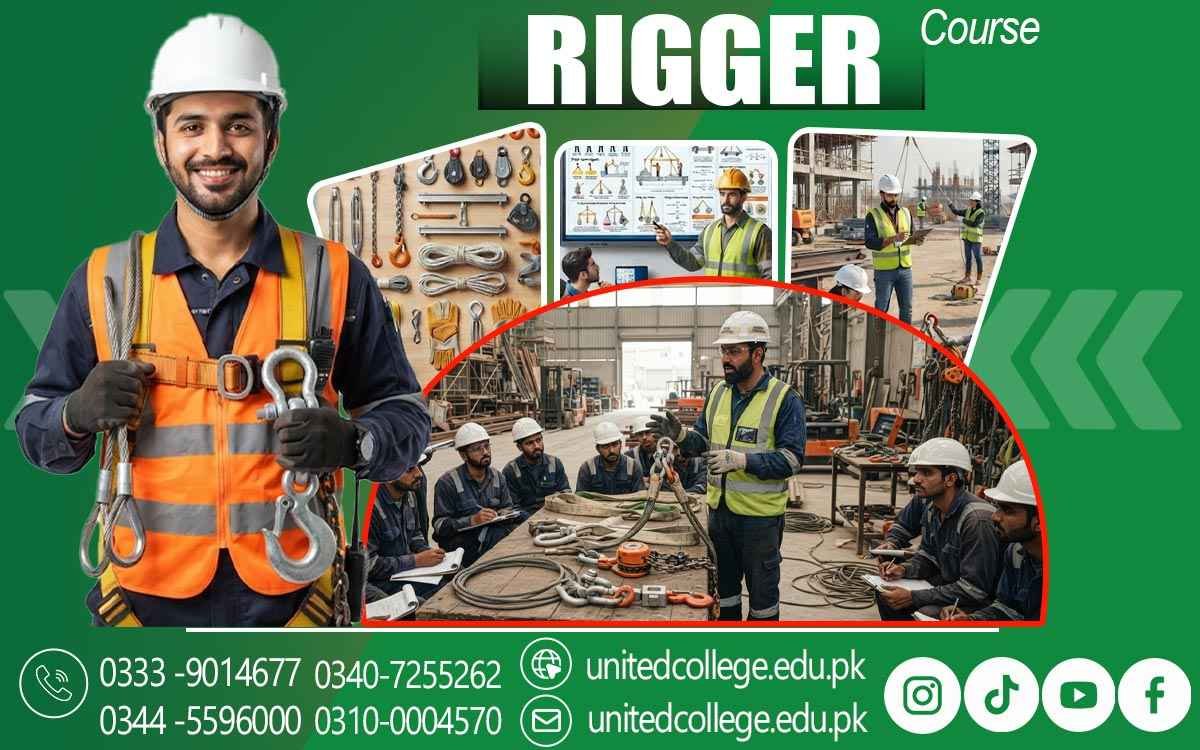

Rigger Course in Hafizabad – Gain Practical Skills for Lifting
Turn Careful Work into a Valuable Technical Skill
Heavy loads need more than powerful machinery to move safely. Behind many lifting activities, skilled workers help prepare loads, connect suitable equipment, communicate with the lifting team, and maintain awareness of possible hazards. This makes rigging an important practical skill in many technical workplaces.
The Rigger Course in Hafizabad introduces learners to the basic knowledge and practical thinking needed for rigging work. Offered by United College of Technology, the training can help beginners, students, workers, and job seekers understand how proper preparation and safe working habits support lifting operations.
The Work of a Rigger Begins Before the Lift
A rigger has responsibilities before a load starts moving. The worker may help prepare the load, inspect relevant rigging equipment, connect lifting accessories, and make sure the surrounding area is suitable for the planned activity. Good rigging requires attention rather than guesswork. A rigger needs to understand the load, equipment, working space, and instructions involved in the task.
Rigger Course in Hafizabad can help learners become familiar with these responsibilities in a structured way. For a beginner, understanding the purpose of each step is important. It helps turn simple equipment knowledge into a more responsible approach to real lifting work.
Building the Right Skills for Controlled Load Movement
Rigging skills develop through a combination of knowledge, observation, and practical understanding. Learners can explore how loads are prepared, secured, moved, and controlled during different lifting activities. A rigger course may introduce students to load handling, rigging procedures, equipment awareness, and safe lifting practices.
Instead of focusing only on technical vocabulary, effective learning should help students understand how these concepts apply to workplace situations. Attention to detail is especially important. A small issue with equipment, positioning, or communication can affect the way a load behaves. Developing careful working habits is therefore an important part of practical rigging training.
Knowing the Tools Behind Every Secure Load
A rigger works with different types of rigging equipment and lifting accessories. Beginners may encounter items such as slings, shackles, hooks, ropes, and other tools used to connect or secure loads. Understanding what equipment does is only the beginning. Learners also need to appreciate why equipment must be suitable for the task and checked before use.
Damaged or unsuitable equipment should never be treated as acceptable simply because it is available. Learning about lifting equipment in a structured environment can help students recognize the connection between equipment condition and lifting safety. This knowledge becomes increasingly useful as learners gain more practical experience.
Safe Load Handling Starts with Proper Preparation
Moving a heavy object requires more planning than simply attaching it to lifting equipment. The load needs to be secured appropriately, and workers must consider its position, balance, shape, and movement before lifting begins. Through training, students can become familiar with basic slinging techniques and load-handling principles.
They can learn why different loads may require different approaches and why careful preparation helps maintain control. Heavy load handling also requires awareness of the area around the load. Workers should avoid unnecessary exposure to suspended loads and follow established safety procedures throughout the operation.
Signals and Communication Keep the Lifting Team Together
Lifting work often requires several workers to coordinate their actions as one team. A rigger may communicate with the crane operator, supervisor, or other workers involved in the operation. Clear signals and instructions help maintain proper coordination and reduce confusion during load movement. Through a Rigger Course in Hafizabad, students can learn why effective communication is an important part of organized lifting work.
A signalman needs to stay focused and follow agreed communication methods instead of depending on uncertain gestures or personal assumptions. Good teamwork also involves recognizing when an instruction is unclear and seeking clarification before continuing. Responsible rigging requires workers to remain attentive and avoid proceeding when an important part of the lifting activity is not properly understood.
Safety Habits Shape a More Responsible Rigger
Lifting safety depends on consistent habits. Checking equipment, understanding the work area, following instructions, maintaining a safe position, and staying alert can all contribute to better workplace awareness. Rigger training can introduce learners to safety procedures that support responsible work around lifting operations.
These principles are relevant in construction, industrial settings, warehouses, maintenance areas, and other environments where loads are moved. A good rigger does not treat safety as a final step. It should influence decisions from the preparation stage through the completion of the lifting task.
Practical Training Gives Beginners a Stronger Starting Point
Technical information becomes easier to understand when learners can connect it with practical situations. Hands-on learning can help students become familiar with equipment, load preparation, communication, and the sequence of a lifting activity. At United College of Technology, the Rigger Course in Hafizabad provides a structured learning path for people interested in developing practical rigging knowledge.
Learners can focus on relevant technical concepts while building awareness of the responsibilities associated with rigging work. For someone new to the field, practical training can make unfamiliar equipment and procedures easier to understand. Workers with some technical experience may also find structured learning useful for strengthening their existing knowledge.
Hafizabad Learners Can Explore Rigging as a Skilled Trade
Rigging skills can be useful across different hands-on work environments. Construction projects may involve moving structural materials, while industrial and manufacturing workplaces can require equipment positioning, maintenance lifting, or material handling. Construction rigging and industrial rigging both require workers to understand load control and safe working practices.
Logistics and other lifting-related workplaces may also involve similar responsibilities, although the exact duties depend on the worksite. For people considering vocational training in Hafizabad, rigging offers a practical technical area to explore. Students, workers, and job seekers who enjoy hands-on work can consider developing these skills alongside their broader technical knowledge.
Careful Practice Turns Training into Stronger Workplace Skills
Becoming a responsible rigger requires more than remembering equipment names. Concentration, teamwork, communication, discipline, and the ability to follow procedures are all important qualities for someone working around lifting operations. The Rigger Course in Hafizabad can help learners build an understanding of these areas while developing practical knowledge of lifting and rigging.
With training from United College of Technology, students can work toward a stronger foundation in equipment awareness, load handling, signaling, and workplace safety. For beginners, the most useful approach is to keep learning, practice carefully, ask when something is unclear, and respect established safety procedures. These habits can help turn technical training into practical workplace awareness and stronger career skills for riggers.
Frequently Asked Questions (FAQs)
Rigging requires careful observation, planning, patience, and the ability to follow instructions while remaining aware of changing conditions around a lifting task.
Knowing the surroundings helps a rigger identify obstacles, restricted spaces, nearby workers, and other conditions that may affect how a load can be moved.
A clear work plan, suitable equipment, agreed communication methods, and defined responsibilities can help the lifting team perform its duties in a more coordinated manner.
Students can learn by identifying different tools, understanding their purposes, observing their condition, and studying how equipment is selected for particular lifting tasks.
Rushing can lead to overlooked details. Patience gives a rigger time to check conditions, understand instructions, and prepare properly before work begins.
Beginners can combine formal training with observation, supervised practice, safety learning, and continuous improvement of their technical and communication skills.
Admission Open: Start Your Professional Journey Today!
Join United College of Technology and build a career with practical training, recognized certifications, and Gulf job support. Seats are limited.
Apply Now via WhatsAppContact Information
- Address: Rawalpindi: F-272 Main New Katarian Stop, Old IJP Road | Lahore Campus: Lahore, Pakistan
- Phone/WhatsApp: 0333-9014677 / 0344-5596000 / 0310-0004570 / 0301-5044340 / 0340-7255262
- Website: unitedcollege.edu.pk
















Leave a Comment