


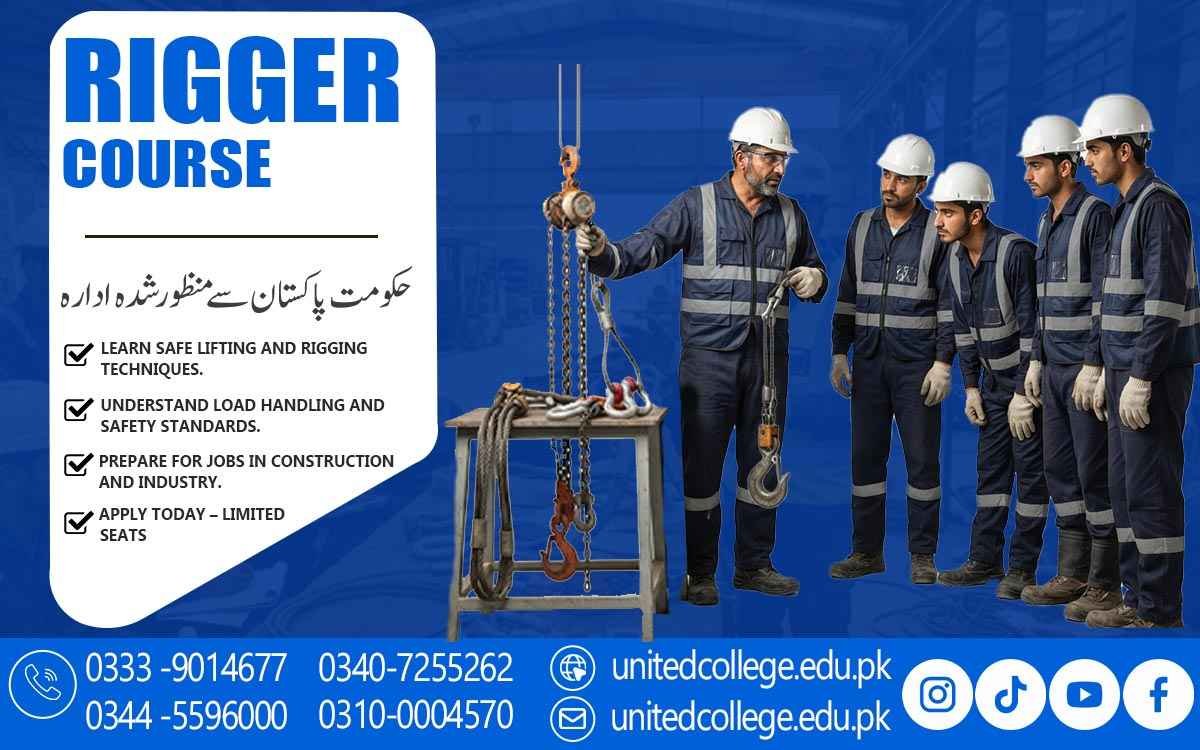

Rigger Course in Jhang – Step Into Skilled Industrial Rigging
Develop the Precision Behind Safer Lifting Work
Rigging is a practical skill that requires more than physical strength. When heavy materials or equipment need to be moved, workers must understand how to prepare the load, use suitable equipment, communicate with the team, and follow safe procedures. A trained rigger helps make these activities more organized and controlled.
The Rigger Course in Jhang gives learners an opportunity to understand the practical side of professional rigging. Offered by United College of Technology, the training can be useful for beginners, students, workers, and job seekers who want to develop technical skills related to lifting, load handling, and workplace safety.
The Real Responsibility Behind Every Rigging Task
A rigger can be involved in preparing loads before lifting begins, connecting appropriate accessories, checking equipment, guiding movement, and maintaining awareness of the work area. Each task requires attention because heavy loads can create serious risks when handled carelessly. Rigger Course in Jhang can introduce learners to the responsibilities involved in these activities.
Instead of treating rigging as simple manual work, students can learn why preparation, planning, communication, and safe positioning matter throughout a lifting operation.For beginners, this foundation can make technical concepts easier to understand. It also helps learners recognize that responsible rigging depends on careful decisions at every stage of the task.
Turning Basic Knowledge into Practical Rigging Ability
A person entering the field needs to understand how different parts of a lifting task connect. Rigging training can introduce learners to load handling, load securing, equipment awareness, lifting procedures, and basic methods used to control materials during movement. Students can gradually develop rigging skills by learning how to prepare a load and understand the purpose of different lifting accessories.
They can also become familiar with the importance of following established procedures instead of relying on assumptions. Practical learning is particularly useful for beginners because it connects technical information with situations they may encounter in hands-on work. It can help them approach lifting activities with greater awareness and discipline.
Learning the Equipment That Supports Controlled Lifting
Riggers work with different types of lifting equipment and accessories. Depending on the task, workers may use items such as slings, hooks, shackles, ropes, and other tools designed to connect or secure loads. Understanding these tools involves more than knowing their names. Learners should recognize their purpose, condition, and proper handling requirements.
Equipment checks are an important part of preparing for any lifting activity. The Rigger Course in Jhang can help students develop basic equipment awareness and understand why damaged, unsuitable, or poorly handled tools can create unnecessary hazards. This knowledge supports safer working habits as learners gain practical experience.
Load Securing Creates Control Before Movement Begins
A lifting operation starts long before a crane or other lifting device moves. The load needs to be prepared and secured in a suitable manner so that it remains controlled during movement. Learners can become familiar with basic load securing, slinging techniques, and principles of material handling.
They can explore why factors such as load position, balance, connection points, and equipment condition deserve careful attention. Good load control also requires awareness of the area around the lifting activity. Workers need to understand where they can safely stand and why people should not be exposed unnecessarily to suspended or moving loads.
Rigging Safety Depends on Decisions Made Before the Lift
Rigging safety is closely connected with preparation and hazard awareness. A rigger should understand the planned activity, inspect relevant equipment, recognize obstacles, and follow workplace instructions before beginning a lifting task. Safe lifting practices also involve maintaining suitable communication with other members of the team.
When a lifting activity includes a crane, the rigger may need to coordinate with the operator through agreed signals and instructions. For beginners interested in developing practical rigging skills, a Rigger Course in Jhang can provide useful knowledge about safe lifting procedures and workplace practices. Learning these safety procedures helps riggers understand why shortcuts are unsuitable around heavy loads. A careful approach gives workers more time to identify problems before they become part of an active lifting operation.
Avoiding Small Mistakes Can Strengthen Workplace Awareness
Beginners can sometimes focus heavily on the equipment and overlook the importance of the surrounding environment. Failing to check equipment, ignoring unclear instructions, standing in an unsafe position, or rushing through load preparation can create avoidable problems. Training helps learners recognize the importance of slowing down when something is unclear.
Asking for clarification, following established procedures, and checking relevant conditions are signs of responsible workplace behavior. This awareness is valuable beyond a single lifting task. It can help students develop a more disciplined approach to technical work, where attention to small details can influence the safety and organization of an entire operation.
Practical Training Brings Technical Lessons Closer to Real Work
Learning through practical activities can make rigging concepts easier for beginners to understand. Handling equipment, observing load preparation, studying communication methods, and discussing workplace situations can connect theoretical knowledge with practical responsibilities. The Rigger Course in Jhang, offered by United College of Technology, provides a structured learning path for individuals interested in practical rigging skills.
The training can help learners become familiar with the principles behind lifting operations while developing workplace safety awareness. For students with limited technical experience, this approach can provide a useful starting point. Workers who already have exposure to construction or industrial activities can also use structured learning to improve their understanding of rigging procedures.
Jhang Learners Can Explore a Specialized Technical Skill
Rigging knowledge can be relevant in several hands-on environments. Construction rigging may involve structural materials and equipment, while industrial rigging can relate to machinery, maintenance activities, production areas, and material movement. Rigging principles may also be useful in workplaces connected with logistics, equipment installation, warehouses, and other lifting-related activities.
The exact responsibilities depend on the work environment, equipment, and level of experience required. For people looking for technical training in Jhang, learning a specialized skill such as rigging can be an option to explore. Students, workers, and job seekers who prefer practical work can develop knowledge that complements broader technical abilities.
Building a Careful Mindset for Long-Term Rigger Skills
Professional development in rigging is not limited to learning how equipment works. A responsible worker also needs concentration, communication, teamwork, discipline, and a consistent commitment to workplace safety. The Rigger Course in Jhang can help learners develop a foundation in load control, lifting equipment, rigging procedures, safety practices, and practical workplace awareness. Through United College of Technology, students can explore these areas in a structured training environment.
For beginners, continued learning and supervised practical experience can help strengthen their abilities over time. Developing good habits from the beginning can make technical knowledge more useful when learners encounter real lifting responsibilities. Rigging is a field where careful preparation matters as much as technical knowledge. By learning the principles of safe lifting, equipment awareness, communication, and load handling, learners can take a more responsible approach to practical work and continue developing their rigger skills through experience.
Frequently Asked Questions (FAQs)
Riggers may work around construction materials, machinery, equipment installation, maintenance activities, storage areas, and other tasks involving controlled load movement.
Understanding how a load can shift, swing, or react during movement helps workers make better decisions about positioning, preparation, and maintaining a safe working area.
Equipment condition can affect the reliability of a lifting setup. Regular visual checks help workers identify obvious damage or defects before equipment is used.
Training encourages learners to examine equipment, review procedures, observe surroundings, and think through each stage of a task instead of acting without preparation.
Patience, alertness, responsibility, willingness to follow instructions, teamwork, and an interest in practical technical work can support the learning process.
Rigging knowledge can work alongside construction, mechanical, maintenance, warehouse, or industrial skills by adding understanding of controlled lifting and material movement.
Admission Open: Start Your Professional Journey Today!
Join United College of Technology and build a career with practical training, recognized certifications, and Gulf job support. Seats are limited.
Apply Now via WhatsAppContact Information
- Address: Rawalpindi: F-272 Main New Katarian Stop, Old IJP Road | Lahore Campus: Lahore, Pakistan
- Phone/WhatsApp: 0333-9014677 / 0344-5596000 / 0310-0004570 / 0301-5044340 / 0340-7255262
- Website: unitedcollege.edu.pk
















Leave a Comment