


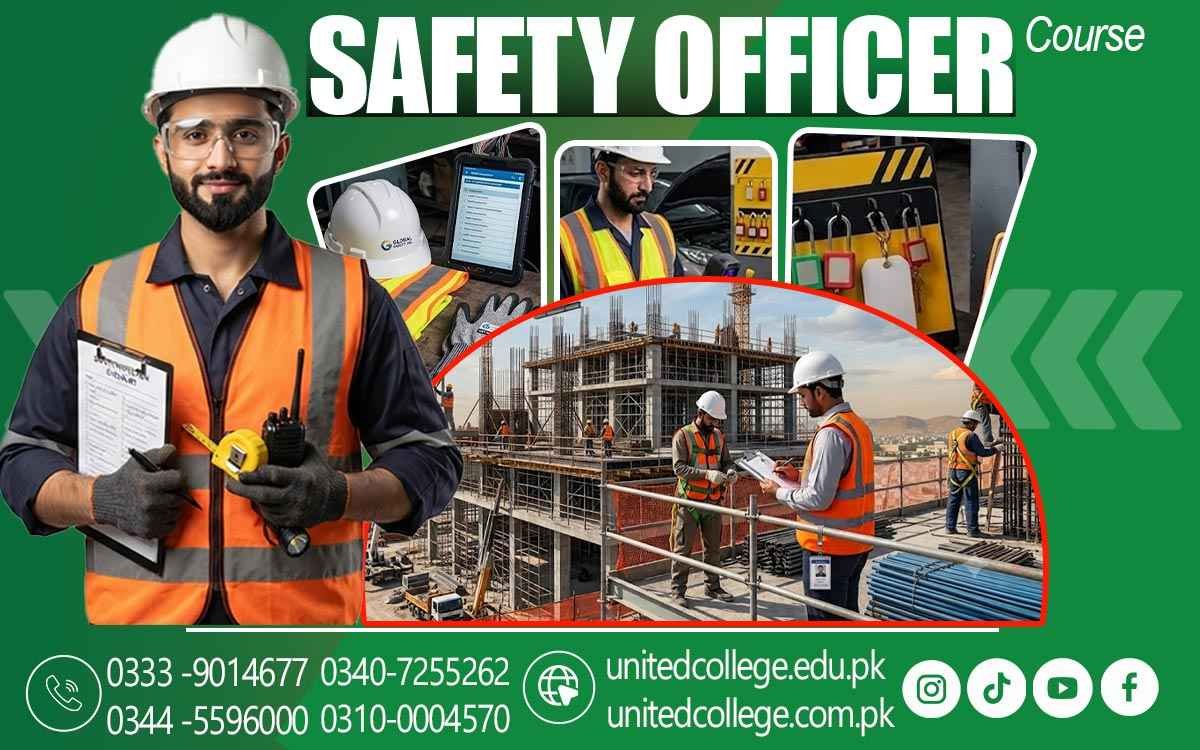

Safety Officer Course in Khushab – Turn Safety Into a Career Path
Turn Safety Skills Into Career Strength
A routine workday can change in a moment when a loose wire, unstable ladder, leaking chemical, or unprotected machine is ignored. The danger may be visible, yet workers often focus so much on completing their tasks that they overlook what is happening around them. This is where a trained Safety Officer can make a meaningful difference. For students, beginners, and job seekers in Khushab, learning how to recognize and manage such situations can become a practical professional skill.
The Safety Officer Course in Khushab introduces learners to the principles behind safer workplaces, from identifying hazards to understanding emergency procedures and workplace responsibilities. Instead of treating safety as a list of instructions, professional training helps learners understand why precautions matter and how they can be applied.
A Safety Officer Does More Than Watch Workers
The work of a Safety Officer involves much more than checking whether employees are wearing helmets. Depending on the workplace, the role may include observing daily activities, inspecting work areas, identifying unsafe conditions, discussing concerns with workers, checking procedures, and maintaining safety records. A Safety Officer may work in a factory where machinery and production processes require close attention, or on a construction site where working at height, tools, lifting activities, and changing conditions create different challenges.
Through the Safety Officer Course in Khushab, learners can begin understanding how professional safety responsibilities vary according to the environment. They can also develop an appreciation for observation, responsibility, communication, and preventive thinking. These qualities are important because safety professionals need to notice potential problems and encourage appropriate action before those problems lead to injuries or operational disruption.
Learn to Notice Workplace Hazards Others May Walk Past
A workplace hazard is not always something dramatic. A poorly stored material, damaged cable, wet floor, blocked passage, missing warning sign, or incorrect working method can create potential danger. Workplace hazard management starts with recognizing these conditions and understanding why they matter. During safety training in Khushab, learners can explore different categories of workplace hazards and how they may affect workers.
Hazard identification helps develop a habit of looking carefully at the workplace rather than assuming everything is safe because no accident has happened yet. This approach supports occupational health and safety by encouraging prevention. A learner who understands hazards can begin asking useful questions: What could cause harm? Who could be affected? What should be changed? These questions form the foundation of responsible safety thinking.
Risk Assessment Gives Structure to Safety Decisions
Recognizing a hazard is only the beginning. The next step is understanding the level of risk and deciding what can reasonably be done to control it. Risk assessment training can teach learners how to examine a task or situation, consider possible consequences, identify people who may be exposed, and think about suitable control measures. For example, if workers are operating equipment without adequate protection, the solution may involve improving the equipment, changing the procedure, providing suitable protection, or strengthening worker training.
The right response depends on the actual workplace conditions. This is why workplace risk management is an important part of a professional occupational safety course. Students can learn that effective hazard control is not about creating fear; it is about making sensible decisions that reduce unnecessary exposure to danger.
Prevention Starts Before the Accident Report Is Written
Accident prevention is one of the central ideas behind workplace safety. Instead of waiting for an incident and then asking what went wrong, organizations can use preventive practices to reduce risks in advance. A health and safety course can introduce learners to safe work procedures, housekeeping, equipment checks, proper handling practices, worker awareness, and appropriate supervision.
For instance, keeping a passage clear may seem like a simple housekeeping task, but it can make movement safer and support easier evacuation during an emergency. Similarly, checking equipment before use can help identify problems before a worker is exposed to them. These examples show why professional safety training focuses on daily behavior as well as major safety events.
PPE Is Useful Only When It Is Used the Right Way
Personal protective equipment, commonly known as PPE, can provide an important layer of protection when workers face specific hazards. Helmets, gloves, safety footwear, goggles, protective clothing, hearing protection, and respiratory equipment may all have different purposes. Students studying a Safety Officer Course in Khushab can learn why PPE should be selected according to the task and hazard rather than treated as a one-size-fits-all solution.
Learners can understand that PPE does not remove a hazard. It is one part of a broader safety approach that may also require engineering controls, safer procedures, supervision, and worker training. This knowledge can help future safety professionals explain protective requirements more effectively and encourage workers to take their responsibilities seriously.
Fire Preparedness and Emergency Response Cannot Be Improvised
When an emergency occurs, confusion can make a difficult situation even worse. This is why workplaces need preparation before a fire, equipment failure, electrical incident, or other emergency takes place. Fire safety training can help learners understand basic prevention measures, alarm awareness, emergency exits, evacuation arrangements, and responsible use of firefighting equipment.
Emergency preparedness is not simply about knowing where an exit is. It involves understanding how people should respond, where they should go, and how information should be communicated. Safety professionals may contribute by checking arrangements, communicating procedures, and identifying weaknesses in emergency plans. These skills are useful in factories, offices, construction areas, workshops, and other workplaces where organized emergency action may be required.
Inspections, Communication, and Rules Keep Safety Moving Forward
Safety management continues even when there is no emergency. Regular safety inspections help organizations examine work areas, equipment, procedures, and employee practices to identify conditions that may need attention. Safety reporting and documentation can also create useful records of incidents, observations, and corrective actions. Learners can become familiar with the importance of following safety rules and regulations and understanding how workplace procedures support safer operations. Communication is equally important.
A Safety Officer may need to explain a rule to a new worker, discuss an unsafe condition with a supervisor, or share inspection findings with management. Developing safety management skills therefore involves more than technical knowledge. It includes listening, explaining, documenting, observing, and working with people. United College of Technology can help learners develop a foundation in these areas through structured, practical-oriented training.
Build a Professional Direction From Knowledge That Protects People
Safety skills can be relevant in construction companies, factories, workshops, warehouses, engineering environments, offices, and other workplaces. Depending on qualifications, experience, and employer requirements, trained individuals may explore Safety Officer jobs and related positions. A safety career in Pakistan can develop gradually through education, workplace exposure, communication ability, additional training, and industry-specific experience.
The Safety Officer Course in Khushab can provide a starting point for students, fresh learners, workers, and job seekers who want to explore this field. It should not be viewed as an automatic promise of employment, but as a foundation that can be strengthened through continued learning and practical experience. United College of Technology offers learners an opportunity to build relevant safety knowledge and understand professional responsibilities in a structured setting.
Frequently Asked Questions (FAQs)
Basic knowledge of workplace practices, clear communication, observation, and willingness to learn can make it easier for beginners to understand safety-related concepts.
Yes. Safety responsibilities often involve communicating with different levels of a workplace so that safety concerns, instructions, and observations are properly understood.
Records provide useful information about what was observed or reported and can help workplaces review problems and track actions taken afterward.
It can. Safety training encourages learners to consider possible consequences before acting and to choose procedures that reduce unnecessary exposure to workplace risks.
Good housekeeping can reduce problems such as slips, trips, blocked pathways, poor material storage, and unnecessary obstacles around working areas.
Yes. Workplace experience can help learners understand how safety principles operate in real situations and allow them to strengthen their professional abilities over time.
Admission Open: Start Your Professional Journey Today!
Join United College of Technology and build a career with practical training, recognized certifications, and Gulf job support. Seats are limited.
Apply Now via WhatsAppContact Information
- Address: Rawalpindi: F-272 Main New Katarian Stop, Old IJP Road | Lahore Campus: Lahore, Pakistan
- Phone/WhatsApp: 0333-9014677 / 0344-5596000 / 0310-0004570 / 0301-5044340 / 0340-7255262
- Website: unitedcollege.edu.pk
















Leave a Comment