


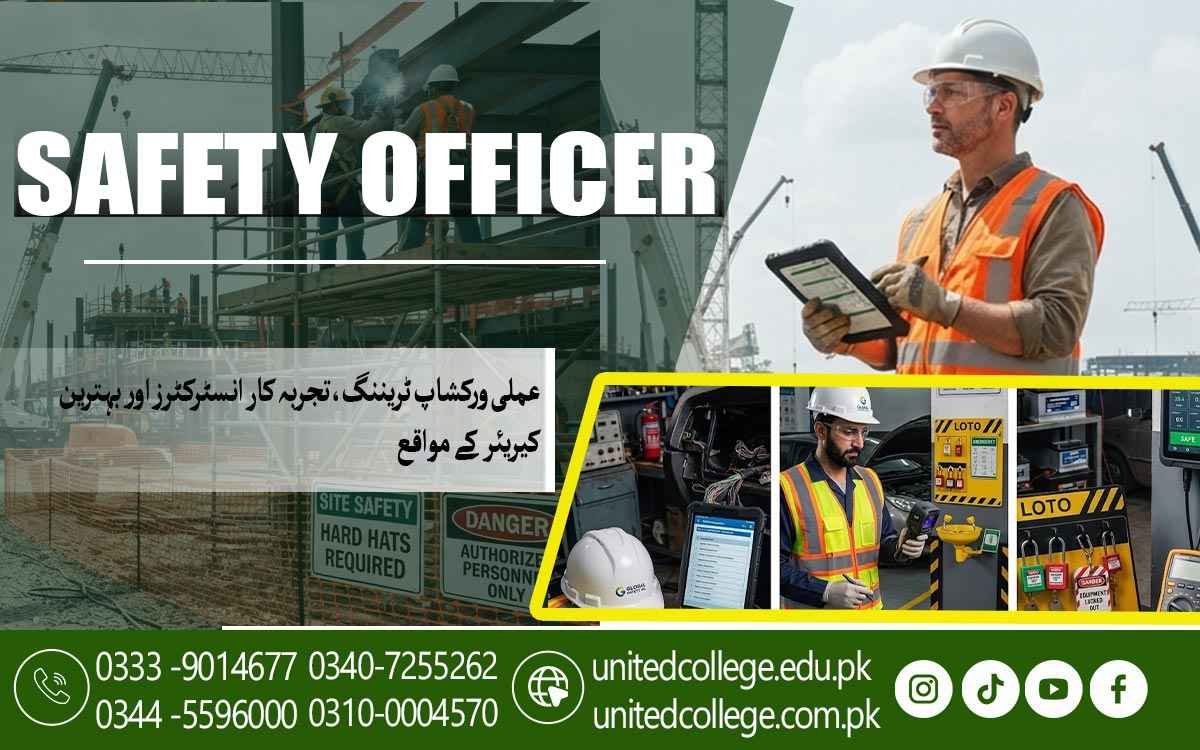

Safety Officer Course in Muzaffargarh for Workplace Safety Skills
Understanding the Role of a Professional Safety Officer
A professional safety officer is responsible for helping organizations maintain safer working conditions. Their duties can include identifying hazards, conducting inspections, monitoring safety practices, and supporting workers in following established safety procedures. Understanding these responsibilities gives learners a clear picture of what is expected from a safety professional.
Safety officers may work in construction, manufacturing, oil and gas, warehouses, workshops, and other industries where workplace risks are present. Their role requires awareness, communication, observation, and problem-solving abilities. During training, students learn how safety responsibilities can be managed systematically rather than responding only after an accident occurs.
The course also develops an understanding of safety culture within an organization. Learners discover how proper communication, worker awareness, and regular monitoring can contribute to accident prevention. These skills can help aspiring safety officers perform their responsibilities more effectively in different workplace environments.
Learning Workplace Hazard Identification Techniques
Hazard identification is one of the most important areas of workplace safety. Learners are introduced to different types of hazards, including physical, electrical, chemical, mechanical, and environmental risks. Recognizing these hazards early can help organizations take suitable preventive measures before they result in injuries or property damage.
Students learn how to observe working areas and identify conditions that may create danger for employees. This can include unsafe equipment, poor housekeeping, exposed electrical connections, improper material storage, or inadequate protective measures. Practical understanding of these situations helps learners become more attentive during workplace inspections.
The training also explains how hazards can be communicated to workers and supervisors. A Safety Officer Course needs to report unsafe conditions clearly and recommend appropriate corrective actions. Developing this ability helps create a workplace where employees are more aware of potential dangers and understand the importance of following safety procedures.
Developing Skills in Risk Assessment and Prevention
Risk assessment helps safety professionals understand the likelihood and possible impact of workplace hazards. During the course, learners study basic methods for evaluating risks and determining which hazards require immediate attention. This knowledge supports better decision-making when developing workplace safety measures.
Students learn that effective risk management involves more than simply identifying hazards. Safety professionals also need to consider who may be affected, how an incident could occur, and what controls can reduce the risk. This structured approach helps organizations manage workplace dangers more effectively.
Preventive measures are another important part of safety management. Learners explore ways to reduce risks through safer work procedures, proper equipment use, worker training, protective equipment, and regular monitoring. These practices can contribute to fewer workplace incidents and a stronger overall safety environment.
Managing Safety Inspections and Workplace Compliance
Regular workplace inspections allow safety officers to identify unsafe conditions before they develop into serious incidents. Students learn how inspections can be planned, conducted, and documented. They develop an understanding of checking work areas, equipment, safety arrangements, and employee practices.
Workplace compliance also requires organizations to follow relevant safety rules and internal procedures. A safety officer course may help monitor whether workers are following established requirements and whether corrective actions have been completed. Training in these areas helps learners understand the importance of maintaining consistent safety standards.
Documentation is another important responsibility connected with safety inspections. Learners can develop knowledge of recording observations, reporting problems, and following up on corrective measures. Proper records help organizations monitor recurring issues and improve their safety management systems over time.
Understanding Fire Safety and Emergency Procedures
Fire safety is an essential part of workplace preparedness. The course introduces learners to common fire hazards, basic prevention practices, emergency alarms, evacuation procedures, and the importance of maintaining clear escape routes. Understanding these areas can help safety officers support organizations in preparing for emergencies.
Students also learn about the importance of emergency planning. A workplace should have clear procedures for responding to incidents such as fires, accidents, chemical spills, or other emergencies. Safety officers can play an important role in helping workers understand their responsibilities during an emergency situation.
Emergency response also depends on communication and proper coordination. Learners develop awareness of how workers can be guided toward safe areas and how emergency procedures can be practiced through drills. This knowledge helps aspiring safety professionals contribute to a more prepared and organized workplace.
Promoting Safe Practices Across Different Workplaces
Every workplace has its own risks, so safety practices need to be adapted according to the working environment. A construction site may have risks related to heights and machinery, while a factory may involve production equipment and electrical hazards. The course helps learners understand how safety measures can vary between industries.
Safety Officer Course also has an important role in promoting awareness among workers. They may conduct briefings, toolbox talks, and safety discussions to remind employees about safe working methods. Effective communication can encourage workers to take safety responsibilities seriously.
Creating a positive safety culture requires continuous effort from both management and employees. Learners understand how regular training, monitoring, reporting, and communication can encourage safer behavior. These practices can help organizations reduce preventable incidents and maintain more productive working environments.
Building Practical Safety Management Skills
Practical safety management requires more than theoretical knowledge. Learners need to understand how safety principles can be applied during real workplace situations. The Safety Officer Course in Muzaffargarh focuses on developing practical awareness through examples related to inspections, hazards, risk control, and emergency preparedness.
Students can strengthen their ability to observe workplace conditions and identify areas that need improvement. They learn how safety concerns can be communicated professionally and how corrective actions can be recommended. These abilities are useful for individuals preparing to take responsibility for workplace safety.
The course can also improve professional skills such as communication, reporting, teamwork, and decision-making. A safety officer often works with workers, supervisors, engineers, and management, making effective communication an important part of the job. Developing these skills can support better performance in safety-related roles.
Preparing for a Successful Safety Career
Safety Officer Course can provide a useful foundation for individuals interested in professional safety careers. Learners who complete their training can use their knowledge in different workplace environments where safety awareness and risk management are important. The skills developed through the course can support future professional growth.
The training is suitable for students, diploma holders, technicians, supervisors, and job seekers who want to improve their workplace safety knowledge. It can also benefit working professionals who want to strengthen their understanding of hazard control, inspections, emergency procedures, and safety management.
With consistent learning and practical experience, students can continue developing their capabilities after completing the course. The Safety Officer Course in Muzaffargarh can therefore serve as a starting point for individuals who want to build professional safety expertise and pursue opportunities in industries where workplace safety is a major priority.
Frequently Asked Questions (FAQs)
The Safety Officer Course in Muzaffargarh is a professional training program that teaches workplace safety, hazard identification, risk assessment, accident prevention, emergency procedures, and safety management.
Students, diploma holders, technicians, supervisors, engineers, and job seekers interested in developing professional workplace safety skills can enroll in the course.
The training covers hazard identification, risk assessment, workplace inspections, fire safety, emergency response, accident prevention, safety reporting, and the proper use of personal protective equipment.
Yes. The course can provide a foundation of practical safety knowledge that may help learners pursue entry-level and professional opportunities in construction, manufacturing, industrial, and other sectors.
Practical training helps learners understand how to identify workplace risks and apply appropriate preventive measures. It also improves their confidence in handling safety inspections and emergency situations.
Admission Open: Start Your Professional Journey Today!
Join United College of Technology and build a career with practical training, recognized certifications, and Gulf job support. Seats are limited.
Apply Now via WhatsAppContact Information
- Address: Rawalpindi: F-272 Main New Katarian Stop, Old IJP Road | Lahore Campus: Lahore, Pakistan
- Phone/WhatsApp: 0333-9014677 / 0344-5596000 / 0310-0004570 / 0301-5044340 / 0340-7255262
- Website: unitedcollege.edu.pk
















Leave a Comment