


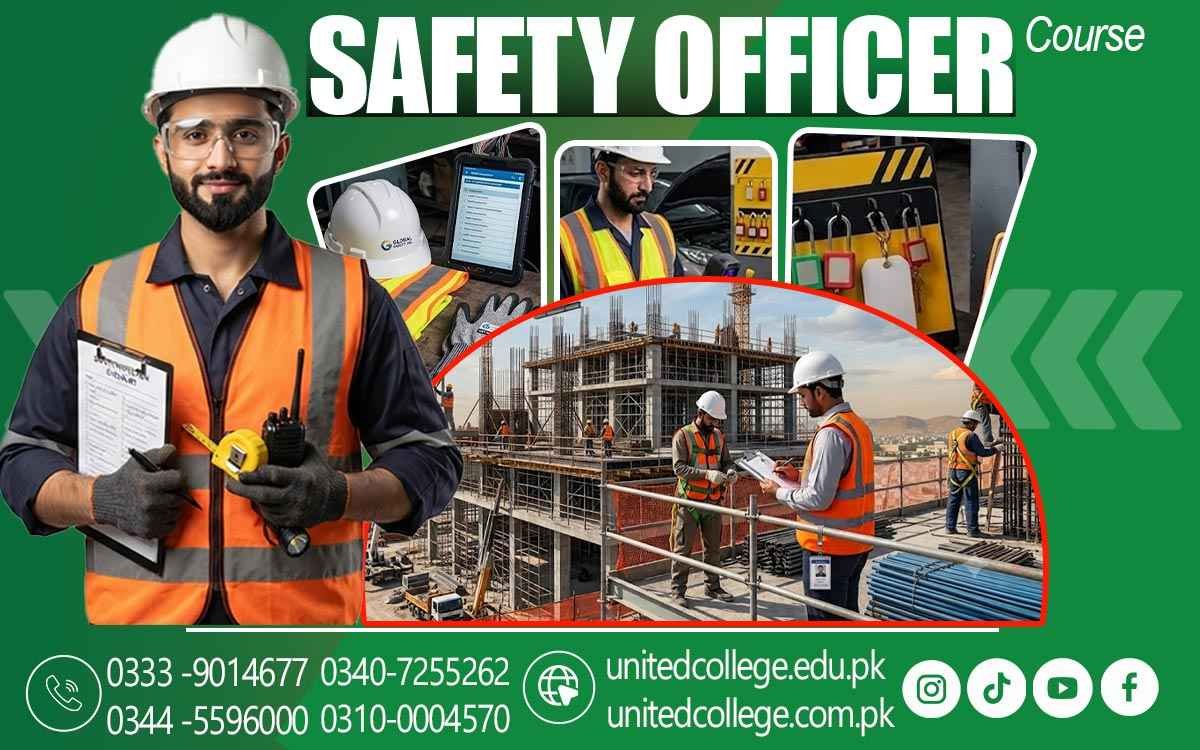

Safety Officer Course in Swat for Practical Safety Skills
Real Workplace Risks That Make Safety Training Essential
Imagine a construction worker walking beneath a raised load while another worker operates machinery nearby. If the workers do not follow safety procedures, a small mistake can cause a serious injury. Similar risks can occur in factories, workshops, warehouses, and other workplaces where people use tools, electrical equipment, heavy materials, or hazardous substances. Workplace accidents can affect workers, delay projects, damage equipment, and create financial problems for businesses. Many incidents can be prevented when people understand potential dangers and take suitable precautions before starting a task.
This is why occupational health and safety has become an important part of responsible workplace management. For students and job seekers interested in this field, the Safety Officer Course in Swat offers a relevant learning direction to explore. Offered by United College of Technology (UCT), this course focuses on the knowledge and skills associated with recognizing workplace hazards and promoting safer working conditions. Safety training helps learners understand why protective equipment matters, how warning signs should be used, and when unsafe work practices need attention. It also introduces the importance of communication between workers, supervisors, and safety personnel.
How a Safety Officer Helps Prevent Workplace Accidents
What should happen when a worker notices a damaged electrical cable, an unprotected opening, or a machine without a suitable safety guard? These problems should be reported and addressed before someone gets hurt. The Safety Officer Course in Swat helps learners understand how safety officers identify workplace dangers, communicate concerns, and support the implementation of workplace safety procedures. Their responsibilities can include inspecting work areas, observing how tasks are performed, checking whether appropriate personal protective equipment is being used, and informing supervisors about unsafe conditions.
A safety officer does not simply tell workers to be careful; the role involves identifying practical risks and encouraging appropriate preventive measures. Through safety officer training in Swat, beginners can explore these responsibilities and understand how safety procedures contribute to a more organized workplace. Good communication is especially important because workers need to understand both the danger and the correct action to take. When hazards are reported promptly and suitable corrective measures are followed, workplaces have a better opportunity to prevent avoidable accidents.
Skills Students Can Develop Through Safety Officer Training
A person interested in workplace safety needs more than a general understanding of accident prevention. They also need to learn how to observe working conditions, recognize potential hazards, communicate clearly, and respond responsibly when a problem appears. A health and safety course can introduce these skills to beginners through explanations, examples, and relevant learning activities. One important skill is hazard identification, which means recognizing anything that could cause injury, illness, or damage. Another is risk assessment, a process used to consider how likely harm is to occur and how serious the consequences could be. Students can also learn why personal protective equipment, commonly called PPE, must be appropriate for the task being performed.
Communication is equally valuable because safety instructions must be clear, understandable, and practical. Other useful areas include reporting unsafe conditions, maintaining basic records, understanding warning signs, and learning the purpose of emergency procedures. These safety officer skills can help students develop a more responsible approach to workplace activities. For learners in Swat, understanding these concepts can provide a starting point for further study and industry-specific training. Practical experience, continued learning, and an understanding of employer requirements remain important when preparing for safety-related responsibilities.
Practical Safety Topics Covered During the Course
A workplace can contain several different hazards at the same time, so safety learning needs to cover more than one type of risk. Relevant workplace safety training may introduce learners to fire prevention, electrical hazards, working at heights, manual handling, machinery risks, and emergency response procedures. Fire safety and prevention involve understanding common ignition sources, keeping escape routes clear, recognizing suitable warning systems, and knowing why emergency arrangements must be established before an incident occurs. Electrical safety includes identifying damaged cables, avoiding unsafe connections, and recognizing the importance of authorized work on electrical systems.
Emergency response training explains why workers need clear instructions about alarms, evacuation routes, assembly points, and reporting procedures. The exact subjects included in the Safety Officer Course in Swat should be confirmed with United College of Technology rather than assumed from a general course description. Understanding these topics helps beginners recognize that accident prevention requires planning, suitable equipment, clear instructions, and consistent attention. When safety procedures are understood and applied correctly, workers are better prepared to identify problems and follow appropriate precautions instead of relying on guesswork during dangerous situations.
Learning Workplace Hazard Identification and Risk Assessment
Consider a workshop where tools are scattered across a walkway, an extension cable lies near a wet floor, and heavy materials are stacked unevenly. Each condition creates a different risk, and ignoring them could lead to falls, electric shock, or injuries caused by falling objects. Workplace hazard identification begins by observing the work area carefully and recognizing conditions or activities that could cause harm. The next step is risk assessment, which involves considering how likely an incident is to happen and how severe its consequences might be.
A suitable response could involve removing the obstruction, organizing storage, and keeping the route clear. In other situations, the best control might include repairing equipment, installing a suitable guard, changing a work procedure, or restricting access until a problem is corrected. These actions are examples of hazard control, which aims to eliminate risks where possible or reduce them to an acceptable level. Learners should also understand that simply providing PPE is not always the strongest solution. Removing the hazard or using a safer method may offer better protection.
The Importance of Practical Learning and Safety Equipment
A worker entering a busy construction area without a helmet or suitable footwear may face risks that could have been reduced through proper precautions. However, wearing safety equipment without understanding its correct use can also create problems. This is why learning about PPE and workplace safety procedures is an important part of safety education. Safety helmets are designed to protect against certain head-impact hazards, while safety shoes can help protect feet from particular impacts, crushing hazards, or other risks depending on their design. Reflective vests improve visibility in areas where vehicles or moving equipment operate, and eye protection can reduce exposure to flying particles or splashes when the equipment is suitable for the hazard.
Practical examples can help beginners connect classroom knowledge with real working conditions. For instance, examining a workplace layout can help learners identify blocked exits, unsafe storage, or poorly marked walkways. Discussing a damaged tool can demonstrate why equipment should be removed from service and reported according to workplace procedures. The Safety Officer Course in Swat can be explored as a way to build an understanding of these safety principles, while the precise practical activities available through United College of Technology should be confirmed directly.
Who Can Consider a Safety Officer Course in Swat
A student finishing school or college may be unsure which technical field to explore, while a job seeker may want to understand the responsibilities associated with workplace safety. People already familiar with construction, workshops, manufacturing, or industrial activities may also wish to develop their knowledge of accident prevention. For these learners, the Safety Officer Course in Swat may be worth considering as an introduction to occupational health and safety. Beginners can use safety training to understand workplace hazards, common protective measures, inspection practices, and the importance of following established procedures.
Individuals interested in construction may want to learn about working at heights, falling objects, site organization, and the use of protective equipment. Those interested in industrial environments may find it useful to study machinery hazards, electrical safety, emergency arrangements, and safe handling practices. People from other educational or work backgrounds can also explore the subject if they are interested in learning how safer workplaces are maintained. However, course suitability depends on the institution's admission requirements, the learner's background, and the intended career direction, so prospective students should confirm the relevant details before enrolling.
How United College of Technology Supports Safety Learning
Choosing a course is an important decision, especially for beginners who want clear information before committing their time and effort. United College of Technology (UCT) offers the Safety Officer Course in Swat for individuals interested in learning about workplace safety and the principles involved in reducing occupational risks. When exploring this course, prospective students should consider how the learning content relates to their interests, educational background, and future goals. Understanding workplace hazards, recognizing unsafe conditions, and learning why safety procedures matter are useful starting points for anyone interested in occupational health and safety.
Students can also benefit from understanding the relationship between hazard identification, risk assessment, protective equipment, incident reporting, and emergency planning. These subjects help explain how safety awareness can be applied to everyday work activities rather than treated as a set of rules to memorize. Before enrolling, interested learners should contact UCT to confirm the current course syllabus, duration, fees, admission requirements, learning arrangements, and any certificate or assessment details that may apply. It is also sensible to ask whether the training includes practical demonstrations, workplace examples, or other activities that help explain safety concepts.
Applying Safety Knowledge to Real Workplace Situations
Imagine that a worker notices an unstable stack of materials beside a frequently used walkway just before a busy shift begins. Ignoring the problem could expose several people to danger, but reporting it promptly allows the responsible supervisor or safety personnel to arrange suitable corrective action. This simple example shows how safety knowledge becomes valuable when it influences everyday decisions. People who understand workplace safety can pay closer attention to warning signs, recognize unsafe conditions, follow established procedures, and communicate concerns clearly.
They can also help workers understand why certain precautions are necessary and why shortcuts may create unnecessary risks. In construction, this may involve attention to fall protection, safe access, and material storage. In a workshop or factory, it may mean checking that guards remain in place, walkways are clear, and unsafe equipment is reported. Effective accident prevention also requires cooperation from management and workers because one person cannot control every workplace risk alone. Training provides a foundation, but people must continue learning as equipment, procedures, and industry requirements change.
Frequently Asked Questions (FAQs)
The Safety Officer Course in Swat is a training option for people who want to learn about workplace safety, hazard identification, risk assessment, fire prevention, and accident prevention. United College of Technology (UCT) offers this course for interested learners.
Students can learn about workplace hazards, personal protective equipment (PPE), fire safety, emergency procedures, safety inspections, and methods of reducing workplace risks.
Students, beginners, fresh learners, and job seekers interested in occupational health and safety may consider this course. Applicants should confirm the current admission requirements with United College of Technology.
Safety officer training helps learners understand how to identify hazards, follow safety procedures, report unsafe conditions, and support accident prevention in different workplaces.
Yes, safety officers may work on construction sites, depending on their training, qualifications, experience, and employer requirements. Their responsibilities may include monitoring site hazards and promoting safe working practices.
Admission Open: Start Your Professional Journey Today!
Join United College of Technology and build a career with practical training, recognized certifications, and Gulf job support. Seats are limited.
Apply Now via WhatsAppContact Information
- Address: Rawalpindi: F-272 Main New Katarian Stop, Old IJP Road | Lahore Campus: Lahore, Pakistan
- Phone/WhatsApp: 0340-7255262 / 0333-9014677 / 0301-5044340 / 0310-0004570 / 051-8770756
- Website: unitedcollege.edu.pk
















Leave a Comment