


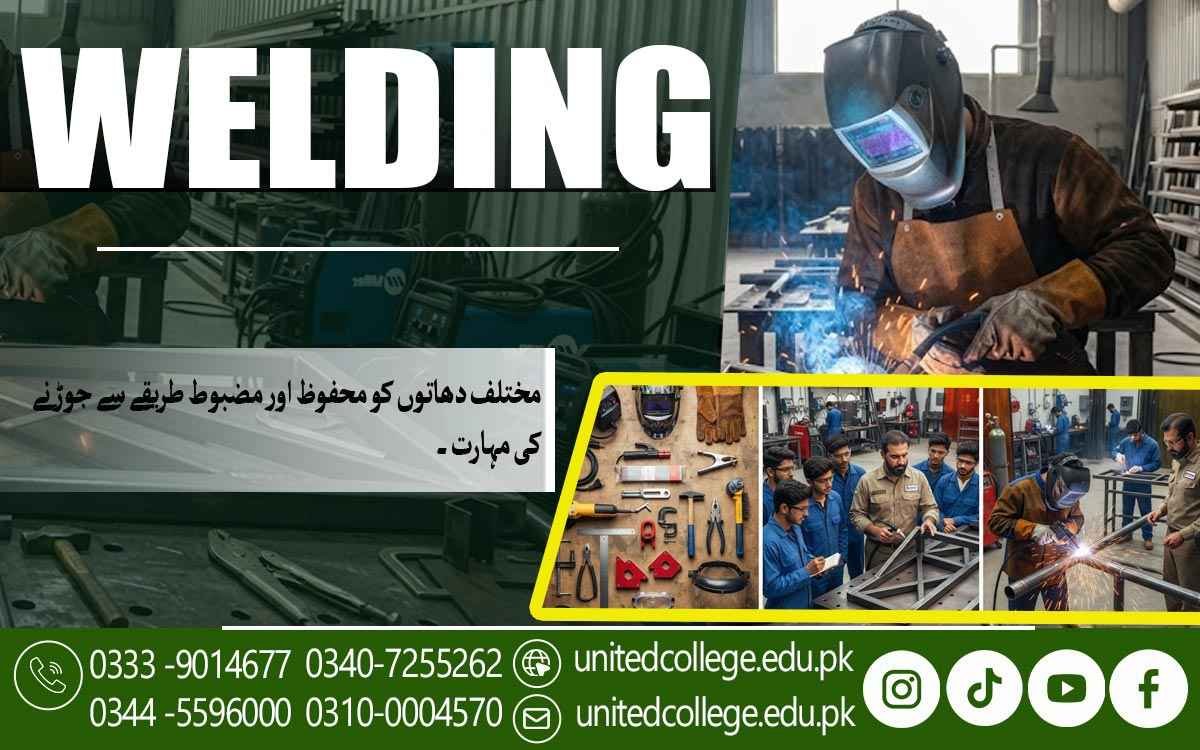

Welding Course in Chiniot – Turn Metalwork Into a Skilled Craft
Turn Practical Metalwork Into a Skill That Takes Shape
A strong metal structure often begins with something simple: two separate pieces that need to become one. Welding makes that possible by using controlled heat to join metal for fabrication, repair, construction, maintenance, and many workshop tasks. The quality of the final work depends on much more than creating a weld. Proper preparation, equipment handling, movement, measurements, and safety all matter.
For beginners and fresh learners in Chiniot, the Welding Course in Chiniot offered by United College of Technology can provide a practical starting point for understanding these skills. Instead of learning only through theory, students can explore how welding work is performed and what habits are needed around a working environment.
The First Workshop Lessons Build Control Before Speed
Welding requires coordination between the hands, eyes, equipment, and workpiece. A beginner may initially find it difficult to maintain a steady movement or keep the correct working position. Regular welding practice helps turn unfamiliar movements into more controlled actions. Learners can work on holding tools correctly, positioning metal, maintaining suitable movement, and observing the weld area.
Cleaning away dirt, rust, or unwanted material can help create a more suitable surface for the welding process. During a Welding Course in Chiniot, beginners can practice these basic techniques while learning how small changes in movement and preparation can affect the finished joint. The goal at this stage is not to rush toward complicated work.
Different Welding Techniques Open Up Different Ways to Work
Welding includes several processes, and each one works in a different way. Arc welding creates an electric arc that produces the heat required for joining metal. It is commonly associated with general workshop and fabrication tasks. Understanding electrode handling, arc control, and basic joint preparation can help beginners become familiar with this process. MIG welding uses a continuously fed wire electrode and shielding gas.
Gas welding uses a flame produced by burning fuel gas with oxygen. Learning about these processes gives students a broader understanding of welding techniques rather than limiting their knowledge to one method. The exact processes and practical exercises available can depend on the training setup. The important point for a beginner is to understand the purpose of each technique and the type of work for which it may be used.
Tools, Cutting Work, and Measurements Bring the Process Together
A welding machine is only one part of a working setup. Depending on the task, learners may encounter electrode holders, cables, clamps, welding helmets, grinders, measuring tools, cutting equipment, and other workshop items. Understanding what each tool does can make practical work more organized. Before metal can be joined, it may need to be measured, marked, cut, cleaned, or positioned. Metal cutting therefore connects naturally with welding and fabrication skills.
Accurate measurements help ensure that pieces fit the intended dimensions, while proper alignment can affect the final shape of the work. Basic drawings can also be useful. A simple technical drawing may show dimensions, angles, shapes, or the arrangement of different parts. Learning to read such information can help students understand what a fabricated component is supposed to look like before they begin working on it.
Better Joints Come From Preparation, Position, and Consistent Movement
A weld joint is not judged only by whether two pieces have been connected. Its appearance, shape, consistency, and position can provide useful information about the welding process. Beginners can learn to observe common problems such as an uneven weld bead, poor alignment, excessive spatter, incomplete joining, or an inconsistent surface.
These exercises can introduce an important lesson: good welding is built through several connected steps. In a Welding Course in Chiniot, learners can practice proper preparation, positioning, and controlled movement while understanding how these steps work together. Correct preparation supports better positioning, and good positioning makes controlled movement easier.
Protective Equipment and Workshop Discipline Belong in Every Practice Session
Welding involves heat, bright light, sparks, fumes, and electrical equipment, so safety must remain part of the learning process. Welding safety begins with using suitable protective equipment and following safe workshop procedures. A welding helmet or appropriate eye protection helps protect the eyes from intense light.
Proper ventilation is also important because welding processes can produce fumes and gases. Learners should also develop habits such as checking equipment before use, keeping cables organized, maintaining a clear work area, and keeping flammable materials away from sparks and heat. These habits are useful beyond the training environment because safe work depends on consistent behavior, not just protective gear.
Real Workshop Applications Give Technical Skills a Wider Direction
Welding knowledge can connect with many forms of technical work. Fabrication shops may use welding to assemble metal components, while maintenance work can involve repairing or modifying suitable metal parts. Construction-related activities can also require metal joining and fabrication, depending on the specific task. The Welding Course in Chiniot can help learners explore this wider side of the trade through practical learning.
Learners should also remember that welding is connected to other useful abilities. Measuring, fitting, cutting, grinding, drawing interpretation, equipment care, and basic fabrication can strengthen a person's overall understanding of metalwork. Building these skills gradually can make practical tasks easier to understand.
Let Consistent Practice Shape the Skill You Take Forward
Welding becomes easier to understand when learners stop viewing it as a single action and start seeing the complete process. Preparing the metal, selecting suitable equipment, positioning the work, controlling movement, checking the result, and following safety procedures all contribute to better practical work.
For students, beginners, and fresh learners in Chiniot, the Welding Course in Chiniot offers a starting point for exploring this hands-on technical field through United College of Technology. The most useful approach is to stay patient, practice carefully, learn from visible mistakes, and continue adding related fabrication skills. Every practice session can improve a different part of the process, helping learners develop a stronger and more practical understanding of welding over time.
Frequently Asked Questions (FAQs)
The operator should inspect the machine, cables, connections, work area, and required protective gear before beginning a welding task.
The position of the electrode or torch can affect how heat and filler material reach the joint, so learners practice maintaining suitable angles for controlled work.
Spatter consists of small droplets of molten metal that can land around the welding area. Excessive spatter may indicate that the process or settings need attention.
They can examine completed joints for visible issues such as cracks, holes, uneven surfaces, or poor fusion and learn what may have caused them.
Yes. Keeping the work area clear, removing unnecessary materials, and storing equipment properly can support safer and more organized workshop activities.
Different thicknesses can require different heat levels, equipment settings, or welding approaches, making material thickness an important part of task planning.
Admission Open: Start Your Professional Journey Today!
Join United College of Technology and build a career with practical training, recognized certifications, and Gulf job support. Seats are limited.
Apply Now via WhatsAppContact Information
- Address: Rawalpindi: F-272 Main New Katarian Stop, Old IJP Road | Lahore Campus: Lahore, Pakistan
- Phone/WhatsApp: 0333-9014677 / 0344-5596000 / 0310-0004570 / 0301-5044340 / 0340-7255262
- Website: unitedcollege.edu.pk
















Leave a Comment