


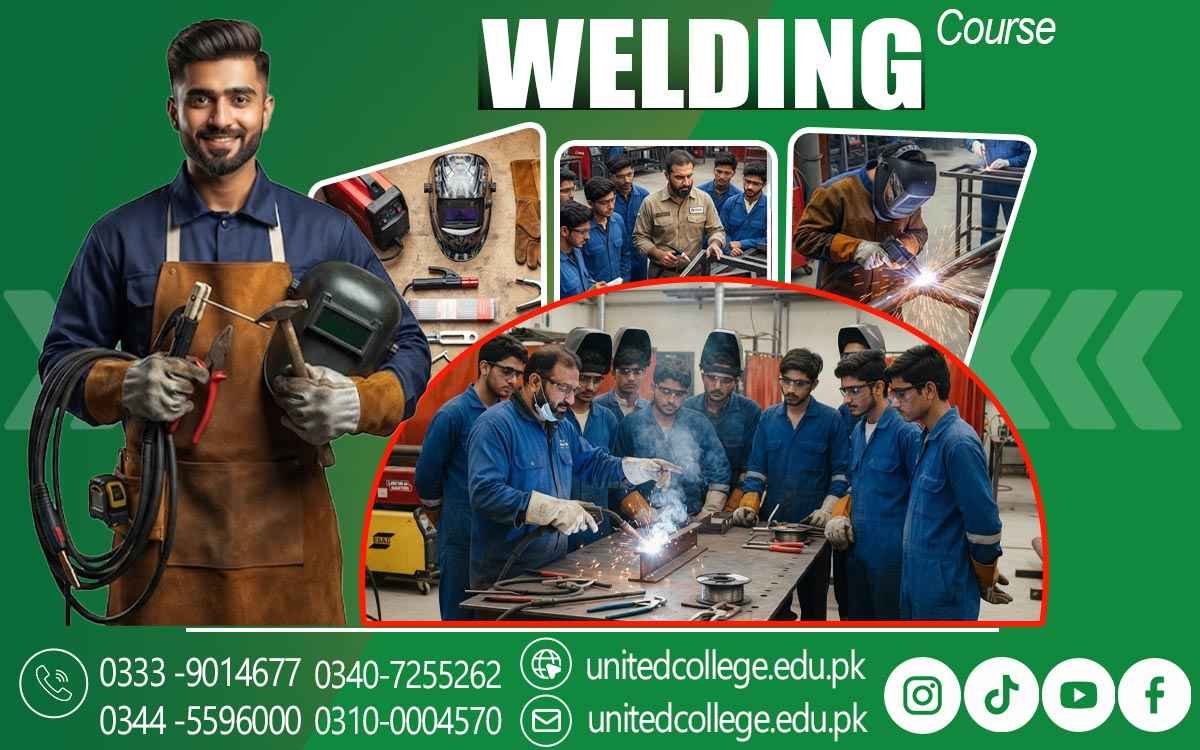

Welding Course in Hafizabad – Step Into Practical Metalwork
Build Precision Through Practical Metalwork
A good weld depends on much more than heat. The welder needs to prepare the metal, select suitable equipment, control hand movement, follow measurements, and work safely around sparks and hot surfaces. These small details turn basic metal joining into a useful technical skill. For beginners in Hafizabad, learning welding through hands-on practice can provide a clear way to understand how metalwork is performed in real workshop settings.
The Welding Course in Hafizabad, offered by United College of Technology, allows learners to explore welding fundamentals and practical workshop skills. Students, fresh learners, and people interested in technical work can become familiar with welding equipment, basic processes, metal preparation, safe working methods, and repeated practice.
The Workshop Teaches More Than Just Welding
A welding workshop introduces learners to a complete working process. Before creating a joint, students may practice measuring metal, marking cutting points, cleaning surfaces, securing workpieces, and using supporting tools. During a Welding Course In Hafizabad, these activities can help learners understand how different stages of fabrication connect.
Practical welding training can also improve familiarity with everyday workshop routines. Learners can practice handling tools carefully, keeping the work area organized, and checking equipment before use. These habits become important when working on tasks that require accuracy and attention. A Welding Course in Hafizabad can provide learners with structured practical exercises that help develop these essential workshop skills.
Choosing the Right Technique for the Job
Different welding processes are designed around different working methods. Arc welding uses an electric arc to create heat, while MIG welding feeds wire through a welding gun. TIG welding uses a tungsten electrode and offers controlled welding, while gas welding produces heat through a gas flame.
Beginners do not have to treat these methods as complicated subjects. They can first learn what each process does, become familiar with its equipment, and understand where it may be used. This basic knowledge creates a useful foundation for developing broader welding skills.
The Right Tools Make Every Practical Task Easier to Understand
A welding machine is only one part of the equipment used in metalwork. Learners may work with electrodes, holders, cables, clamps, grinders, measuring tools, and cutting equipment. Each tool supports a particular stage of the job, from preparing the material to finishing the completed piece.
Students can also become familiar with protective equipment such as welding helmets, gloves, protective clothing, and suitable footwear. Learning how to use and handle equipment properly is an important part of welding classes because practical skill includes both technical work and responsible tool use.
Measurements Give Metalwork Its Direction
A welder often needs to work according to measurements, markings, dimensions, and simple instructions. Before cutting or joining metal, learners may need to check length, alignment, angles, or the position of a joint. Accurate preparation can make later welding work easier to manage.
Basic technical drawings or simple workshop instructions can also help learners understand what needs to be produced. A beginner does not need advanced drawing knowledge to start. Learning common measurements, symbols, and markings can gradually make practical fabrication tasks easier to follow.
Welding Skills Reach Beyond The Welding Bench
Welding is closely connected with metal fabrication, where workers may measure, cut, shape, fit, join, and finish metal components. Understanding these related processes can give learners a broader view of technical workshop work. Welding knowledge may be useful in repair workshops, fabrication activities, maintenance work, construction-related projects, and other settings where metal components are handled.
The type of work a person can perform depends on their actual training, experience, workplace requirements, and equipment. For someone in Hafizabad, completing a Welding Course in Hafizabad can provide a foundation for exploring additional technical areas. Continued learning can include more welding processes, advanced fabrication techniques, equipment operation, and specialized workshop practices.
A Practical Learning Path With United College of Technology
United College of Technology offers the Welding Course in Hafizabad for learners who want to develop practical knowledge of welding and related workshop activities. The course can introduce beginners to basic welding processes, equipment handling, metal preparation, safety practices, and hands-on exercises.
Starting with fundamentals can make technical learning easier for students who have never worked with welding equipment before. As learners gain practice, they can connect classroom explanations with actual workshop tasks and better understand how preparation, technique, and safety work together.
Let the Next Weld Be Better Than the Last
Welding ability develops through repetition, observation, and careful correction. Learners can continue strengthening their skills by practicing different joints, improving measurement and preparation, exploring welding techniques, reviewing safety procedures, and learning how different materials respond during practical work.
If you are considering a Welding Course in Hafizabad, think about the technical skills you want to build and the type of practical work you want to understand. Exploring training through United College of Technology can be a starting point for learning the fundamentals. From there, regular practice and continued skill development can help turn basic knowledge into stronger workshop ability.
Frequently Asked Questions (FAQs)
Hand control, attention to detail, patience, and willingness to practice can help beginners develop welding skills.
A clean surface can help create a more consistent weld and make it easier to work with the selected welding process.
It means placing the metal pieces in the correct position before joining them, helping maintain the intended shape and structure.
Repeated tasks allow learners to become more familiar with torch or electrode movement, working distance, and controlled hand positioning.
The material, welding process, task requirements, and appropriate protective equipment are important factors to consider.
Yes. Basic welding knowledge can provide a foundation for exploring related areas such as fabrication, metal cutting, fitting, and workshop assembly.
Admission Open: Start Your Professional Journey Today!
Join United College of Technology and build a career with practical training, recognized certifications, and Gulf job support. Seats are limited.
Apply Now via WhatsAppContact Information
- Address: Rawalpindi: F-272 Main New Katarian Stop, Old IJP Road | Lahore Campus: Lahore, Pakistan
- Phone/WhatsApp: 0333-9014677 / 0344-5596000 / 0310-0004570 / 0301-5044340 / 0340-7255262
- Website: unitedcollege.edu.pk
















Leave a Comment