


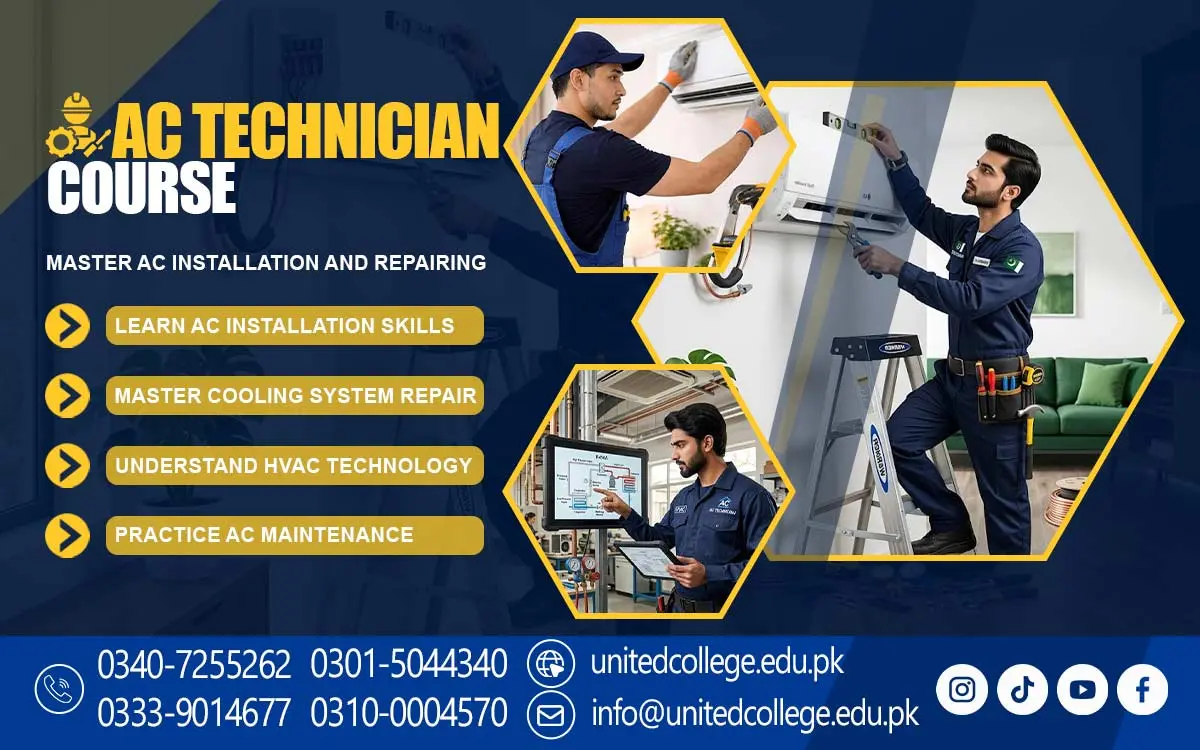

AC Technician Course in Mardan for Cooling System Expertise
Understanding the Fundamentals of Air Conditioning Technology
Air conditioning technology focuses on controlling indoor temperature, humidity, and air quality to create a comfortable environment. An air conditioning system removes heat from an indoor space and transfers it outside through a refrigeration process. Students enrolled in an AC Technician Course in Mardan can learn how this process works and why different cooling systems are used in residential and commercial settings.
Learners can also explore the basic principles of heat transfer, airflow, and temperature control. Understanding these concepts helps technicians identify how an AC system operates under different conditions. This knowledge is important when selecting suitable equipment, checking cooling performance, and understanding the reasons behind common air conditioning problems.
The course introduces students to different types of air conditioners, including split ACs, window units, and other commonly used cooling systems. Learners can become familiar with their basic functions and applications. This foundation helps students understand the technical subjects covered in later stages of their training.
Exploring AC Components and Their Functions
An air conditioner contains several important components that work together to provide effective cooling. These include the compressor, condenser, evaporator, expansion device, fan motor, thermostat, and air filters. Each component performs a specific function in the cooling process. Students in an AC Technician Course learn to recognize these parts and understand how they contribute to the overall performance of an AC system.
The compressor circulates refrigerant through the system, while the condenser helps release heat into the surrounding environment. The evaporator absorbs heat from indoor air, allowing the room to become cooler. The expansion device regulates refrigerant flow and pressure. Understanding these functions enables learners to develop a clearer picture of how refrigeration and air conditioning systems operate.
Students can also study the importance of filters, sensors, drainage systems, and electrical controls. Dirty filters, blocked drainpipes, and faulty components may affect cooling performance. By learning about these parts, trainees can improve their ability to inspect equipment, recognize potential problems, and understand the importance of regular maintenance.
Learning Refrigeration Cycles and Cooling Principles
The refrigeration cycle is one of the most important topics in air conditioning training. It explains how refrigerant circulates through different components to absorb heat from indoor air and release it outside. Students can learn about the main stages of this cycle, including compression, condensation, expansion, and evaporation. These stages work together to produce the cooling effect required for comfortable indoor conditions.
During training, learners can explore how refrigerant pressure and temperature change as it moves through the system. They can also understand why proper refrigerant circulation is essential for effective cooling. This knowledge helps students recognize possible causes of poor performance, such as restricted airflow, incorrect operating conditions, or refrigerant-related faults that require professional diagnosis.
Another important area is energy efficiency. Air conditioners need proper maintenance and correct operating conditions to work effectively. Students can learn how clean filters, suitable temperature settings, adequate airflow, and properly maintained components contribute to better performance. These principles are valuable for technicians who want to provide reliable service and help customers avoid unnecessary energy consumption.
Practicing Air Conditioner Installation Procedures
Correct installation plays a major role in the performance, safety, and service life of an air conditioning system. Students can learn about the steps involved in preparing an installation location, positioning indoor and outdoor units, measuring pipe routes, and arranging drainage. They can also explore the importance of following manufacturer instructions and selecting suitable locations for effective airflow and convenient maintenance.
An AC technician must understand that installation involves more than simply mounting equipment. Refrigerant piping, electrical connections, drainage arrangements, and the positioning of both units must be handled correctly. Poor installation can result in water leakage, vibration, reduced cooling, and other operational problems. Practical instruction helps learners understand how these issues can be prevented through careful planning and proper procedures.
Students can also become familiar with essential installation tools and testing methods. Depending on the training facilities, practical activities may include measuring, pipe preparation, mounting exercises, and supervised system checks. Refrigerant handling, pressure testing, and electrical work should always follow appropriate safety procedures and be performed under qualified supervision.
Understanding Electrical Connections in AC Systems
Electrical knowledge is essential for anyone who wants to work as an AC technician. Air conditioning systems use electrical components to operate compressors, fan motors, sensors, control boards, and other parts. Students can learn basic electrical concepts, including voltage, current, resistance, circuit protection, and the purpose of different electrical connections.
Training can introduce learners to wiring diagrams and explain how electrical components interact within an air conditioning system. They can study the functions of capacitors, relays, contactors, thermostats, and protective devices commonly found in relevant equipment. Understanding these components helps technicians investigate electrical symptoms and recognize when a fault requires further testing or specialist assistance.
Safety is particularly important when dealing with electrical equipment. Students should learn how to isolate power, verify that equipment is de-energized, use suitable protective equipment, and follow safe testing procedures. Practical electrical work must be completed under qualified supervision. Developing these habits helps future technicians reduce risks while carrying out installation, inspection, and maintenance tasks.
Identifying Common Cooling System Faults
Troubleshooting is an important part of an AC technician's daily work. Air conditioners may experience problems such as weak cooling, unusual noises, water leakage, excessive vibration, poor airflow, or failure to start. Students can learn how to identify these symptoms and investigate possible causes through a systematic inspection process rather than replacing components without proper diagnosis.
For example, weak cooling may result from dirty filters, blocked airflow, incorrect thermostat settings, or problems within the refrigeration system. Water leakage may be associated with a blocked drainage line or an installation issue. Electrical faults can also prevent an air conditioner from operating correctly. Learners can study these common situations to understand how different problems affect system performance.
A proper troubleshooting process involves observing symptoms, checking basic operating conditions, inspecting accessible components, and using suitable diagnostic tools. Students can learn the importance of recording findings and explaining technical problems clearly to customers. More advanced repairs and refrigerant-related work should be carried out by trained personnel using approved procedures and equipment.
Applying Routine Maintenance and Servicing Methods
Regular maintenance helps air conditioners operate efficiently and reduces the likelihood of unexpected breakdowns. Students can learn about routine servicing tasks, including cleaning or replacing filters, inspecting accessible components, checking drainage, examining airflow, and looking for visible signs of wear or damage. These activities help maintain system performance and support a longer equipment lifespan.
An AC technician should also understand the importance of inspecting both indoor and outdoor units. Dust accumulation, blocked airflow, damaged insulation, loose external fittings, and drainage problems may affect the operation of a cooling system. Learners can explore how to identify these issues and determine when cleaning, adjustment, further testing, or professional repair is required.
Proper servicing also involves keeping maintenance records and communicating findings to customers. Technicians should explain the condition of the equipment, describe any identified problems, and recommend appropriate next steps. Through the AC Technician Course in Mardan, learners can develop an understanding of maintenance procedures that support reliable cooling, customer satisfaction, and responsible use of equipment.
Exploring Career Opportunities in AC Technology
Air conditioning and refrigeration technology offers several potential career paths for people with suitable technical knowledge and practical experience. After completing relevant training, learners may seek entry-level work with AC service companies, refrigeration businesses, maintenance contractors, appliance service providers, or building maintenance departments. Their opportunities will depend on their practical abilities, qualifications, and employers' requirements.
Some technicians focus on installing new air conditioners, while others specialize in routine servicing, troubleshooting, or refrigeration equipment. With additional experience and relevant certifications, individuals may develop expertise in commercial cooling systems or other specialized areas. Continued learning is important because air conditioning equipment, energy-efficiency standards, and diagnostic methods can change over time.
The course can also provide a foundation for individuals interested in starting a small AC servicing business in the future. Self-employment requires more than technical knowledge; it also involves customer communication, accurate cost estimates, tool management, workplace safety, and dependable service. By combining proper training with supervised practice and professional experience, learners can work toward building a sustainable career in this field.
Frequently Asked Questions (FAQs)
The AC Technician Course in Mardan teaches students about air conditioning systems, refrigeration, installation, troubleshooting, and maintenance procedures.
Students learn about AC components, cooling cycles, electrical connections, installation methods, common faults, and routine servicing.
Beginners and individuals interested in air conditioning and refrigeration technology can consider joining, subject to the institute’s admission requirements.
Students can develop knowledge of AC installation, component inspection, basic fault diagnosis, maintenance procedures, and safe tool handling.
Graduates may seek opportunities with AC service companies, refrigeration businesses, maintenance departments, or work toward starting their own servicing business with suitable experience.
Admission Open: Start Your Professional Journey Today!
Join United College of Technology and build a career with practical training, recognized certifications, and Gulf job support. Seats are limited.
Apply Now via WhatsAppContact Information
- Address: Rawalpindi: F-272 Main New Katarian Stop, Old IJP Road | Lahore Campus: Lahore, Pakistan
- Phone/WhatsApp: 0340-7255262 / 0333-9014677 / 0301-5044340 / 0310-0004570 / 051-8770756
- Website: unitedcollege.edu.pk
















Leave a Comment