


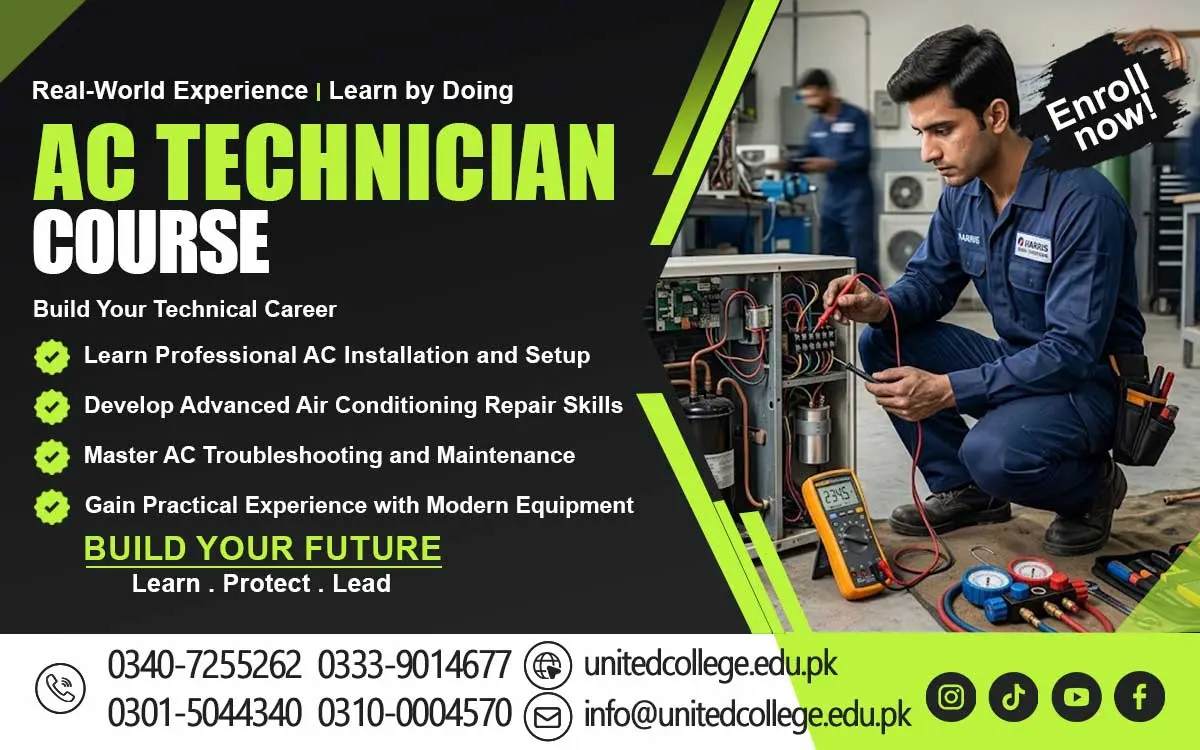

AC Technician Course in Skardu for Cooling Equipment Care
Exploring Modern Air Conditioning Equipment
Modern air conditioning equipment is designed to control indoor temperatures and improve comfort in different environments. Students can learn about common types of air conditioners, including split ACs, window units, and inverter systems. Each type has different features, components, and installation requirements. Understanding these differences helps learners recognize which systems are suitable for residential and commercial applications.
The course also introduces important AC components, such as compressors, evaporator coils, condenser coils, fans, filters, and thermostats. Each component performs a specific function in the cooling process. Learners can explore how these parts work together to remove heat from indoor spaces and release it outside. This knowledge provides a foundation for understanding modern cooling technology.
In addition, students can become familiar with basic tools used during AC installation and maintenance. These may include screwdrivers, spanners, measuring instruments, cleaning equipment, and electrical testing devices. Learning about equipment and tools helps students understand technical procedures and prepare for practical activities under proper supervision.
Understanding Compressor Types and Their Functions
The compressor is one of the most important components of an air conditioning system. It circulates refrigerant through the system by increasing its pressure and helping it move through the refrigeration cycle. Students can learn about different compressor types, including rotary, reciprocating, scroll, and inverter-driven compressors. Understanding their basic working principles helps learners recognize the differences between various AC models.
Compressor performance affects the cooling capacity and energy consumption of an air conditioner. Learners can explore how compressor operation relates to refrigerant circulation, heat transfer, and temperature control. They can also study common warning signs of compressor problems, such as unusual noise, overheating, and poor cooling performance. Proper diagnosis requires suitable testing methods and technical knowledge.
The AC Technician course also explains why compressors need appropriate electrical supply, ventilation, and regular inspection. Students can understand the importance of checking system conditions before identifying a fault. Practical work involving electrical connections or compressor testing should always follow manufacturer instructions and appropriate safety procedures.
Learning the Principles of Refrigeration Systems
Refrigeration is the basic process that allows an air conditioner to remove heat from an indoor environment. Students can learn about the four main stages of the refrigeration cycle: compression, condensation, expansion, and evaporation. These stages work together to transfer heat and produce a cooling effect. Understanding this cycle makes it easier to learn how different AC components perform their functions.
The refrigerant moves through the system and changes pressure and temperature as it passes through different components. The evaporator absorbs heat from indoor air, while the condenser releases heat into the outdoor environment. The expansion device controls refrigerant flow into the evaporator, and the compressor helps maintain circulation. Learning about these processes provides a strong foundation for understanding cooling systems.
Students can also explore factors that influence refrigeration performance, including airflow, coil cleanliness, refrigerant charge, and the condition of system components. Poor airflow or incorrect refrigerant levels can reduce cooling efficiency. A clear understanding of refrigeration principles helps future technicians investigate problems more carefully and recognize when specialized equipment or professional assistance is required.
Practicing Indoor Unit and Outdoor Unit Fitting
Air conditioning installation requires proper placement of both indoor and outdoor units. The indoor unit should be positioned to support effective air distribution, while the outdoor unit needs sufficient airflow and suitable protection from environmental conditions. Students can learn about the factors that influence installation locations, including room layout, wall strength, drainage, accessibility, and manufacturer recommendations.
The AC Technician course introduces the basic steps involved in mounting AC units and preparing the connections between them. Learners can understand why secure brackets, correctly sized piping, suitable insulation, and proper condensate drainage are important. Incorrect installation may lead to water leakage, vibration, reduced cooling performance, or unnecessary strain on system components.
Practical training can also introduce learners to installation planning and the importance of checking connections before operating the equipment. Tasks involving refrigerant piping, pressure testing, evacuation, or electrical connections require suitable tools, training, and supervision. Following approved procedures helps reduce installation errors and supports safe, reliable operation.
Studying AC Wiring and Control Mechanisms
Electrical systems allow air conditioners to start, operate, regulate temperature, and control different components. Students can learn about basic AC electrical circuits, thermostats, relays, capacitors, sensors, and control boards. These components help manage the operation of compressors and fans according to the system's design. Understanding their functions is important for learning how air conditioners respond to cooling demands.
The course can introduce learners to wiring diagrams and explain how to identify electrical connections using manufacturer documentation. Students may study the role of protective devices and learn why correct wiring is essential for reliable equipment operation. They can also explore the differences between conventional AC controls and electronic inverter control systems.
Electrical safety is a key part of this subject. Before inspection or maintenance, equipment must be isolated from the power supply and verified safe according to established procedures. Capacitors may retain dangerous electrical charges even after power is disconnected. Learners should perform electrical testing only with appropriate training, equipment, and supervision to reduce the risk of electric shock or equipment damage.
Learning Methods for Detecting Technical Defects
An AC technician needs to identify possible causes of cooling problems and determine the appropriate next steps. Students can learn to recognize common symptoms, including weak airflow, unusual sounds, water leakage, frequent shutdowns, and inconsistent indoor temperatures. These symptoms may have several possible causes, so a careful inspection is necessary before deciding what action to take.
Basic troubleshooting involves checking accessible filters, observing airflow, inspecting visible components, and reviewing the system's operating conditions. Learners can understand how dirty filters, blocked coils, drainage problems, damaged wiring, or faulty sensors may affect performance. They can also study how to record observations and compare them with manufacturer guidance to support accurate diagnosis.
The AC Technician course emphasizes that troubleshooting should follow a systematic approach rather than relying on guesswork. Refrigerant leaks, compressor faults, and electrical problems may require specialized instruments and qualified technicians. Students can learn the importance of identifying warning signs, avoiding unsafe repairs, and recommending appropriate corrective measures. These practices help improve reliability and reduce the likelihood of repeated faults.
Performing Basic Cleaning and System Maintenance
Regular maintenance helps an air conditioner operate efficiently and may reduce the likelihood of unexpected breakdowns. Students can learn about basic cleaning tasks, including inspecting air filters, removing accessible dust, checking drainage outlets, and keeping the area around outdoor units clear. These activities support proper airflow and help maintain suitable cooling performance.
Learners can also explore the importance of inspecting coils, fans, insulation, and visible piping for signs of dirt, damage, or wear. Blocked filters and dirty heat-exchange surfaces can restrict airflow and reduce system efficiency. Understanding the relationship between cleanliness and performance helps students recognize why maintenance schedules are important for residential and commercial cooling equipment.
Maintenance should always be performed according to manufacturer instructions and appropriate safety procedures. Electrical isolation is essential before cleaning or inspecting internal components, and sensitive equipment should not be exposed to unsuitable cleaning methods. Refrigerant handling and complex electrical work must be left to appropriately trained personnel. Developing good maintenance habits can help future technicians provide more dependable service.
Preparing for Work in the Cooling Services Sector
The cooling services sector offers different opportunities for people who develop relevant technical knowledge and practical experience. After suitable training, learners may explore entry-level roles with AC installation companies, HVAC service providers, maintenance departments, and appliance service businesses. The responsibilities available to each person depend on their competence, qualifications, and the requirements of the employer.
An AC technician needs more than knowledge of equipment. Communication, punctuality, problem-solving, teamwork, and careful recordkeeping are also important in technical work. Students can learn why technicians should explain equipment problems clearly, follow workplace instructions, and treat customers professionally. These qualities can help them build trust and improve their working relationships.
The AC Technician Course in Skardu can provide a starting point for individuals who want to pursue further learning in refrigeration and air conditioning technology. With practical experience, continued training, and a commitment to safety, learners can gradually improve their technical abilities. They may also explore advanced HVAC systems, energy-efficient cooling solutions, and modern climate-control technology as they progress in their careers.
Frequently Asked Questions (FAQs)
The AC Technician Course in Skardu introduces students to air conditioning systems, refrigeration principles, installation procedures, electrical controls, troubleshooting, and basic maintenance.
Students can learn about AC components, compressors, refrigeration cycles, indoor and outdoor unit fitting, electrical wiring, fault detection, and system cleaning.
Yes, the course can be suitable for beginners who want to develop basic technical knowledge and learn about air conditioning systems.
Refrigeration knowledge helps technicians understand how an air conditioner transfers heat, circulates refrigerant, and produces a cooling effect.
Depending on the training program, students may learn basic installation procedures, equipment inspection, cleaning methods, component identification, and troubleshooting techniques under supervision.
Admission Open: Start Your Professional Journey Today!
Join United College of Technology and build a career with practical training, recognized certifications, and Gulf job support. Seats are limited.
Apply Now via WhatsAppContact Information
- Address: Rawalpindi: F-272 Main New Katarian Stop, Old IJP Road | Lahore Campus: Lahore, Pakistan
- Phone/WhatsApp: 0340-7255262 / 0333-9014677 / 0301-5044340 / 0310-0004570 / 051-8770756
- Website: unitedcollege.edu.pk
















Leave a Comment