


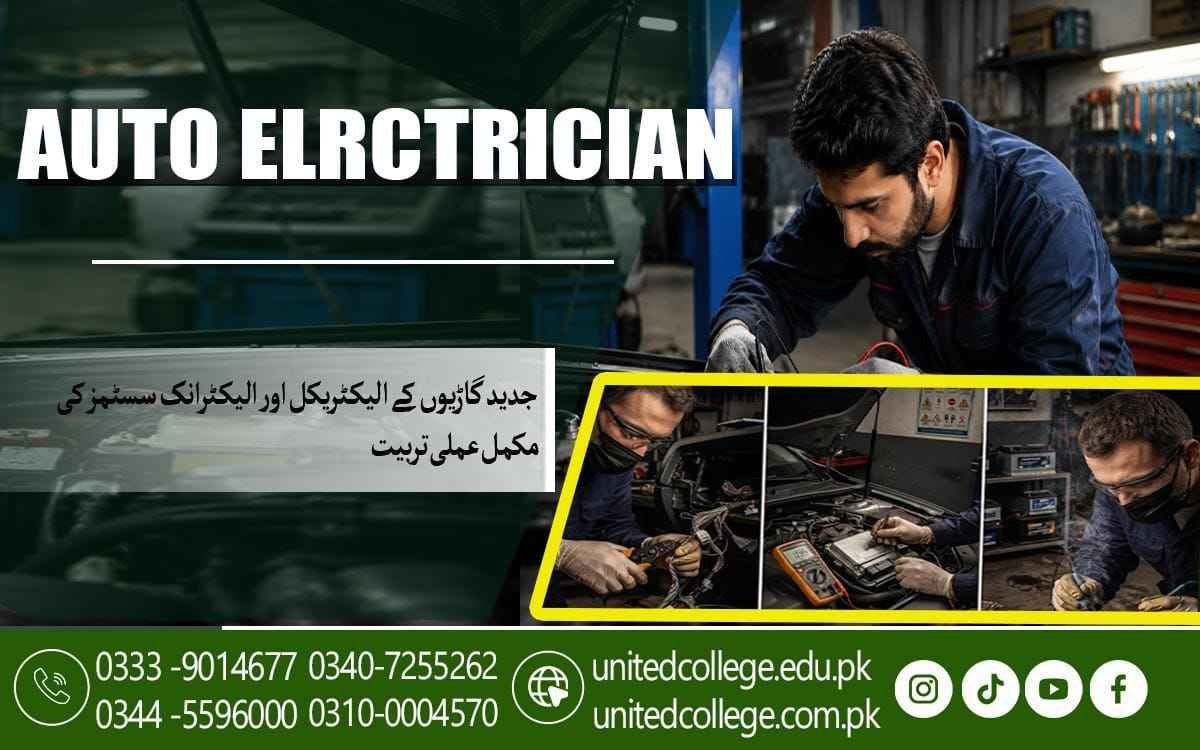

Auto Electrician Course in Balakot for Practical Repair Skills
Understanding How Vehicle Electrical Systems Work
A vehicle electrical system consists of several connected components that work together to keep the vehicle operating correctly. These include the battery, alternator, starter motor, wiring, fuses, relays, lights, switches, and electronic control units. Each component has a particular function, and a fault in one area can sometimes affect other parts of the vehicle. For example, a loose battery connection may prevent a car from starting, while a damaged wire may cause a light or dashboard feature to stop working.
Through an Auto Electrician Course in Balakot, beginners can learn what these components do and how electricity flows through vehicle circuits. Understanding how the parts relate is an important step toward accurate fault diagnosis. Instead of replacing components without checking the problem, a trained learner can begin examining the symptoms, testing connections, and identifying possible causes. This knowledge also helps students understand the difference between electrical faults and mechanical problems, which may produce similar symptoms but require different repair methods.
Learning to Test Car Batteries and Charging Systems
A weak battery is one of the most common reasons a vehicle struggles to start, especially after being parked for a long time or during periods of extreme weather. However, a battery that repeatedly loses charge does not always mean the battery itself is faulty. The charging system, electrical connections, or an accessory that continues using power may also be responsible. The Auto Electrician Course in Balakot helps learners understand car battery and charging system functions, including how a battery stores electrical energy, supplies power to the starter, and receives a charge from the alternator while the engine runs.
Students can learn about battery terminals, corrosion, loose connections, charging voltage, and suitable battery testing procedures. A multimeter can help measure voltage and support basic electrical checks when used correctly. Learners also need to understand that different battery types have different maintenance requirements and that modern vehicles may use battery monitoring systems. Through appropriate practical instruction, students can develop a systematic approach to battery problems rather than assuming that every starting issue requires a replacement battery. These skills are useful when diagnosing no-start complaints and investigating repeated battery discharge in everyday vehicles.
Exploring Starter Motors, Alternators, and Ignition Systems
When a driver turns the ignition key or presses the start button, several components must work together before the engine can run. The starter motor uses electrical power to turn the engine during starting, while the alternator generally supplies electrical power and recharges the battery after the engine starts. The ignition system, in petrol engines, produces the spark needed to ignite the air-fuel mixture. A fault in any of these systems can create different symptoms. A clicking sound may indicate a weak battery, poor connection, or starter-related issue, while a battery warning light may point towards a charging-system problem.
These signs are useful clues, but they do not prove that a particular component has failed. In automotive electrical training, learners can study the purpose of each component, understand common warning signs, and learn suitable testing methods. Starter motor and alternator repair knowledge also introduces students to electrical connections, solenoids, charging output, and component inspection. The exact diagnosis depends on the vehicle design and test results. By learning these principles through an Auto Electrician Course in Balakot, students can build a stronger understanding of starting and charging faults and prepare to investigate them more carefully in a workshop environment.
Developing Skills in Vehicle Wiring and Circuit Repair
Vehicle wiring connects electrical components and allows power and control signals to reach the places where they are needed. A damaged wire, loose connector, blown fuse, or faulty switch can interrupt this process and cause unexpected problems. For example, a vehicle's indicator may stop working because of a defective bulb, a damaged connection, a blown fuse, or a fault elsewhere in the circuit. Replacing parts without testing can waste time and money, so learning to follow a circuit and check its connections is an important technical skill. The Auto Electrician Course in Balakot helps learners develop car wiring repair skills and understand wires, connectors, terminals, switches, fuses, and relays used in vehicle electrical systems.
They can also study wiring diagrams, which use symbols and lines to show how components are connected. Reading these diagrams helps technicians understand the intended path of electrical current and identify possible points of failure. Vehicle wiring and troubleshooting require patience because some faults appear only when a wire moves, a connection becomes warm, or a component is operating under certain conditions. Careful inspection and appropriate testing methods help learners approach these problems logically and reduce the risk of causing further damage.
Repairing Headlights, Indicators, and Electrical Accessories
Imagine driving after sunset and discovering that one headlight has stopped working, or preparing to turn at a busy road when the indicator fails. These situations demonstrate why vehicle lighting and electrical accessories are important for visibility, communication, and road safety. An automobile electrical system powers headlights, rear lights, brake lights, indicators, dashboard illumination, horns, wipers, power windows, and many other features. When one of these stops working, the cause may be a failed bulb, damaged wiring, a faulty switch, a poor earth connection, or a problem with a fuse or relay.
During practical auto electrician training, learners can study how these accessories operate and how their circuits are arranged. They can learn to inspect bulbs and connectors, check relevant fuses, and use suitable test equipment to investigate electrical faults. Earth connections deserve particular attention because electricity must have a complete path through the circuit for many components to function correctly. A poor connection to the vehicle body can cause dim lights, intermittent operation, or unusual electrical behaviour. The Auto Electrician Course in Balakot can be a starting point for learners who want to understand these everyday repair situations and develop the ability to investigate them methodically under suitable supervision.
Understanding Sensors and Modern Vehicle Electronics
Today's vehicles use more electronic technology than older models, making automotive electrical knowledge increasingly important for people interested in vehicle repair. Depending on the vehicle, electronic systems may include engine sensors, electronic control units (ECUs), anti-lock braking systems, electronic fuel injection, parking sensors, and dashboard warning systems. A sensor measures a particular condition, such as temperature, engine speed, or oxygen levels, and sends information to a control system. The ECU uses information from various sensors to manage particular vehicle functions. If a sensor produces an incorrect signal or its wiring becomes damaged, the vehicle may display a warning light, run poorly, or store a diagnostic fault code.
However, a fault code does not automatically mean that the named sensor needs replacement; the wiring, power supply, connector, or another related component may be responsible. Learners exploring modern vehicle electrical systems can benefit from understanding basic electronic principles, reading wiring diagrams, and learning how diagnostic tools communicate with vehicle computers. They can also become familiar with the limitations of scan tools and the need to confirm findings through appropriate tests. As automotive technology continues to develop, ongoing learning helps technicians keep their knowledge relevant and understand the electrical systems found in different vehicle models.
Using Diagnostic Tools to Find Electrical Faults
Replacing a part without confirming the cause of a problem can lead to unnecessary expense and may leave the original fault unresolved. A more reliable approach is to collect information, inspect the affected system, and perform suitable tests. The Auto Electrician Course in Balakot helps learners understand how automotive diagnostic tools support accurate fault detection. A digital multimeter is commonly used to measure voltage, resistance, and current within its rated limits and according to the correct procedure. Test lights can help with certain basic circuit checks, while an automotive scan tool can retrieve diagnostic trouble codes from compatible electronic control modules.
During auto electrician training in Balakot, learners should become familiar with the purpose of these tools and understand when each one is appropriate. They also need to learn how to interpret results rather than relying on a single reading. For example, a battery may show an acceptable voltage when the engine is off but fail under a starting load. Similarly, a stored fault code may identify a system where a problem has occurred without revealing the exact failed component. A careful technician compares symptoms with test results, checks relevant wiring and connections, and follows the vehicle manufacturer's recommended procedures whenever available.
Following Safe Practices During Automotive Electrical Repairs
Electrical repair work requires more than technical knowledge because incorrect handling can damage vehicle components or expose the person performing the repair to injury. Vehicle batteries can deliver very high current, and accidental short circuits may produce sparks, intense heat, or damaged wiring. Some vehicles also contain airbag systems, high-voltage hybrid components, and electric vehicle battery packs that require specialised training and safety procedures. Beginners should never assume that every vehicle electrical system is safe to handle using the same method. A proper learning environment should emphasise identifying hazards, selecting suitable tools, protecting the vehicle from accidental damage, and following the manufacturer's instructions.
Learners need to understand when the ignition must be switched off, when the battery should be isolated, and why certain electronic systems require specific shutdown or reconnection procedures. When using a multimeter, students should select the correct measurement mode and input terminals before testing a circuit. They should avoid probing unknown high-voltage systems or working on exposed conductors without the required competence and precautions. The Auto Electrician Course in Balakot, offered by United College of Technology, provides a context for learners to explore this technical field, while the quality of their practical preparation will depend on the instruction, supervision, and safety procedures available.
Building Practical Skills and Exploring Auto Electrician Career Paths
Learning about electrical components is valuable, but becoming confident with vehicle faults also requires practical experience. A student may understand how an alternator works in theory yet need repeated practice to inspect its connections, measure charging output, and distinguish an alternator fault from a weak battery or damaged cable. Practical exercises can help learners connect classroom knowledge with real repair situations. Depending on the training provided, these exercises may involve identifying components, studying wiring diagrams, testing circuits, checking fuses, practising battery measurements, and investigating common electrical symptoms.
United College of Technology (UCT) offers the Auto Electrician Course for people interested in developing knowledge of automotive electrical systems, and prospective students should confirm the current syllabus, practical arrangements, entry requirements, and course details directly with the institution. For learners in Balakot and nearby areas, automotive electrical training may provide a starting point for exploring work in vehicle repair workshops, auto electrical service centres, vehicle maintenance businesses, or related technical settings. Some learners may eventually consider independent repair services, but that requires appropriate experience, tools, business planning, and an understanding of customer needs
Frequently Asked Questions (FAQs)
An Auto Electrician Course in Balakot teaches students how vehicle electrical systems work, including batteries, wiring, starter motors, alternators, lights, and electronic components.
Beginners, students, fresh learners, and individuals interested in automotive electrical repair can explore this course. Contact United College of Technology (UCT) to confirm the current admission requirements.
You can learn about battery testing, vehicle wiring, electrical fault diagnosis, starter motor and alternator systems, lighting circuits, and the use of diagnostic tools, depending on the course syllabus.
Modern vehicles rely on electrical and electronic systems for starting, lighting, charging, and many other functions. Understanding these systems helps technicians identify faults and perform appropriate repairs.
Automotive electrical training may cover sensors, electronic control units (ECUs), and diagnostic methods. Contact UCT to confirm which modern vehicle technologies are included in its current syllabus.
Admission Open: Start Your Professional Journey Today!
Join United College of Technology and build a career with practical training, recognized certifications, and Gulf job support. Seats are limited.
Apply Now via WhatsAppContact Information
- Address: Rawalpindi: F-272 Main New Katarian Stop, Old IJP Road | Lahore Campus: Lahore, Pakistan
- Phone/WhatsApp: 0340-7255262 / 0333-9014677 / 0301-5044340 / 0310-0004570 / 051-8770756
- Website: unitedcollege.edu.pk
















Leave a Comment