


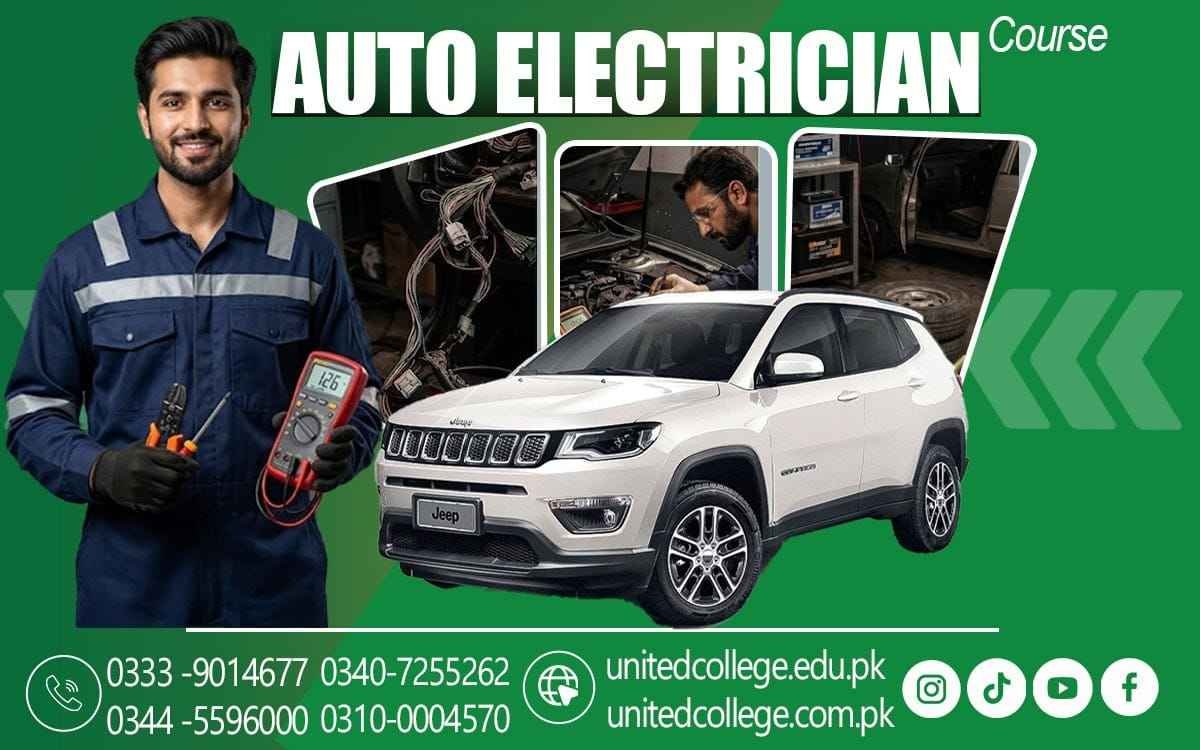

Auto Electrician Course in Lower Dir for Automotive Knowledge
Understanding the Fundamentals of Automotive Electrical Systems
Automotive electrical systems are essential for the reliable operation of modern vehicles. These systems distribute electrical power to different components and support functions such as starting the engine, operating lights, charging the battery, and powering electronic accessories. The Auto Electrician Course in Lower Dir introduces learners to the basic principles behind these systems.
Students can learn about voltage, current, resistance, conductors, insulators, and electrical circuits. Understanding these concepts makes it easier to recognize how electricity moves through vehicle wiring and reaches different components. This knowledge also helps learners understand why correct connections and suitable protection are important for safe vehicle operation.
A strong foundation in automotive electricity can support more advanced learning. When students understand the basic principles, they can better follow wiring diagrams, inspect electrical connections, and identify possible reasons for common vehicle problems.
Learning About Vehicle Wiring and Circuit Connections
Vehicle wiring connects electrical components and allows them to function as part of a complete system. Damaged wires, loose connections, corroded terminals, and faulty connectors can interrupt electrical power and affect vehicle performance. Learning about wiring is therefore an important part of automotive electrical education.
During training, students can study wiring harnesses, fuses, relays, switches, connectors, and circuit diagrams. They can learn how electrical power travels from a battery to different components and how protective devices help prevent damage. Reading wiring diagrams also helps learners understand circuit layouts and follow connections during inspection.
The Auto Electrician Course in Lower Dir can help students develop a better understanding of automotive wiring and circuit testing. These skills are useful when investigating problems with headlights, indicators, dashboard displays, power windows, and other electrical features.
Understanding Battery Testing and Charging Systems
The battery is one of the most important components of a vehicle's electrical system. It supplies power to start the engine and supports electrical functions when required. A weak battery, dirty terminals, or poor connections can cause starting difficulties and other electrical problems.
Students learn why battery inspection is important and how battery condition affects vehicle performance. Training may cover checking terminals, examining battery cables, measuring voltage with suitable testing equipment, and understanding safe charging procedures. Learners can also explore the warning signs of a weak battery, including slow engine cranking and dim lights.
Battery charging systems are another important topic. Students can study how the alternator produces electrical energy while the engine runs and helps maintain battery charge. Understanding the relationship between the battery and alternator can help learners recognize common charging problems and develop a systematic approach to inspection.
Studying Starter Motors and Alternator Functions
Starter motors and alternators perform different but closely connected roles in a vehicle. The starter motor uses electrical power to turn the engine during starting, while the alternator generates electricity to support the vehicle's electrical needs and recharge the battery during operation.
The Auto Electrician Course in Lower Dir introduces learners to the basic operation of these components. Students can explore their main parts, electrical connections, and common signs of malfunction. For example, clicking sounds during starting, slow cranking, or repeated starting difficulties may indicate a problem that requires further investigation.
Learners can also study charging system warning lights and possible alternator-related faults. Understanding these components helps students recognize the importance of proper testing before replacing parts. Careful diagnosis can reduce unnecessary repairs and support more effective vehicle maintenance.
Exploring Vehicle Lighting and Electrical Accessories
Lighting systems are important for visibility and road safety. Headlights, rear lights, brake lights, indicators, and hazard lights allow drivers to communicate with other road users and see clearly in different conditions. Electrical faults in these systems can create safety risks and affect vehicle operation.
Students can learn about the circuits and components that control vehicle lighting. They may study switches, fuses, relays, bulbs, connectors, and wiring connections. Learning how these parts work together can help learners understand common problems such as flickering lights, non-working indicators, and failed brake lights.
Modern vehicles also include electrical accessories such as dashboard displays, horns, power windows, central locking systems, and infotainment equipment. Studying these features introduces learners to the wider role of automotive electricity and prepares them to explore more advanced vehicle technologies.
Developing Automotive Electrical Fault Diagnosis Skills
Fault diagnosis is an essential part of an auto electrician's work. Instead of replacing components immediately, technicians inspect the system, test electrical connections, and identify possible causes of the problem. A careful process can help save time and reduce unnecessary expenses.
The Auto Electrician Course in Lower Dir can introduce students to diagnostic methods and basic electrical testing tools. These may include digital multimeters, test lights, and other suitable equipment used to check voltage, continuity, and electrical connections. Learners can also study how to follow wiring diagrams and compare test results with expected values.
Practical troubleshooting can help students understand common faults involving batteries, starter motors, alternators, fuses, lights, and wiring. By developing a step-by-step approach, learners can improve their problem-solving abilities and build confidence in handling automotive electrical systems under proper supervision.
Following Workshop Safety and Maintenance Procedures
Safety is essential whenever someone works with vehicle electrical components. Batteries can deliver high current, and incorrect connections may cause sparks, short circuits, burns, or damage to electrical equipment. Following appropriate workshop procedures helps reduce these risks.
Students can learn about selecting suitable tools, inspecting equipment before use, protecting electrical connections, and following battery handling guidelines. They can also understand why the correct procedure should be followed before disconnecting or reconnecting electrical components. Special care is required when working around sensitive electronic systems and modern vehicle control units.
Preventive maintenance is another important topic. Checking wiring condition, inspecting terminals, identifying corrosion, and confirming secure connections can help reduce the likelihood of electrical problems. Good maintenance habits also encourage careful working practices and improve the reliability of vehicle electrical systems.
Building Future Opportunities in Automotive Electrical Work
The automotive industry requires people who understand vehicle maintenance and electrical systems. Learners who complete suitable auto electrician training and gain practical experience may explore opportunities in automobile workshops, vehicle service centers, fleet maintenance departments, and automotive electrical businesses.
The Auto Electrician Course in Lower Dir can provide a starting point for students who want to develop technical knowledge in this field. Career progress depends on practical ability, further learning, workplace experience, and the availability of opportunities. Students may also benefit from learning about diagnostic equipment and electronic systems used in newer vehicles.
As automotive technology continues to develop, electrical knowledge is becoming increasingly relevant. Hybrid and electric vehicles, advanced sensors, electronic control units, and computer-based diagnostic systems require additional specialized training. Building a strong foundation in automotive electricity can help learners prepare for continued professional development.
Frequently Asked Questions (FAQs)
The Auto Electrician Course in Lower Dir introduces students to vehicle electrical systems, wiring, batteries, starter motors, alternators, lighting, and basic electrical fault diagnosis.
Students learn about automotive circuits, battery testing, wiring connections, electrical accessories, charging systems, and methods for identifying common electrical problems.
Students interested in automotive technology and vehicle electrical work can consider this course. Admission requirements depend on the training institute.
Modern vehicles depend on electrical systems for starting, lighting, charging, and electronic functions. Training helps learners understand these systems and their maintenance requirements.
Auto electricians may use digital multimeters, test lights, wiring diagrams, battery testers, and other diagnostic tools to inspect electrical circuits and components.
Admission Open: Start Your Professional Journey Today!
Join United College of Technology and build a career with practical training, recognized certifications, and Gulf job support. Seats are limited.
Apply Now via WhatsAppContact Information
- Address: Rawalpindi: F-272 Main New Katarian Stop, Old IJP Road | Lahore Campus: Lahore, Pakistan
- Phone/WhatsApp: 0340-7255262 / 0333-9014677 / 0301-5044340 / 0310-0004570 / 051-8770756
- Website: unitedcollege.edu.pk
















Leave a Comment