


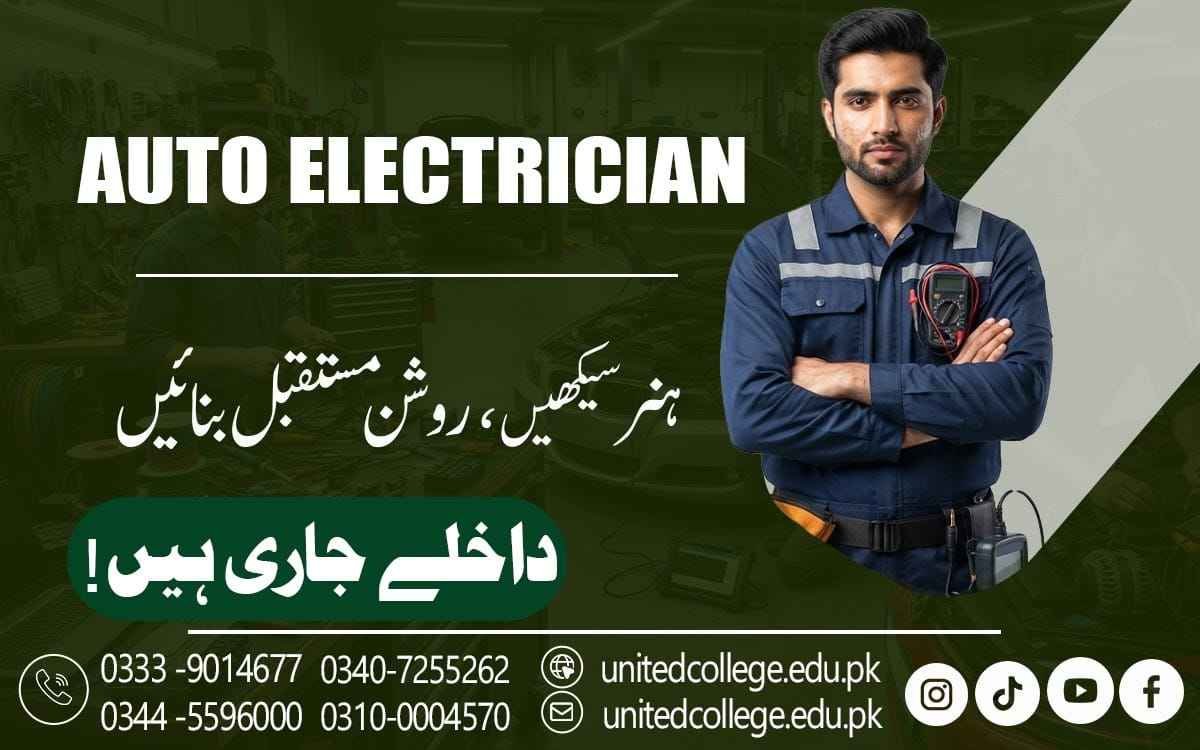

Auto Electrician Course in Sibi with Hands-On Technical Learning
Build Modern Automotive Knowledge Through Practical Electrical Skills
A vehicle that refuses to start, headlights that suddenly stop working, or a battery that repeatedly loses power can indicate an electrical problem. Finding the actual cause requires more than basic mechanical knowledge. It demands an understanding of circuits, wiring connections, electrical components, and testing methods. The Auto Electrician Course in Sibi offers a learning path for people who want to understand these systems and develop useful automotive repair skills.
As vehicles increasingly rely on electrical components and electronic controls, learning how these parts function together has become an important part of automotive technical education. Beginners, students, fresh learners, and job seekers can explore this field to improve their technical knowledge. By studying electrical principles and common vehicle faults, learners can begin developing the foundation needed to understand automotive electrical maintenance and troubleshooting.
Discover the Electrical Systems That Keep Vehicles Running
Modern vehicles contain several electrical systems that support engine starting, lighting, battery charging, and the operation of electronic components. Each system has a specific purpose, and a fault in one area can sometimes affect other functions. Through the Auto Electrician Course in Sibi, learners can develop an understanding of how these systems operate and how electrical power reaches different vehicle components.
A useful Automotive Electrical Course introduces basic concepts such as voltage, current, resistance, circuit connections, and electrical protection. These concepts help learners understand why a component may stop working even when it appears undamaged. Vehicle Electrical System Training can also introduce wiring diagrams and common electrical symbols, helping students recognize connections and follow circuits more carefully.
Explore Battery Performance, Starter Operation, and Charging Faults
A vehicle's battery, starter motor, and alternator perform different but closely connected functions. The battery supplies electrical power, the starter helps turn the engine during startup, and the alternator generates electrical power while the engine operates. Problems in any of these areas can cause starting difficulties, charging warnings, or other electrical symptoms.
Learners can also study the purpose of starter and alternator components and understand the symptoms associated with possible faults. This part of Auto Electrical Training encourages careful inspection instead of guessing which part needs replacement. Understanding these systems helps beginners develop a more organized approach to common vehicle electrical concerns.
Master Vehicle Wiring, Lighting Circuits, and Ignition Components
Wiring connects different electrical parts and allows power to reach the components that depend on it. Damaged insulation, loose terminals, blown fuses, or broken wires may interrupt a circuit and affect vehicle operation. Vehicle Wiring Training helps learners understand the purpose of wires, connectors, switches, and circuit protection devices.
Learners can examine how these circuits work and how technicians check their connections when a light fails. Ignition systems also deserve attention because they play an important role in starting and running an engine. Depending on the vehicle design, sensors and electronic controls may contribute to engine operation as well. Studying these components can strengthen the Auto Electrician Course in Sibi and help learners understand the relationship between individual electrical parts and the vehicle as a whole.
Use Diagnostic Equipment to Trace Difficult Electrical Problems
Identifying a fault accurately is an important part of automotive electrical work. Replacing a component without testing it first may waste money and leave the original problem unresolved. Car Electrical Troubleshooting involves observing symptoms, checking relevant connections, testing circuits, and examining the results. A digital multimeter can help measure voltage, resistance, and continuity when used according to the correct procedure.
Other suitable automotive test equipment may assist with specific checks. Through Automotive Electrical Fault Diagnosis, learners can understand how to narrow down possible causes and distinguish between a faulty component and a problem in its wiring or power supply. For example, a non-working headlight might have a damaged bulb, a blown fuse, a loose connector, or a wiring fault.
Gain Confidence Through Practical Auto Electrician Training
Technical knowledge becomes more useful when learners understand how to apply it to real components and workshop situations. A practical Auto Electrician Course can help students become familiar with common tools, wiring layouts, battery connections, lighting circuits, and basic testing procedures. Instead of simply memorizing component names, learners can study what each part does and how to inspect it safely.
Practical exercises may include identifying electrical components, examining damaged connections, tracing simple circuits, and learning how to interpret test readings, depending on the available training facilities and course arrangements. Safety must remain a priority throughout this process. Learners should understand when power needs to be disconnected, how to avoid accidental short circuits, and why the correct tools and testing methods matter.
Start Technical Learning with United College of Technology in Sibi
The Auto Electrician Course in Sibi, offered by United College of Technology, is relevant to people who want to explore automotive electrical work and strengthen their technical understanding. Beginners can use this learning path to become familiar with the basic principles behind vehicle wiring, battery operation, starting systems, lighting, and fault detection. Students and fresh learners may find it useful when deciding whether automotive repair matches their interests, while job seekers can develop knowledge that supports further practical training.
People who already have some experience with mechanical repairs may also benefit from understanding the electrical side of vehicle maintenance. Before enrolling, interested learners should confirm the current course details and practical training arrangements directly with the institute. Building technical ability requires regular practice, attention to safety, and a willingness to understand why a fault occurs rather than relying on guesswork.
Apply Automotive Electrical Knowledge in Workshops and Repair Settings
Automotive electrical knowledge can be useful in vehicle workshops, auto repair centers, and other automotive service environments. Technicians may need to inspect lighting faults, check battery connections, investigate starting problems, or identify damaged wiring. A person with a foundation in automotive electrical systems can better understand these tasks and recognize when a problem requires additional testing or specialist support.
The Car Electrician Course concept also relates to the broader skills needed to inspect vehicle circuits and maintain electrical components. However, working independently on complex systems requires sufficient hands-on experience, appropriate technical knowledge, and an understanding of the specific vehicle being serviced. Training alone does not guarantee employment, and workplace responsibilities depend on practical ability and employer requirements.
Turn Your Interest in Vehicle Technology into Lasting Technical Knowledge
Learning automotive electrical work offers an opportunity to understand the systems that support everyday vehicle operation. From tracing a damaged wire to checking a charging system, each task requires observation, technical understanding, and a careful testing process. The Auto Electrician Course in Sibi can provide a starting point for learners who want to explore this field and develop a foundation in vehicle electrical maintenance.
By focusing on circuit knowledge, component functions, diagnostic methods, and safe working practices, students can build skills that support further learning in automotive repair. The training offered by United College of Technology gives interested learners a route to explore this technical subject while understanding the importance of practical experience.
Frequently Asked Questions (FAQs)
Service manuals provide vehicle-specific information about components, wiring layouts, testing values, and repair procedures. Learning to use them helps technicians follow accurate instructions instead of relying on assumptions.
When several accessories fail at once, the issue may involve a shared fuse, power supply, ground connection, or another common circuit component. Proper testing helps narrow down the possible cause.
A poor ground connection may cause dim lights, intermittent operation, or unusual electrical behavior. Technicians can inspect connection points for corrosion or looseness and perform suitable electrical tests to investigate the problem.
Electrical resistance affects how easily current flows through a circuit. Understanding resistance helps learners interpret test readings, recognize possible connection problems, and understand how electrical components respond under different conditions.
The technician should identify the vehicle model, review relevant safety instructions, locate the correct wiring information, and understand the system being inspected. This preparation reduces guesswork and supports safer diagnosis.
Routine inspection can reveal loose terminals, damaged wiring insulation, corrosion, and worn connections before they develop into more serious issues. Timely checks also help maintain the reliability of electrical components.
Admission Open: Start Your Professional Journey Today!
Join United College of Technology and build a career with practical training, recognized certifications, and Gulf job support. Seats are limited.
Apply Now via WhatsAppContact Information
- Address: Rawalpindi: F-272 Main New Katarian Stop, Old IJP Road | Lahore Campus: Lahore, Pakistan
- Phone/WhatsApp: 0340-7255262 / 0333-9014677 / 0301-5044340 / 0310-0004570 / 051-8770756
- Website: unitedcollege.edu.pk
















Leave a Comment