


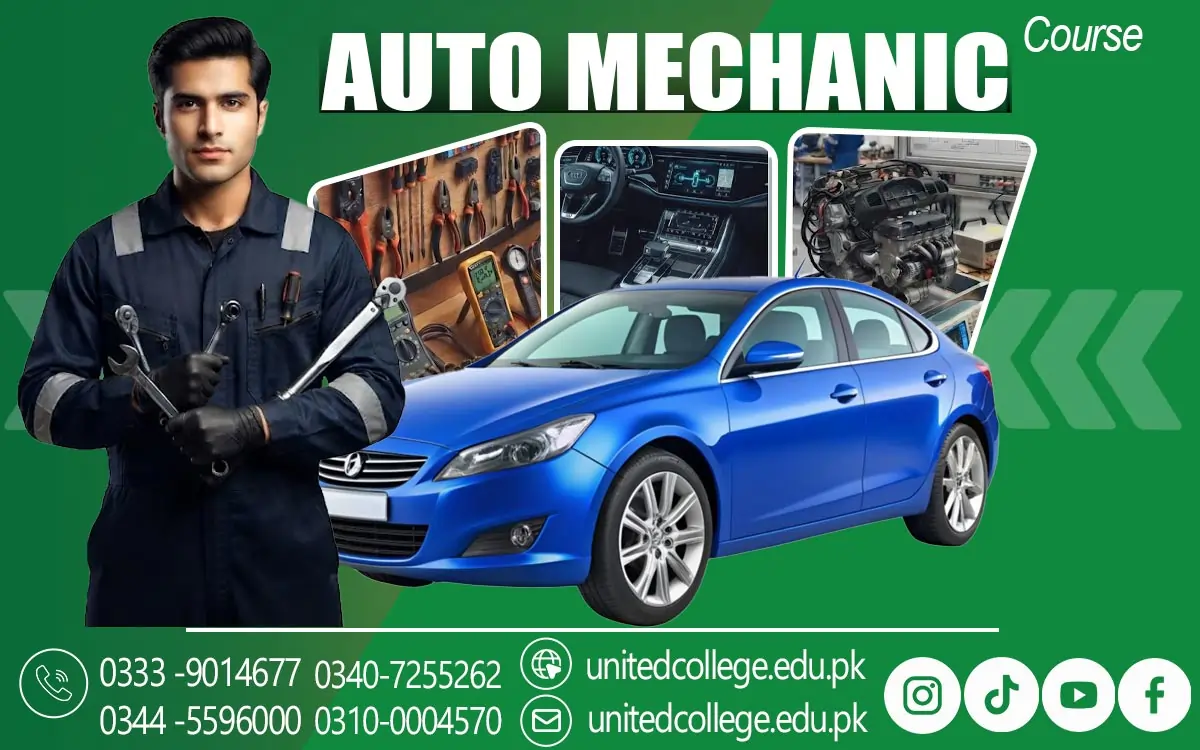

Auto Mechanic Course in Toba Tek Singh for Practical Auto Career
Modern Vehicles Need Mechanics With Practical Skills
A car can stop working at the most inconvenient time, whether it happens before an important journey, during daily travel, or when someone is already running late. Sometimes the problem is easy to notice, while other times a strange sound, weak performance, overheating, or a starting issue may require careful inspection. Modern vehicles have become more advanced, with mechanical, electrical, and electronic systems working together. Because of this, an auto mechanic needs more than basic knowledge of engines.
The Auto Mechanic Course in Toba Tek Singh offered by United College of Technology can help beginners understand different vehicle systems and develop practical skills related to inspection, maintenance, servicing, repair, and troubleshooting. This type of training can be useful for students and job seekers who enjoy working with vehicles and want to develop a technical skill that can be improved through practice and real workshop experience.
Turn Your Interest in Cars Into a Useful Career Skill
Many people have a natural interest in cars, engines, and vehicle repair, but interest alone is not enough to work confidently in a professional workshop. Structured automobile mechanic training can help learners understand vehicles in a more organized way and gradually build their knowledge. Students can learn about important vehicle components, maintenance procedures, common faults, and different repair practices while receiving guidance during their learning process. The Auto Mechanic Course can be particularly useful for beginners because they can start with understandable concepts and gradually develop more advanced car repair skills.
At United College of Technology, learners can focus on practical and career-oriented automotive training rather than depending only on theoretical information. For someone in Toba Tek Singh who wants to explore a technical career, learning automobile repair can provide a foundation that may later be strengthened through workplace experience, regular practice, and continued automotive learning.
Hands-On Workshop Training Builds Real Confidence
Automobile repair is a practical profession, so students need opportunities to understand how knowledge is applied in real workshop situations. Reading about an engine, brake system, or electrical component is useful, but handling tools and inspecting actual vehicle parts can make the learning experience much clearer. Through practical mechanic training, learners can become familiar with commonly used workshop tools, equipment, inspection procedures, and servicing activities. They can observe how experienced instructors approach different tasks and gradually become more comfortable performing practical work under proper guidance.
This kind of workshop training can help beginners overcome the hesitation that often comes with working on a vehicle for the first time. Regular hands-on practice can improve confidence, attention to detail, and familiarity with repair procedures. For students taking the Auto Mechanic Course in Toba Tek Singh, practical exposure can therefore be an important part of preparing for the realities of an automobile workshop, where mechanics need to work carefully, responsibly, and with a problem-solving mindset.
Learn How Engines and Major Vehicle Systems Work Together
The engine is a central part of a vehicle, but it does not work alone. A mechanic needs to understand how the engine connects with other systems that help the vehicle move, stop, turn, and operate smoothly. Engine repair training can introduce students to important engine components, common maintenance needs, and signs that may indicate a problem. Learners can also develop an understanding of brakes, clutch, suspension, steering, and transmission systems. The brake system is important for safe stopping, while steering and suspension contribute to control and stability.
The clutch and transmission help manage and transfer engine power to the wheels. Learning these areas through an auto repair course can help students develop a broader understanding of vehicle maintenance instead of focusing on only one part. As learners gain more practical experience, they can become better prepared to inspect different vehicle systems and understand how a problem in one area may sometimes affect the overall performance of the vehicle.
Learn to Troubleshoot Instead of Replacing Parts Without Checking
A vehicle problem does not always have an obvious cause. If a car fails to start, for example, the issue could be related to the battery, starter, wiring, fuel system, or another component. Similarly, an unusual engine sound may have several possible causes, which means an auto mechanic needs to inspect the vehicle carefully before deciding what should be repaired. Engine troubleshooting and vehicle fault identification are therefore important parts of an auto mechanic course, helping learners understand how to identify problems, check different vehicle systems, and perform suitable repairs with greater confidence.
Students can learn to observe symptoms, inspect relevant components, consider possible causes, and use suitable tools or testing methods to investigate a problem. This teaches learners to approach repairs logically rather than simply replacing parts based on assumptions. Developing good diagnostic habits can save time and reduce unnecessary repairs while helping mechanics provide more responsible service. As students gain more experience through vehicle repair training, they can gradually improve their ability to recognize common problems and decide which areas need closer attention.
Electrical Knowledge Is Becoming Important in Modern Auto Repair
Today's vehicles contain many electrical and electronic components, so modern mechanics increasingly need to understand how these systems affect vehicle operation. Batteries, alternators, starters, lights, wiring, sensors, and electronic controls can all be connected to different vehicle functions. A problem in an electrical system may sometimes cause symptoms that appear to be mechanical, making proper inspection especially important. Through automotive training, learners can develop an understanding of automotive electrical systems and learn why electrical faults need to be approached carefully.
Students do not need to master every advanced electronic technology at the beginning; instead, they can build a foundation and continue developing their knowledge as they gain experience. Understanding both mechanical and electrical systems can help an aspiring automotive technician become more adaptable in a changing industry. This broader knowledge can also make future workshop tasks easier to understand because modern vehicle repair often involves more than traditional engine and mechanical work.
Safe Working Habits Make a Mechanic More Professional
Technical ability is important, but a professional mechanic also needs to understand workshop safety and responsible working practices. Automobile workshops can involve heavy vehicle components, moving parts, electrical systems, oils, tools, and different types of equipment. If tools are used incorrectly or repair procedures are rushed, unnecessary risks can occur. During training, learners can develop habits such as keeping the work area organized, handling tools correctly, inspecting components carefully, and following appropriate safety procedures. Vehicle maintenance also requires patience because rushing a servicing or repair task can lead to mistakes.
United College of Technology can help learners understand the importance of combining practical automotive skills with careful working habits and instructor guidance. Developing these habits early can make students more comfortable in professional workshop environments and help them understand that quality automobile repair is not only about finding a fault but also about completing the work safely and responsibly.
Build Your Automotive Career Through Training and Experience
The Auto Mechanic Course in Toba Tek Singh can provide a foundation for learners who want to enter the automotive field, but career development normally continues through practical experience. After gaining suitable training and improving their abilities, learners may explore roles such as Auto Mechanic, Automotive Technician, Car Repair Technician, Vehicle Maintenance Technician, Workshop Assistant, or Service Technician. Depending on their skills and workplace requirements, they may seek opportunities in automobile workshops, garages, service centers, dealerships, or maintenance-related businesses.
Beginners may start with basic responsibilities and gradually take on more demanding work as their confidence and practical knowledge improve. Experience can teach important lessons about handling different vehicle models, communicating with customers, managing workshop tasks, and solving unexpected problems. Continued learning is also important because automotive technology keeps developing. Someone who regularly improves their skills, gains practical experience, and learns new repair methods can gradually become a more capable professional and create better opportunities for long-term growth.
Take the First Step Toward a Skilled Mechanic Career
Choosing to learn automobile repair can be a practical decision for students, beginners, and job seekers who enjoy hands-on work and have an interest in vehicles. The Auto Mechanic Course in Toba Tek Singh at United College of Technology can help learners develop knowledge and practical understanding of engine repair, vehicle servicing, maintenance, brakes, clutch, steering, suspension, transmission, electrical systems, troubleshooting, tools, and workshop safety. However, completing training should be seen as the beginning of professional development rather than the end.
A learner can become stronger by practicing regularly, gaining workplace experience, learning from experienced mechanics, and keeping up with changes in vehicle technology. With sufficient experience, an automotive professional may explore opportunities in different cities, take on greater workshop responsibilities, or eventually consider independent repair work. If you have a genuine interest in cars and want to turn that interest into a practical profession, structured automotive training can give you the foundation to begin building your skills and move gradually toward a confident and professional mechanic career.
Frequently Asked Questions (FAQs)
The Auto Mechanic Course in Toba Tek Singh is practical automotive training that helps learners understand vehicle repair, maintenance, servicing, troubleshooting, and workshop practices.
Students, beginners, job seekers, and individuals interested in automobile repair can consider joining the course and developing practical automotive skills.
Students can learn about engine maintenance, brakes, clutch, steering, suspension, transmission, vehicle inspection, electrical systems, troubleshooting, and workshop tools.
Yes, practical learning is an important part of auto mechanic training because learners need hands-on experience to understand how vehicle repair and maintenance tasks are performed.
After gaining suitable training and experience, learners may explore opportunities in automobile workshops, garages, service centers, dealerships, and vehicle maintenance businesses.
Admission Open: Start Your Professional Journey Today!
Join United College of Technology and build a career with practical training, recognized certifications, and Gulf job support. Seats are limited.
Apply Now via WhatsAppContact Information
- Address: Rawalpindi: F-272 Main New Katarian Stop, Old IJP Road | Lahore Campus: Lahore, Pakistan
- Phone/WhatsApp: 0340-7255262 / 0333-9014677 / 0301-5044340 / 0310-0004570 / 051-8770756
- Website: unitedcollege.edu.pk
















Leave a Comment