


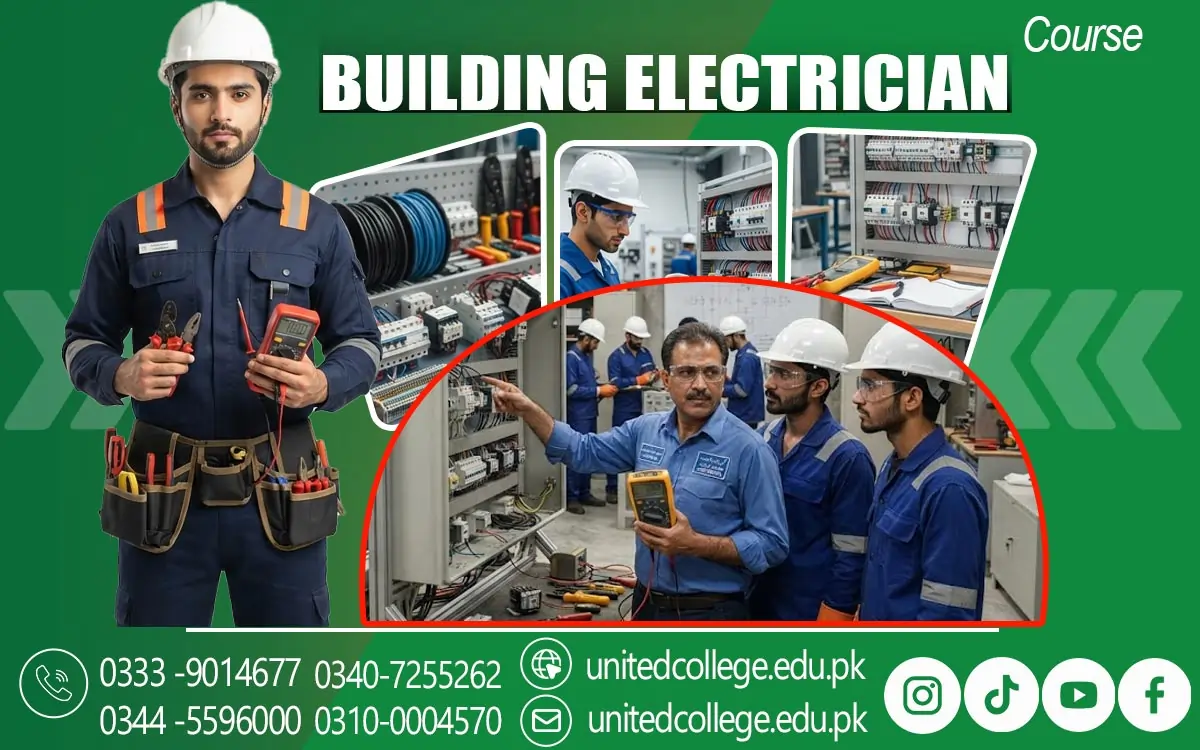

Building Electrician Course in Gujrat for Technical Excellence
Building Electrician Course in Gujrat for Practical Electrical Expertise
The electrical sector has become one of the fastest-growing technical industries, creating excellent career opportunities for trained professionals. The Building Electrician Course in Gujrat is designed for individuals who want to gain practical skills and technical knowledge that can be applied in residential, commercial, and industrial environments. Rather than focusing only on theory, the course emphasizes practical learning that reflects the demands of today's electrical industry.
Students are introduced to modern installation methods, electrical planning, testing procedures, maintenance techniques, and workplace safety through structured classroom sessions and supervised workshop activities. Every stage of the training is planned to help learners understand not only how electrical systems operate but also why professional standards are important in every project.
Whether your objective is to secure a technical job, improve your existing abilities, or establish your own electrical services business, this course provides the practical foundation needed to achieve those goals. By the end of the program, students are better prepared to work with confidence and contribute effectively to professional electrical projects.
Building the Right Mindset for a Successful Electrical Career
Success in the electrical profession begins with the right attitude toward learning, responsibility, and continuous improvement. The Building Electrician Course in Gujrat encourages students to develop a professional mindset before they begin working with electrical systems. Learners understand that becoming a skilled electrician requires patience, discipline, technical accuracy, and a commitment to following industry standards in every task.
Throughout the course, students are encouraged to approach every practical assignment as if they were working on a real construction project. They learn the importance of planning their work carefully, using the correct tools, maintaining organized workspaces, and completing every installation with attention to detail. These habits not only improve technical performance but also help build trust with employers and clients.
Developing a professional mindset also means being ready to adapt to new technologies and changing industry requirements. As electrical systems continue to evolve, electricians who are willing to learn and upgrade their skills remain competitive in the job market. This course helps students build confidence, improve problem-solving abilities, and prepare for long-term success in the electrical industry.
How Modern Buildings Depend on Smart Electrical Infrastructure
Today's buildings rely on advanced electrical infrastructure to support lighting, power distribution, communication systems, safety equipment, and energy-efficient technologies. Understanding how these systems work together is an essential part of becoming a professional building electrician. This course introduces students to the complete electrical framework that supports modern residential and commercial construction.
Students explore the role of distribution boards, circuit protection devices, electrical panels, earthing systems, wiring networks, switches, sockets, and lighting arrangements within different types of buildings. They also learn why proper electrical planning is necessary to ensure a reliable power supply while protecting equipment from overloads and electrical faults.
Practical demonstrations allow learners to examine electrical layouts and identify how each component contributes to the overall performance of a building. By connecting theoretical knowledge with real electrical installations, students develop a deeper understanding of modern electrical infrastructure and become better prepared for practical workshop activities and professional fieldwork.
Planning Electrical Layouts Before Installation Begins
Every successful electrical project starts with careful planning rather than immediately beginning installation work. During the Building Electrician Course in Gujrat, students learn how professional electricians prepare electrical layouts that ensure safe power distribution, efficient cable routing, and convenient access to electrical equipment. Proper planning helps reduce installation mistakes and improves the overall quality of electrical systems.
The course teaches learners how to study building drawings, determine the location of switches, sockets, lighting fixtures, distribution boards, and electrical panels before any wiring begins. Students also understand how electrical loads are distributed across different circuits to avoid unnecessary pressure on the electrical system and maintain consistent performance throughout the building.
Practical planning exercises help students organize installation materials, calculate cable requirements, and prepare structured wiring layouts for different construction projects. These activities improve technical accuracy and teach learners how professional electricians complete projects efficiently while following recognized installation standards.
Turning Workshop Practice into Professional Experience
Workshop training provides students with the opportunity to transform classroom knowledge into practical skills that can be applied in real working environments. The Building Electrician Course in Gujrat includes extensive workshop sessions where learners perform electrical tasks using professional tools, wiring accessories, testing instruments, and installation equipment commonly found on construction sites.
Students participate in practical activities such as conduit bending, cable installation, switchboard assembly, lighting connections, distribution board wiring, earthing installation, and electrical panel setup. Every exercise is completed under instructor supervision, allowing students to improve their techniques while receiving guidance on professional working methods and quality standards.
Regular workshop practice develops confidence, improves speed, and strengthens technical abilities through continuous hands-on learning. By working on multiple installation projects, students become comfortable handling different electrical tasks independently and gain the practical experience needed to perform confidently after completing the course.
Improving System Performance Through Accurate Electrical Work
The performance of any electrical system depends on the quality of its installation and the precision of every connection. During the Building Electrician Course in Gujrat, students learn that even small errors in wiring, cable termination, or equipment installation can affect the efficiency, safety, and reliability of an entire electrical network. This section of the course focuses on developing careful working methods that produce high-quality results.
Learners are trained to perform electrical tasks with attention to detail by following proper installation procedures, checking electrical connections, selecting suitable materials, and inspecting completed work before energizing a system. They also understand the importance of balanced electrical loads, secure cable routing, and correctly installed protective devices in maintaining stable electrical performance.
Practical assignments encourage students to evaluate their own work and identify areas where improvements can be made. Through repeated practice and instructor feedback, they develop the ability to complete installations that operate efficiently while reducing future maintenance requirements. These professional habits help graduates deliver reliable electrical services in residential, commercial, and industrial projects.
Working Efficiently with Electrical Equipment and Protective Devices
Professional electricians work with a wide variety of electrical equipment every day, making it essential to understand the correct purpose and operation of each component. This course introduces students to modern electrical devices used in building installations and explains how they contribute to the safety and performance of electrical systems. Learners gain practical knowledge that prepares them to work confidently with industry-standard equipment.
Students become familiar with distribution boards, miniature circuit breakers (MCBs), RCCBs, isolators, cable connectors, switches, sockets, electrical panels, conduits, and earthing materials. They learn how to install, inspect, and maintain these components while ensuring that every device performs its intended function within the electrical system. Understanding the role of protective equipment also helps students prevent electrical hazards and improve overall system reliability.
Workshop sessions provide practical experience in assembling, connecting, and testing electrical equipment under realistic working conditions. Students learn how to select appropriate tools for different tasks, handle equipment correctly, and perform inspections before completing an installation. This hands-on approach develops technical confidence and prepares learners for professional electrical work in construction projects, maintenance departments, and industrial facilities.
Meeting the Growing Demand for Skilled Building Electricians
The construction and infrastructure sectors continue to expand, increasing the need for qualified building electricians who can install, maintain, and upgrade modern electrical systems. The Building Electrician Course in Gujrat prepares students to meet this growing demand by providing practical skills that are relevant to today's workplaces. As new housing schemes, commercial centers, educational institutions, hospitals, and industrial units are developed, trained electricians remain an important part of every project.
Students learn about the different career paths available after completing the course and understand the responsibilities associated with each role. From electrical installation and preventive maintenance to system inspection and renovation work, the course introduces learners to the wide range of services that professional electricians provide. This knowledge helps students identify career opportunities that match their interests and technical abilities.
The demand for skilled electricians is not limited to Pakistan. Many international construction companies and maintenance organizations also require trained professionals who understand modern electrical practices. By developing practical expertise and professional confidence, students improve their chances of finding rewarding employment both locally and abroad while building a stable and successful career.
Creating Long-Term Career Success Through Technical Education
Technical education provides a strong foundation for individuals who want to achieve lasting success in skilled professions. The Building Electrician Course in Gujrat equips students with practical knowledge, technical competence, and workplace discipline that continue to benefit them throughout their careers. Instead of focusing only on short-term training, the course encourages continuous learning and professional growth.
Throughout the program, students strengthen their abilities through classroom instruction, practical workshops, installation projects, equipment handling, and performance evaluations. Every stage of the training is designed to improve technical understanding while helping learners develop confidence in solving real electrical challenges. This balanced approach prepares graduates to perform effectively in different working environments.
Completing this course opens the door to a variety of opportunities, including employment with electrical contractors, construction companies, maintenance departments, manufacturing industries, and facility management organizations. It also provides the practical skills needed to establish an independent electrical services business. With dedication, experience, and ongoing skill development, graduates can build a respected and rewarding career in the electrical industry.
Frequently Asked Questions (FAQs)
Yes. The course starts with fundamental electrical concepts and gradually progresses to practical installation, maintenance, testing, and troubleshooting, making it suitable for beginners as well as those with basic technical knowledge.
Students receive hands-on experience in electrical wiring, distribution board installation, electrical layout planning, equipment handling, testing procedures, maintenance, and professional workshop activities.
Learners work with professional electrical tools such as multimeters, voltage testers, clamp meters, cable cutters, wire strippers, crimping tools, conduit equipment, and other installation accessories used in the electrical industry.
Yes. The practical knowledge gained during the course enables graduates to provide electrical installation, maintenance, inspection, repair, and troubleshooting services independently.
Graduates can work as building electricians, electrical installation technicians, maintenance electricians, site electricians, electrical supervisors, facility maintenance staff, or pursue overseas career opportunities where skilled electricians are in high demand.
Admission Open: Start Your Professional Journey Today!
Join United College of Technology and build a career with practical training, recognized certifications, and Gulf job support. Seats are limited.
Apply Now via WhatsAppContact Information
- Address: Rawalpindi: F-272 Main New Katarian Stop, Old IJP Road | Lahore Campus: Lahore, Pakistan
- Phone/WhatsApp: 0340-7255262 / 0333-9014677 / 0301-5044340 / 0310-0004570 / 051-8770756
- Website: unitedcollege.edu.pk
















Leave a Comment