


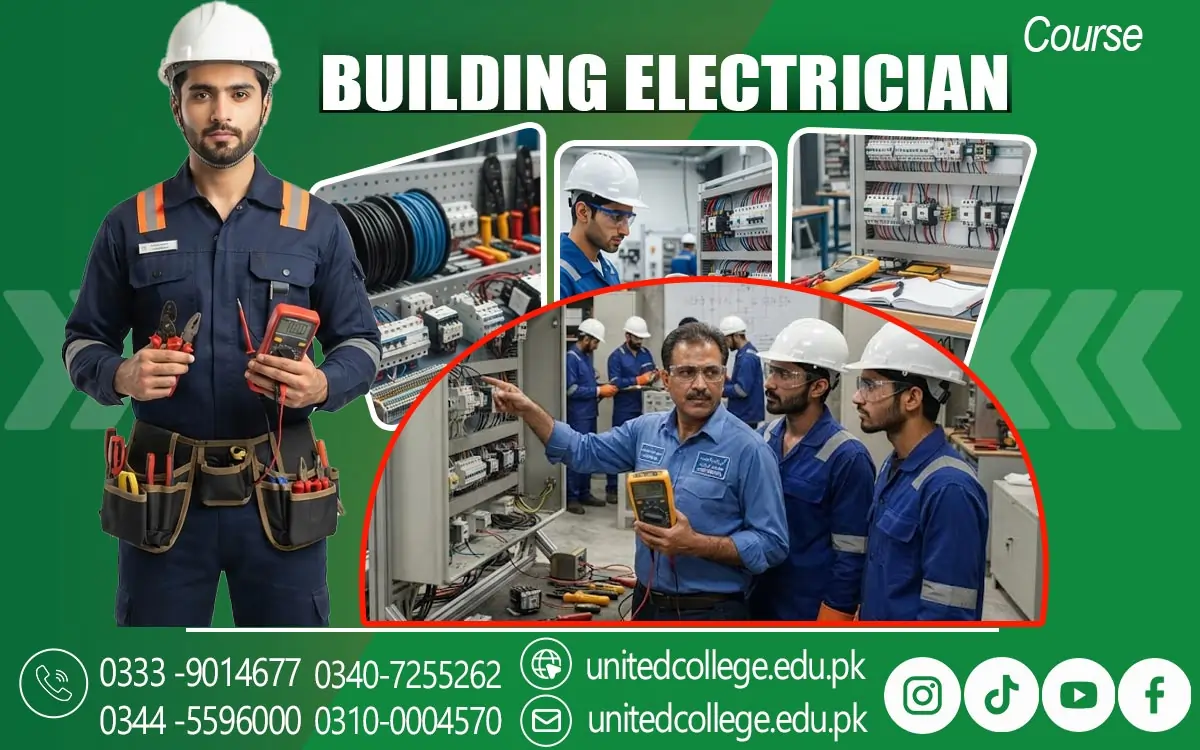

Building Electrician Course in Jhang: Step Into Electrical Work
Build Skills That Work Beyond the Classroom
A building may look complete from the outside, but its real functionality depends on an electrical system working correctly behind the walls. Lights need suitable connections, sockets require properly arranged circuits, and every electrical point must be installed with care. As construction and maintenance work continue to depend on reliable electrical systems, practical electricians remain an important part of building projects.
The Building Electrician Course in Jhang introduces learners to the knowledge and practical techniques used in building electrical work. It can be suitable for students, fresh learners, and individuals who want to learn a hands-on profession without needing an advanced electrical background. Instead of treating electrical work as something complicated, structured training can break it into understandable stages, allowing learners to become familiar with wiring, installation, equipment, safety, and maintenance.
The Real Value of an Electrician Starts With Understanding the System
A building electrician has to understand how different electrical parts work together rather than looking at each component separately. Their responsibilities can involve installing wiring, connecting electrical points, arranging circuits, fitting switches and sockets, working with distribution boards, and supporting maintenance tasks. In a real building, one incorrect connection can affect more than a single light or socket, which is why electricians need to approach their work carefully.
Through the Building Electrician Course in Jhang, learners can begin understanding how electrical power moves through a building and how individual circuits serve different purposes. They can also learn why components such as breakers are used and how electrical systems are organized. For someone taking an electrician course in Jhang, this broader understanding is important because it changes electrical work from a collection of separate tasks into a connected technical process.
Wiring Practice Turns Technical Concepts Into Something You Can See
Electrical wiring becomes easier to understand when learners can connect theory with practical examples. An electrical wiring course can introduce students to cables, connections, switches, sockets, lighting points, circuits, and other components used in buildings. Domestic electrical wiring provides a useful starting point because learners can relate it to familiar environments such as homes and small properties.
Training can then introduce more detailed wiring and installation concepts so learners can see how electrical requirements change according to a building's design and purpose. Wiring diagrams can also help students understand connections before carrying out practical work. Rather than simply memorizing diagrams, learners can be encouraged to understand what each connection represents and why it is needed.
A Toolbox Becomes Useful When Every Tool Has a Purpose
Practical electrical work involves more than knowing the names of tools. An electrician needs to understand which tool is appropriate for a task and how to handle it responsibly. During electrician practical training, students can become familiar with commonly used electrical tools, equipment, wiring materials, and components. They can learn through supervised exercises how tools support activities such as preparing wires, making suitable connections, installing accessories, and checking electrical work.
Exposure to practical equipment can make classroom learning more meaningful because learners can connect technical terms with objects they can actually see and handle. Students can also become familiar with components such as switches, sockets, breakers, and distribution boards and understand their basic roles within an electrical installation. Hands-on electrical training is particularly useful for beginners because confidence often develops through repeated practice.
Fault Finding Teaches You to Think Before You Touch
Electrical repair is not simply about replacing a component whenever something stops working. A trained electrician needs to approach a fault logically and determine where a problem may exist. Electrical troubleshooting introduces learners to this way of thinking by helping them understand how common electrical problems can be examined systematically. A faulty light, inactive socket, or interrupted circuit may have different possible causes, so guessing can lead to unnecessary changes or unsafe practices.
Through training, students can learn basic methods for observing a problem, checking relevant parts, and understanding possible causes within their level of training. Electrical fault finding can become an important part of developing electrical repair skills because maintenance work often requires more than installation knowledge. Learners also gain an appreciation for the relationship between circuits and individual components.
Safe Electrical Work Begins Before the First Connection
A Building Electrician Course in Jhang helps students develop both technical skills and responsible electrical working habits. Electrical work can involve serious risks if installations, repairs, or testing are carried out incorrectly, which is why electrical safety is an essential part of professional electrician training. Students learn the importance of power isolation, careful inspection, appropriate protective equipment, and following correct safety procedures before starting any electrical task.
During a professional building electrician course in Jhang, these safety practices become part of the learner’s daily working routine rather than something studied only for an assessment. This is especially important in construction environments, where electricians may work around other workers, electrical tools, equipment, unfinished buildings, and changing site conditions.
One Skill Can Prepare You for Different Types of Building Work
Electrical requirements are not identical in every property. A house may have a different arrangement from a shop, office, workshop, or larger commercial building. Domestic electrical wiring can involve everyday lighting, sockets, fans, and household circuits, while commercial electrical wiring may involve more extensive installations and maintenance requirements. Learning about both environments can help students understand how electrical work changes according to the building and its purpose.
This can be useful for people who may later explore installation work, property maintenance, construction projects, or other areas where electrical knowledge is required. The course does not need to determine a person's entire career path; instead, it can provide basic technical abilities that learners can develop further. With additional experience and training, students can continue improving their understanding of electrical maintenance, installation, and troubleshooting while adapting their skills to different working environments.
Good Training Gives Beginners a Starting Point, Not an Empty Promise
Choosing technical training should involve looking at what a learner will actually experience during the course. A useful program should make difficult concepts understandable, provide opportunities for practical learning, encourage safe working habits, and help students become familiar with real electrical tasks. United College of Technology offers the Building Electrician Course in Jhang with a focus on practical and skill-oriented learning.
The learning process can introduce students to wiring, installation, maintenance, tools, circuits, safety, and basic troubleshooting in a progressive manner. After developing these foundations, learners can consider different work directions according to their skills, experience, and future goals. Some may seek opportunities with construction teams or maintenance services, while others may continue learning before moving toward independent work.
Let Practical Learning Become the First Step Toward Your Trade
A technical career is rarely built through one lesson or one certificate. It develops as a learner gains knowledge, practices tasks, understands mistakes, improves technique, and gradually becomes more capable. Electrical training can provide that starting structure by introducing the learner to the basic principles behind wiring and installation while also developing awareness of safety and maintenance. For someone in Jhang, the Building Electrician Course in Jhang can be a practical option for beginning this journey and gaining exposure to a trade that is used across residential and commercial environments.
The skills learned during training can become more valuable as learners continue practicing and gain suitable field experience. Electrical technician skills, installation knowledge, maintenance awareness, and troubleshooting ability can all grow over time when learners remain committed to improving. Rather than expecting instant professional results, students can focus on building a reliable foundation one skill at a time.
Frequently Asked Questions (FAQs)
Yes. Practical electrician training can be useful for learners from different educational levels who have an interest in technical and hands-on work.
Basic calculations can be useful, but learners do not need advanced mathematics to begin understanding practical building electrical tasks.
Developing practical skills can help learners become more capable of handling suitable electrical tasks independently as their knowledge and experience grow.
Carefulness, responsibility, patience, observation, and a willingness to follow instructions are valuable qualities for someone entering electrical work.
Yes. After developing basic abilities, learners can pursue additional training in areas such as advanced installations, maintenance, or other electrical specialties.
Electrical methods, equipment, and workplace requirements can change, so continued learning helps professionals keep improving their knowledge and practical abilities.
Admission Open: Start Your Professional Journey Today!
Join United College of Technology and build a career with practical training, recognized certifications, and Gulf job support. Seats are limited.
Apply Now via WhatsAppContact Information
- Address: Rawalpindi: F-272 Main New Katarian Stop, Old IJP Road | Lahore Campus: Lahore, Pakistan
- Phone/WhatsApp: 0340-7255262 / 0333-9014677 / 0301-5044340 / 0310-0004570 / 051-8770756
- Website: unitedcollege.edu.pk
















Leave a Comment