


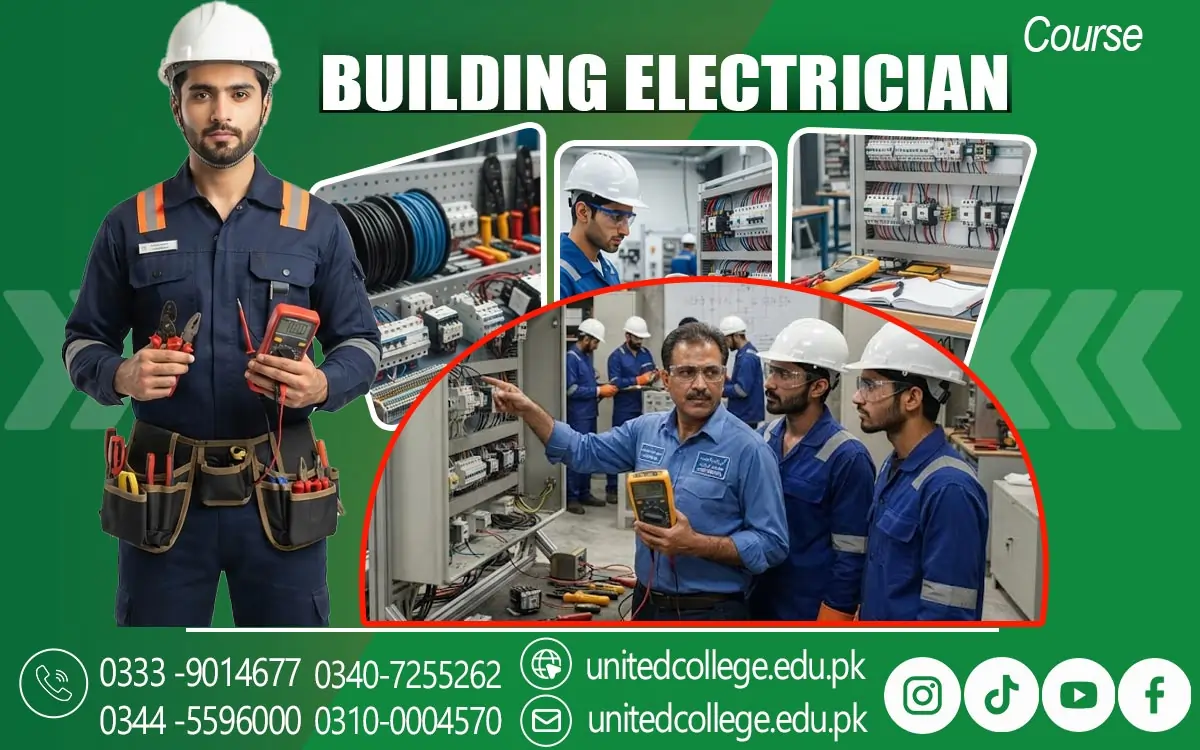

Building Electrician Course in Narowal – Learn Practical Skills
Turn Everyday Electrical Work Into a Practical Career
Electricity is an essential part of modern life, and almost every home, shop, office, school, and commercial building depends on a properly working electrical system. Lights, fans, switches, sockets, appliances, and other equipment all need safe and organized electrical connections. Many people see electricians working around them but do not realize that these practical skills can become a valuable career when learned properly.
The Building Electrician Course in Narowal allows beginners to understand basic electrical work and develop hands-on skills in a structured learning environment. Students can gradually learn how building electrical systems work, how different components are connected, and how common electrical tasks are performed safely. For students, fresh learners, and job seekers who prefer practical work instead of only classroom-based study, electrician training can provide a useful foundation for entering the technical field.
Learn the Wiring Skills Every Building Depends On
Proper wiring is one of the most important parts of any building's electrical system. During Building Technician Course training, students can learn the basic methods used for connecting lights, fans, switches, sockets, and other electrical points. A Building Technician Course can help beginners understand how domestic electrical wiring is planned and arranged so that different areas of a house can receive power safely. Students may also learn about building wiring and the importance of using suitable cables, making secure connections, and keeping electrical lines properly organized.
These skills are useful because poor wiring can create problems such as electrical faults, equipment damage, short circuits, or safety hazards. Instead of simply memorizing wiring methods, learners can develop a better understanding of how different connections work together. This foundation can help them become more confident when they move toward practical electrical installation and maintenance tasks.
Understand How Electrical Systems Work Inside Buildings
A building's electrical system includes many different parts that work together to provide power where it is needed. Students can learn about switches, sockets, lighting points, cables, distribution boards, circuit protection, and other basic electrical components during an Electrical Wiring Course. They can understand how electricity is distributed to different sections of a building and why electrical connections need to be arranged carefully.
Electrical installation training can also introduce learners to basic practices involved in installing lighting systems, connecting electrical points, and organizing wiring according to the requirements of a building. A distribution board, for example, helps manage different circuits and provides a central point for basic circuit protection. Learning these concepts in simple language can make it easier for beginners to understand the bigger picture of building electrical work. This knowledge can later support more advanced learning as students gain practical experience.
Get Hands-On With Electrical Tools and Components
Electrical work cannot be properly learned through theory alone because electricians need practical confidence when handling tools, cables, and electrical components. A practical electrician training program can give learners an opportunity to become familiar with commonly used tools and understand what each tool is designed to do. Students can practice handling wires and cables, making basic electrical connections, installing switches and sockets, and working with lighting points under suitable supervision. They can also learn how to keep their tools organized and use them responsibly while performing different tasks.
This practical experience is important for beginners because working with actual electrical materials can feel very different from reading about them in a book. Repeated practice can help students improve their hand skills, accuracy, confidence, and understanding of common electrical procedures. These experiences can form an important part of developing professional electrician skills for future residential, commercial, or maintenance-related work.
Develop the Ability to Find and Understand Electrical Faults
Electrical systems may develop different problems during installation or regular use, which makes fault finding an important skill for an electrician. A Building Technician Course can help students understand common electrical issues and learn basic methods for identifying them. A light may stop working, a socket may not provide power, a connection may become loose, or a circuit may experience a problem. Through practical training, students can learn basic approaches to identifying common faults instead of trying random connections or making unsafe adjustments.
Beginners can learn why careful inspection is important and why an electrician should never assume the cause of a problem without proper checking. They can also develop basic maintenance knowledge that can help them understand how electrical systems are kept in working condition. With practice and experience, these skills can become useful when dealing with routine electrical service and repair work.
Make Electrical Safety a Priority From Day One
Safety should be one of the most important parts of any electrician's training because electrical work can become dangerous when proper precautions are ignored. Students can learn basic electrical safety practices such as isolating power before appropriate work, using tools correctly, avoiding damaged wires, keeping work areas organized, and using suitable protective equipment. They can also understand the risks associated with electrical shocks, short circuits, overheating, incorrect connections, and electrical fires. Safe working habits are not something that should be added after learning the technical side; they should become part of an electrician's normal working routine from the beginning.
At United College of Technology, learners can explore technical education that emphasizes practical skill development along with responsible working practices. Understanding safety procedures can help students approach electrical installation, maintenance, and repair tasks more carefully. A skilled electrician should not only know how to make an electrical system work but should also understand how to carry out work in a safer and more responsible manner.
Build Confidence Through Practical Electrician Training
One of the most valuable parts of an Electrician Course in Narowal is the opportunity to connect classroom knowledge with practical work. Beginners may understand the purpose of a switch, socket, cable, or circuit in theory, but practical sessions can help them understand how these components are actually handled and connected. With supervised practice, students can work on basic wiring exercises, lighting connections, switches, sockets, cable handling, and other common tasks according to the training provided. Practical learning can also help learners recognize mistakes and understand how proper procedures should be followed.
United College of Technology provides a setting where students can explore practical technical education and work toward developing useful building electrician skills. The purpose of training is not to promise instant employment but to help learners build a foundation that they can strengthen through further practice and real-world experience. For a beginner, this gradual learning process can make technical work feel more understandable and manageable.
Explore Different Areas of Building Electrical Work
After developing suitable knowledge and practical experience, a trained electrician may explore different areas of building electrical work. Residential work can include house wiring, lighting installation, switches, sockets, maintenance, and basic repair tasks. Commercial electrical work may involve shops, offices, schools, workshops, and other buildings where electrical systems need installation and regular maintenance. Construction projects can also require workers who understand basic electrical installation and building wiring.
Some electricians may work with contractors, maintenance teams, property management services, workshops, or electrical service providers. The type of work available can depend on practical ability, experience, training, and local demand. Students should therefore focus on developing reliable skills rather than expecting immediate results. With time and consistent practice, an individual can become more familiar with different electrical systems and may explore suitable electrical technician jobs or other electrician-related work in Pakistan.
Create a Strong Foundation for Long-Term Technical Growth
Learning basic electrical skills can be the beginning of a longer technical learning journey. After completing a Building Electrician Course in Narowal, students can continue improving their abilities through additional training, supervised work experience, safety education, and exposure to different electrical systems. As technology develops, buildings may use new equipment and more advanced electrical solutions, so electricians can benefit from continuing to learn and update their knowledge. An experienced technician may eventually become more comfortable with complex maintenance tasks, different installation environments, and specialized electrical work depending on further education and practical exposure.
For beginners in Narowal, structured electrician training can provide a practical starting point for understanding wiring, installation, maintenance, troubleshooting, and safety. With patience, regular practice, responsible working habits, and a willingness to keep learning, students can build useful skills that may support employment or self-employment opportunities in residential, commercial, construction, and electrical service work.
Frequently Asked Questions (FAQs)
It is a practical training program that helps beginners learn building wiring, electrical installation, maintenance, troubleshooting, and basic electrical safety.
Students can learn house wiring, building wiring, switches, sockets, lighting installation, cables, electrical tools, distribution boards, fault finding, and safety practices.
Yes. The course can be suitable for beginners who want to develop basic electrical knowledge and practical electrician skills from the start.
The training can provide a foundation in practical electrical work. Career opportunities generally depend on your skills, experience, qualifications, and local employment demand.
With suitable skills and experience, electricians may explore residential wiring, commercial buildings, construction projects, maintenance work, workshops, and electrical service work.
Admission Open: Start Your Professional Journey Today!
Join United College of Technology and build a career with practical training, recognized certifications, and Gulf job support. Seats are limited.
Apply Now via WhatsAppContact Information
- Address: Rawalpindi: F-272 Main New Katarian Stop, Old IJP Road | Lahore Campus: Lahore, Pakistan
- Phone/WhatsApp: 0340-7255262 / 0333-9014677 / 0301-5044340 / 0310-0004570 / 051-8770756
- Website: unitedcollege.edu.pk
















Leave a Comment