


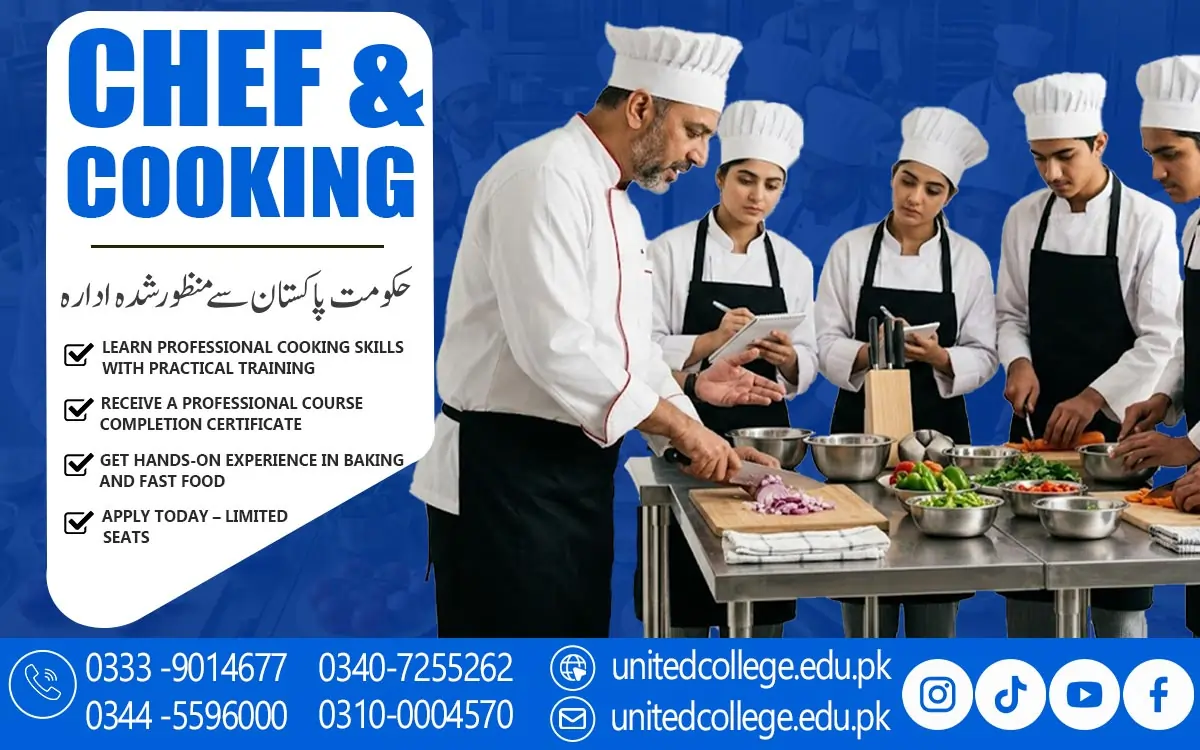

Chef and Cooking Course in Gawadar: Culinary Skills for Aspiring Chefs
Chef and Cooking Course in Gwadar for Practical Culinary Skills and Professional Kitchen Training
Cooking is more than preparing meals; it is a practical skill that combines creativity, discipline, and knowledge of food. From preparing fresh ingredients to serving a well-presented dish, every step requires care and attention. For beginners who want to explore the food industry, the Chef and Cooking Course in Gawadar offers a useful learning direction.
It helps learners understand basic cooking techniques, kitchen routines, food hygiene, and the responsibilities involved in professional cooking. These skills can be valuable for students, job seekers, fresh learners, and people interested in working in hotels, restaurants, cafés, or catering businesses. With regular practice, learners can develop a better understanding of how a professional kitchen operates and what it takes to prepare food safely and consistently.
Turn Your Interest in Food into Practical Kitchen Skills
A genuine interest in cooking can become more meaningful when it is supported by structured learning. Chef training introduces learners to different ingredients, preparation methods, cooking temperatures, and the correct use of kitchen tools. Instead of relying only on home cooking experience, students can learn how to follow recipes, measure ingredients, prepare workstations, and manage several kitchen tasks in an organized way.
Chef and Cooking Course in Gawadar can be a suitable option for people who want to understand the basic responsibilities of a chef before exploring professional kitchen work. A Professional Cooking Course also helps learners recognize the importance of consistency, cleanliness, and proper food presentation. These foundations are useful because preparing food for customers requires a different level of planning and responsibility than cooking a meal at home.
Master Ingredient Preparation Before Moving to Complex Dishes
Good cooking begins before a pan reaches the stove. Learners need to understand how to select fresh ingredients, wash vegetables, prepare meat safely, measure spices, and organize everything required for a recipe. Cutting techniques are another important part of culinary learning. Proper chopping, slicing, peeling, and portioning help make food preparation more organized and support even cooking.
They can also learn why ingredient quality affects taste, texture, and appearance. Understanding these details makes it easier to follow recipes and reduce avoidable mistakes. Over time, careful preparation can help learners become more confident when handling different foods and completing kitchen tasks.
Explore Cooking Methods That Bring Flavour and Quality Together
Professional cooking involves more than memorizing recipes. Learners need to understand how different cooking methods affect the final dish. Boiling, steaming, frying, grilling, roasting, and sautéing each require different levels of heat, timing, and attention. Seasoning is equally important because the correct balance of salt, spices, herbs, and other ingredients can improve flavour without overpowering the food. A Professional Chef and Cooking Course can introduce beginners to these basic cooking principles and help them understand how to follow instructions carefully.
Menu preparation also teaches learners to consider ingredients, cooking time, portion sizes, and the order in which dishes should be prepared. These skills provide a foundation for preparing a range of meals and adapting to different kitchen requirements. Regular practice allows learners to identify mistakes, improve their methods, and pay closer attention to the quality of each dish.
Build Strong Hygiene Habits for Safe Food Preparation
Food safety is a responsibility that every cook must take seriously. In a Chef training program in Gwadar, learners are taught the importance of maintaining clean working surfaces, properly washed utensils, safe ingredient handling, and suitable food storage practices to reduce contamination risks. They should understand the importance of washing their hands, separating raw and cooked foods, and keeping ingredients at appropriate storage temperatures.
Food Hygiene and Safety should remain an essential part of any cooking course because even a well-prepared meal can become unsafe if handled incorrectly. Kitchen cleanliness also includes removing waste, cleaning equipment after use, and keeping preparation areas organized. These habits are particularly important in commercial kitchens, where several people may work together while preparing different dishes.
Understand the Kitchen Responsibilities Behind Every Successful Meal
A professional kitchen depends on teamwork, timing, and clear communication. Chefs often need to coordinate with other kitchen workers, prepare ingredients before service, follow recipes, and ensure that dishes are ready when required. Learners can develop these habits by practicing tasks in a planned order and keeping their workstations organized. Kitchen Management Skills include understanding ingredient quantities, reducing unnecessary waste, storing supplies correctly, and maintaining an efficient workflow.
Time management is especially important when several dishes need attention at once. Cooking practice can also improve patience, discipline, concentration, and attention to detail. These qualities are useful beyond the kitchen because they encourage people to work responsibly and solve practical problems. Understanding kitchen routines can prepare beginners for the pace and expectations they may encounter in food service environments.
Connect Cooking Skills with Gawadar’s Food Service Environment
Gawadar offers a local setting in which people may explore different areas of hospitality and food service. Hotels, restaurants, cafés, catering providers, and small food businesses all require people who understand food preparation and safe kitchen practices. Learners interested in this field can use cooking training to explore the types of skills these workplaces may value. Hotel and Restaurant Cooking Skills can include preparing ingredients, following recipes, maintaining cleanliness, supporting menu preparation, and working cooperatively with other staff.
Catering work may require additional attention to food quantities, packaging, transport, and serving arrangements. A Chef and Cooking course does not guarantee a job, but it can help learners understand the practical demands of these environments. Developing reliable cooking habits may also support people who wish to explore small-scale food businesses, provided they research local requirements and plan their activities carefully.
Choose Cooking Classes That Focus on Real Learning
When comparing Cooking Classes in Gawadar, learners should look beyond attractive course descriptions and consider the quality of instruction. A useful course should explain cooking methods clearly and provide suitable opportunities to practice relevant tasks. Ask whether the learning approach covers ingredient preparation, knife safety, food hygiene, cooking techniques, and kitchen organization.
The Chef and Cooking Course in Gawadar is offered by United College of Technology, providing an option for people researching cooking education. Before enrolling, contact the institution directly to confirm current course content, practical learning arrangements, fees, duration, and any admission or certification details. Checking these points helps learners make an informed decision based on their needs rather than assumptions.
Shape Your Future Through Consistent Cooking Practice
Learning to cook professionally is a gradual process that requires patience, repetition, and a willingness to improve. Beginners can start by mastering basic recipes, understanding measurements, practicing safe knife handling, and keeping their work areas clean. As their confidence grows, they can explore different ingredients, improve seasoning, experiment with presentation, and learn to manage preparation time more effectively.
The Chef and Cooking Course in Gawadar can serve as a starting point for individuals who want to develop these practical abilities and learn more about the food service industry. Whether the goal is to explore hotel cooking, restaurant work, catering, or a future food business, a strong foundation in culinary skills can make the learning journey more focused. Consistent practice and a commitment to quality are what help turn basic cooking knowledge into dependable skills.
Frequently Asked Questions (FAQs)
Yes. Beginners can start by learning basic food preparation, ingredient measurements, cooking methods, and recipe instructions before moving to more advanced dishes.
Learners can explore plate arrangement, portion balance, colour combinations, and simple garnishing methods to make meals look more appealing.
Portion control helps maintain consistency between servings, manage ingredient use, and plan food quantities more effectively.
Beginners should understand the flavour, aroma, and strength of common spices and learn how to use them in suitable amounts.
They can practice organizing ingredients, following preparation schedules, keeping tools ready, and completing tasks in a planned sequence.
Yes. Cooking knowledge can support meal preparation for a small food business, although pricing, packaging, customer service, and local business requirements also need attention.
Admission Open: Start Your Professional Journey Today!
Join United College of Technology and build a career with practical training, recognized certifications, and Gulf job support. Seats are limited.
Apply Now via WhatsAppContact Information
- Address: Rawalpindi: F-272 Main New Katarian Stop, Old IJP Road | Lahore Campus: Lahore, Pakistan
- Phone/WhatsApp: 0340-7255262 / 0333-9014677 / 0301-5044340 / 0310-0004570 / 051-8770756
- Website: unitedcollege.edu.pk
















Leave a Comment