


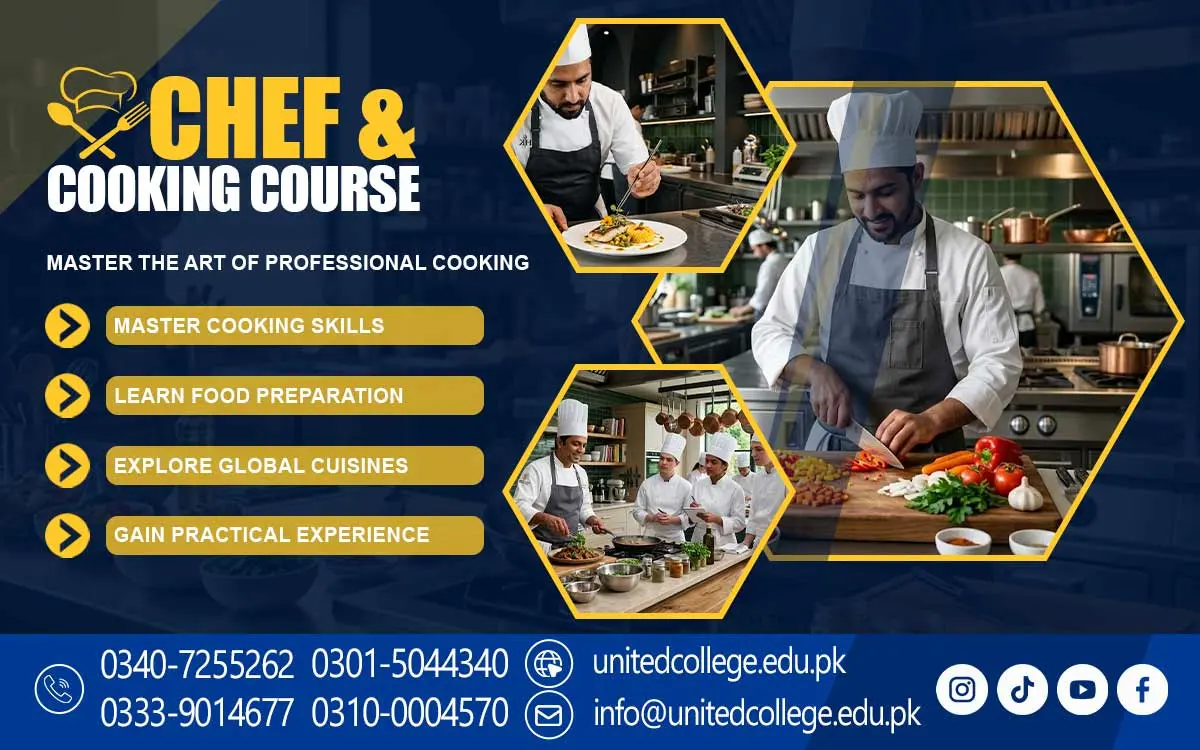

Chef and Cooking Course in Waziristan: Excellence in Modern Gastronomy
Chef and Cooking Course in Waziristan for Practical Skills and Creative Food Preparation
Cooking brings together creativity, patience, and practical knowledge. A simple set of ingredients can become a delicious meal when a person understands how to prepare, cook, and present food correctly. For beginners, learning these skills can make everyday cooking easier and open the door to further learning in the food industry. The Chef and Cooking Course in Waziristan is a relevant option for students, fresh learners, job seekers, and anyone who wants to improve their culinary knowledge.
Through structured learning and regular practice, beginners can understand recipes, explore different cooking methods, and become more familiar with kitchen responsibilities. Professional cooking involves much more than mixing ingredients or following instructions. It requires careful planning, attention to food quality, cleanliness, and the ability to manage several tasks.
Turn Everyday Cooking Into a More Skilled and Creative Practice
Every successful dish begins with proper preparation. Learners need to understand how to select suitable ingredients, check their freshness, measure quantities, and prepare food according to a recipe. Cutting vegetables into suitable sizes, removing unwanted parts, and arranging ingredients before cooking can make the process more organized. A Professional Chef and Cooking Course in Waziristan can help beginners understand the importance of these basic techniques.
Learners can also explore how ingredients work together and why some combinations create better flavours than others. Developing these skills requires attention and repeated practice rather than rushing through each step. As learners become more familiar with preparation methods, they can follow recipes more comfortably and begin experimenting with new dishes. This foundation is useful for anyone who wants to improve home cooking or understand the responsibilities involved in professional food preparation.
Discover Cooking Methods That Give Every Ingredient a Purpose
Different ingredients respond differently to heat, so choosing an appropriate cooking method is an important culinary skill. Boiling can soften ingredients, steaming can help retain their natural qualities, and frying can create a crisp surface. Grilling, roasting, sautéing, and baking each produce different results depending on the food and the cooking conditions. Chef Training in Waziristan can introduce beginners to these principles and help them become familiar with a wider range of cooking techniques.
Seasoning also deserves attention because salt, spices, herbs, and other flavouring ingredients can change the character of a dish. Using too much seasoning may overpower the natural taste, while too little can leave food less enjoyable. Regular practice helps learners understand how to adjust flavours carefully. By learning these methods step by step, beginners can develop better control over their cooking and gain the confidence to prepare different meals.
Bring Flavour and Presentation Together for Memorable Meals
The quality of a meal depends on more than its ingredients. Taste, aroma, texture, colour, and presentation all influence the final result. Learners can practise arranging ingredients neatly, choosing suitable serving dishes, and avoiding unnecessary decoration that distracts from the meal itself. They can also explore how different textures work together, such as combining soft foods with crisp elements to create a more enjoyable experience. Cooking and Cooking Course in Waziristan can help learners understand these details as part of practical culinary development.
Another useful area is recipe consistency. Preparing the same dish more than once allows learners to compare results and identify where they need to improve. They can pay attention to cooking time, ingredient quantities, and the final appearance of the food. With continued effort, learners can develop a more careful approach to presentation and understand how small improvements can make meals more attractive.
Build Food Safety Habits That Support Responsible Cooking
Cleanliness is essential wherever food is prepared. Learners should understand the importance of washing their hands, cleaning work surfaces, and keeping utensils in suitable condition. Raw ingredients and ready-to-eat foods must be handled carefully to reduce the risk of cross-contamination. Food also needs appropriate storage to maintain its quality and safety. Beginners should learn to check freshness, follow safe handling practices, and avoid leaving perishable ingredients in unsuitable conditions.
Food Safety and Hygiene are equally important in home kitchens and professional food settings. Kitchen discipline includes handling knives carefully, paying attention around hot surfaces, and keeping floors and work areas free from unnecessary clutter. These habits help reduce common risks and make preparation more organized. A person who learns cooking techniques without understanding safety may overlook important responsibilities.
Connect Culinary Learning With Everyday Life in Waziristan
Learning cooking skills can be useful for people in Waziristan who want to improve their daily routines, explore food preparation, or consider further training. Familiar meals can provide a starting point for learning how to control heat, balance seasoning, prepare ingredients, and serve food properly. Learners can gradually explore additional recipes and cooking styles while respecting the food traditions they already know. These skills may also be useful when preparing meals for family gatherings or other occasions that require careful planning.
Understanding ingredient quantities and preparation order can help reduce confusion when several dishes need attention. A Professional Cooking Course in Waziristan can provide a learning direction for individuals who want to develop their knowledge beyond basic home cooking. The value of training does not depend on making unsupported assumptions about local employment demand. Instead, learners can focus on gaining practical knowledge, identifying their interests, and understanding how culinary skills might fit into their personal plans.
Learn Kitchen Management Skills That Keep Work Moving Smoothly
A kitchen needs organization as much as it needs good cooking. When preparing several dishes, a cook must understand which tasks should happen first and which ingredients need more time. Planning preparation steps in advance can reduce delays and make better use of available time. Through the Chef and Cooking Course in Waziristan, learners can develop Kitchen Management Skills, including arranging ingredients, keeping the workspace orderly, cleaning tools after use, and checking that each task is completed properly.
Clear communication helps prevent mistakes and supports a smoother working process. Beginners can develop these habits by following instructions, asking for clarification when needed, and learning to complete tasks carefully. The course is offered by United College of Technology, and learners can review the available course information to understand whether it matches their interests and learning goals.
Explore Food Industry Pathways Through Practical Culinary Knowledge
Cooking knowledge can support different directions depending on a learner's interests, experience, and plans. Restaurants and hotels require food preparation skills, attention to cleanliness, and an understanding of kitchen routines. Catering services involve preparing food for groups, which makes planning, timing, and consistent portions especially important. Bakeries may appeal to learners who want to explore breads, cakes, pastries, and other baked products.
Each direction involves different responsibilities, and additional experience or training may be needed. Professional Chef Skills can develop gradually through practice, feedback, and a willingness to improve. Learning a course does not guarantee employment or business success, but it can help people understand culinary work and identify areas they may want to study further. Learners should consider their interests carefully and explore the requirements of any setting they hope to enter.
Make Consistent Practice the Foundation of Your Culinary Progress
Becoming comfortable with cooking takes patience and regular effort. Beginners do not need to master every recipe at once; they can start with basic preparation tasks, learn one cooking method at a time, and gradually attempt more challenging dishes. Reviewing mistakes can be just as valuable as celebrating successful results. If a dish becomes too dry, too salty, or unevenly cooked, learners can examine the preparation steps and make adjustments the next time.
Keeping simple notes about ingredient quantities and cooking times may also help them repeat successful results. The Chef and Cooking Course in Waziristan can be a starting point for people who want to take their interest in food preparation more seriously and build practical culinary knowledge. Whether their aim is better home cooking, future training, or exploring food-related work, learners can benefit from developing good habits and remaining curious.
Frequently Asked Questions (FAQs)
Seasonal ingredients can influence menu choices and help cooks explore different flavours throughout the year. Understanding seasonality also encourages flexibility when planning dishes.
Learners can compare measured ingredients with finished portions, practise using kitchen scales, and record quantities that produce consistent results.
Garnishing adds a finishing touch to a dish when chosen carefully. Suitable garnishes can improve appearance and complement the food without overpowering its main flavours.
Marinades combine ingredients such as herbs, spices, oils, and suitable acidic liquids to add flavour to foods before cooking. Learning their purpose helps beginners prepare a wider range of dishes.
They can read each recipe beforehand, organize ingredients separately, and make a simple preparation checklist to track the steps that need attention.
Different knives are designed for different cutting tasks. Understanding their uses helps learners choose suitable tools and handle ingredients with greater control and care.
Admission Open: Start Your Professional Journey Today!
Join United College of Technology and build a career with practical training, recognized certifications, and Gulf job support. Seats are limited.
Apply Now via WhatsAppContact Information
- Address: Rawalpindi: F-272 Main New Katarian Stop, Old IJP Road | Lahore Campus: Lahore, Pakistan
- Phone/WhatsApp: 0340-7255262 / 0333-9014677 / 0301-5044340 / 0310-0004570 / 051-8770756
- Website: unitedcollege.edu.pk
















Leave a Comment