


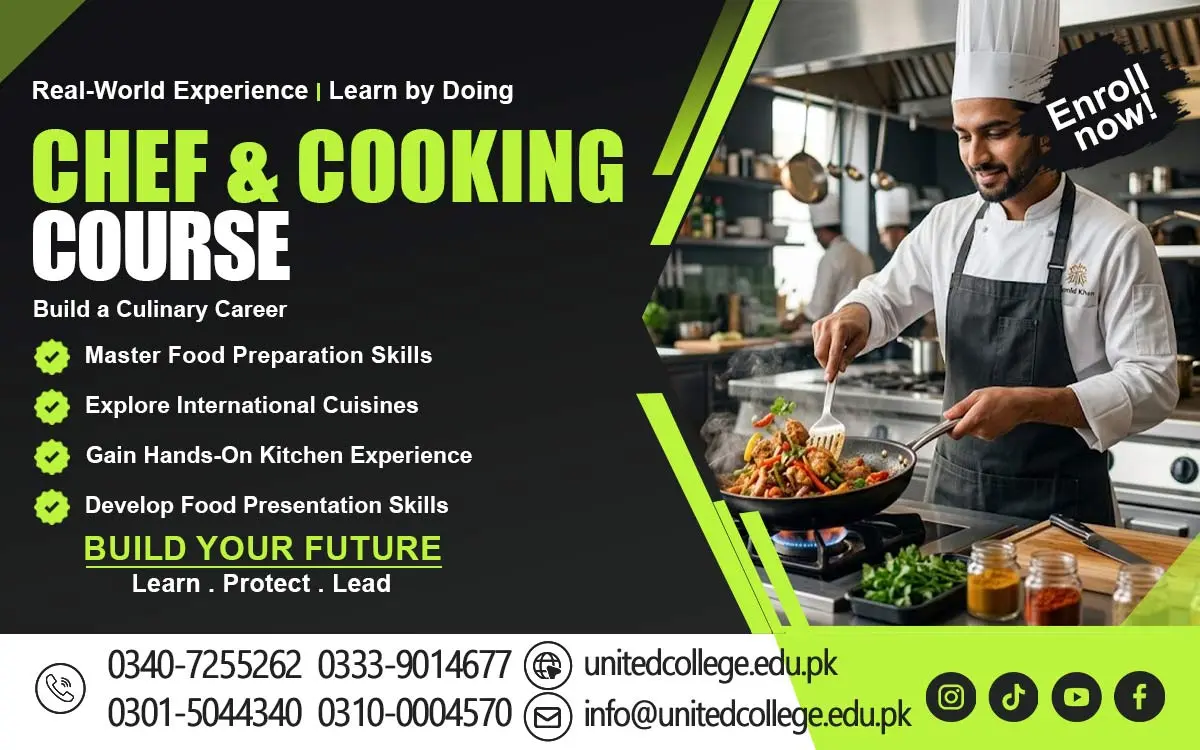

Chef and Cooking Course in Karak for Food Preparation
Introduction to Modern Culinary Practices
Modern culinary practices involve using suitable cooking methods, quality ingredients, and organized preparation techniques to produce enjoyable meals. Students learn about the basic responsibilities of professional chefs and how they manage different activities in a kitchen. These practices include preparing ingredients, following recipes, selecting suitable equipment, and maintaining consistent food quality throughout the cooking process.
Professional kitchens use organized procedures to make food preparation more efficient. Chefs need to understand the importance of timing, portion sizes, temperature control, and teamwork. Learning these fundamentals helps students recognize how different kitchen activities are connected and why proper planning is important when preparing several dishes together.
The Chef and Cooking Course in Karak introduces learners to essential culinary concepts that can support their development. Students can build an understanding of traditional cooking practices alongside selected modern techniques. This knowledge provides a foundation for individuals who want to improve their cooking abilities and explore opportunities in the culinary and hospitality sectors.
Selecting Ingredients for Different Dishes
Selecting suitable ingredients is an important step in preparing flavorful and appealing meals. Students in the Chef and Cooking Course learn about common food products, including vegetables, fruits, grains, meat, poultry, dairy products, herbs, and spices. Each ingredient has different characteristics, and understanding these differences helps learners choose suitable products for particular recipes and cooking methods.
Food quality and freshness also influence the final result of a dish. Learners can study how to identify fresh ingredients, check their condition, and store them appropriately. Proper storage helps preserve flavor, maintain quality, and reduce food waste. Chefs must also understand the importance of keeping raw and ready-to-eat foods separate to prevent cross-contamination.
Ingredient selection requires knowledge of flavor combinations and recipe requirements. For example, certain herbs and spices complement specific dishes, while sauces and seasonings can improve their overall taste. Through professional cooking training, students can learn how to select ingredients carefully and understand their role in preparing traditional Pakistani food and other cuisines.
Learning Essential Knife Handling Techniques
Knife handling is a fundamental part of food preparation in professional kitchens. Students learn about different kitchen knives, cutting boards, and the purposes of common cutting techniques. Methods such as chopping, slicing, dicing, and mincing help prepare ingredients in suitable sizes for different recipes. Consistent cutting also supports even cooking and improves the presentation of food.
Safe knife handling is equally important for anyone working in a kitchen. Learners can understand how to hold knives properly, maintain a stable cutting surface, and use suitable equipment for different ingredients. Keeping knives clean, storing them safely, and avoiding distractions during food preparation are important practices that help reduce the risk of injuries.
Developing these techniques can improve both speed and accuracy in the kitchen. When ingredients are prepared correctly, chefs can follow recipes more efficiently and manage cooking tasks with greater confidence. The Chef and Cooking Course in Karak introduces learners to the importance of careful preparation and safe working habits as part of professional culinary training.
Preparing Meals Using Various Cooking Methods
Professional chefs use different cooking methods to achieve the desired flavor, texture, and appearance of food. Chef and Cooking Students can learn about boiling, steaming, frying, grilling, roasting, baking, and sautéing. Each method has different uses, and choosing the correct technique depends on the ingredients, recipe, and intended result.
Temperature control and cooking time are important considerations when preparing meals. Excessive heat may burn ingredients, while insufficient cooking can affect food quality and safety. Learners can explore how different ingredients respond to heat and why certain cooking methods are more suitable for particular dishes. These concepts help students understand the relationship between technique and the final result.
Practical experience allows learners to apply their knowledge when preparing a variety of meals. They can explore traditional Pakistani recipes and selected international dishes while developing an understanding of different cooking processes. Learning multiple methods can improve versatility and help students prepare for different kitchen environments, including restaurants, cafés, hotels, and catering services.
Understanding Flavors and Seasoning
Flavor development is an important skill for professional chefs because seasoning influences the overall taste of a dish. Students learn about common seasonings, including salt, pepper, herbs, spices, sauces, and other flavor-enhancing ingredients. Understanding how these ingredients work together helps learners prepare balanced meals that meet different tastes and preferences.
Different cuisines use unique combinations of ingredients to create their characteristic flavors. Pakistani cooking, for example, often uses a variety of spices and herbs, while other cuisines may focus on different sauces, seasonings, and preparation techniques. Learners can explore how ingredient combinations affect aroma, texture, and taste when preparing different dishes.
Good seasoning requires careful measurement and regular attention during cooking. Adding too much salt or spice can overpower other ingredients, while appropriate seasoning can improve a meal's overall quality. Through culinary arts training, students can develop an understanding of flavor balance and learn why tasting, adjusting, and following recipes are important parts of professional cooking.
Following Kitchen Cleanliness and Safety Standards
Kitchen cleanliness is essential for preparing food safely and maintaining a professional working environment. Chefs and Cooking Students learn why cooking surfaces, utensils, equipment, and food preparation areas must be cleaned regularly. Proper handwashing, clean clothing, and suitable food handling procedures help reduce contamination risks and support good hygiene throughout the cooking process.
Food safety also involves correct storage, temperature control, and careful handling of ingredients. Learners can understand why raw meat should be kept separate from ready-to-eat foods and why perishable ingredients need appropriate refrigeration. Following safe cooking temperatures and storing food correctly can help reduce the risk of foodborne illness.
Professional kitchens also require safe equipment use and organized working areas. Students can learn about handling hot utensils, using appliances responsibly, disposing of waste properly, and keeping floors clear to prevent accidents. These habits are valuable for anyone planning to work in restaurants, hotels, bakeries, or catering businesses where cleanliness and safety are essential responsibilities.
Organizing Kitchen Tasks and Food Supplies
Kitchen organization helps chefs complete tasks efficiently and maintain consistent food quality. Students learn about arranging ingredients, preparing equipment before cooking, following recipes in the correct order, and keeping workstations organized. These practices help reduce unnecessary movement and make it easier to manage multiple food preparation activities.
Managing food supplies is another important part of kitchen operations. Learners can explore basic stock management, ingredient storage, checking expiry dates, and monitoring the quantity of available supplies. Proper inventory practices help kitchens avoid shortages, reduce waste, and maintain the freshness of ingredients. These concepts are particularly useful in busy restaurants and commercial food service environments.
Time management and teamwork also contribute to an organized kitchen. Chefs often coordinate with other staff members to prepare different dishes and serve customers on time. By learning how to prioritize tasks and communicate clearly, students can understand the importance of cooperation in professional cooking. These organizational abilities support better kitchen performance and help learners prepare for future workplace responsibilities.
Building a Future in Professional Cooking
Professional cooking can lead to different opportunities in the food and hospitality industry. After developing relevant knowledge and gaining practical experience, learners may consider positions such as kitchen assistant, assistant chef, restaurant cook, food preparation worker, or catering assistant. Available opportunities depend on the employer's requirements, the learner's experience, and the level of training completed.
Some individuals may choose to specialize in baking, pastry preparation, traditional cuisine, or international dishes. With additional experience and professional development, they may work toward more advanced kitchen positions. Restaurants, hotels, cafés, catering companies, and other food service businesses may offer suitable opportunities for individuals who demonstrate good cooking abilities, hygiene awareness, teamwork, and reliability.
Learning professional cooking can also provide a starting point for entrepreneurship. Individuals may explore home-based food services, small catering operations, or other food-related businesses after developing the necessary skills and understanding local food safety requirements. The Chef and Cooking Course in Karak can help learners explore their interests and identify areas for further development. Continued practice, creativity, and a commitment to quality can support long-term progress in the culinary field.
Frequently Asked Questions (FAQs)
The Chef and Cooking Course in Karak introduces students to professional cooking methods, ingredient selection, food preparation, seasoning, kitchen management, and food safety.
Beginners, students, and individuals interested in cooking or pursuing a career in the food industry can consider applying, subject to the institute's admission requirements.
Students can learn about boiling, frying, grilling, steaming, roasting, baking, and sautéing, depending on the course syllabus and practical training.
Proper knife handling helps chefs prepare ingredients accurately, improve cooking efficiency, and reduce the risk of kitchen injuries.
Food safety helps prevent contamination, maintain food quality, and protect customers from foodborne illnesses.
Admission Open: Start Your Professional Journey Today!
Join United College of Technology and build a career with practical training, recognized certifications, and Gulf job support. Seats are limited.
Apply Now via WhatsAppContact Information
- Address: Rawalpindi: F-272 Main New Katarian Stop, Old IJP Road | Lahore Campus: Lahore, Pakistan
- Phone/WhatsApp: 0340-7255262 / 0333-9014677 / 0301-5044340 / 0310-0004570 / 051-8770756
- Website: unitedcollege.edu.pk
















Leave a Comment