


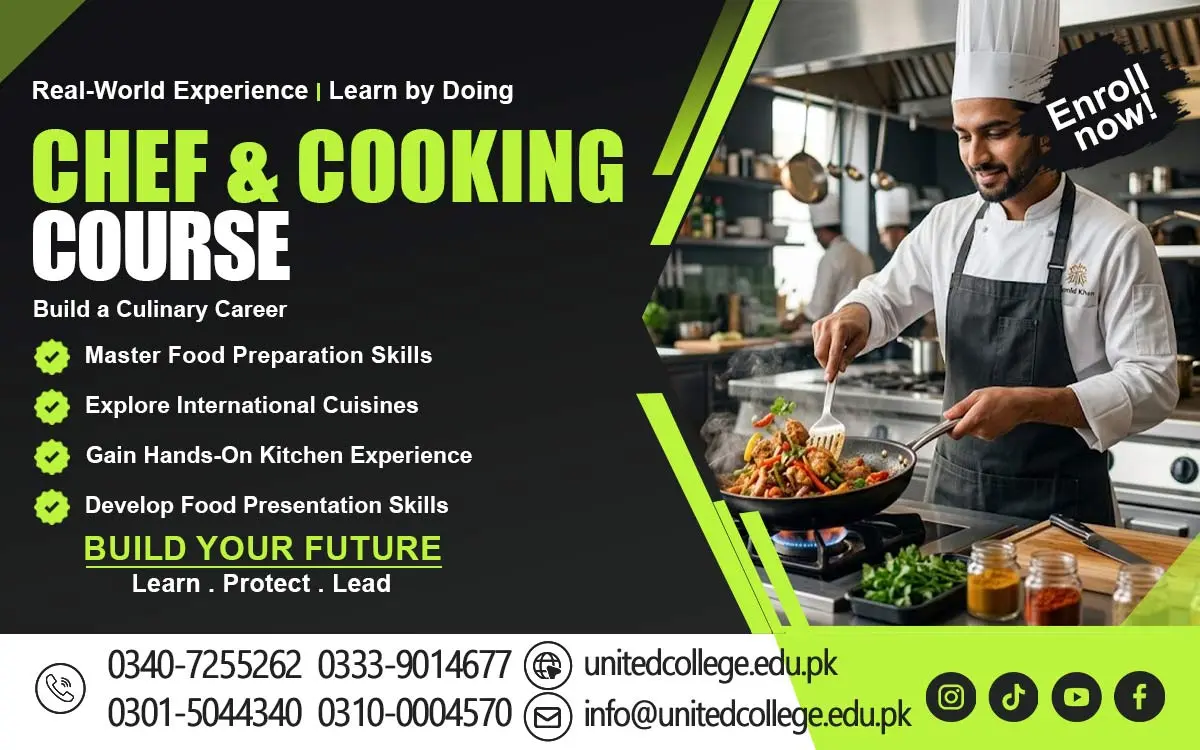

Chef and Cooking Course in Sibi: Mastering Flavours and Food Craft
Chef and Cooking Course in Sibi for Creative Skills and Professional Kitchen Confidence
Cooking is a skill that brings together taste, creativity, planning, and careful work. A well-prepared meal depends not only on ingredients but also on the cook’s ability to manage time, follow recipes, and maintain quality. The Chef and Cooking Course in Sibi can be a useful learning option for beginners, students, job seekers, and people who want to understand professional cooking. It introduces learners to the knowledge and practical habits needed to work with food in an organized way.
From preparing vegetables and measuring spices to learning different cooking methods, each task helps develop a stronger foundation. For people in Sibi who want to explore the hospitality industry or improve their personal cooking abilities, structured culinary learning can provide a clear starting point. It also helps learners understand that professional cooking requires patience, cleanliness, teamwork, and a willingness to improve through regular practice.
Transform Everyday Ingredients into Well-Prepared Dishes
Every successful dish begins with understanding its ingredients. Learners need to recognize freshness, measure quantities correctly, and prepare different foods according to recipe requirements. A structured Chef and Cooking Course in Sibi approach can help beginners understand how washing, peeling, chopping, slicing, and portioning affect the cooking process. They can also learn why certain ingredients should be prepared before others and how organized preparation reduces confusion during cooking.
Measuring ingredients is particularly useful when a recipe requires a specific balance of flavours or a consistent result. Beginners can gradually practice preparing vegetables, grains, sauces, and other common ingredients while learning how to keep their work area tidy. These basic habits create a foundation for more complex dishes. They also encourage learners to pay attention to small details rather than rushing through the preparation stage.
Discover Cooking Methods That Bring Out Natural Flavours
Different dishes require different cooking techniques, and understanding these methods helps cooks make better decisions in the kitchen. A Professional Cooking Course may introduce learners to boiling, steaming, frying, grilling, roasting, and sautéing, depending on the course content. Each method affects the texture, taste, and appearance of food in a different way. Learners also need to understand heat control because excessive heat can burn ingredients, while insufficient heat may prevent food from cooking properly.
Seasoning is another important area of culinary learning. Beginners can explore how salt, herbs, spices, and other flavouring ingredients work together without overpowering a dish. Following recipes carefully helps learners understand ingredient combinations and cooking times. As their experience grows, they can practice adjusting flavours and preparing a wider variety of meals. This knowledge supports the development of both confidence and consistency.
Develop Food Presentation Skills That Make Meals More Appealing
The appearance of a dish can influence how people experience a meal. Professional cooks consider portion size, colour, arrangement, and cleanliness when serving food. Through Culinary Skills Training, learners can explore simple presentation techniques such as arranging ingredients neatly, choosing suitable serving dishes, and using garnishes appropriately. Presentation does not require expensive ingredients or complicated designs.
Garnishes must suit the dish, and serving arrangements should not make food difficult to eat. These skills are useful in restaurants, hotels, cafés, and catering settings where appearance forms part of the overall dining experience. Practicing presentation also encourages attention to detail, helping learners take greater care with the final result rather than focusing only on taste.
Make Food Hygiene and Kitchen Safety Part of Every Routine
Safe food handling is one of the most important responsibilities in any kitchen. In a Chef and Cooking Course in Sibi, learners are taught to keep their hands, utensils, preparation surfaces, and storage areas clean to reduce the risk of contamination. They also learn how to separate raw ingredients from ready-to-eat foods and store perishable items at suitable temperatures.
Knife handling, hot cooking surfaces, spills, and electrical appliances also require attention. Learners should develop the habit of using tools correctly, cleaning up promptly, and following safety instructions. Proper waste disposal and careful storage help maintain an orderly kitchen. These routines matter in domestic cooking as well as commercial food preparation.
Strengthen Kitchen Management Through Planning and Teamwork
A professional kitchen often involves several tasks happening at the same time. Ingredients may need preparation, dishes may require different cooking times, and orders may need to be completed in a particular sequence. Kitchen Management Skills help cooks organize these responsibilities without losing focus. Learners can practice arranging ingredients before starting, checking recipe instructions, keeping frequently used tools accessible, and cleaning as they work.
Time management is especially useful when preparing several dishes together. Teamwork is equally important because kitchen staff must communicate clearly and coordinate their activities. A person who understands their task and respects the work of others can contribute to a more organized environment. Training can also encourage discipline, patience, and problem-solving.
Explore Food Service Possibilities Across Sibi and Beyond
Cooking skills can be relevant to different types of food businesses. Restaurants may need cooks who can prepare menu items consistently, while hotels often serve meals that require careful planning and presentation. Catering services may focus on preparing food in larger quantities, arranging portions, and organizing service for events. Bakeries and cafés involve their own preparation methods and product requirements.
Learning Chef and Cooking Training can help beginners understand the responsibilities associated with these environments, although the exact skills required depend on the workplace. People in Sibi who are interested in hospitality can use culinary learning to explore these different areas and identify the type of work that suits their interests.
Choose a Learning Path That Matches Your Culinary Goals
Selecting a suitable Professional Chef Course requires more than comparing course names. Learners should review the actual topics covered, the amount of practical work involved, and the guidance provided by instructors. A useful learning programme should explain basic techniques clearly and help students understand how to improve their performance.
The Chef and Cooking Course in Sibi is offered by United College of Technology. Anyone considering enrolment should contact the institution directly to confirm the current syllabus, practical training arrangements, fees, duration, admission requirements, and certificate details, if applicable. These details should be verified rather than assumed.
Turn Culinary Practice into a Skill You Can Keep Improving
Developing professional cooking ability takes time, repetition, and an open mind. Beginners can make steady progress by practicing basic recipes, measuring ingredients accurately, controlling heat, and reviewing the results of each attempt. Keeping notes about cooking times, seasoning, and preparation methods can help them identify what works and what needs improvement. Basic to Advanced Cooking Skills develop through consistent effort rather than memorizing recipes alone.
Learners should also maintain good hygiene, respect kitchen safety rules, and stay willing to learn from feedback. For people in Sibi, the Chef and Cooking Course in Sibi can be a starting point for exploring culinary knowledge and understanding the food service industry. With practical experience and responsible habits, learners can continue strengthening their skills for personal use or future professional goals.
Frequently Asked Questions (FAQs)
Temperature control helps cooks manage texture, prevent burning, and cook different ingredients properly. Understanding heat levels also helps maintain consistent results when preparing recipes.
Yes. Culinary learning can introduce students to different cooking traditions, flavour combinations, and preparation styles used in various cuisines, depending on the course curriculum.
Food costing helps cooks understand ingredient expenses, calculate approximate recipe costs, reduce waste, and make better decisions when planning meals for customers.
Standardized recipes help kitchen staff follow consistent ingredient quantities, preparation steps, and serving sizes, making it easier to maintain similar results across different orders.
They can practice prioritizing tasks, following clear instructions, staying calm when mistakes happen, and communicating effectively with other kitchen workers.
Creativity, patience, cleanliness, curiosity, reliability, and a willingness to accept feedback can help aspiring cooks learn new techniques and improve their daily performance.
Admission Open: Start Your Professional Journey Today!
Join United College of Technology and build a career with practical training, recognized certifications, and Gulf job support. Seats are limited.
Apply Now via WhatsAppContact Information
- Address: Rawalpindi: F-272 Main New Katarian Stop, Old IJP Road | Lahore Campus: Lahore, Pakistan
- Phone/WhatsApp: 0340-7255262 / 0333-9014677 / 0301-5044340 / 0310-0004570 / 051-8770756
- Website: unitedcollege.edu.pk
















Leave a Comment