


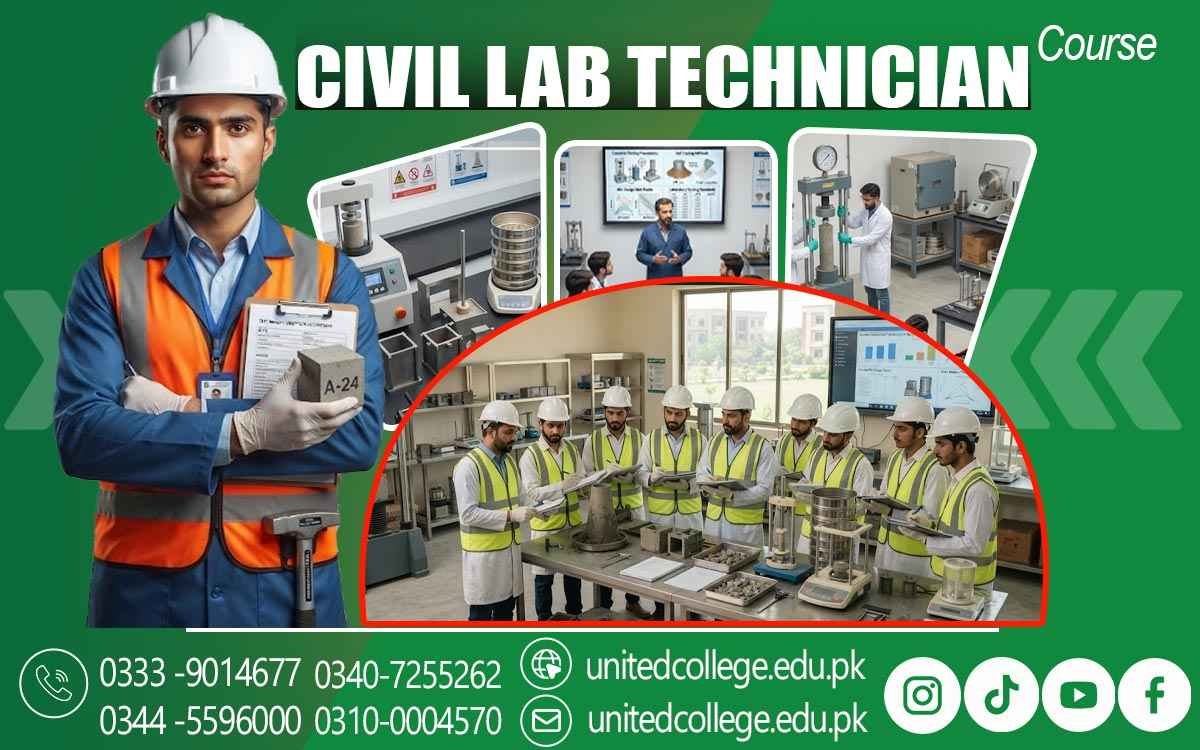

Civil Lab Technician Course in Khushab – Develop Technical Expertise
Civil Lab Technician Course in Khushab for Practical Skills That Build Construction Confidence
A successful construction project starts long before the final structure takes shape. The quality of cement, concrete, soil, sand, and aggregates can influence how a project performs. For this reason, careful testing and accurate measurements are an important part of modern construction work. A civil lab technician works behind this process by examining construction materials and carrying out assigned laboratory tests.
The Civil Lab Technician Course in Khushab, offered by United College of Technology, gives beginners and students an opportunity to explore these practical skills. The training can help learners understand basic testing procedures, material inspection, laboratory safety, and quality control in a clear and accessible way.
Behind Every Reliable Structure Is Careful Material Checking
Construction materials may look suitable, but their actual properties cannot always be understood through visual inspection. Laboratory testing provides a more organized way to examine materials before or during construction activities. A technician may receive a sample, identify it, prepare it for testing, and use the appropriate method to examine it. The results are then measured and recorded for further technical review.
This work supports construction quality control because engineers and other professionals can use testing information when assessing materials. Through a Civil Lab Technician Course in Khushab, learners can understand how laboratory procedures, accurate measurements, and proper documentation contribute to construction quality. Therefore, civil laboratory work connects technical measurements with practical construction activities.
Cement and Concrete Testing Turn Basic Materials Into Useful Data
Cement and concrete are central to many building projects, but each requires its own testing approach. Learning their basic testing concepts helps students understand why material properties matter. Cement testing can introduce learners to procedures used to examine important characteristics of cement.
Concrete testing can then help them understand how concrete quality and strength are evaluated through appropriate methods. Concrete mix testing also gives learners a useful view of how different materials work together. Instead of treating concrete as a single material, students can begin to understand the role of cement, aggregates, water, and proportions within a mix.
Soil Testing Starts With Understanding the Ground
A structure depends on more than the materials placed above ground. The soil beneath foundations, roads, and other structures can also influence construction activities. Basic soil testing introduces learners to concepts such as moisture content, compaction, and soil analysis. These tests help students understand how soil conditions can be studied before certain construction activities take place.
Sample collection and preparation are equally important. If a sample is not handled properly, the resulting information may not accurately represent the material being examined. This is why careful procedures form a major part of civil laboratory training.
The Right Sample and the Right Method Make Testing More Meaningful
Good testing begins with preparation. Before equipment is used, a technician needs to understand what sample is being examined and which procedure is appropriate. During practical training, learners can become familiar with sample preparation, measurement techniques, and laboratory equipment. They can also learn why different tests require different tools and steps.
A material testing laboratory depends on organized working. When students practice each stage carefully, they can better understand how testing methods produce useful technical information. This approach can be especially valuable for beginners because practical activities turn unfamiliar technical terms into processes they can observe and understand.
Accurate Records Give Construction Teams Something They Can Review
Testing produces information, but that information needs to be recorded clearly. A laboratory technician may document sample details, measurements, observations, and test findings. Accurate documentation helps maintain an organized testing history. It can also make it easier for engineers and quality control staff to review laboratory information related to construction materials.
Through a Civil Lab Technician Course in Khushab, learners can understand the importance of proper record-keeping and accurate documentation in laboratory work. This is where laboratory work supports quality assurance in construction. Clear records do not replace professional engineering decisions, but they can provide useful technical evidence for people responsible for assessing construction quality.
Safety and Discipline Shape Strong Laboratory Habits
Civil laboratory work involves equipment, construction materials, samples, and specific testing procedures. Therefore, safety should remain part of practical training from the beginning. Learners can develop habits such as following instructions, handling equipment carefully, keeping work areas organized, and using suitable protective practices. These simple habits can reduce avoidable errors and support responsible technical work.
United College of Technology can introduce learners to practical civil engineering laboratory activities while providing guidance during their learning process. The focus should remain on understanding procedures and developing careful working habits rather than simply completing tests.
Civil Laboratory Skills Connect With Many Construction Environments
The skills learned through civil laboratory training can relate to different parts of the construction sector. Material testing laboratories, building projects, road development, infrastructure work, and quality control departments may all involve testing or inspection activities. Depending on the workplace, a civil lab technician may assist with sample handling, laboratory testing, equipment use, measurements, documentation, and material inspection.
Responsibilities can differ according to the project and testing requirements. For job seekers and fresh learners, these skills can provide a practical foundation for understanding technical construction work. They can also complement other knowledge related to civil engineering, building materials, or construction site activities.
Build Your Technical Direction Through Practical Testing Knowledge
Civil laboratory work offers an interesting path for people who enjoy careful, practical, and technical activities. It brings together construction materials, testing procedures, measurements, equipment, documentation, and safety. The Civil Lab Technician Course in Khushab can help beginners explore these areas while developing a clearer understanding of how laboratory work connects with construction quality.
Learners can build familiarity with cement testing, concrete testing, aggregate testing, soil analysis, sample preparation, and basic quality control practices. Offered by United College of Technology, the course provides a learning path for students and fresh learners who want to strengthen their practical civil construction skills. Developing this knowledge can be a useful next step for anyone interested in the technical side of construction and material testing.
Frequently Asked Questions (FAQs)
Before testing, the technician may verify the sample identity, condition, required equipment, and testing instructions. This preparation helps keep the process organized and reduces avoidable mistakes.
Laboratory tasks often require precise measurements and careful observation. Regular practice can encourage learners to notice small differences and complete technical work more carefully.
Construction materials have different physical and technical properties. Therefore, laboratories use suitable instruments and methods according to the material and the information being examined.
Testing can provide information about a material's characteristics. Technical teams can consider this information when assessing whether a material is appropriate for a particular construction purpose.
Sample handling, equipment demonstrations, basic measurements, observation exercises, and guided testing procedures can make laboratory concepts easier to understand for someone new to the field.
Along with testing knowledge, learners can work on communication, record-keeping, organization, safety awareness, and responsible equipment handling. These habits support effective technical work.
Admission Open: Start Your Professional Journey Today!
Join United College of Technology and build a career with practical training, recognized certifications, and Gulf job support. Seats are limited.
Apply Now via WhatsAppContact Information
- Address: Rawalpindi: F-272 Main New Katarian Stop, Old IJP Road | Lahore Campus: Lahore, Pakistan
- Phone/WhatsApp: 0340-7255262 / 0333-9014677 / 0301-5044340 / 0310-0004570 / 051-8770756
- Website: unitedcollege.edu.pk
















Leave a Comment