


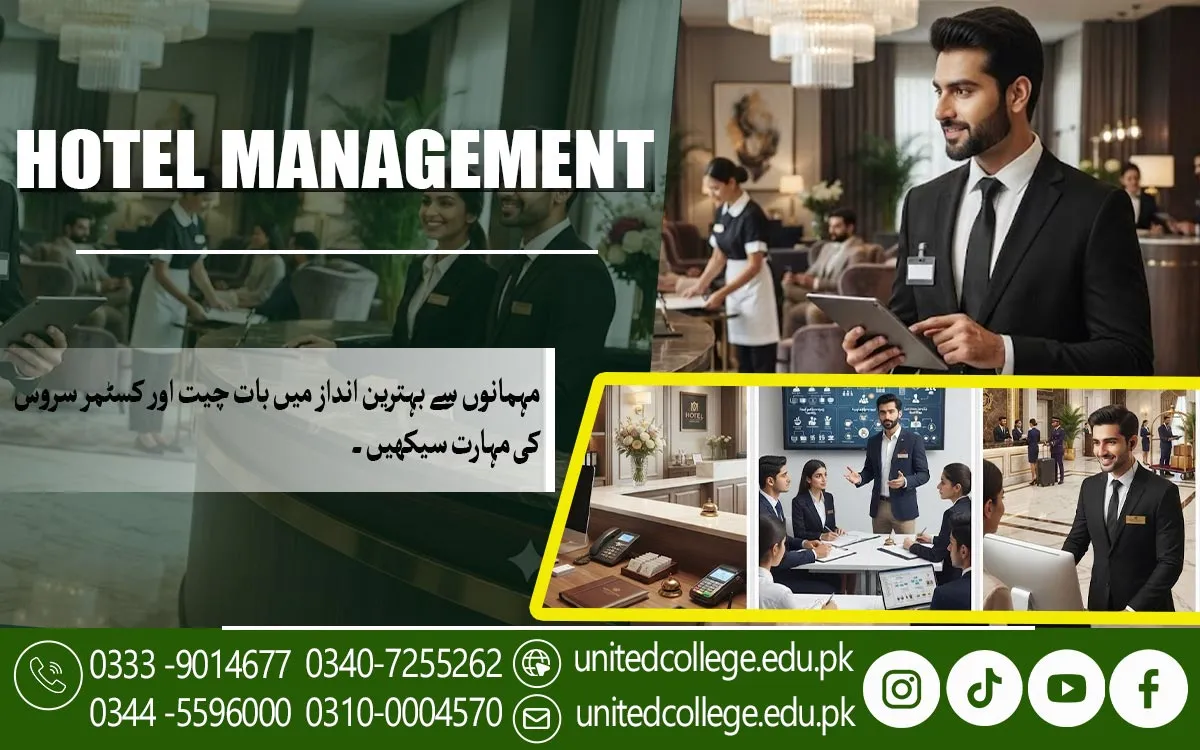

Hotel Management Course in Okara – Build Practical Skills
What Really Makes a Hotel Experience Memorable
A hotel may appear simple and peaceful to a guest, but behind every comfortable stay there is a team managing many responsibilities at the same time. Someone welcomes the guest, another person handles the reservation, housekeeping prepares the room, restaurant staff manages food service, and different departments continue coordinating throughout the day. When these tasks are performed professionally, the guest may simply feel that everything is working smoothly without realizing how much planning is involved.
This is what makes hospitality an interesting field for students and fresh learners who enjoy meeting people, organizing work, solving everyday problems, and creating a positive service experience. A Hotel Management Course in Okara can introduce learners to this practical side of the hospitality industry and help them understand how hotels, restaurants, resorts, guest houses, and other service environments operate. Instead of focusing only on theory, students can explore the responsibilities behind guest service, hotel operations, front office work, housekeeping, food and beverage service, communication, and professional workplace behavior.
Why Every Detail Matters in Hotel Operations
A good hotel experience is usually created through many small details rather than one single task. A guest may remember how politely they were welcomed, whether their room was ready on time, how quickly their request was handled, or whether the dining service felt organized and professional. These details are connected to different areas of hotel operations, which means staff need to understand both their individual responsibilities and how their work affects other departments. Through a Hotel Management Course, learners can become familiar with guest services, hotel administration, front office operations, housekeeping, restaurant operations, and service standards.
They can also understand why punctuality, cleanliness, organization, professional behavior, and attention to detail are important in hospitality. For a beginner, this broader understanding can make the hotel industry easier to understand because it shows that hospitality is not simply about welcoming guests. It is about creating an organized environment where different services work together to provide a comfortable and professional experience.
Developing Front Office Skills From the First Guest Greeting to Check-Out
The front office is one of the most visible parts of a hotel because it is often where guests begin and end their interaction with the property. This makes front office management an important area for anyone interested in hotel career skills. Learners can become familiar with basic reception practices, reservation management, guest communication, check-in procedures, check-out procedures, record handling, and responding to common guest questions. Although these tasks may look straightforward, they require accuracy, patience, organization, and professional communication. A small mistake in reservation details or room information can create confusion, so front desk staff need to pay attention while handling information.
Students can also learn how to communicate with guests respectfully when they have questions, requests, or concerns. Developing these skills can help beginners understand how a professional reception operates and why the front office plays such an important role in shaping the first impression of a hotel. The experience also helps learners see how customer service skills and administrative responsibilities come together in everyday hotel work.
Keeping Hotel Rooms Ready With Professional Housekeeping
Cleanliness is one of the first things guests expect when they enter a hotel room, which is why housekeeping management is an essential part of hotel operations. A room needs to be properly prepared, organized, hygienic, and checked before it is made available to a guest. Hotel housekeeping involves more than basic cleaning because staff also need to pay attention to room condition, supplies, linen, presentation, hygiene procedures, and workplace organization. In a Hotel Management Course in Okara, learners can develop an understanding of how housekeeping teams contribute to the overall guest experience and how their work connects with the front office.
For example, reception staff need accurate information about room status, while housekeeping may need updates about arrivals, departures, or special guest requirements. Good coordination can reduce confusion and help departments complete their responsibilities more efficiently. Students can also learn why attention to detail matters in housekeeping because a small issue that goes unnoticed can affect a guest’s impression of the entire hotel. This makes cleanliness, organization, and consistency important practical skills for anyone interested in hospitality.
Turning Communication and Customer Service Into Practical Skills
Food and beverage service can play a major role in the overall guest experience, especially in hotels that operate restaurants, cafés, dining areas, room service, or event catering. Guests often judge a dining experience not only by the food but also by how they are welcomed, how their order is handled, how the dining area is maintained, and how professionally staff respond to their needs. Through a Hotel Management Course, learners can explore basic food service procedures, restaurant operations, customer interaction, dining area organization, service standards, and coordination between kitchen and service staff. This coordination is particularly important because restaurant service depends on teamwork and accurate communication.
Working in hospitality means dealing with people throughout the day, so communication is one of the most useful skills a learner can develop. Hotel staff may interact with guests asking for directions, requesting additional services, making reservations, asking questions about facilities, or raising concerns about their experience. Handling these situations professionally requires more than memorizing standard responses. Staff need to listen carefully, understand the actual request, remain polite, and communicate information clearly. Customer service also involves staying calm when a guest is unhappy and trying to identify a practical way to respond within workplace procedures.
Learning Hotel Management Through Practical Workplace Situations
Hospitality is a practical field, so students can benefit from learning how hotel procedures work in realistic situations rather than relying only on classroom explanations. Practical hotel management training can help learners connect concepts with everyday responsibilities such as welcoming guests, handling reservations, following service procedures, maintaining professional behavior, organizing tasks, and coordinating with different departments. Practical learning can also help beginners become more comfortable with workplace expectations, including punctuality, communication, teamwork, cleanliness, responsibility, and attention to detail.
At United College of Technology, the Hotel Management Course in Okara can introduce students to important areas of hotel operations while helping them understand how hospitality responsibilities are handled in professional environments. The purpose of this type of training is not to promise an automatic career outcome but to provide learners with knowledge and practical awareness that they can continue developing through experience. Students who understand why a procedure is important are often better prepared to apply that knowledge when they encounter similar situations in a real workplace.
Understanding How Every Hotel Department Depends on Another
A hotel functions as one connected system, even though different employees may have completely different responsibilities. The front office may manage reservations and guest arrivals, while housekeeping prepares rooms and updates their condition. The restaurant team handles food service, and administration supports records, scheduling, supplies, and other operational requirements. These departments cannot work effectively if they fail to communicate with each other. For example, a room may need to be prepared quickly after a previous guest checks out, while the front desk needs updated information before assigning that room to another guest. Similarly, a guest may make a request at reception that needs to be communicated to housekeeping or another service team.
Learning about this coordination helps students understand why teamwork is such an important part of hospitality management. A Hotel Management Course in Okara can help learners explore these connections and understand how hotel staff responsibilities fit into the larger operation. This broader knowledge can also help students identify which department matches their interests while appreciating the work performed by other teams.
Exploring Different Hospitality Environments and Career Directions
Hotel management skills can be useful in several types of hospitality environments, so students do not necessarily have to think only about traditional hotels when considering their future direction. The hospitality industry includes hotels, restaurants, resorts, guest houses, catering businesses, event-related services, and other customer-focused workplaces. Depending on their education, skills, practical experience, and employer requirements, beginners may explore entry-level areas such as front desk support, guest services, housekeeping, restaurant service, reservations, or administrative work.
Each area has different responsibilities, and some roles require frequent guest interaction while others involve more organization, coordination, or operational work. This is why students can benefit from exploring different parts of the field before deciding where they would like to build further experience. Hospitality jobs should be approached with realistic expectations because completing a course alone cannot guarantee a particular position or salary. Instead, training can provide a foundation of practical knowledge, while communication skills, workplace discipline, experience, and continued learning can help a person gradually develop their professional abilities.
Finding Out Whether Hospitality Matches Your Personality and Goals
Choosing a hotel management field becomes easier when students understand the type of work involved and consider whether it matches their own interests and strengths. Someone who enjoys meeting people and communicating may feel comfortable exploring guest relations or front desk operations, while a person who prefers organized and detail-focused work may be more interested in housekeeping management or hotel administration. Learners who enjoy food service may find restaurant operations and food and beverage management more interesting, while others may prefer coordination and general hotel operations.
Regardless of the department, hospitality requires patience, teamwork, professional communication, time management, responsibility, and the ability to handle changing situations. A Hotel Management Course in Okara can provide a structured way for beginners to explore these areas and understand the practical responsibilities involved in hospitality work. Students can use this learning experience to recognize their strengths, improve areas where they need more practice, and decide which part of the hospitality industry they would like to explore further. With realistic expectations and consistent effort, developing these skills can become a useful starting point for continued learning and professional growth in hospitality.
Frequently Asked Questions (FAQs)
A Hotel Management Course in Okara introduces students to hotel operations, guest services, front office work, housekeeping, food and beverage service, and hotel administration.
Students, fresh learners, college graduates, and people interested in hotels, restaurants, tourism, and the hospitality industry can consider joining the course.
Students can learn about front office management, reservation management, housekeeping, guest relations, food service, restaurant operations, customer service, communication, and professional workplace practices.
Customer service helps hotel staff understand guest needs, handle requests professionally, communicate clearly, and contribute to a positive overall guest experience.
Hotel management skills can be useful in hotels, restaurants, resorts, guest houses, catering businesses, and other hospitality-related workplaces.
Admission Open: Start Your Professional Journey Today!
Join United College of Technology and build a career with practical training, recognized certifications, and Gulf job support. Seats are limited.
Apply Now via WhatsAppContact Information
- Address: Rawalpindi: F-272 Main New Katarian Stop, Old IJP Road | Lahore Campus: Lahore, Pakistan
- Phone/WhatsApp: 0340-7255262 / 0333-9014677 / 0301-5044340 / 0310-0004570 / 051-8770756
- Website: unitedcollege.edu.pk
















Leave a Comment