

Quality Control Course in Hyderabad for a Successful Career
Build a Strong Future with the Quality Control Course in Hyderabad
The industrial sector is growing rapidly, and companies are paying more attention to the quality of their products than ever before. Customers expect safe, reliable, and high-quality products, which is why businesses need trained professionals who can maintain strict quality standards. The Quality Control Course in Hyderabad provides an excellent opportunity for students and professionals to learn the skills required to inspect products, identify defects, and improve manufacturing processes. Whether a company produces machinery, medicines, food products, textiles, or construction materials, quality control plays an essential role in ensuring customer satisfaction and business success.
Quality control professionals help organizations reduce production mistakes, minimize waste, and improve efficiency throughout the manufacturing process. Their work ensures that products meet customer expectations and comply with industrial regulations before reaching the market. As industries continue expanding in Pakistan and internationally, the demand for trained quality control experts continues to increase. This course introduces students to modern inspection techniques, industrial procedures, and practical quality management methods that prepare them for successful careers.
Understand How Quality Control Protects Every Industry
Quality control is much more than checking finished products. It is a complete process that begins with inspecting raw materials, monitoring production activities, and evaluating finished goods before they reach customers. Every successful manufacturing company depends on Quality Control Course Training because maintaining consistent quality helps reduce production costs, improve customer trust, and strengthen the company's reputation. Without proper quality control, even small production mistakes can result in expensive recalls, customer complaints, and financial losses.
Students learn that quality control professionals monitor every stage of production to ensure products meet required specifications and Industrial Quality Standards. They become familiar with Product Quality Management systems that help organizations maintain consistency in every manufacturing process. The course also explains how quality control works together with quality assurance to prevent problems before they occur. Understanding these principles enables students to contribute effectively in industries such as manufacturing, pharmaceuticals, engineering, food processing, textiles, automotive production, and construction.
Learn Practical Inspection Techniques Used in Modern Industries
Modern industries rely on accurate inspection methods to maintain high-quality production standards. During the course, students receive practical exposure to different Quality Inspection Techniques that help identify defects before products reach customers. Instead of simply learning theoretical concepts, learners practice inspection procedures that are commonly used in industrial workplaces. This practical approach allows students to understand how quality inspections improve productivity while reducing manufacturing errors.
The training introduces various Inspection and Testing Methods used to examine dimensions, appearance, materials, and product performance. Students also become familiar with Industrial Testing Procedures that help verify whether products comply with customer requirements and company specifications. Practical exercises improve observation skills, analytical thinking, and decision-making abilities, enabling learners to perform inspections with greater confidence. These valuable experiences prepare graduates to handle real workplace responsibilities where precision and attention to detail are essential for maintaining industrial excellence.
Develop Professional Skills Through Hands-On Industrial Training
Practical learning is one of the most valuable parts of the Quality Control Course in Hyderabad because industries prefer professionals who can perform real inspection tasks rather than simply understand theory. United College of Technology combines classroom education with practical workshops that allow students to experience industrial quality control procedures firsthand. This balanced learning method helps students understand how quality systems operate inside manufacturing facilities while building confidence through practical experience.
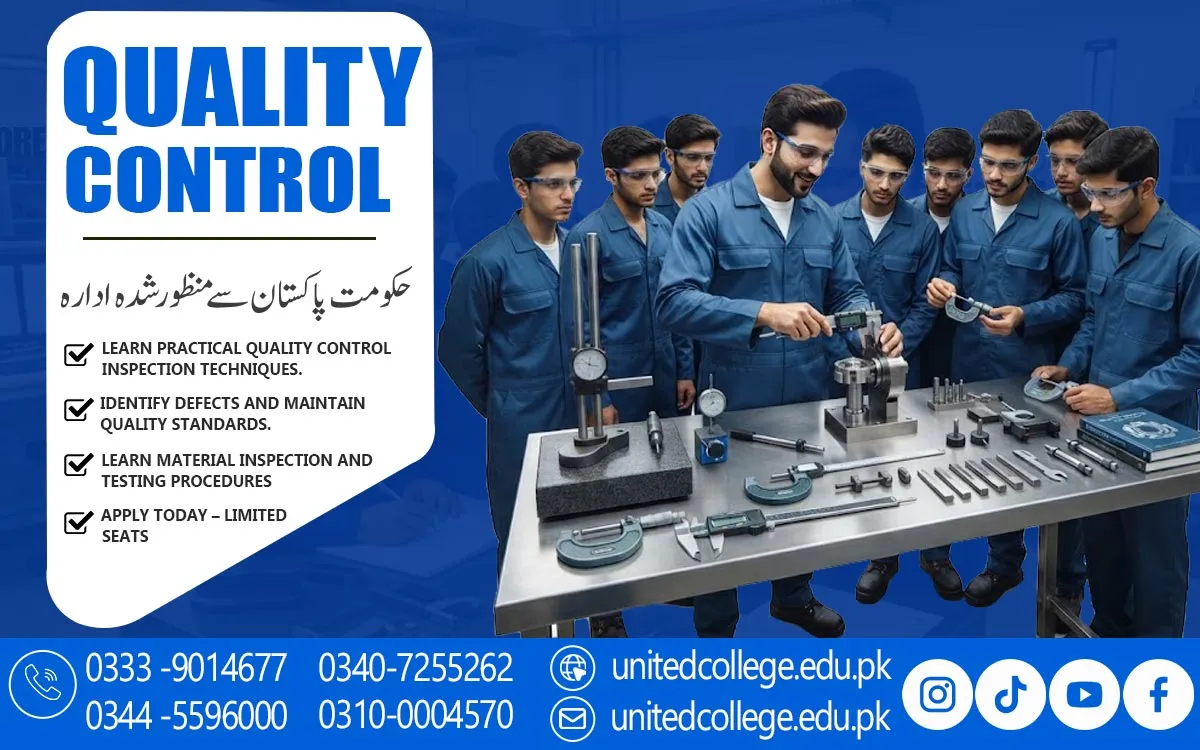
Students receive Practical Quality Control Training using measuring instruments, inspection tools, testing equipment, and industrial documentation methods. They learn how to inspect products, record inspection results, identify production defects, and recommend corrective actions that improve manufacturing performance. Practical exercises simulate real workplace situations, allowing learners to strengthen their technical knowledge and problem-solving abilities.
Master Technical Drawings, Measuring Instruments, and Testing Equipment
Quality control professionals must understand engineering drawings and technical specifications because every manufactured product is produced according to precise measurements and design requirements. During the Quality Control Course, students learn how to read technical drawings, understand symbols, interpret dimensions, and compare finished products with engineering specifications. These skills are essential for maintaining production accuracy and preventing manufacturing errors that could affect product quality. Through this training, learners develop the ability to analyze product requirements and ensure that every item meets the required industrial standards.
Accurate measurement is one of the most important responsibilities of a quality control inspector because even the smallest variation can affect product performance. Students develop confidence using inspection equipment while learning proper calibration methods and measurement techniques. These practical skills support Manufacturing Quality Control and prepare learners to perform professional inspections in a wide range of industrial environments. By gaining hands-on experience with tools and testing methods, students improve their Quality Control Skills and become better prepared for real workplace challenges.
Build Knowledge of Quality Management Systems and ISO Standards
Modern companies follow organized quality systems that help them consistently produce reliable products while improving operational efficiency. Understanding a Quality Management System is an important part of becoming a successful quality control professional because it provides a structured approach to maintaining product quality throughout every stage of production. Through the Quality Control Course, students learn how documented procedures, inspections, corrective actions, and continuous improvement activities work together to support business success.
The Quality Control Course also introduces internationally recognized ISO Quality Standards that many organizations follow to improve product quality and maintain consistent production processes. Students understand how these standards influence manufacturing operations, documentation procedures, and quality audits. Knowledge of international quality systems increases employment opportunities because employers value professionals who understand global industrial practices and modern quality management techniques.
Discover Career Opportunities Across Multiple Industrial Sectors
One of the greatest advantages of completing a quality control program is the wide range of employment opportunities available in different industries. Almost every manufacturing and production company requires skilled professionals who understand inspection procedures, quality assurance methods, and industrial quality standards. This creates excellent career prospects for graduates who complete professional Quality Control Certification programs and continue developing their technical expertise.
After completing the training, graduates can work as quality control inspectors, quality assurance assistants, production quality supervisors, inspection technicians, laboratory quality staff, process control assistants, or industrial quality coordinators. Industries such as pharmaceuticals, food processing, engineering, textiles, construction, automotive manufacturing, oil and gas, electronics, packaging, and heavy industries actively recruit trained quality professionals. As industrial development continues across Pakistan and international markets, the demand for qualified inspectors and quality specialists continues to grow steadily.
Continue Growing Through Professional Learning and Industry Certifications
The industrial sector continues to adopt new technologies, modern manufacturing equipment, and advanced quality management practices. As a result, successful quality control professionals understand the importance of continuous learning throughout their careers. Completing a Quality Assurance Course provides an excellent starting point, but gaining additional certifications and practical experience can lead to better job opportunities, higher salaries, and leadership positions within quality departments.
Professional development helps individuals stay updated with changing Quality Assurance Techniques, inspection technologies, and international quality standards. Employers often prefer candidates who actively improve their knowledge because they can contribute more effectively to process improvement and production efficiency. Continuous learning also strengthens confidence, improves technical decision-making, and supports long-term career growth in both local and international industries where quality remains a top priority.
Start Your Professional Journey with United College of Technology
Choosing the right institute can make a significant difference in your future career. United College of Technology has developed its Quality Control Course in Hyderabad to meet the needs of modern industries by combining practical training with professional knowledge. The experienced instructors guide students through real industrial concepts while providing hands-on learning opportunities that develop technical confidence and workplace readiness.
The learning environment encourages students to understand industrial challenges and apply effective solutions using modern quality control methods. The course is suitable for fresh students, diploma holders, technicians, and working professionals who want to improve their qualifications and build successful industrial careers. By learning QC Inspector Training, Industrial Inspection Training, Production Quality Assurance, and practical inspection procedures, graduates become better prepared for employment in manufacturing, engineering, pharmaceuticals, construction, food production, and many other industries.
Frequently Asked Questions (FAQs)
A Quality Control Course in Hyderabad is a professional training program designed to teach students how to maintain product quality, perform inspections, identify defects, and follow industrial quality standards. The course helps learners develop practical skills required to work in different manufacturing and industrial sectors.
This course is suitable for fresh students, diploma holders, technicians, and working professionals who want to improve their technical knowledge and build a career in quality control. Anyone interested in industrial inspection, testing procedures, and quality management can benefit from this training.
Students learn important skills such as product inspection, defect identification, measuring techniques, quality documentation, testing methods, technical drawing reading, and quality assurance practices. These skills help learners perform professional responsibilities in quality control departments.
After completing the course, students can work as Quality Control Inspectors, QC Assistants, Quality Assurance Staff, Inspection Technicians, and Production Quality Supervisors. Graduates can find opportunities in industries like manufacturing, construction, pharmaceuticals, engineering, textiles, and food production.
Quality control professionals help companies maintain product standards, reduce production errors, improve efficiency, and ensure customer satisfaction. Their role is important because businesses depend on skilled inspectors to deliver safe and reliable products.
Yes, a professional quality control course includes practical training where students learn inspection techniques, use measuring instruments, understand testing procedures, prepare reports, and practice real industrial quality control activities. This hands-on experience helps students become confident for workplace challenges.
Admission Open: Start Your Professional Journey Today!
Join United College of Technology and build a career with practical training, recognized certifications, and Gulf job support. Seats are limited.
Apply Now via WhatsAppContact Information
- Address: Rawalpindi: F-272 Main New Katarian Stop, Old IJP Road | Lahore Campus: Lahore, Pakistan
- Phone/WhatsApp: 0340-7255262 / 0333-9014677 / 0301-5044340 / 0310-0004570 / 051-8770756
- Website: unitedcollege.edu.pk
















Leave a Comment