


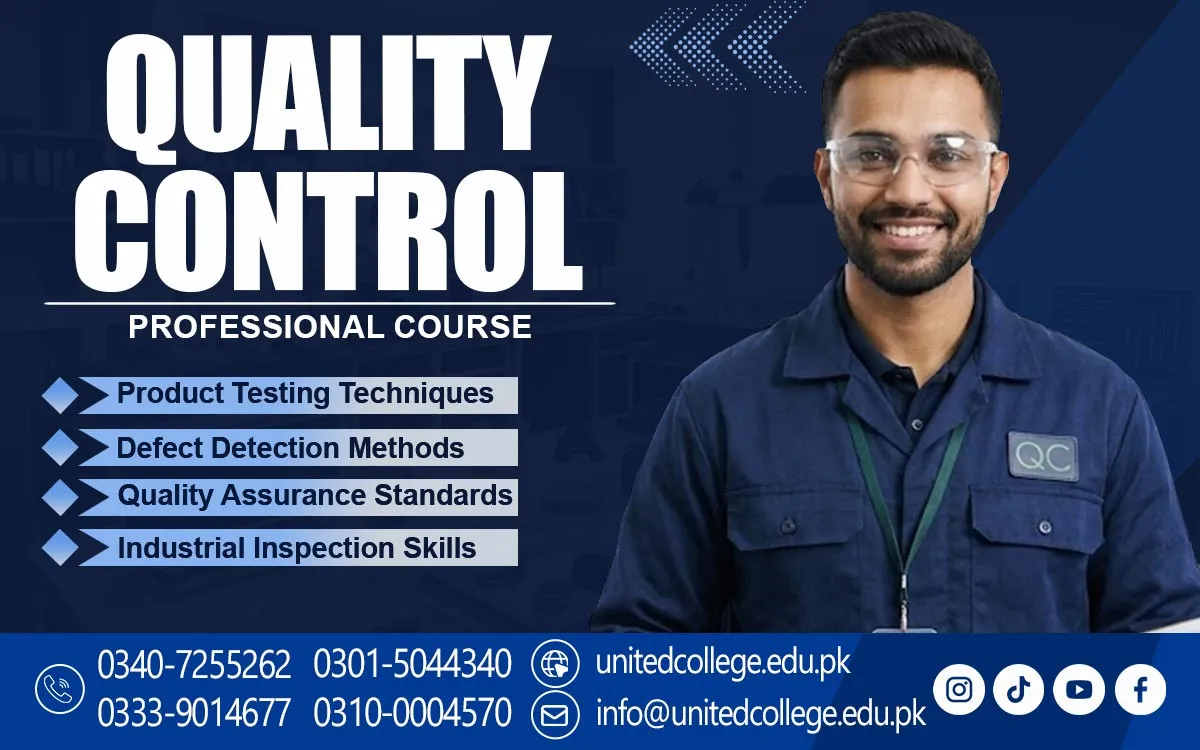

Quality Control Course in Khurram Agency for Beginners
Quality Problems That Can Affect Industrial Projects
A construction project may appear perfectly organised, but a hidden material defect can create problems during later stages of work. For example, low-quality concrete, damaged steel bars, incorrect measurements, or unsuitable building materials can affect the final result. In manufacturing, a product with the wrong dimensions or a faulty component may cause customer complaints and additional production costs. These situations show why quality inspection should be part of regular workplace activities rather than something performed only at the end of a project. Quality control involves checking materials, products, processes, and finished work to make sure they meet the required standards.
A trained inspector observes different details, identifies possible defects, and reports problems before they become more serious. Students taking the Quality Control Course in Khurram Agency can develop an understanding of these responsibilities through beginner-friendly learning. They can explore how quality checks support workplace safety, reduce material waste, and improve customer satisfaction. Understanding the importance of product quality inspection also helps learners recognise that even a small mistake can affect an entire production process. These skills are relevant to different industries where accuracy, consistency, and reliable results are important.
Technical Knowledge Developed Through Quality Control Training
Quality control training introduces students to the knowledge required to examine materials, products, and workplace activities. Beginners first need to understand what makes a product acceptable and how inspectors compare actual results with specified requirements. During a Quality Control Course in Khurram Agency, learners can study important subjects such as inspection procedures, material checking, measurement techniques, defect identification, and quality documentation. They can also develop an understanding of quality assurance and quality management skills used in different industries. For example, an inspector working in a manufacturing facility may check whether a product has the correct shape, size, finishing, and material condition.
In a construction environment, the same professional may examine building materials and review whether work follows approved specifications. Students can learn why each inspection requires attention, patience, and accurate observations. Quality control training also introduces the importance of following instructions instead of making decisions based on personal assumptions. Through these learning areas, beginners can understand the responsibilities of a quality inspector and the connection between technical knowledge and workplace performance. This foundation can help learners become more familiar with industrial quality control practices and prepare them to understand inspection-related tasks in professional environments.
Quality Assurance and Quality Control in Workplace Operations
Quality assurance and quality control are closely related, but they perform different roles in maintaining standards. Quality assurance focuses on preventing problems by improving the processes used to create a product or complete a project. It includes planning, following procedures, reviewing work methods, and making sure that suitable systems are in place. Quality control focuses more directly on checking the actual materials, products, or completed work to identify defects and confirm that requirements have been met. For example, a factory may use quality assurance procedures to guide workers during production, while quality control inspectors examine finished items to check their size, appearance, and performance.
Both activities are important because preventing mistakes and identifying existing defects help maintain consistent results. Students studying quality assurance and quality control can learn how these responsibilities work together in construction, manufacturing, and other industrial settings. The Quality Control Course in Khurram Agency introduces beginners to these concepts in simple language so they can understand the purpose of different inspection activities. Learners can also explore how quality standards, workplace instructions, and inspection records support organised operations. This knowledge helps them understand why companies need proper procedures instead of depending only on final product checks.
Inspection Techniques for Identifying Material and Product Defects
An inspector needs more than basic observation skills to identify quality problems accurately. Different materials and products require different inspection techniques, depending on their purpose, condition, and industry requirements. Visual inspection is one common method that involves examining an item for visible damage, cracks, scratches, rust, incorrect finishing, or other defects. Measurement is another important activity because even a small difference in size can affect how a component fits into a larger product or structure. Students can learn about measurement and testing techniques and understand how inspection tools help workers obtain more reliable results.
For example, a measuring tape or ruler can be used to check basic dimensions, while a vernier caliper can measure smaller distances more accurately. In manufacturing, an inspector may examine a metal component to identify surface damage or incorrect dimensions before it moves to the next production stage. In construction, checking the condition and measurements of materials can help identify problems before installation. Quality inspector training also develops attention to detail because inspectors must notice small defects that other workers might overlook. Through practical quality control training, beginners can understand how inspection methods help maintain product quality and reduce avoidable mistakes.
Quality Standards and Inspection Documentation in Professional Work
Quality standards and workplace procedures provide clear requirements that help employees understand what is acceptable and what needs correction. These requirements may cover material specifications, product dimensions, testing methods, finishing, safety conditions, and inspection responsibilities. A quality inspector uses relevant instructions and checklists to examine work systematically. For example, during a construction material inspection, the inspector may check the material type, quantity, visible condition, and information provided by the supplier. If a material does not meet the required specification, the issue should be recorded and reported to the responsible person.
Documentation is therefore an important part of quality management. Inspection reports usually contain details such as the date, inspected item, observations, test results, identified defects, and recommended actions. Accurate records help supervisors understand repeated problems and decide what needs improvement. During the Quality Control Course in Khurram Agency, learners can develop an understanding of why inspection reports, checklists, and workplace records are necessary. They can also learn that clear communication is important when reporting defects because incomplete information may delay corrective action. Proper documentation supports accountability and makes it easier for organisations to monitor quality throughout their operations.
Quality Control Practices in Construction and Manufacturing Industries
Quality control is used in several industries because every organisation needs reliable materials, products, and working processes. In construction, inspectors may examine cement, sand, steel, concrete, bricks, and other building materials to check whether they meet project requirements. They may also review measurements, surface finishing, installation work, and construction activities according to approved specifications. Incorrect measurements can create alignment problems, material wastage, or difficulties during the next stage of a project. Manufacturing industries have different inspection requirements because products often pass through several production stages.
A damaged component, incorrect size, weak connection, or poor finishing can affect the performance of the final product. Quality control methods help workers identify these issues before products reach customers. In production facilities, regular quality checks also help maintain consistency between different batches of products. Engineering workshops may use inspection procedures to examine machine parts, tools, and fabricated components. Students enrolled in the Quality Control Course in Khurram Agency can explore these industrial applications and understand how inspection responsibilities change according to the type of workplace. Learning about construction quality control and manufacturing quality inspection gives beginners a clearer picture of the practical importance of quality management in professional operations.
Practical Inspection Tools and Quality Testing Activities
Understanding inspection methods becomes more useful when learners know how different tools are used during quality checks. Inspectors work with various instruments depending on the material, product, and required measurement. Basic equipment may include measuring tapes, rulers, vernier calipers, micrometers, weighing scales, and other inspection instruments. Each tool has a specific purpose. A measuring tape helps check longer dimensions, while a vernier caliper can measure smaller distances with greater accuracy. A weighing scale can help verify whether a product or material meets its specified weight. In some industries, specialised testing equipment is also used to examine material strength, hardness, thickness, or other properties.
Students need to understand that selecting the correct tool and using it properly are both important for reliable results. During practical quality control learning, beginners can become familiar with inspection activities such as checking dimensions, examining surface conditions, comparing results with specifications, and recording observations. For example, if a manufactured component is slightly larger than its required measurement, it may not fit correctly during assembly. Identifying this issue before further production can prevent unnecessary delays and material waste. The Quality Control Course in Khurram Agency helps learners understand the connection between inspection equipment, accurate measurements, and professional quality control procedures.
Professional Skills and Industry-Related Career Opportunities
Construction companies, manufacturing plants, engineering workshops, production facilities, and industrial projects all depend on suitable inspection procedures to maintain their required standards. Depending on their qualifications and experience, trained individuals may explore roles such as quality control assistant, quality inspector, inspection technician, production quality checker, or junior quality assurance staff. However, the responsibilities of these positions can differ between organisations. Some employers require additional technical education, previous industry experience, specialised training, or knowledge of particular quality standards. Along with technical knowledge, quality professionals need several personal skills to perform their duties effectively.
Attention to detail helps them notice small defects, while communication skills allow them to explain inspection findings clearly. Problem-solving skills are useful when identifying possible reasons behind repeated quality issues. Time management also matters because inspections must be completed without unnecessarily interrupting workplace operations. The Quality Control Course in Khurram Agency can help beginners understand these professional requirements and develop a foundation in quality inspection techniques. For learners in Khurram Agency who want to explore technical education, quality control training can provide useful knowledge about industrial operations. Career progress, however, depends on individual performance, further qualifications, practical experience, and employer requirements.
Skill Development Through United College of Technology
Learning a technical subject becomes easier when students can connect classroom knowledge with practical workplace situations. United College of Technology (UCT) offers the Quality Control Course in Khurram Agency for learners interested in understanding quality inspection, quality assurance, and industrial quality management. The training focuses on introducing important concepts in a way that beginners can follow without needing advanced technical knowledge before starting. Students can develop an understanding of inspection procedures, measurement methods, material checking, defect identification, quality standards, and documentation. These subjects help learners recognise how quality control activities are performed in construction, manufacturing, and other professional environments.
For someone who has never studied quality management before, learning these concepts can provide a useful starting point for further technical development. Students from Khurram Agency can explore quality control training to improve their understanding of industry-related responsibilities and the skills expected in inspection work. United College of Technology aims to support learners through technical education that connects important concepts with practical industry knowledge. Developing a strong understanding of quality control takes regular learning, careful observation, and continued practice, but these foundations can help beginners approach professional inspection responsibilities with greater confidence.
Frequently Asked Questions (FAQs)
Quality control training helps students understand how to inspect materials, identify defects, check product measurements, and maintain required quality standards in different industries.
Yes, beginners can study quality control concepts without having previous industrial experience. Basic technical knowledge can be helpful, but the training introduces important concepts in an understandable way.
A quality inspector checks materials, products, and completed work for defects, while a quality assurance officer focuses on improving processes to prevent quality problems.
Common inspection instruments include measuring tapes, vernier calipers, micrometers, weighing scales, and specialised testing equipment. The selection depends on the material and inspection requirements.
Regular inspection helps identify damaged materials and defective products before they move to the next production stage. This can reduce unnecessary rework, material loss, and production delays.
Admission Open: Start Your Professional Journey Today!
Join United College of Technology and build a career with practical training, recognized certifications, and Gulf job support. Seats are limited.
Apply Now via WhatsAppContact Information
- Address: Rawalpindi: F-272 Main New Katarian Stop, Old IJP Road | Lahore Campus: Lahore, Pakistan
- Phone/WhatsApp: 0340-7255262 / 0333-9014677 / 0301-5044340 / 0310-0004570 / 051-8770756
- Website: unitedcollege.edu.pk
















Leave a Comment