


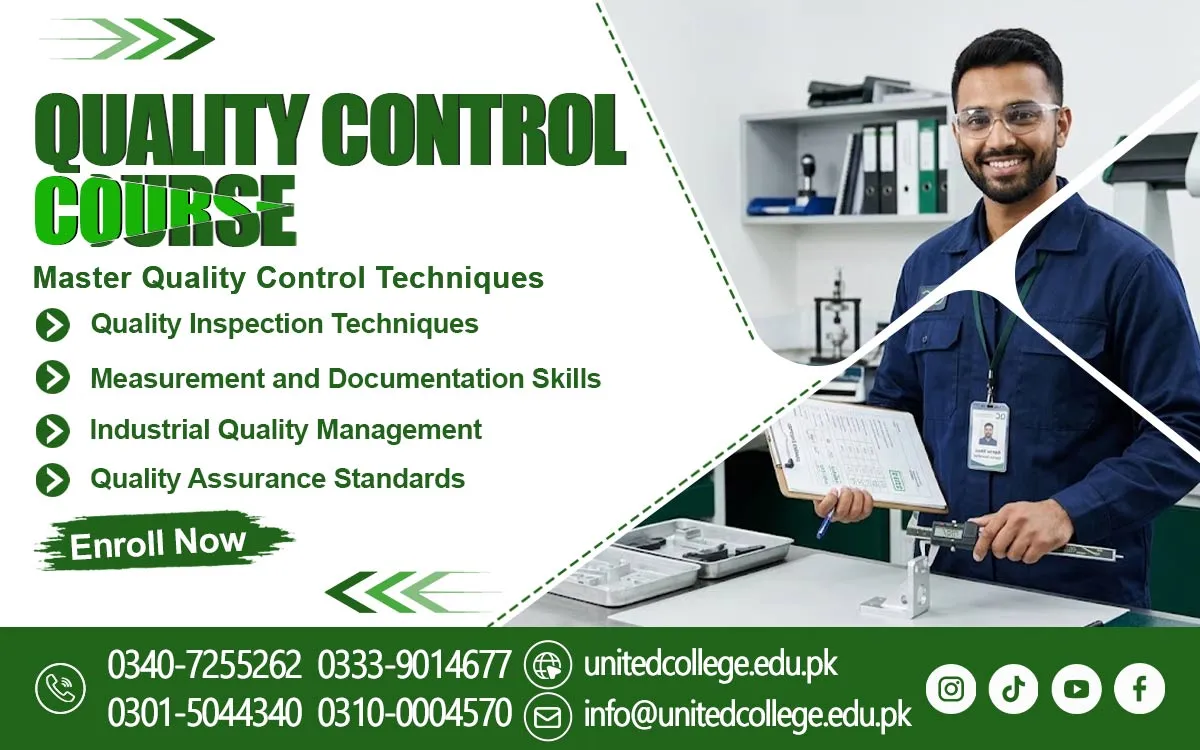

Quality Control Course in Malakand for Skill Development
Quality Control Course – Develop Practical Inspection and Quality Management Skills
A construction project may look complete, but what happens when the concrete does not meet the required strength or the materials fail an inspection? Similarly, a manufacturing company can face customer complaints when products contain defects or do not match the required measurements. These problems can lead to wasted materials, additional expenses, project delays, and reduced customer trust. This is why quality inspection and proper testing are important in technical and industrial work.
People working in these fields need to understand how to check materials, identify defects, follow quality standards, and maintain accurate records. The Quality Control Course in Malakand, offered by United College of Technology (UCT), provides learners with an opportunity to develop knowledge of quality inspection, testing procedures, and industrial quality management. It is a useful learning option for students, fresh learners, and individuals interested in developing technical skills related to construction, manufacturing, and other industrial sectors.
The Role of Quality Inspection in Preventing Workplace Mistakes
A small mistake during production or construction can create a much bigger problem if nobody notices it at the right time. For example, incorrect measurements in a building project may affect the fitting of doors, windows, or structural components. In a factory, a product with a damaged surface or incorrect size may reach customers if it is not inspected properly. Quality control helps prevent such situations by checking materials, products, and completed work against specific requirements. During quality inspection, workers examine different items to identify visible damage, measurement errors, weak materials, and other defects. They also compare results with approved specifications to determine whether something meets the expected standard.
The Quality Control Course in Malakand introduces learners to the importance of these inspection activities and explains how quality checks support better workplace performance. Students can develop an understanding of why accuracy, consistency, and attention to detail matter in technical environments. Quality control is not simply about finding mistakes after work has finished. It also involves checking different stages of a process so that problems can be identified before they become more difficult and expensive to correct. This approach helps businesses reduce unnecessary waste, maintain product quality, and complete projects according to their required specifications.
Technical Learning Opportunities Through Quality Control Training in Malakand
Technical industries depend on workers who can understand inspection requirements and recognise problems during different stages of work. In construction, materials must be checked before they are used, while manufacturing units need regular inspections to maintain consistent product quality. These responsibilities create a need for people who understand quality control methods and workplace procedures. Quality Control Training in Malakand can help interested learners build an understanding of these important responsibilities without requiring them to have advanced technical knowledge at the beginning. Students can gradually learn how inspection activities are planned, how testing results are recorded, and why materials must meet specific requirements before being approved for use.
The training is particularly relevant for individuals interested in construction quality control, manufacturing quality control, and industrial inspection. It can also help learners understand the connection between technical knowledge and practical workplace responsibilities. People who are new to this field can become familiar with common inspection terms, measurement methods, and quality documentation. Developing these skills requires patience and regular practice because even a small measurement difference can affect the final result of a product or project. Through structured learning, students can build a stronger understanding of quality-related responsibilities and prepare themselves for further technical learning in this field.
Essential Subjects Covered in Quality Control and Quality Assurance Training
One important area is quality inspection, which focuses on checking whether an item meets its required specifications. Students can also learn about defect identification, including the recognition of cracks, surface damage, incorrect dimensions, and material inconsistencies. Another important subject is measurement and testing methods. These methods help inspectors check the size, weight, thickness, and other properties of materials or products using suitable instruments. Quality assurance is another relevant area because it focuses on improving work processes and reducing the chances of mistakes. Learners may also become familiar with inspection checklists, sampling methods, testing procedures, and quality-related documentation.
The Quality Control Course in Malakand can introduce these topics in a way that helps beginners understand their practical importance. For example, when a batch of manufactured products is ready for inspection, a quality inspector may check selected items to identify whether their dimensions and appearance match the approved requirements. If a problem is found, the result needs to be recorded and reported to the relevant person. Understanding these subjects helps learners recognise how different inspection activities work together to maintain product quality and support reliable industrial operations.
Practical Inspection Skills and the Use of Quality Control Tools
Imagine a worker receiving a batch of metal components for a manufacturing project. At first glance, the pieces may look identical, but a closer inspection could reveal differences in thickness, length, or surface condition. This is where practical quality control skills become useful. Inspectors use different measuring instruments to check whether materials and products match the required specifications. Common tools include measuring tapes, vernier calipers, micrometers, weighing scales, and other inspection equipment, depending on the type of work. Learners can develop an understanding of how these instruments are used and why correct measurements are important.
Another important skill is visual inspection, which involves examining products for visible defects such as scratches, cracks, dents, uneven surfaces, and damaged edges. Students can also learn the importance of maintaining inspection records, completing checklists, and preparing clear reports. Documentation and reporting help supervisors understand which items have passed inspection and which require further checking or correction. These skills help inspectors share their findings with engineers, supervisors, production teams, and other workers. Practical knowledge of inspection techniques can make learners more familiar with the responsibilities involved in maintaining quality across different technical workplaces.
The Difference Between Quality Control and Quality Assurance in Industrial Work
Quality control mainly focuses on examining products, materials, and completed work to identify defects or differences from approved requirements. Quality assurance focuses on the processes and procedures used to prevent problems from occurring in the first place. For example, in a manufacturing factory, a quality control inspector may examine finished products to check their dimensions, appearance, and performance. If a product does not meet the required specifications, it may be separated for further inspection. On the other hand, quality assurance involves reviewing the production process, checking working procedures, and making improvements that can reduce the chances of similar defects.
Both areas are important because inspecting finished products alone cannot solve every quality-related problem. A company also needs reliable procedures that help workers perform tasks correctly from the beginning. Through QA/QC training, learners can understand how these two areas support each other in construction, manufacturing, and industrial environments. This knowledge can help students understand the responsibilities of quality inspectors, QA assistants, and other technical staff. Learning the difference between quality control and quality assurance also makes it easier to understand how organisations maintain consistent standards while improving their daily operations.
Quality Standards, ISO Guidelines, and Accurate Inspection Documentation
A company cannot maintain consistent quality if every worker follows a different method of checking materials or products. This is why industries use defined quality standards, inspection procedures, and documentation systems. These guidelines provide a common reference for evaluating work and maintaining consistency. One widely recognised example is ISO 9001, which relates to quality management systems and helps organisations establish processes for maintaining and improving quality. During the Quality Control Course, learners can develop a basic understanding of quality management systems (QMS), standard operating procedures, inspection records, and corrective actions.
For example, if a factory repeatedly produces components with incorrect measurements, the responsible team may need to review machine settings, working methods, or measurement procedures. Inspection documentation also plays an important role because it provides written evidence of the checks performed and the results obtained. A quality inspector may record material details, inspection dates, measurement results, and any defects identified during the process. Proper documentation makes it easier for supervisors to review work, identify repeated problems, and make informed decisions. Understanding these standards and procedures helps learners recognise that quality management depends on organised processes, accurate records, and regular improvement.
Quality Control Practices Across Construction, Manufacturing, and Industrial Sectors
Quality control is used in many industries because different types of work require materials and products to meet specific standards. On a construction site, inspectors may check cement, steel, concrete, bricks, and other building materials before they are used. Concrete testing, for example, helps determine whether a concrete sample meets the required strength specifications. In manufacturing units, quality inspectors examine products during different production stages to identify defects and measurement differences. They may also check packaging, finishing, product dimensions, and other requirements before items are approved for delivery.
Workshops and engineering facilities also depend on inspection procedures to maintain the quality of tools, machine parts, and manufactured components. In some industries, workers follow sampling procedures in which selected items from a batch are tested to evaluate whether the overall production meets the required specifications. Quality inspection techniques can vary depending on the material, product, and industry involved. This is why learners need to understand that one testing method cannot be applied to every workplace situation. The Quality Control Course in Malakand can help students become familiar with these different applications and understand the importance of following suitable inspection procedures.
Career Development Through Quality Inspector and QC Technician Skills
People who develop quality control knowledge may explore different technical roles depending on their education, practical experience, and industry requirements. A Quality Inspector generally checks materials, products, or completed work to determine whether they meet approved specifications. A QC Assistant may help with inspection records, checklists, sample collection, and routine quality-related tasks under supervision. Quality Control Technicians may work with measuring instruments, testing equipment, and inspection procedures to support quality monitoring activities. An Inspection Assistant may also help technical teams organise materials, record observations, and prepare inspection reports.
However, the responsibilities and eligibility requirements for each role can vary between employers. Some positions may require additional technical qualifications, relevant industry experience, or specialised knowledge of particular materials and testing methods. Completing Quality Inspector Training can help learners understand the basic responsibilities associated with inspection work, but professional development also requires practical experience and continuous learning. Students interested in this field should focus on improving their measurement skills, technical understanding, communication, and ability to maintain accurate records. Developing these abilities can provide a useful foundation for exploring quality-related career pathways while helping learners understand the professional expectations of industrial workplaces.
Professional Skill Development Through United College of Technology in Malakand
Learning quality control requires more than memorising technical terms because inspectors must understand how to apply inspection procedures in real workplace situations. A person may know the definition of a defect, but identifying that defect in a material or manufactured product requires careful observation and practical understanding. This is why selecting suitable training is an important step for students who want to develop technical knowledge. United College of Technology (UCT) offers the Quality Control Course in Malakand for individuals interested in learning about inspection methods, quality standards, testing procedures, and industrial quality management.
Developing these skills can help learners become more familiar with the responsibilities involved in maintaining product and construction quality. It is also important to remember that professional competence develops through continuous practice, attention to detail, and the ability to follow instructions carefully. Quality control is a field where accuracy and responsibility matter at every stage of work. By developing a strong understanding of inspection and quality management, learners can take a practical step towards improving their technical knowledge and preparing for further learning in construction, manufacturing, and other industrial sectors.
Frequently Asked Questions (FAQs)
The Quality Control Course in Malakand is a technical training program that introduces students to quality inspection, testing procedures, defect identification, and quality management practices.
Students, fresh learners, job seekers, and individuals interested in construction, manufacturing, and industrial quality management can consider this training.
The course covers quality inspection, quality assurance, measurement techniques, defect identification, testing procedures, documentation, and quality standards.
Quality Control focuses on identifying defects through inspection and testing, while Quality Assurance focuses on improving processes to prevent defects.
Common tools include measuring tapes, vernier calipers, micrometers, weighing scales, and other inspection instruments.
Admission Open: Start Your Professional Journey Today!
Join United College of Technology and build a career with practical training, recognized certifications, and Gulf job support. Seats are limited.
Apply Now via WhatsAppContact Information
- Address: Rawalpindi: F-272 Main New Katarian Stop, Old IJP Road | Lahore Campus: Lahore, Pakistan
- Phone/WhatsApp: 0340-7255262 / 0333-9014677 / 0301-5044340 / 0310-0004570 / 051-8770756
- Website: unitedcollege.edu.pk
















Leave a Comment