


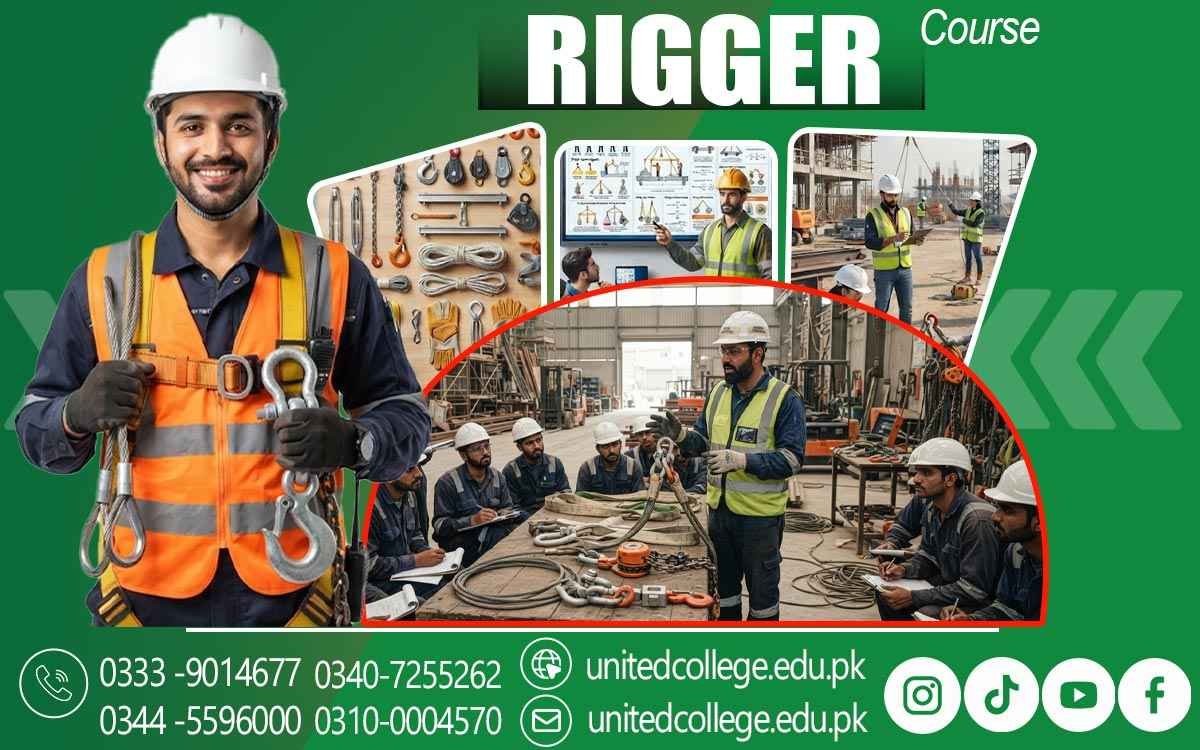

Rigger Course in Narowal for Safe Lifting and Rigging Skills
When Every Lift Depends on the Right Rigging Decision
A heavy load does not move safely just because a crane has enough power to lift it. The real challenge begins before the load leaves the ground, when someone must understand its weight, shape, balance, lifting points, equipment condition, and the safest way to connect and guide it. A small mistake in selecting a sling, attaching a shackle, judging the load capacity, or communicating with the crane operator can create serious risks on a worksite. This is why rigging is a practical skill that requires attention, planning, and proper training rather than simply physical strength. A Rigger Course in Narowal can introduce beginners and workers to the basic knowledge and practical techniques used for lifting and handling loads in construction, industrial, warehouse, factory, machinery installation, and maintenance environments.
Rigger training focuses on understanding lifting equipment, rigging tools, load handling, safe lifting practices, equipment inspection, crane signaling, and workplace hazards. Learners can gradually understand how different lifting accessories are selected and used according to the load and working conditions. In a construction project, for example, a rigger may help prepare a steel section, concrete component, pipe, machine part, or other heavy material for lifting. The task requires more than attaching a hook; it involves checking the equipment, securing the load, considering its balance, communicating with the crane operator, and keeping people away from unnecessary danger. Understanding these responsibilities gives learners a clearer picture of why proper rigging matters.
Learning the Tools That Keep Loads Connected
Before handling a load, a rigger needs to recognize the equipment being used and understand what each item is designed to do. Common rigging tools and lifting accessories can include wire ropes, chains, web slings, shackles, hooks, lifting points, clamps, and other connection equipment. Each item has a specific purpose, and using the wrong accessory or using suitable equipment incorrectly can affect the safety of the lifting operation. During Rigger course training, beginners can learn the difference between common slings, how shackles connect lifting components, how hooks engage with loads, and why equipment must be selected according to the load and working conditions.
Wire ropes also require careful inspection because broken wires, corrosion, deformation, or other visible damage can affect their condition. Learners can become familiar with basic equipment terminology without having to memorize complicated definitions. Instead, practical examples can show how a rigger identifies an accessory, checks its condition, and considers whether it is appropriate for the task. A rigging course can also introduce learners to lifting accessories such as hooks, shackles, and lifting points and explain why these components need to work together as part of a properly planned lifting arrangement.
Checking Lifting Equipment Before the Load Moves
One of the most important habits in rigging is inspection before use. A lifting accessory may look normal from a distance while having damage that makes it unsuitable for a particular operation, which is why a rigger needs to develop the habit of checking equipment carefully. Equipment inspection can involve looking for cuts, broken wires, stretched or distorted components, corrosion, damaged stitching, bent hooks, damaged shackles, worn chains, or other visible problems depending on the type of equipment. Learners can also understand the importance of checking identification information and the rated capacity of lifting accessories rather than assuming that every sling or shackle can handle any load.
For instance, if a web sling has visible damage or a hook has a serious deformation, the correct response is not to ignore the problem simply because the load is being lifted for a short distance. Equipment should be assessed according to appropriate workplace procedures before use. Inspection also involves checking connection points and ensuring that accessories are properly attached. A rigger needs to understand that lifting equipment forms a complete system, so one weak or unsuitable component can affect the overall arrangement. Developing this inspection mindset helps learners approach lifting operations more carefully and recognize that safe rigging begins before the crane starts moving.
Understanding Load Weight, Balance, and Lifting Capacity
A load may look manageable when it is sitting on the ground, but its weight and balance become much more important once it is suspended. Riggers therefore need to understand basic load calculation and why lifting equipment has specified capacities. Load weight may be provided through project information, equipment documentation, markings, drawings, or other reliable sources, while the shape and distribution of the load can affect how it behaves during lifting. The center of gravity is another important concept. In simple terms, it is the point around which the load is balanced, and understanding its location can help a rigger think about suitable lifting points and how the load may behave when raised.
For example, a long steel component may not have its weight distributed equally along its length, so attaching lifting accessories without considering its balance can cause the load to tilt when it leaves the ground. Similarly, a machine with an uneven shape may require carefully selected lifting points. Learners can also understand why the rated capacity of a sling or other lifting accessory cannot be ignored simply because its physical size looks strong. The angle of a sling arrangement and the way a load is attached can affect the forces placed on equipment.
Securing the Load Before the Crane Starts Moving
Once the lifting equipment has been selected and inspected, the load must be connected and secured in a way that suits its shape, weight, and lifting points. Load securing is not simply a matter of wrapping a sling around an object and attaching it to a hook. The rigger needs to think about whether the load can shift, slide, rotate, or become unstable during movement. The selected rigging arrangement should support the load appropriately and prevent avoidable movement. During practical rigging training, learners can explore different ways of attaching and securing loads and understand why certain arrangements may be unsuitable for particular objects.
Learners can study lifting points, connection methods, hooks, shackles, slings, and load positioning while also considering the surroundings in which the lift will take place. The goal is to develop a careful process: understand the load, select appropriate equipment, inspect it, make secure connections, check the arrangement, and only then proceed according to the site procedure. This approach is useful in construction rigging, industrial rigging, machinery installation, warehouse operations, and maintenance work. For people learning these skills in Narowal, realistic examples can make it easier to understand why every load should be treated according to its actual characteristics instead of using one method for every lifting situation.
Using Clear Signals Between the Rigger and Crane Operator
A lifting operation can involve several people, but the crane operator may not always have a clear view of the load or its final position. This makes communication between the rigger and crane operator extremely important. Crane signaling allows the rigger or designated signal person to communicate movement instructions using agreed hand signals or other approved communication methods. During a Rigger Course in Narowal, learners can become familiar with common crane hand signals and understand why signals need to be clear, deliberate, and consistent. For example, instructions for raising, lowering, stopping, or moving a load should not be confused with one another, especially when the load is heavy or the surrounding area is busy.
If communication is lost or becomes unclear, the lifting operation should not continue based on assumptions. Learners can also understand the importance of having clearly defined responsibilities during lifting operations so that multiple people do not give conflicting instructions to the crane operator. Good crane signaling is therefore not simply about memorizing hand movements; it is about creating a reliable communication process between the people controlling and guiding the lift. This skill can be especially relevant on construction and industrial sites where machinery, workers, materials, and structures may all occupy the same work area.
Identifying Hazards Before Starting a Lifting Operation
Safe lifting begins with recognizing what could go wrong before the load is moved. Construction sites, factories, warehouses, and industrial workplaces can contain many hazards, including unstable ground, overhead obstructions, electrical lines, moving machinery, nearby workers, restricted spaces, poor visibility, damaged equipment, and changing weather conditions. Hazard identification allows a rigger and other members of the lifting team to consider these factors before beginning the operation. During rigging training, learners can develop a basic understanding of how to observe the work area, identify potential hazards, and follow the site's established safety procedures.
PPE is important, but it should not be treated as a replacement for proper planning, equipment inspection, communication, and safe lifting procedures. Learners can also understand why people should not stand beneath suspended loads and why loads should be controlled carefully rather than moved in a rushed manner. A Rigger Course in Narowal can introduce students to these workplace safety principles through practical examples that relate to construction rigging, industrial material handling, warehouse operations, and machinery movement. The more carefully a worksite is assessed before lifting begins, the easier it becomes to identify problems that should be addressed before the operation proceeds.
Practicing Rigging Procedures Through Realistic Work Situations
Rigging becomes easier to understand when learners can connect technical terms with realistic workplace situations. A classroom explanation of a shackle or sling may provide useful information, but practical exercises can help students understand how the equipment is actually selected, inspected, connected, and handled. In a practical rigger training environment, learners can work through examples involving different types of loads and consider the steps required before lifting. They can practice identifying lifting accessories, checking equipment condition, understanding load capacity, recognizing lifting points, discussing load balance, and using basic crane signals.
These activities help learners understand that rigging is a sequence of connected decisions rather than one isolated task. United College of Technology can be mentioned naturally as a place where people interested in learning rigging skills in Narowal can explore structured training, while the actual value of the learning depends on consistent practice, understanding safety procedures, and applying the knowledge responsibly. Practical exercises can also help learners become more comfortable with workplace terminology and communication. Rather than memorizing a long list of rigging tools, students can gradually understand why each item is used, what condition it should be in, and how it fits into a planned lifting operation.
Building Practical Rigger Skills for Construction and Industrial Work in Narowal
Rigging knowledge connects several important skills that work together whenever a load needs to be lifted, moved, positioned, or secured. A beginner may start by learning common rigging terms and identifying equipment such as slings, shackles, hooks, chains, and wire ropes, then progress toward equipment inspection, load calculation, lifting capacity, center of gravity, lifting points, load securing, crane signaling, hazard identification, and workplace safety. A Rigger Course in Narowal can provide a structured way to study these practical areas while helping learners understand why careful preparation is important before a lifting operation begins.
In construction work, for example, a rigger may need to help prepare steel, pipes, machinery, building materials, or other heavy items for movement, while an industrial workplace may involve equipment installation or maintenance tasks requiring controlled lifting. Each situation can present different loads, equipment, surroundings, and hazards, so a rigger needs to apply basic principles thoughtfully rather than relying on one fixed method. By learning how to inspect lifting equipment, understand load capacity, secure loads, communicate through signals, identify hazards, use appropriate PPE, and follow established workplace procedures, learners can build a practical foundation for responsible rigging work.
Frequently Asked Questions (FAQs)
A Rigger Course in Narowal teaches practical skills related to load handling, lifting equipment, rigging tools, slings, shackles, hooks, crane signaling, load securing, and workplace safety.
Yes, beginners can learn rigging from the fundamentals, including common lifting equipment, basic load handling, equipment inspection, hand signals, and safe lifting procedures.
Training may cover common rigging equipment such as wire ropes, chains, web slings, shackles, hooks, lifting points, and other lifting accessories.
A rigger helps prepare and secure loads for lifting, checks lifting equipment, considers load balance and capacity, communicates with the crane operator, and follows workplace safety procedures.
Crane signaling helps the rigger and crane operator communicate clearly during lifting operations, especially when the operator cannot see the load or its movement area clearly.
Learners can develop skills in equipment inspection, hazard identification, load securing, use of PPE, exclusion zones, safe lifting practices, and communication during lifting operations.
Admission Open: Start Your Professional Journey Today!
Join United College of Technology and build a career with practical training, recognized certifications, and Gulf job support. Seats are limited.
Apply Now via WhatsAppContact Information
- Address: Rawalpindi: F-272 Main New Katarian Stop, Old IJP Road | Lahore Campus: Lahore, Pakistan
- Phone/WhatsApp: 0340-7255262 / 0333-9014677 / 0301-5044340 / 0310-0004570 / 051-8770756
- Website: unitedcollege.edu.pk
















Leave a Comment