


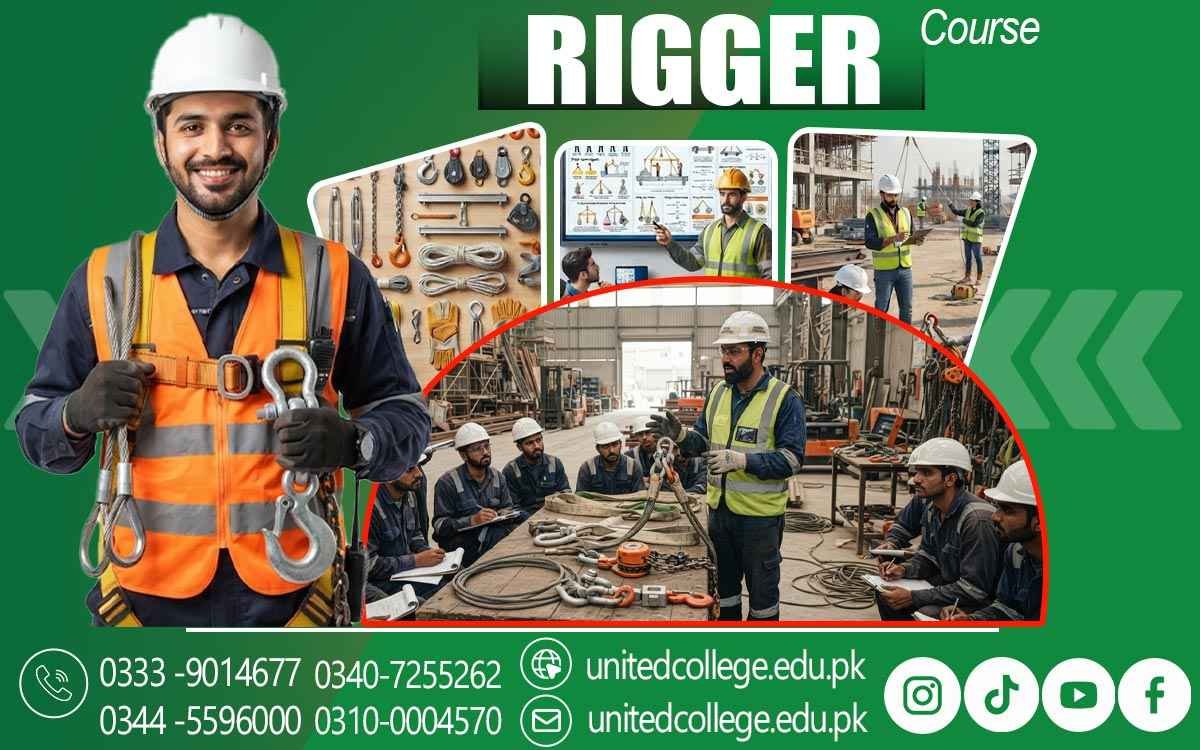

Rigger Course in Toba Tek Singh for Practical Lifting Skills
Why Every Safe Lift Needs Careful Preparation
A heavy machine or construction material may look easy to move while it is on the ground, but lifting it safely requires proper planning. Before a crane starts moving, the load needs to be checked, suitable lifting equipment must be selected, and the surrounding area should be examined for possible hazards. A rigger helps prepare the load and coordinate the lifting process according to workplace procedures. In a Rigger Course in Toba Tek Singh, learners can understand why lifting should never depend on guesswork or rushing.
They can learn about load handling, equipment selection, lifting preparation, and communication with other workers involved in the operation. These skills can be useful in construction sites, warehouses, workshops, industrial workplaces, and other areas where heavy materials need to be moved. Proper preparation gives workers a clearer understanding of what needs to happen before the load leaves the ground and helps create a more controlled approach to lifting operations.
Getting Familiar With Essential Rigging Equipment
A rigger needs to recognize different lifting equipment and understand the purpose of each item before using it. Common rigging tools include wire rope slings, chain slings, web slings, shackles, hooks, lifting points, chains, clamps, and other lifting accessories. Slings are commonly used to connect a load with lifting equipment, while shackles can connect different parts of a lifting arrangement. Hooks provide another important connection point, depending on the approved lifting setup. In a Rigger Course in Toba Tek Singh, learners can become familiar with these tools and understand their proper use in different lifting situations.
During rigger training, learners can become familiar with these tools through demonstrations and practical equipment handling. They can also understand why an accessory should not be selected simply because it appears strong. Its type, condition, capacity, and intended use need to match the lifting task. Learning the purpose of different equipment helps beginners understand how a complete rigging arrangement works and why correct equipment selection is an important part of safe lifting practices.
Inspecting Slings and Lifting Accessories Before Use
A lifting operation can be carefully planned, but damaged equipment can still create a serious problem if it is not identified before use. This is why inspection of rigging equipment is an important part of practical training. Learners can study how to check slings, shackles, hooks, chains, wire ropes, and other lifting accessories for visible signs of damage or excessive wear. Depending on the equipment, this may include checking for cuts, broken wires, corrosion, damaged stitching, deformation, or other conditions that require attention. Students can also learn why equipment markings and working load limits should be considered when selecting lifting accessories.
A rigging course can help beginners understand that inspection is not simply a quick routine before work starts. It is part of responsible lifting preparation and should follow workplace procedures and manufacturer guidance. Proper storage and handling are also important because lifting equipment can become damaged through misuse. Developing careful inspection habits helps learners recognize unsuitable equipment and understand why damaged accessories should be reported and dealt with according to established procedures.
Understanding Load Weight, Capacity, and Balance
A load may appear stable on the ground but behave differently once it is suspended. Its weight, shape, dimensions, lifting points, and center of gravity can all affect its movement during a lifting operation. The center of gravity is the point where a load can be considered balanced, and understanding its position can help a rigger think about possible tilting or shifting. Learners can also study load capacity and understand that slings, shackles, hooks, and other lifting equipment have working limits.
During a Rigger Course in Toba Tek Singh, beginners can be introduced to basic load calculations, weight estimation, and working load limits. They can learn why guessing the weight of a load or selecting equipment without checking its capacity can create unnecessary hazards. Understanding weight and balance helps learners approach heavy load lifting more carefully and follow the available lifting information and workplace procedures. These concepts provide an important foundation for safe lifting because the equipment and lifting method should be suitable for the actual load rather than based on appearance alone.
Securing Loads for Controlled Lifting and Movement
Once the load has been assessed, it needs to be attached and secured using suitable lifting accessories and an approved method. Sling selection may depend on the load's weight, shape, material, lifting points, and the required lifting arrangement. Learners can study how slings, shackles, hooks, chains, and other accessories work together and why their positioning can affect load stability. They can also learn about load securing and the importance of checking connections before the lifting operation begins. In a Rigger Course in Toba Tek Singh, learners can develop a clearer understanding of proper load securing and the safe use of lifting accessories during practical rigging tasks.
In suitable situations, tag lines may be used to help guide or control unwanted movement while workers remain in a safe position. Practical lifting and rigging training can help beginners understand the sequence of preparing, connecting, checking, and guiding a load under proper supervision. Whether materials are being moved on a construction site, inside a warehouse, or around an industrial workplace, careful load preparation can help workers identify problems before the load leaves the ground and reduce unnecessary confusion during the movement.
Using Clear Signals During Crane Operations
A crane operator may control the crane, but the operator may not have a complete view of the load or the surrounding work area. Clear communication between the rigger, crane operator, signal person, and other authorized workers is therefore an important part of crane safety. Learners can study common lifting signals and hand signals used for movements such as raising, lowering, stopping, and positioning a load. Depending on the workplace, radios or other approved communication methods may also be used.
During rigging training, students can learn why signals should be clear, deliberate, and understood before the load starts moving. If communication becomes unclear or is lost, workers should follow the established workplace procedure rather than guessing what should happen next. This helps learners understand that lifting is a coordinated activity rather than the responsibility of one person. Good communication also requires attention and discipline because unnecessary or confusing signals can create problems around a suspended load.
Identifying Hazards Around Lifting Work Areas
The load itself is only one part of a lifting operation, because the surrounding environment can also create hazards. Construction areas may contain vehicles, uneven surfaces, structures, excavations, electrical hazards, and other workers, while warehouses may have forklifts, storage racks, narrow pathways, and limited working space. Industrial workplaces and workshops may also involve machinery and other activities taking place at the same time. Through rigging safety training, learners can study hazard identification and basic risk assessment to understand how these conditions may affect lifting work.
Common hazards can include suspended loads, unstable loads, pinch points, damaged equipment, poor visibility, and people entering restricted lifting areas. Personal protective equipment, or PPE, may include safety helmets, protective footwear, gloves, eye protection, and other equipment required by the workplace. However, learners should understand that PPE is only one part of workplace safety. Proper planning, equipment inspection, safe positioning, clear communication, and following established lifting procedures are also important. Recognizing hazards before work begins allows workers to deal with unsafe conditions according to the required procedures.
Building Practical Rigging Skills Through Training
Rigging is a practical field, so hands-on learning can help beginners understand equipment and procedures more clearly than theory alone. Demonstrations and supervised exercises can allow learners to see different lifting accessories, understand inspection steps, observe load connections, and practice communication methods in realistic training situations. At United College of Technology, the Rigger Course in Toba Tek Singh can provide learners with a structured environment for studying practical rigging concepts, equipment familiarity, and safety procedures. Students can become familiar with slings, shackles, hooks, load preparation, inspection practices, lifting signals, and common hazards.
Practical exercises can also help them understand why equipment selection and load securing need careful attention. Training activities should remain under suitable supervision and within established safety procedures rather than encouraging inexperienced learners to perform lifting work independently. This type of practical learning can help beginners connect classroom information with real equipment and workplace situations. Over time, careful observation, correct equipment handling, communication, and following procedures can become important parts of developing practical rigging skills.
Applying Rigging Skills in Workplaces Around Toba Tek Singh
Rigging knowledge can be useful in different workplaces where heavy materials, machinery, structural components, or equipment need to be moved and positioned. Construction projects, warehouses, workshops, fabrication areas, industrial workplaces, infrastructure activities, and maintenance projects can involve different material-handling requirements. Around Toba Tek Singh, learners can relate their training to these practical environments while understanding that every workplace has its own equipment, hazards, and safety procedures.
A Rigger Course in Toba Tek Singh can help learners connect equipment identification, inspection, load capacity, sling selection, load securing, lifting signals, hazard identification, and workplace safety into one practical skill set. By developing these skills through structured learning and supervised practice, beginners and workers can build a clearer understanding of how rigging supports lifting operations. This foundation can help learners approach material handling with greater attention to equipment condition, load stability, communication, safe positioning, and responsible workplace behavior.
Frequently Asked Questions (FAQs)
A Rigger Course in Toba Tek Singh teaches practical skills related to lifting equipment, rigging tools, load handling, equipment inspection, load securing, crane signals, and workplace safety.
Yes, beginners can learn basic rigging concepts, equipment identification, load handling, inspection procedures, communication, and safe lifting practices through structured training.
Training may cover wire rope slings, chain slings, web slings, shackles, hooks, chains, lifting points, tag lines, and other commonly used lifting accessories.
Inspection helps identify visible damage, excessive wear, deformation, corrosion, or other conditions that may make lifting equipment unsuitable for use.
Learners can develop skills related to hazard identification, load securing, equipment inspection, lifting signals, PPE, crane safety, and following workplace procedures.
Admission Open: Start Your Professional Journey Today!
Join United College of Technology and build a career with practical training, recognized certifications, and Gulf job support. Seats are limited.
Apply Now via WhatsAppContact Information
- Address: Rawalpindi: F-272 Main New Katarian Stop, Old IJP Road | Lahore Campus: Lahore, Pakistan
- Phone/WhatsApp: 0340-7255262 / 0333-9014677 / 0301-5044340 / 0310-0004570 / 051-8770756
- Website: unitedcollege.edu.pk
















Leave a Comment