


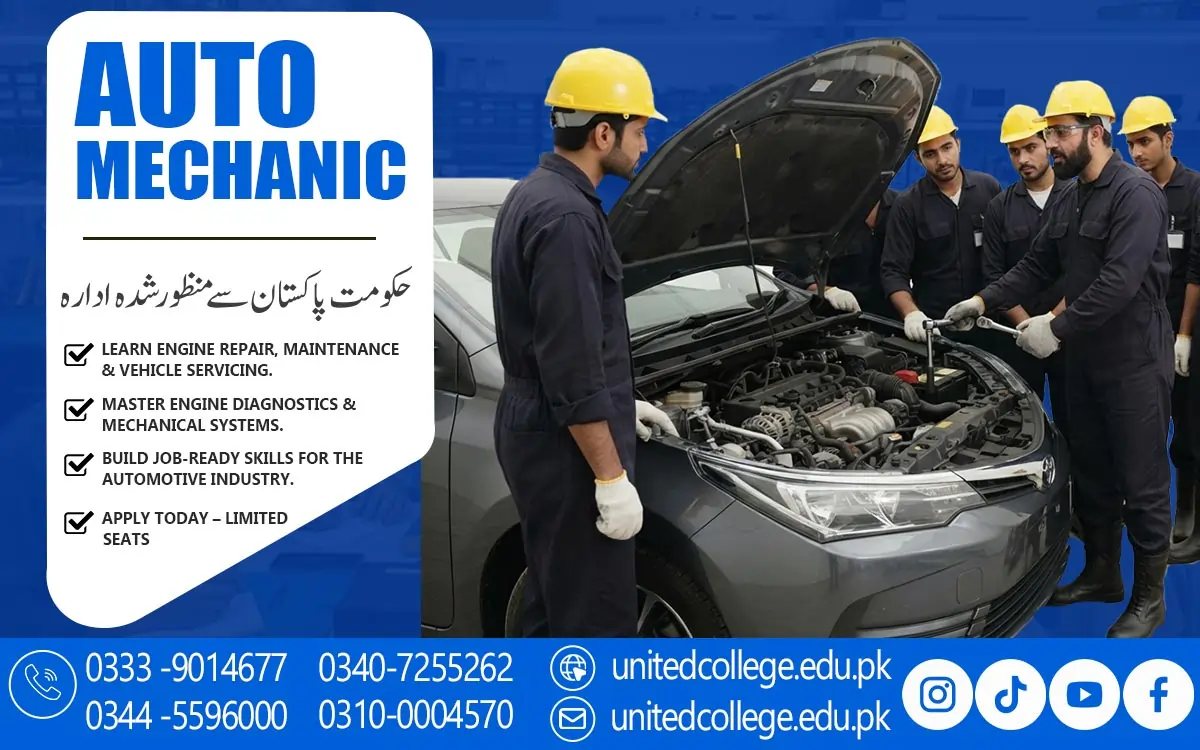

Auto Mechanic Course in Okara for Future Automotive Technicians
Auto Mechanic Course in Okara: Build a Practical Career With Automotive Skills
Modern vehicles are much more advanced than they were in the past. A car is no longer just an engine, wheels, brakes, and a steering system; it also includes electrical components, sensors, electronic controls, and different systems that work together to provide better performance and safety. When a vehicle starts making strange sounds, loses power, overheats, has starting problems, or develops braking issues, finding the real cause requires proper knowledge and practical ability. This is why skilled mechanics continue to play an important role in keeping vehicles safe and functional.
The Auto Mechanic Course in Okara offered by United College of Technology provides an opportunity for students, beginners, and job seekers to develop useful automotive skills in a structured learning environment. Instead of simply learning the names of vehicle parts, learners can develop an understanding of inspection, servicing, maintenance, repair, and troubleshooting. For someone who enjoys practical work and wants to enter a technical field, learning automobile repair can be a valuable first step toward a career.
Turn Your Interest in Cars Into a Skill You Can Actually Use
Many young people have an interest in cars but do not know how to turn that interest into a practical profession. Watching repair videos or helping someone in a garage can provide some knowledge, but structured training can give a learner a clearer understanding of vehicle systems and workshop practices. An auto mechanic course can introduce beginners to the different areas of automobile repair and help them understand how a mechanic approaches a vehicle problem.
At United College of Technology, students can work on developing their automotive knowledge while becoming familiar with practical tasks under instructor guidance. The aim of an automobile mechanic course is not simply to make students memorize technical information but to help them understand how that information is used during real vehicle servicing and repair. For beginners in Okara, this type of training can provide a useful starting point for building confidence, learning professional working habits, and preparing for further experience in the automotive field.
Workshop Practice Can Turn Knowledge Into Real Confidence
You can read about vehicle repair for hours, but working on an actual vehicle is a completely different experience. A beginner may understand how a component works in theory but still feel unsure when holding a tool or inspecting a real vehicle. This is why practical mechanic training is an important part of automotive learning. Students can become familiar with common workshop tools and learn how they are used during inspection, maintenance, servicing, and repair tasks. Under proper guidance, learners can observe procedures and gradually participate in practical activities instead of depending entirely on classroom explanations.
This type of workshop exposure can help students understand how mechanics approach different tasks and why careful inspection is important before starting a repair. It can also improve confidence because repeated practice makes unfamiliar tasks easier to understand. For anyone considering the Auto Mechanic Course in Okara, hands-on learning can be especially valuable because the automotive profession depends heavily on practical ability, attention to detail, patience, and the willingness to keep learning.
Learn What Keeps a Vehicle Running Smoothly
A professional mechanic needs to understand several important vehicle systems because a problem in one area can sometimes affect another. Engine repair training can help learners understand the purpose of major engine components, common maintenance requirements, and signs that may indicate an engine-related issue. Along with the engine, students can learn about brakes, suspension, steering, and transmission systems and understand their role in vehicle performance and safety. A vehicle repair course can introduce learners to inspection and maintenance practices so they can better understand what to look for when a vehicle comes into a workshop.
Brakes need careful attention because they are directly connected with vehicle safety, while steering and suspension affect handling and stability. Transmission systems are also important because they help transfer engine power to the wheels. Learning these areas together gives students a broader foundation and helps them understand that automobile repair is not about fixing one part in isolation but about understanding how different systems work together.
Good Mechanics Find the Problem Before They Fix It
One of the biggest differences between an inexperienced person and a trained mechanic is the way they approach a vehicle problem. A car that will not start, for example, could have an issue with the battery, starter, fuel system, electrical connections, or another component. Simply replacing parts without identifying the actual cause can waste both time and money. This is why vehicle troubleshooting and car diagnostic training are important parts of an Auto Mechanic Course. During the course, students can learn to observe symptoms, inspect relevant components, consider possible causes, and follow a logical process when investigating a fault.
They can also become familiar with the purpose of different tools and inspection methods used during vehicle servicing. Developing this problem-solving mindset can make a mechanic more effective because repair work is not always about knowing the answer immediately. Sometimes it is about asking the right questions, checking the right components, and gradually narrowing down the possible causes. These skills can become stronger as learners gain more workshop experience and work with different types of vehicles.
Modern Automotive Work Goes Beyond the Engine
A mechanic working with modern vehicles needs to understand more than traditional mechanical systems. Electrical and electronic components are now important parts of many vehicles, including batteries, charging systems, starting systems, lights, wiring, sensors, and other electronic controls. A problem with an electrical connection or sensor can sometimes cause symptoms that appear to be mechanical, which makes broader automotive knowledge useful. Automotive technician training can help learners develop an introduction to these systems and understand why proper inspection is necessary before carrying out repairs.
Students can learn how electrical and mechanical components are connected to the overall operation of a vehicle and why technicians need to keep improving their knowledge as technology changes. This does not mean a beginner needs to understand every advanced system immediately. Instead, the goal is to build a strong foundation and develop the habit of learning new automotive technology over time. This wider skill set can make a learner more adaptable when they eventually enter a workshop or service environment.
Safe Maintenance Is Just as Important as Fast Repair
A good mechanic should not focus only on completing a repair quickly. The work also needs to be performed carefully and safely. Automobile workshops can contain heavy vehicle parts, moving equipment, electrical components, oils, tools, and machinery, so learners need to understand the importance of safe working habits. During practical training, students can learn how to handle common tools properly, keep the work area organized, inspect components carefully, and follow appropriate workshop procedures. Car maintenance course training can also help learners understand why regular inspection and servicing are important for identifying potential problems before they become more serious.
Proper maintenance may involve checking different vehicle components, observing signs of wear, and following suitable servicing procedures. Developing these habits during training can prepare learners for real workshop conditions where responsibility matters. At United College of Technology, instructor guidance and practical exposure can help students become more aware of the relationship between technical ability, careful workmanship, and workshop safety.
Build Experience Today for Better Career Opportunities Tomorrow
Completing the Auto Mechanic Course in Okara can give a learner a foundation, but professional growth normally continues through experience and regular practice. After completing training, learners may explore opportunities as an Auto Mechanic, Automotive Technician, Car Service Technician, Vehicle Maintenance Technician, Workshop Assistant, or Automobile Repair Technician, depending on their skills and the requirements of the workplace. They may look for experience in garages, workshops, service centers, dealerships, or other automotive businesses. A beginner should understand that the first job may involve basic responsibilities, and becoming highly skilled takes time.
By working with experienced mechanics, handling different vehicle problems, improving troubleshooting skills, and learning how to communicate with customers, a person can gradually become more confident and capable. Experience can also help a mechanic understand how a real workshop operates, from inspecting a vehicle to completing a repair and maintaining professional standards. Continued learning is equally important because automotive technology keeps developing, so mechanics who keep improving their skills can be better prepared for future opportunities.
Take the First Step Toward a Long-Term Automotive Career
For students and job seekers in Okara who enjoy practical work, learning automobile repair can be a useful way to develop a technical skill with long-term potential. The Auto Mechanic Course in Okara at United College of Technology can help learners build knowledge and practical understanding in areas such as vehicle inspection, engine maintenance, brakes, steering, suspension, transmission, electrical systems, troubleshooting, servicing, and workshop safety. The course should be considered the beginning of a professional journey rather than a shortcut to becoming an expert. Real improvement comes when training is followed by regular practice, workplace experience, and continued learning.
As a mechanic develops stronger automotive skills, they may explore opportunities in Okara and other cities, and experienced professionals may eventually consider self-employment or starting a small automobile repair business. Those who continue improving their practical abilities can also explore opportunities beyond their local area and, where qualifications and experience meet relevant requirements, potentially consider international career pathways. The most important step is to start building the right skills today and continue developing them with patience, practice, and dedication.
Frequently Asked Questions (FAQs)
The Auto Mechanic Course in Okara is a practical training program that helps students learn vehicle inspection, maintenance, repair, troubleshooting, and workshop skills.
Students, beginners, job seekers, and anyone interested in developing practical automotive skills can consider joining an auto mechanic course.
Students can learn about engine repair, brakes, steering, suspension, transmission, vehicle electrical systems, servicing, maintenance, and fault finding.
Practical learning is an important part of automotive training because it helps students understand how tools, vehicle components, and repair procedures are used in real workshop situations.
After gaining training and experience, learners may explore roles such as Auto Mechanic, Automotive Technician, Car Service Technician, Vehicle Maintenance Technician, or Workshop Assistant.
Admission Open: Start Your Professional Journey Today!
Join United College of Technology and build a career with practical training, recognized certifications, and Gulf job support. Seats are limited.
Apply Now via WhatsAppContact Information
- Address: Rawalpindi: F-272 Main New Katarian Stop, Old IJP Road | Lahore Campus: Lahore, Pakistan
- Phone/WhatsApp: 0340-7255262 / 0333-9014677 / 0301-5044340 / 0310-0004570 / 051-8770756
- Website: unitedcollege.edu.pk
















Leave a Comment