


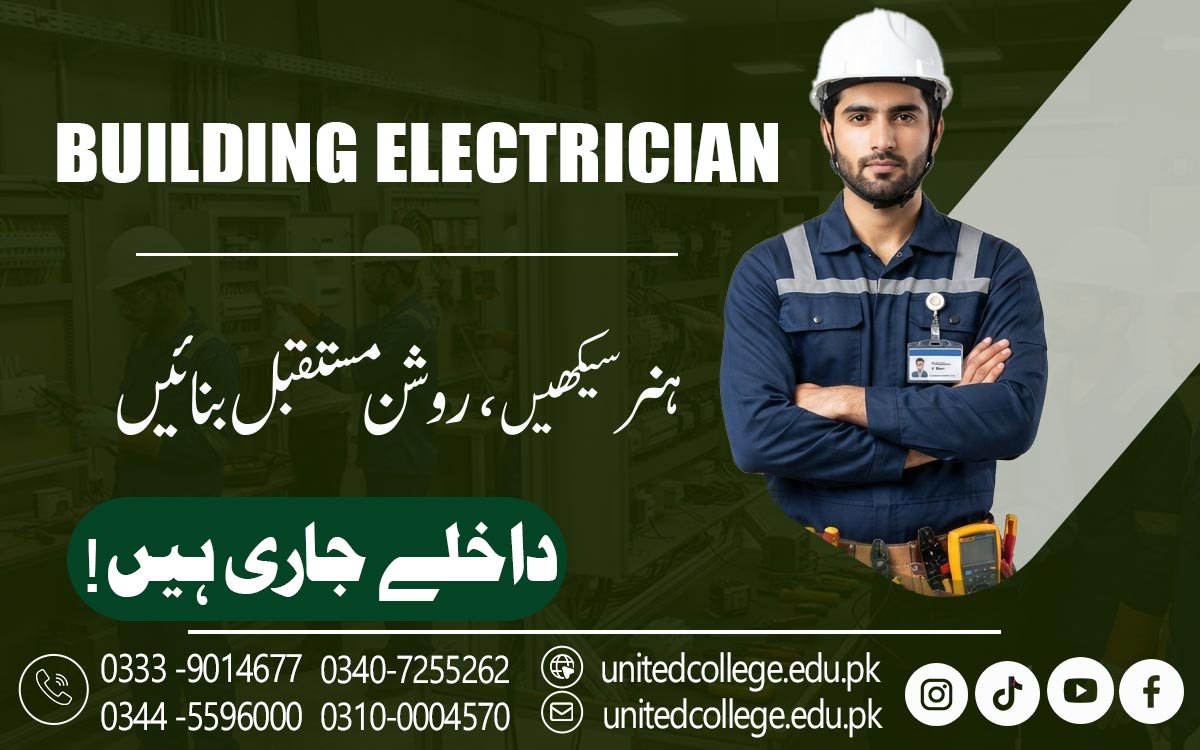

Building Electrician Course in Khushab: Turn Skills Into Opportunity
Build a Trade You Can Take Further
Modern buildings depend on electrical systems for almost everything people use every day. From lighting a room to powering equipment, electrical connections make homes, shops, offices, workshops, and other spaces functional. This creates a need for people who understand electrical work and can perform practical tasks responsibly. For beginners and job seekers in Khushab, learning this trade can be a useful way to develop a skill through vocational education.
The Building Electrician Course in Khushab offers learners a practical route into electrical work by helping them understand building wiring, installations, components, tools, and safe working methods. It can suit fresh learners who want to start from the basics as well as students or individuals looking to add a technical skill to their existing abilities.
Every Building Tells an Electrical Story
Walk into a newly constructed house, and the electrical work may seem almost invisible. Yet behind the walls, many connections are working together to deliver power where it is needed. A building electrician needs to understand how these systems are planned and connected rather than simply knowing how to join two wires. This is where an electrical installation course becomes useful.
The Building Electrician Course in Khushab can introduce these concepts in a practical learning environment, allowing students to connect basic theory with the type of work they may encounter in real buildings. This foundation is important because good electrical work depends on understanding the complete system, not just one individual task.
Learning Changes When the Work Is in Your Hands
Reading about electrical equipment is different from actually learning how it is handled. Practical training allows learners to become familiar with electrical tools and equipment and understand their purpose through supervised practice. A student may gradually learn how different tools are used during measuring, preparing wires, making connections, or checking electrical components.
This kind of hands-on electrical training can make technical concepts easier to understand because learners can see the result of each task. United College of Technology provides a skill-focused environment where students can work toward developing useful electrician skills through practical learning. Instead of expecting beginners to understand everything immediately, training can allow them to build confidence step by step as they become more familiar with electrical work.
Wiring Knowledge Becomes Useful When It Solves a Real Need
One important part of building electrical work is understanding how power is distributed throughout a property. Residential electrical wiring involves much more than placing wires inside walls. Learners need to understand the role of switches, sockets, lights, circuits, distribution points, and other electrical components. A building wiring course can help students become familiar with these areas while introducing suitable house wiring techniques.
The purpose of this training is to develop an understanding of how different parts of an electrical system work together. Students can also learn why neat and organized wiring matters for future inspection and maintenance. As their practice improves, they can become more comfortable with the sequence of an installation and better understand how electrical work contributes to the everyday use of a home.
Larger Devices Bring a Different Kind of Challenge
Mobile repairing requirements can change when working with different types of smartphones, tablets, and other electronic devices. Modern mobile phones may contain advanced circuits, delicate components, cameras, displays, charging systems, and software-related issues that require careful troubleshooting. A Mobile Repairing Course in Khushab helps students understand these different problems and learn how to approach repairs systematically.
This knowledge can be useful for anyone interested in electronics and technical work because mobile devices are an important part of everyday life. Learning about different mobile models, components, common faults, and repair techniques gives students a broader view of the trade and helps them understand that a mobile technician’s responsibilities can vary from one repair to another.
A Fault Is a Lesson in Careful Thinking
Electrical systems do not always operate perfectly. A connection can develop a problem, a circuit may stop working, or an electrical component may need attention. Finding the cause requires more than guessing. Electrical troubleshooting teaches learners to approach problems in an organized way by observing the issue, checking relevant parts, and identifying where the fault may exist.
Electrical maintenance adds another dimension because an electrician may need to inspect existing systems and identify issues that require correction. During practical electrician training, learners can become familiar with the idea that electrical work involves both installation and ongoing care. These skills can become especially useful as a learner gains experience and starts dealing with different types of electrical systems in actual workplaces.
Safety Is the Habit Behind Good Electrical Work
No electrical skill is complete without an understanding of safety. Electricity can become dangerous when systems are handled carelessly, which is why responsible working habits should be developed from the beginning. Electrical safety training can help learners understand common hazards, safe handling practices, appropriate testing procedures, and the importance of following established precautions.
Safety also means knowing when a task requires proper isolation, suitable equipment, or experienced supervision. By making safety part of everyday learning, a student can develop a more professional attitude toward the trade. This is one reason professional electrician training should focus not only on getting a connection to work but also on performing electrical tasks responsibly.
The Right Learner Can Grow With the Trade
You do not need years of electrical experience to begin learning a technical trade. Beginners can start by developing basic knowledge and gradually improve through practice. Students who enjoy practical activities may find electrical training engaging because many tasks require attention, patience, and careful handwork.
People already connected with construction or maintenance may also find electrical knowledge useful for expanding their technical abilities. At United College of Technology, the learning approach can help students work toward a stronger foundation through practical exercises and structured instruction. Success in the trade still depends on continued practice, discipline, experience, and a willingness to keep learning.
A Technical Skill Can Become the Beginning of Something Bigger
Completing an electrician training program in Khushab does not automatically define a person's entire career. Instead, it can provide a foundation that learners may build upon through field experience and further specialization. After developing suitable skills, individuals may explore work with construction teams, electrical contractors, property maintenance services, residential projects, commercial sites, or workshops.
Others may choose additional technical training to expand their abilities. The important point is to view electrician training as a starting platform rather than a guaranteed job outcome. The Building Electrician Course in Khushab can help a learner take that first structured step, develop useful wiring and installation skills, and discover how a practical trade can support long-term personal and professional growth. For someone ready to learn through practice, electrical work can become a skill worth developing well beyond the classroom.
Frequently Asked Questions (FAQs)
Yes. Beginners can start with simple electrical concepts and gradually develop their understanding through guided practice and technical exercises.
Yes. Electrical tasks require careful observation, accurate connections, and proper checking, which can naturally strengthen a learner’s focus and precision.
A learner can expect demonstrations, guided activities, repeated practice, and opportunities to understand how electrical concepts are applied to practical tasks.
Yes. Electrical knowledge can also be relevant when existing properties need upgrades, repairs, inspections, or routine maintenance work.
Continuing to learn is valuable because electrical practices, equipment, building requirements, and workplace expectations can develop over time.
It can provide a foundation for learners who want to enter electrical work and later strengthen their abilities through experience, additional training, and specialization.
Admission Open: Start Your Professional Journey Today!
Join United College of Technology and build a career with practical training, recognized certifications, and Gulf job support. Seats are limited.
Apply Now via WhatsAppContact Information
- Address: Rawalpindi: F-272 Main New Katarian Stop, Old IJP Road | Lahore Campus: Lahore, Pakistan
- Phone/WhatsApp: 0340-7255262 / 0333-9014677 / 0301-5044340 / 0310-0004570 / 051-8770756
- Website: unitedcollege.edu.pk
















Leave a Comment