


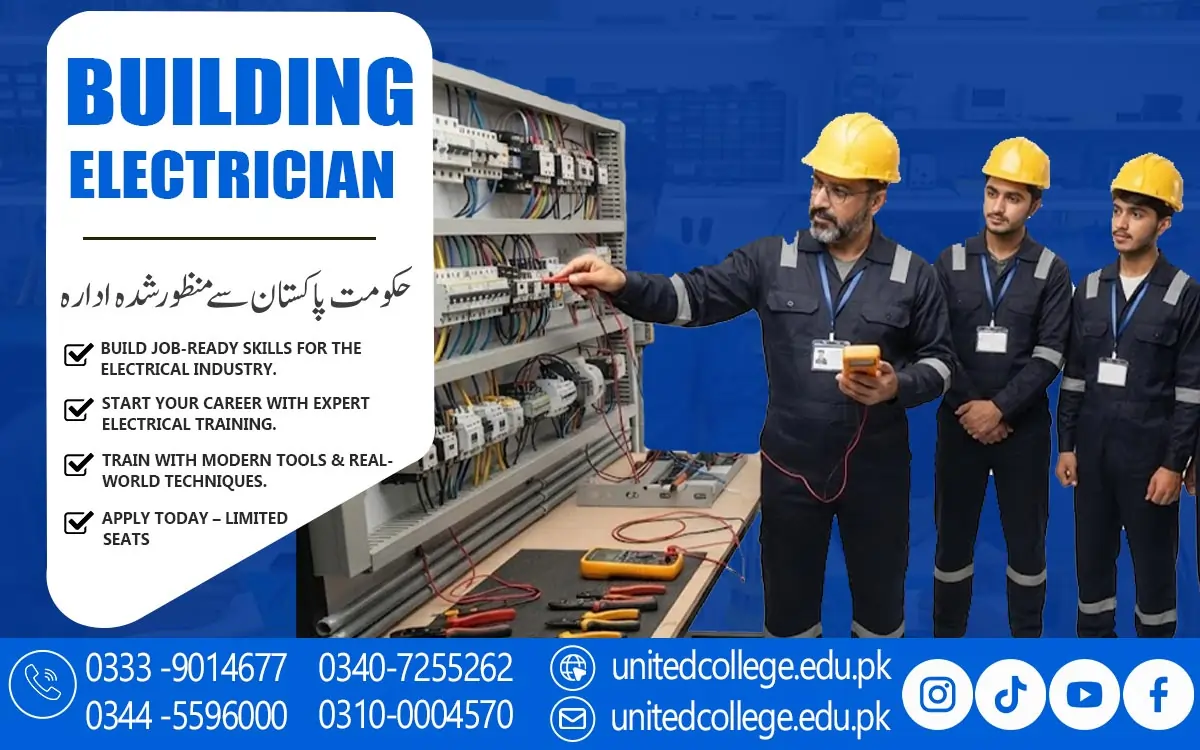

Building Electrician Course in Sheikhupura: Master Wiring Skills
Turn Technical Learning Into Real-World Skills
A building becomes useful when its electrical system works properly. Lights, fans, sockets, appliances, security systems, and many other facilities depend on safe and correctly installed electrical connections. For people in Sheikhupura who want to learn a practical trade, electrical work can be a useful skill to develop. The Building Electrician Course in Sheikhupura gives beginners a chance to understand how building electrical systems work while developing practical abilities that can be used in real work settings.
Instead of learning only from books, students can explore wiring techniques, electrical installation, maintenance, and safe working methods. This type of vocational electrical training can be helpful for students, job seekers, fresh learners, and anyone looking for a technical skill that can grow through experience.
A Building Has More Electrical Work Than You See
Electrical work inside a building starts long before someone turns on a light. Wires need proper routes, circuits require suitable connections, switches and sockets must be installed correctly, and the complete electrical system needs to operate safely. A Building Electrician Course in Sheikhupura introduces students to these essential concepts simply and practically.
This foundation helps learners understand why different electrical components are used and how they work together within a building’s electrical system. For someone who is completely new to the trade, a professional building electrician course in Sheikhupura can reduce confusion, develop practical understanding, and provide a clearer path toward becoming a skilled and responsible electrician.
The First Real Skill Begins With the Tools in Your Hands
An electrician does not work with wires alone. Different tasks require different electrical tools and equipment, and knowing how to use them correctly is an important part of practical learning. During an electrical installation training program, students can become familiar with the tools used for measuring, cutting, stripping, tightening, testing, and connecting electrical components. They also learn that using the right tool can make a task safer and more accurate.
This practical understanding develops gradually as learners handle equipment themselves. At United College of Technology, students can use their training environment to strengthen their technical knowledge through practice rather than simply memorizing the names of tools. This approach can help beginners become more comfortable with practical electrician training and understand how basic electrical tasks are performed.
House Wiring Turns Electrical Theory Into Visible Work
One of the most useful areas for a new learner is residential electrical wiring. House wiring allows students to see how electrical knowledge becomes part of an actual building. Learners can study the installation of switches, sockets, lights, fans, and other common connections while understanding how circuits are arranged. They may also practice different wiring techniques and learn how connections should be organized for reliable operation.
Distribution boards are another important part of this learning because they help control and distribute electrical power within a building. By working through practical examples, students can develop house wiring skills that are useful for understanding residential electrical systems. The goal is not simply to connect wires but to understand the purpose of each connection and perform the work carefully.
Commercial Buildings Change the Way an Electrician Thinks
Electrical work can look different when the building becomes larger or more complex. Shops, offices, schools, workshops, and other commercial spaces may require different planning and installation approaches. Students learning a Building Electrician Course in Sheikhupura can explore how commercial electrical installation differs from simple household work. Larger buildings may contain more circuits, greater electrical loads, multiple distribution points, and more organized maintenance requirements.
Learning about these differences helps students understand that an electrician must first look at the building and its electrical needs before beginning a task. This part of training can also introduce learners to the importance of organized circuit installation, proper connections, and careful inspection. Such knowledge can support people who later want to gain experience on construction projects or commercial maintenance work.
Finding a Fault Teaches More Than Fixing a Wire
Sometimes an electrical problem is not visible immediately. A light may stop working, a socket may lose power, or a circuit may behave unexpectedly. This is where electrical troubleshooting becomes important. Students can learn how to approach a fault logically instead of changing components without understanding the cause. Training may involve checking connections, testing circuits, identifying damaged parts, and following a step-by-step process to locate a problem.
This develops patience and problem-solving ability alongside technical knowledge. Electrical maintenance also teaches learners that good electrical work continues after installation. Regular inspection and proper care can help identify issues before they become larger problems. Learning these practices can prepare students for the type of thinking required when working in homes, workplaces, and other buildings.
Safety Comes Before Every Electrical Connection
Electrical knowledge has little value if safety is ignored. Contact with electricity can cause serious injury, so students must understand safe working practices before handling electrical systems. Electrical safety training can teach learners how to recognize hazards, use equipment responsibly, work with appropriate protective measures, and avoid unsafe connections. Students also need to understand why power should be isolated before certain tasks and why testing is important before touching electrical components.
Safety is not simply another topic in an electrician course; it should become part of the learner's daily working habit. United College of Technology can help students develop this safety-focused approach alongside their practical skills. When learners combine technical ability with responsible working habits, they are better prepared to handle electrical tasks with care.
One Practical Trade Can Open Several Working Directions
The value of electrician training does not end when classroom learning is completed. A learner who develops a solid foundation can continue improving through supervised work, field experience, and advanced technical learning. In Sheikhupura and surrounding areas, electrical skills can be relevant to residential projects, commercial buildings, construction sites, repair work, and building maintenance.
These electrician career opportunities depend on skill level, experience, reliability, and local demand rather than a guaranteed result. For beginners, the most important step is building a strong technical foundation. The Building Electrician Course in Sheikhupura can provide that starting point by combining basic concepts with hands-on electrical practice, giving learners a practical direction for continued growth in the electrical trade.
Frequently Asked Questions (FAQs)
Yes. Training can introduce learners to basic electrical layouts and help them understand how wiring is planned before installation begins.
Electrician skills can be useful in homes, shops, offices, workshops, construction projects, and other places where electrical systems need installation or care.
Yes. Repeated practice helps learners become more careful with connections, measurements, tool handling, and the overall sequence of an electrical task.
Understanding electrical loads helps learners recognize why circuits need proper planning and why different electrical devices require suitable connections.
It can provide a technical foundation for those who later want to work with contractors or develop independent services after gaining enough practical experience.
Practical learning allows students to see how technical concepts are applied to real tasks, making it easier to connect classroom knowledge with workplace situations.
Admission Open: Start Your Professional Journey Today!
Join United College of Technology and build a career with practical training, recognized certifications, and Gulf job support. Seats are limited.
Apply Now via WhatsAppContact Information
- Address: Rawalpindi: F-272 Main New Katarian Stop, Old IJP Road | Lahore Campus: Lahore, Pakistan
- Phone/WhatsApp: 0340-7255262 / 0333-9014677 / 0301-5044340 / 0310-0004570 / 051-8770756
- Website: unitedcollege.edu.pk
















Leave a Comment