


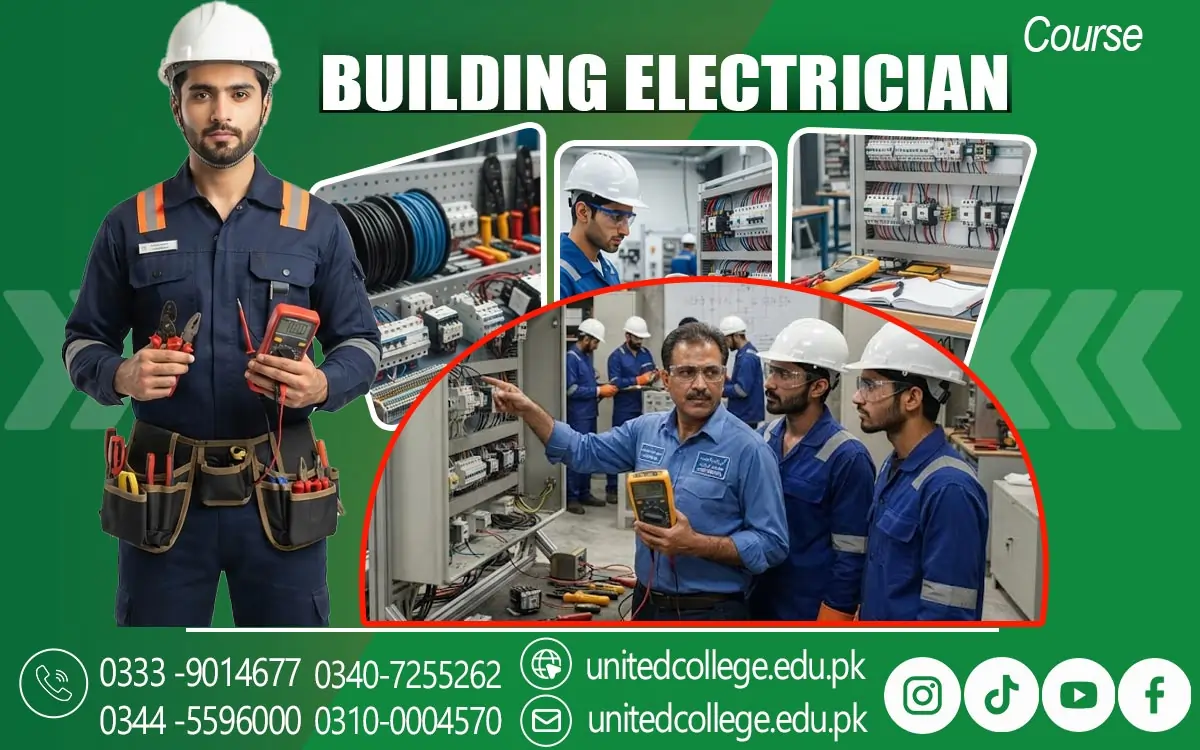

Building Electrician Course in Mandi Bahauddin: Learn With Practice
A Skill That Can Power Your Future
A practical skill can change the way a person looks at work. Instead of waiting for limited opportunities, learning a technical trade can create a path toward useful, hands-on work. Electrical systems are now essential in almost every home, shop, office, workshop, and construction project, making trained workers an important part of building development.
For learners in Mandi Bahauddin who want to enter a technical field, the Building Electrician Course in Mandi Bahauddin can provide a structured way to understand electrical work from the ground up. The training is suitable for beginners, students, job seekers, and fresh learners who want to develop skills that can be improved through practice and field experience.
Behind Every Working Building Is Someone Who Understands Electricity
A building electrician does much more than connect wires. The work involves helping create electrical systems that allow people to use lighting, fans, appliances, equipment, and other facilities safely. Before a building becomes fully functional, its electrical needs must be considered carefully. This makes building electrical work an important part of construction and property maintenance.
Through a Building Electrician Course in Mandi Bahauddin, learners can begin to understand how electrical systems are arranged and how different parts work together. A person entering this field needs both technical knowledge and careful working habits because even a small mistake in an electrical connection can affect the performance and safety of an entire system. Learning the trade properly gives beginners a clearer idea of what professional electrical work involves.
The Learning Starts With Understanding What the Current Is Doing
Before handling complicated installations, students need a clear understanding of basic electrical ideas. An electrical installation course can introduce learners to concepts such as circuits, current, voltage, connections, conductors, and electrical components in simple language. These concepts may sound technical at first, but practical examples can make them easier to understand.
For instance, students can learn why a circuit needs a complete path and how a switch controls the flow of electricity to a particular point. This foundation supports later learning in domestic wiring, circuit connections, and installation work. The Building Electrician Course in Mandi Bahauddin can help beginners move gradually from basic theory toward practical application, giving them a stronger foundation instead of expecting them to understand advanced electrical work immediately.
A Wiring Task Becomes Easier When You Know the System Behind It
Once learners understand basic concepts, they can begin exploring how electrical systems are installed inside buildings. An electrical wiring course may cover the practical use of switches, sockets, lighting points, distribution boards, and different wiring arrangements. Students can learn how circuits are connected and why different parts of an installation have specific purposes.
Wiring and installation skills also require attention to neatness and proper organization because poorly arranged wiring can make future inspection and maintenance more difficult. Learners can gradually practice common residential setups and then develop an understanding of commercial electrical wiring, where the number of circuits and electrical requirements can be greater.
Tools Teach You to Work With Precision, Not Just Speed
An electrician depends on tools to perform many everyday tasks, but simply knowing a tool's name is not enough. Learners need to understand how and when different electrical tools are used and how careful handling can improve the quality of their work. During hands-on electrical training, students can become familiar with equipment used for preparing wires, making connections, measuring electrical values, and checking circuits.
Practical exercises can also teach them to work patiently rather than rushing to complete a task. At United College of Technology, the practical learning environment can help students develop technical skills through guided activities and repeated practice. This experience can be especially useful for fresh learners because confidence usually develops when a person gets the opportunity to perform a task, observe the result, identify mistakes, and try again with better understanding.
When Something Goes Wrong, Your Method Matters
Electrical installation is only one side of the trade. Existing building electrical systems may also require inspection, repair, or maintenance when something stops working as expected. This is where electrical troubleshooting becomes valuable. Instead of immediately replacing a component, an electrician needs to investigate the problem and determine where the fault may be located.
Students in a Building Electrician Course in Mandi Bahauddin can learn to observe symptoms, check relevant connections, and follow a logical process while identifying basic electrical faults. Electrical maintenance also involves keeping building systems in suitable working condition and recognizing issues that may need professional attention. These skills encourage learners to think rather than depend on guesswork.
Safe Electrical Work Begins Before the First Connection
Skill without safety can create unnecessary danger. Electricity must always be treated with care, which is why electrical safety training should be an important part of professional learning. Students need to understand common electrical hazards, safe handling methods, the importance of appropriate protective practices, and the need to follow proper procedures before working on electrical systems. Training can also help learners understand why power isolation and testing are important steps in many electrical tasks.
These habits should become part of a worker's normal routine rather than something remembered only during a class. United College of Technology can support learners by combining practical electrical education with safety awareness. Developing this mindset early can help future electricians approach their work with greater responsibility and respect for the risks involved.
From a Training Room to Different Places Where Skills Are Needed
The usefulness of electrician skills can extend across several working environments. After completing suitable practical electrician training, learners can continue developing their abilities through supervised field experience and may explore residential projects, construction work, commercial properties, workshops, maintenance services, or electrical contracting environments.
Some people may eventually want to provide small independent services once they have gained enough experience and understand the responsibilities involved. Others may use their foundation to pursue additional electrical technician training or related technical education. For students and job seekers in Mandi Bahauddin, this flexibility can make vocational training an attractive option when they prefer practical work over purely academic learning.
A Strong Trade Is Built One Practical Skill at a Time
Choosing a technical field is an important decision, especially for someone starting without previous experience. Electrical work requires patience, attention, safety awareness, and a willingness to keep improving. The right professional electrician training can help learners develop these qualities alongside technical knowledge. For people in Mandi Bahauddin, learning locally can provide a practical opportunity to build a foundation before seeking wider field experience.
United College of Technology offers the Building Electrician Course in Mandi Bahauddin for learners who want to explore a career in electrical work through structured education and practical skill development. The real value of the course comes from what students continue to do with their training afterward. With regular practice, responsible work habits, and a commitment to learning, a basic electrical skill can become the foundation for a more capable and adaptable technical career.
Frequently Asked Questions (FAQs)
People who enjoy practical tasks, solving small technical problems, and working carefully with equipment may find electrical work a suitable technical field to explore.
No. Correctness and safety are more important than speed. Beginners should first learn to perform tasks carefully before trying to improve their working pace.
Yes. Practical exercises can help learners understand how to prepare for a task, arrange their equipment, follow a suitable process, and keep their work area manageable.
Yes. Understanding basic electrical work can help a learner communicate more effectively with workers involved in construction, renovation, maintenance, and related building activities.
A learner can seek supervised practical experience, continue with advanced technical education, or gradually develop specialized abilities according to their interests and work goals.
Regular practical learning can build confidence because learners become familiar with tools, procedures, and technical tasks instead of facing them for the first time in a workplace.
Admission Open: Start Your Professional Journey Today!
Join United College of Technology and build a career with practical training, recognized certifications, and Gulf job support. Seats are limited.
Apply Now via WhatsAppContact Information
- Address: Rawalpindi: F-272 Main New Katarian Stop, Old IJP Road | Lahore Campus: Lahore, Pakistan
- Phone/WhatsApp: 0340-7255262 / 0333-9014677 / 0301-5044340 / 0310-0004570 / 051-8770756
- Website: unitedcollege.edu.pk
















Leave a Comment