


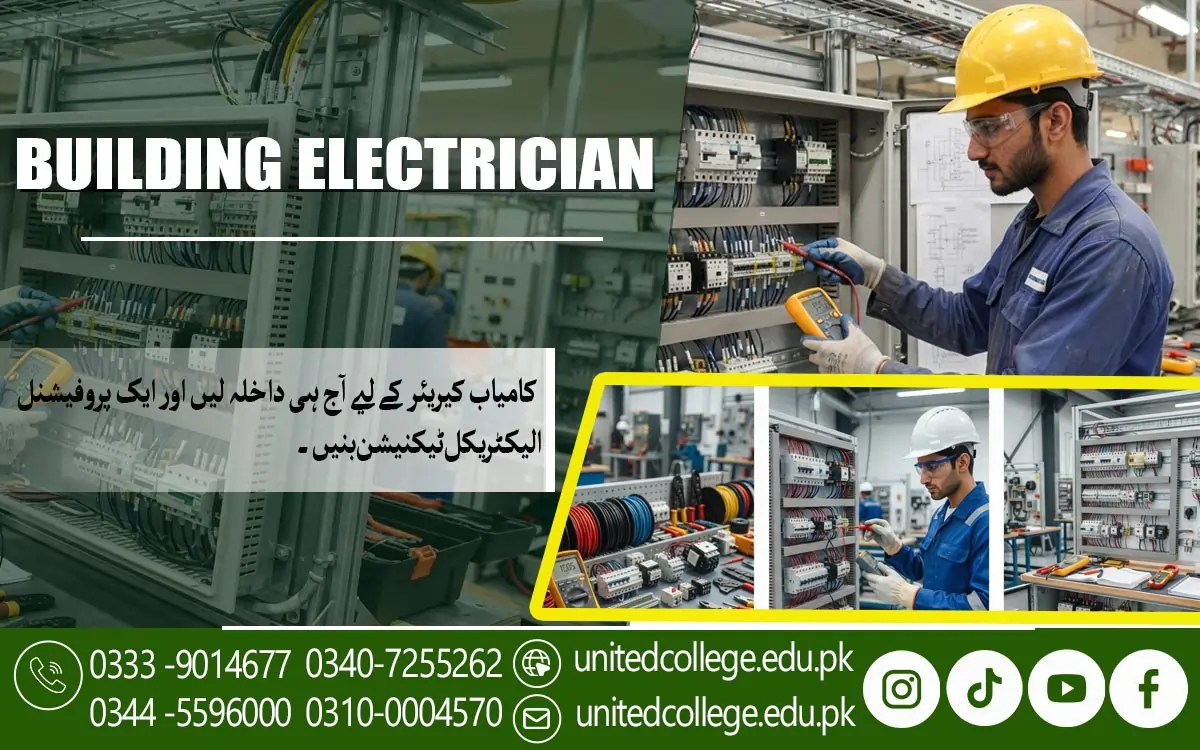

Building Electrician Course in Okara – Learn Practical Skills
The Buildings Around You Need Skilled Electricians
Think about a normal day at home: lights turn on with a switch, fans run from a connection, appliances receive power through sockets, and offices and shops depend on electrical systems to keep working. Behind all of this is careful wiring and installation. When electrical work is poorly done, even a small fault can become a serious problem. This is why trained electricians are needed in homes, shops, offices, construction projects, and other buildings.
The Building Electrician Course in Okara can help beginners understand how building electrical systems work and develop practical skills for installation, wiring, maintenance, repair, and basic troubleshooting. For students and job seekers who want to learn a hands-on trade, structured electrical training can provide a useful foundation for entering the technical field.
Learn What Really Happens Behind a Building's Electrical System
Have you ever wondered how electricity reaches different rooms and operates multiple devices without everything being connected to one simple wire? A building's electrical system contains different connections and components that work together. During building electrician Course training, learners can become familiar with basic electrical concepts, wiring methods, cables, switches, sockets, lighting points, circuits, and distribution boards. They can understand how electrical connections are arranged for different parts of a building and why proper installation matters.
A vocational electrical course can introduce these ideas in simple language so beginners do not feel overwhelmed by technical terms. Instead of only memorizing information, learners can gradually understand how electrical systems are planned, connected, checked, and maintained. This basic knowledge can help them move toward more practical electrical work with greater confidence.
From House Wiring to Commercial Work, Build Skills That Matter
A house and a commercial building may have different electrical requirements, but both depend on safe and organized wiring. A house wiring lesson can help beginners understand common domestic electrical wiring used for lights, fans, switches, sockets, and household appliances. As learners progress, they can also become familiar with commercial electrical wiring, where larger buildings may have more electrical points and different installation requirements.
Learning these wiring techniques gives students a broader understanding of building electrical work rather than limiting them to one type of property. They can practice how cables are handled, how connections are organized, and how circuits are arranged according to the work being performed. This knowledge can become useful for people who later want to work on residential buildings, shops, offices, construction projects, or property maintenance tasks.
Master the Connections Behind Lights, Switches, and Sockets
A light coming on with a switch may look simple, but behind that single action are electrical connections that need to be installed correctly. During an electrical wiring course, students can learn about switch and socket installation, lighting connections, circuit installation, and other common building electrical tasks. They can understand how electrical components are connected and why secure connections and proper cable handling are important.
Learners may also practice different wiring techniques through controlled exercises, helping them become more comfortable with practical electrical work. Understanding these everyday installations can be especially useful for beginners because they provide a clear connection between classroom learning and real-life situations. As their skills improve, students can develop a better understanding of how electrical installation is carried out in homes and other buildings while keeping safety and correct working methods in mind.
Treat Electrical Safety as a Professional Responsibility
What is the most important thing an electrician can bring to a job? It is not only technical ability but also a strong understanding of safety. Electrical work can involve risks such as electric shock, short circuits, overheating, equipment damage, and fire when proper precautions are ignored. Building Electrician Course training should therefore give proper attention to electrical safety from the beginning. Learners can become familiar with safe working practices, appropriate protective equipment, correct use of electrical tools, power isolation before starting work, and careful inspection of connections.
They can also learn why damaged cables, loose connections, overloaded circuits, and careless handling should never be ignored. A responsible electrician understands that completing a job quickly is not more important than completing it safely. Building electrician training can help beginners develop safety-conscious habits that remain important whether they eventually work in homes, commercial buildings, construction sites, or maintenance environments.
Get Familiar With Tools, Components, and Electrical Troubleshooting
When an electrical problem appears, an experienced technician does not simply start changing wires and hoping the problem disappears. Fault finding requires observation and a logical approach. Through practical training, students can become familiar with common electrical tools and components used during installation and maintenance work. They can learn the purpose of basic tools and how they should be handled responsibly.
Electrical troubleshooting can introduce learners to the process of identifying common problems, such as a light that does not work, a socket that has lost power, a loose connection, or a circuit that is not operating correctly. Students can learn to inspect relevant areas and use suitable testing methods rather than making random connections. This can also support their understanding of electrical repair and maintenance. Developing these skills can help beginners become more careful and systematic when dealing with everyday electrical faults.
Hands-On Training Makes Electrical Knowledge Easier to Use
Reading about wiring is one thing, but handling actual cables, tools, switches, and electrical components is where practical confidence starts to develop. Electrical work is a hands-on trade, which makes practical experience an important part of learning. During hands-on electrical training, learners can practice wiring exercises, lighting installation, switch and socket connections, cable handling, testing, maintenance tasks, and basic fault finding under appropriate guidance.
Practical sessions can help beginners understand how classroom concepts apply to real electrical work and allow them to improve through repeated practice. United College of Technology can provide learners with an opportunity to explore practical vocational education focused on useful technical skills. The purpose of this training is to build a foundation rather than promise instant professional success. With continued practice, learners can gradually improve their accuracy, confidence, tool handling, safety awareness, and understanding of common electrical tasks.
Explore Real Workplaces Where Electrician Skills Are Needed
Where can these skills actually be used after training? The answer can include many everyday places where electrical systems need installation, maintenance, or repair. A trained learner may eventually explore work related to residential buildings, shops, offices, factories, construction projects, electrical workshops, maintenance teams, and property maintenance services, depending on their skills and experience. Possible roles can include Building Electrician, Electrician, Electrical Technician, Maintenance Electrician, Wiring Technician, or electrical installation worker.
The exact opportunities available in Okara and elsewhere in Pakistan can depend on local demand, qualifications, practical ability, and previous work experience. Instead of expecting guaranteed employment immediately after completing a course, beginners can focus on becoming reliable and safety-conscious workers. As they gain experience, they may become better prepared to take on more responsibilities and explore suitable building electrician jobs or other technical positions.
Build Your Future Through Skills, Practice, and Continued Learning
Learning electrical work does not have to end when classroom training is completed. A person who wants to become a professional electrician can continue developing through practical experience, additional vocational training, safety education, and exposure to different types of electrical systems. With enough experience and appropriate knowledge, some electricians may also explore independent electrical work or small service projects where legally and professionally appropriate.
United College of Technology can help beginners take an initial step toward developing practical electrician skills through structured training and hands-on learning. For students and job seekers in Okara, the Building Electrician Course in Okara can be a useful starting point for learning wiring, electrical installation, maintenance, repair, troubleshooting, and safety. Building a technical career takes practice and responsibility, but learning the right skills can give beginners a stronger foundation for exploring electrical work in Pakistan.
Frequently Asked Questions (FAQs)
The Building Electrician Course in Okara is a practical vocational program that helps beginners learn electrical wiring, installation, maintenance, repair, troubleshooting, and safety.
Students can learn house wiring, building electrical wiring, switch and socket installation, lighting connections, electrical tools, components, circuit installation, fault finding, and basic maintenance.
Yes, the course is suitable for beginners who want to develop basic electrical knowledge and practical skills without requiring advanced technical experience.
Depending on their skills and experience, electricians may explore work in residential buildings, shops, offices, factories, construction projects, workshops, and maintenance services.
The course can provide a foundation in electrical work. Becoming a professional electrical technician generally requires continued practice, experience, and further technical learning.
Admission Open: Start Your Professional Journey Today!
Join United College of Technology and build a career with practical training, recognized certifications, and Gulf job support. Seats are limited.
Apply Now via WhatsAppContact Information
- Address: Rawalpindi: F-272 Main New Katarian Stop, Old IJP Road | Lahore Campus: Lahore, Pakistan
- Phone/WhatsApp: 0340-7255262 / 0333-9014677 / 0301-5044340 / 0310-0004570 / 051-8770756
- Website: unitedcollege.edu.pk
















Leave a Comment