


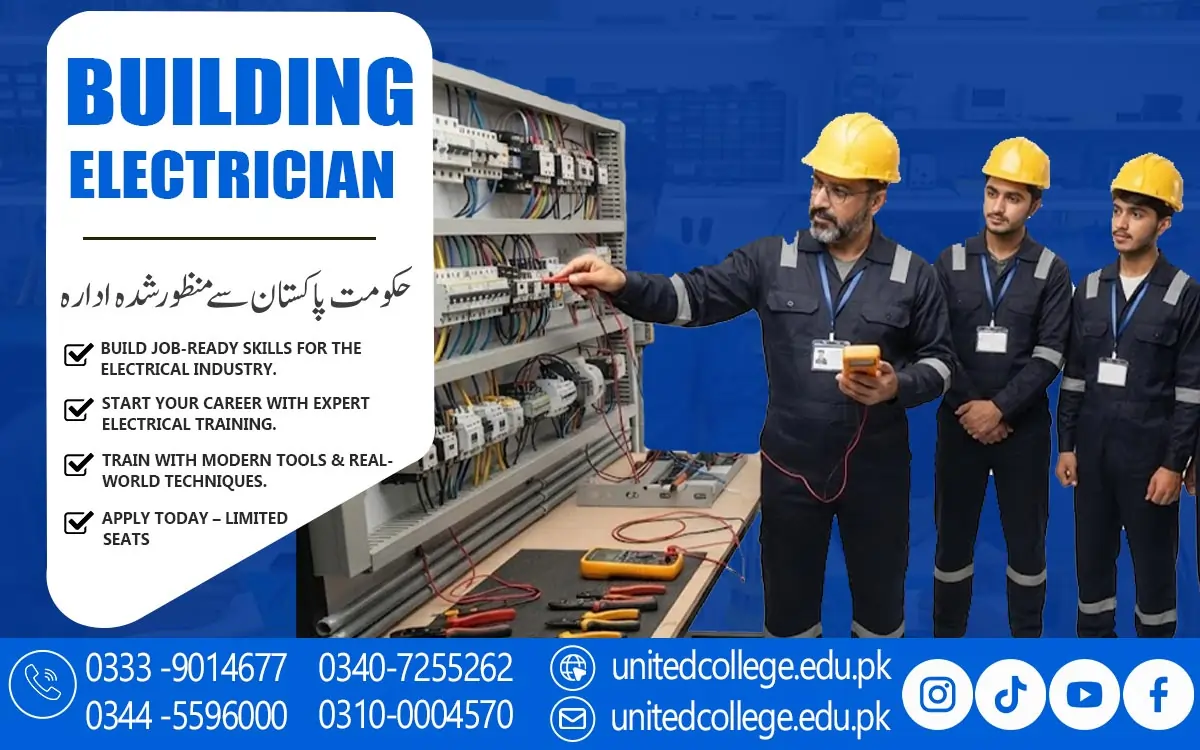

Building Electrician Course in Sahiwal – Practical Skills Training
Turn a Practical Skill Into a Real Career Direction
Every modern home, shop, office, and construction project depends on electricity. From a simple light and fan to sockets, appliances, and complete building wiring, electrical systems need proper installation and regular maintenance. This creates a need for people who understand electrical work and can perform it carefully.
The Building Electrician Course in Sahiwal can be a useful starting point for students, beginners, and job seekers who want to learn a practical trade. Instead of relying only on theoretical knowledge, learners can develop basic wiring, installation, repair, maintenance, troubleshooting, and safety skills. With proper training and continued practice, these skills can help beginners understand the responsibilities of a skilled electrician and prepare for different types of electrical work.
Why Skilled Electricians Still Matter in Growing Buildings
Walk into any newly constructed building, and you will see how much electrical work is involved before the space becomes ready to use. Wiring needs to be arranged, lights and fans need connections, switches and sockets need installation, and electrical circuits need to be organized properly. Residential and commercial properties also require regular inspection, maintenance, and repair as electrical systems become older or develop faults. A Building Electrician Course can help beginners understand these practical tasks and learn how electrical systems are installed, maintained, and repaired in different types of buildings.
Building electrician training in Sahiwal can introduce learners to these everyday requirements and help them understand how electrical work fits into construction and property maintenance. A trained electrician may work with contractors, construction teams, maintenance departments, workshops, or electrical service providers. The demand for electrical skills can vary by area and experience, but learning a practical trade gives beginners a useful technical foundation to build upon.
Learn Wiring Skills Through Practical Electrical Training
What looks like a simple wire connection can involve several important steps when it is part of a complete electrical system. An electrical wiring course can help beginners understand how wires and cables are used for different electrical points and why connections must be made carefully. Students can learn basic building electrical wiring, house wiring, domestic electrical wiring, and selected commercial wiring methods according to their level of training.
They can also become familiar with wiring techniques used for lights, fans, switches, sockets, and other common electrical points. Rather than simply memorizing connections, learners can develop an understanding of how different parts of a circuit work together. This practical foundation can make it easier for beginners to approach electrical installation and maintenance work with greater confidence and responsibility.
Master the Everyday Connections Used Inside Buildings
Have you ever wondered what happens behind a wall when you turn on a light or plug an appliance into a socket? There are electrical connections working behind these everyday actions. During an Electrical Installation Course, students can learn about common tasks such as switch and socket installation, lighting installation, fan wiring, cable handling, and basic circuit installation. They can also become familiar with distribution boards and circuit breakers, which are important parts of many building electrical systems.
Distribution board wiring requires careful attention because it helps organize different circuits within a property. Beginners can practice these tasks in a controlled learning environment so they can understand how individual electrical components are used. Developing these basic electrical wiring and installation skills can provide a stronger foundation for future technical work.
Learn to Recognize Faults Before Attempting Repairs
Electrical problems do not always appear in an obvious way. Sometimes a light stops working, a socket loses power, a connection becomes loose, or a circuit repeatedly develops a problem. This is where electrical fault finding becomes an important skill. Through Building Electrician Course training, learners can understand basic methods for observing symptoms, checking relevant connections, and identifying possible causes of common faults.
Electrical troubleshooting should not involve random wire connections because careless work can create additional risks. Students can learn to approach faults systematically and use suitable tools and testing methods under proper guidance. This knowledge can also support electrical maintenance training, helping learners understand how regular inspection and careful repair can contribute to the reliable operation of building electrical systems.
Make Electrical Safety a Habit From the Very Beginning
What is the most important thing an electrician can bring to a job? It is not only technical ability but also a strong understanding of safety. Electrical work can involve risks such as electric shock, short circuits, overheating, equipment damage, and fire when proper precautions are ignored. Electrical safety training should therefore be an important part of electricians' practical learning from the beginning. Learners can become familiar with safe working practices, appropriate protective equipment, correct use of electrical tools, safe isolation of power before suitable work, and careful inspection of connections.
They should also understand why damaged cables, loose connections, overloaded circuits, and unsafe working conditions should never be ignored. A responsible electrician understands that safety must come before speed. Developing these habits during training can help learners approach electrical installation, repair, and maintenance work more carefully.
Hands-On Practice Builds Confidence With Tools and Wiring
Reading about electrical systems is useful, but practical work helps turn information into usable skills. Hands-on electrical training allows beginners to become familiar with electrical tools, cables, components, switches, sockets, lighting points, and other materials used in everyday electrical work. During practical electrician training, learners can work through wiring exercises, make basic connections, practice installation procedures, and learn how to inspect their work. Repeated practice can help improve coordination, accuracy, tool handling, and confidence.
At United College of Technology, students can explore career-focused vocational learning designed to help beginners develop practical technical abilities. The value of this type of training is not simply in completing exercises; it is in helping learners understand correct working methods and prepare themselves for the realities of electrical work. Further experience is still important for anyone who wants to become a professional electrician.
Explore Different Workplaces After Developing Your Skills
Where can building electrician skills be useful? There are several possible work environments, depending on a person's practical ability, experience, and local opportunities. Residential electrical work may involve house wiring, lighting, fans, switches, sockets, maintenance, and basic repair tasks. Commercial properties such as shops and offices can require electrical installation and maintenance, while construction projects may need workers familiar with building wiring and electrical connections.
Other possibilities can include electrical workshops, factories, property maintenance teams, and electrical service businesses. A learner may eventually work toward roles such as Building Electrician, Electrician, Wiring Technician, Maintenance Electrician, or Electrical Technician. Some experienced electricians may also take on independent service work or small electrical projects where legally and professionally appropriate. However, career progress normally depends on practical experience, reliability, communication, safety awareness, and continued skill development.
Build Your Electrical Career One Skill at a Time
Learning electrician skills is not a one-day process; it develops through structured education, repeated practice, and real-world experience. The Building Electrician Course in Sahiwal can give beginners a starting point for understanding wiring, electrical installation, maintenance, repair, troubleshooting, tools, components, and safety. United College of Technology can help learners explore practical technical education in a structured environment, while students can strengthen their abilities through continued practice and additional learning.
As experience grows, electricians may become more comfortable working with residential and commercial electrical systems and may explore employment or service opportunities according to their skills. For someone in Sahiwal looking for a practical technical path, learning electrical work can be a meaningful first step. The key is to focus on safe working habits, practical ability, and continuous improvement rather than expecting instant career results.
Frequently Asked Questions (FAQs)
The course is a practical vocational program that helps beginners learn electrical wiring, installation, maintenance, repair, troubleshooting, and safety for building electrical systems.
Admission Open: Start Your Professional Journey Today!
Join United College of Technology and build a career with practical training, recognized certifications, and Gulf job support. Seats are limited.
Apply Now via WhatsAppContact Information
- Address: Rawalpindi: F-272 Main New Katarian Stop, Old IJP Road | Lahore Campus: Lahore, Pakistan
- Phone/WhatsApp: 0340-7255262 / 0333-9014677 / 0301-5044340 / 0310-0004570 / 051-8770756
- Website: unitedcollege.edu.pk
















Leave a Comment