


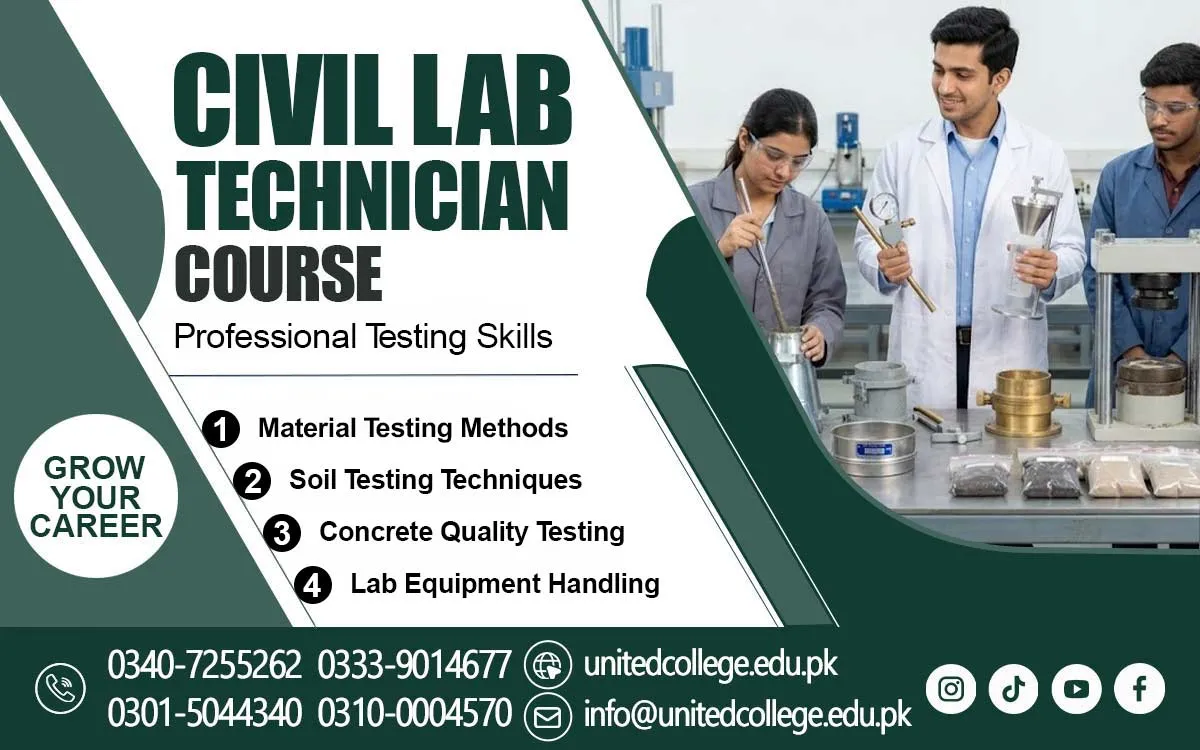

Civil Lab Technician Course in Karak for Construction Material Analysis
Fundamentals of Construction Material Inspection
Construction material inspection is an important part of civil engineering because it helps ensure the quality and reliability of materials used in different projects. Students enrolling in the Civil Lab Technician Course in Karak learn about the basic principles of examining construction materials such as cement, concrete, soil, sand, bricks, steel, and aggregates. They understand why materials must be inspected before being used in buildings, roads, bridges, and other infrastructure developments.
Students become familiar with different inspection procedures used in civil engineering laboratories. They learn how to observe material conditions, identify visible defects, collect samples, and examine basic material characteristics. These activities help them understand how laboratory inspection supports construction quality and project requirements.
The course also introduces learners to the responsibilities of laboratory technicians during material inspection. They develop an understanding of accuracy, proper testing methods, and systematic observations. This knowledge provides a foundation for performing laboratory tasks and supporting construction quality assessment.
Understanding Laboratory Safety Requirements
Laboratory safety is essential for protecting technicians, equipment, and construction material samples during testing activities. Students learn about common safety requirements followed in civil engineering laboratories. They understand how proper working practices can reduce accidents and create a secure environment for performing different material testing procedures.
During this section, learners become familiar with personal protective equipment such as safety gloves, protective glasses, helmets, and laboratory coats. They also explore safe handling methods for testing instruments, chemicals, cement samples, and other construction materials. Understanding equipment instructions and workplace precautions helps students avoid unnecessary risks.
Students also learn the importance of maintaining cleanliness and organization inside the laboratory. They understand how to store materials properly, handle waste carefully, and follow emergency procedures when required. These safety practices help future technicians develop responsible working habits.
Exploring Physical Properties of Soil
Soil plays an important role in civil engineering because it provides the foundation for buildings, roads, and other construction structures. Students learn about different soil types and their physical characteristics. They explore properties such as moisture content, particle size, density, texture, and consistency to understand how soil conditions influence construction activities.
The Civil Lab Technician Course in Karak introduces learners to basic soil examination techniques used in engineering laboratories. They become familiar with soil sampling, sample preparation, moisture determination, and particle-size analysis. These procedures help technicians collect useful information about the condition and composition of soil.
Students also understand how soil properties are considered during construction planning and foundation development. They learn why proper soil investigation is necessary before starting major projects. This knowledge helps them understand the contribution of laboratory testing to safe and stable construction.
Learning Methods of Cement Examination
Cement is a major construction material used in concrete, mortar, and different structural applications. Students learn about its basic properties and understand why cement examination is necessary to evaluate its quality. They explore how proper testing helps determine whether cement is suitable for particular construction requirements.
Learners become familiar with common cement testing procedures, including fineness testing, consistency determination, setting time examination, and specific gravity testing. They understand how laboratory instruments are used during these activities and why accurate measurements are important. These procedures provide useful information about cement characteristics.
Students also learn how to prepare cement samples, follow testing instructions, and record laboratory observations. They understand the importance of comparing results with relevant technical standards. This knowledge helps them develop a basic understanding of cement quality assessment.
Testing Concrete for Strength and Durability
Concrete is widely used in construction because of its ability to support different structural requirements. Its strength and durability are important for maintaining the safety and performance of buildings, bridges, roads, and other infrastructure. Students learn about the main ingredients of concrete and understand how their proportions influence the final material quality.
The Civil Lab Technician course introduces learners to common concrete testing procedures, including slump testing and compressive strength testing. They explore how fresh concrete is examined for workability and how hardened concrete specimens are tested to evaluate their load-bearing capacity. Students also learn about sample preparation and curing procedures.
Understanding concrete testing helps students recognize the importance of quality control in construction projects. They learn how test results provide information about concrete performance and whether materials meet specified requirements. These concepts prepare learners for basic responsibilities in concrete testing laboratories.
Understanding Fine and Coarse Aggregates
Aggregates are essential materials used in concrete production, road construction, and other civil engineering applications. Students learn about the two main categories of aggregates: fine aggregates and coarse aggregates. They understand the differences between sand, gravel, and crushed stone and explore their importance in construction mixtures.
During this section, learners study aggregate properties such as particle size, shape, texture, grading, and cleanliness. They become familiar with sieve analysis, which is used to determine the distribution of different particle sizes in an aggregate sample. This testing procedure helps evaluate whether aggregates are suitable for specific construction applications.
Students also explore how aggregate quality influences concrete strength, workability, and durability. They understand why proper material selection and grading are necessary for preparing reliable construction mixtures. This knowledge helps them understand the role of aggregate testing in laboratory quality control.
Maintaining Laboratory Records and Test Reports
Maintaining accurate laboratory records is an important responsibility in civil engineering material testing. Students learn how testing information is documented and why organized records are necessary for construction quality assessment. They understand how laboratory reports provide details about material samples, testing procedures, observations, and final results.
The course introduces learners to basic report preparation techniques. They explore how to record measurements, organize test data, mention equipment details, and present results in a clear format. Students also understand the importance of avoiding calculation mistakes and maintaining consistency when documenting laboratory activities.
Proper record management helps engineers and construction professionals review testing results whenever required. Students learn how to maintain sample information and prepare reports according to laboratory procedures. These abilities help them develop accuracy and professionalism in civil testing environments.
Professional Career Paths in Civil Testing
Civil testing provides different employment opportunities in the construction, engineering, and infrastructure development sectors. Individuals completing the Civil Lab Technician Course in Karak can explore professional positions according to their technical knowledge, practical abilities, and experience. Employment opportunities may be available in material testing laboratories, construction companies, engineering consultancies, and development organizations.
Some possible career positions include Civil Lab Technician, Material Testing Assistant, Concrete Testing Technician, Soil Testing Assistant, Quality Control Assistant, and Laboratory Record Assistant. A Civil Lab Technician performs basic tests on construction materials such as cement, concrete, and soil. A Material Testing Assistant helps collect samples and examine material properties, while a Concrete Testing Technician assists with strength, consistency, and quality examinations. Similarly, Soil Testing Assistants support soil sampling and classification, whereas Quality Control Assistants monitor material quality and maintain inspection records.
With practical experience and further professional learning, individuals can improve their understanding of civil engineering testing procedures. Developing equipment-handling abilities, accurate documentation habits, and material inspection knowledge can help them explore further career opportunities in the construction industry.
Frequently Asked Questions (FAQs)
The Civil Lab Technician Course in Karak provides basic knowledge of construction material inspection, soil testing, cement examination, concrete testing, and laboratory procedures.
Students learn construction material inspection, laboratory safety, soil properties, cement testing, concrete strength, aggregate grading, and laboratory report preparation.
Common materials include cement, concrete, soil, sand, bricks, steel, gravel, and different types of construction aggregates.
Laboratory safety helps prevent accidents, protects workers and equipment, and ensures that testing activities are performed under suitable working conditions.
Common soil tests include moisture content determination, particle-size analysis, density testing, and soil classification.
Admission Open: Start Your Professional Journey Today!
Join United College of Technology and build a career with practical training, recognized certifications, and Gulf job support. Seats are limited.
Apply Now via WhatsAppContact Information
- Address: Rawalpindi: F-272 Main New Katarian Stop, Old IJP Road | Lahore Campus: Lahore, Pakistan
- Phone/WhatsApp: 0340-7255262 / 0333-9014677 / 0301-5044340 / 0310-0004570 / 051-8770756
- Website: unitedcollege.edu.pk
















Leave a Comment