
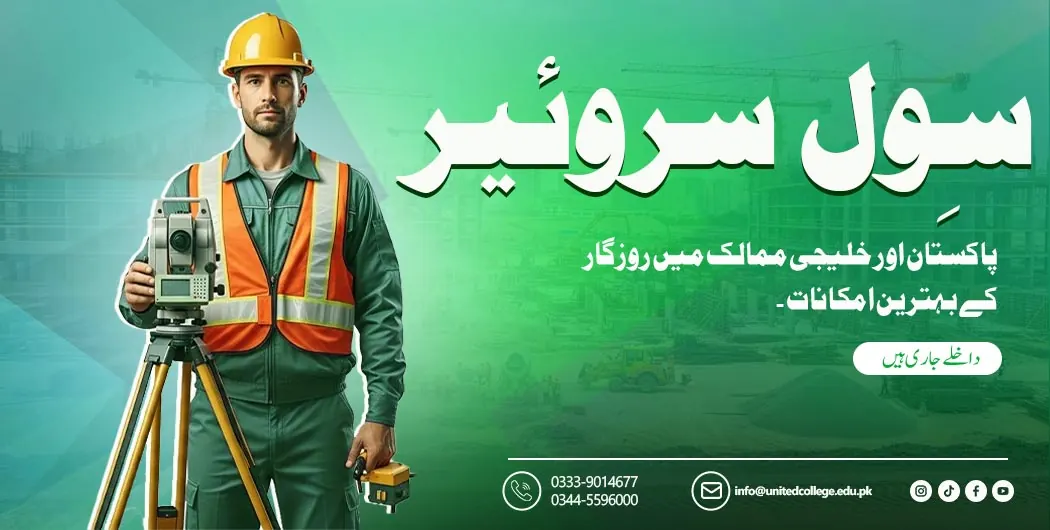

Civil Surveyor Course in Islamabad – Learn Land Surveying with UCT
If you want a stable, respected career in construction and land development, the Civil Surveyor Course in Islamabad at United College of Technology (UCT) can get you there. This course teaches you how to measure land, read maps, and use modern surveying tools like total stations and auto levels. You don't need to be a genius at math or have an engineering background. You just need the will to learn a skill that is always needed on construction sites, government projects, and private housing schemes across Pakistan and abroad.
Below, we'll walk you through everything this course covers, how it prepares you for real jobs, and why UCT is a smart place to start.
Turn a Piece of Land into a Readable Map
Every building, road, and housing society starts with one thing: an accurate survey. Before any construction begins, someone has to walk the site, take measurements, and turn raw land into numbers and drawings that engineers can actually use. That's the job of a civil surveyor.
In this Civil Surveyor Training in Islamabad, you'll learn how surveying actually works in the field, not just in theory. You'll study different types of surveys, including boundary surveys, topographic surveys, and road surveys. Each type has its own purpose. A boundary survey tells you exactly where one property ends and another begins. A topographic survey shows the shape of the land, including hills, slopes, and low points. Once you understand these differences, reading a site plan becomes second nature instead of a confusing mess of lines and numbers.
Learn Survey Equipment Through Practical Training
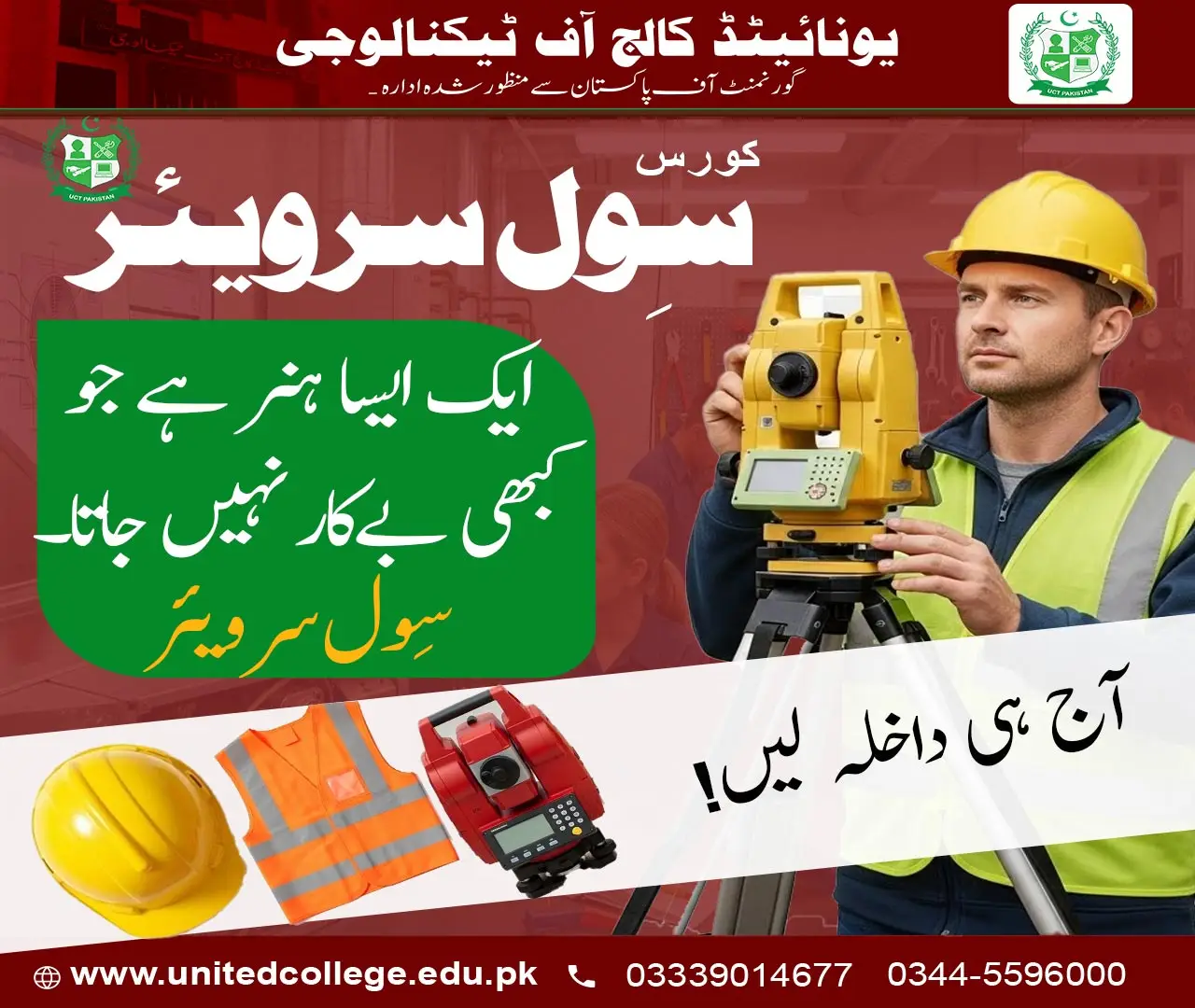
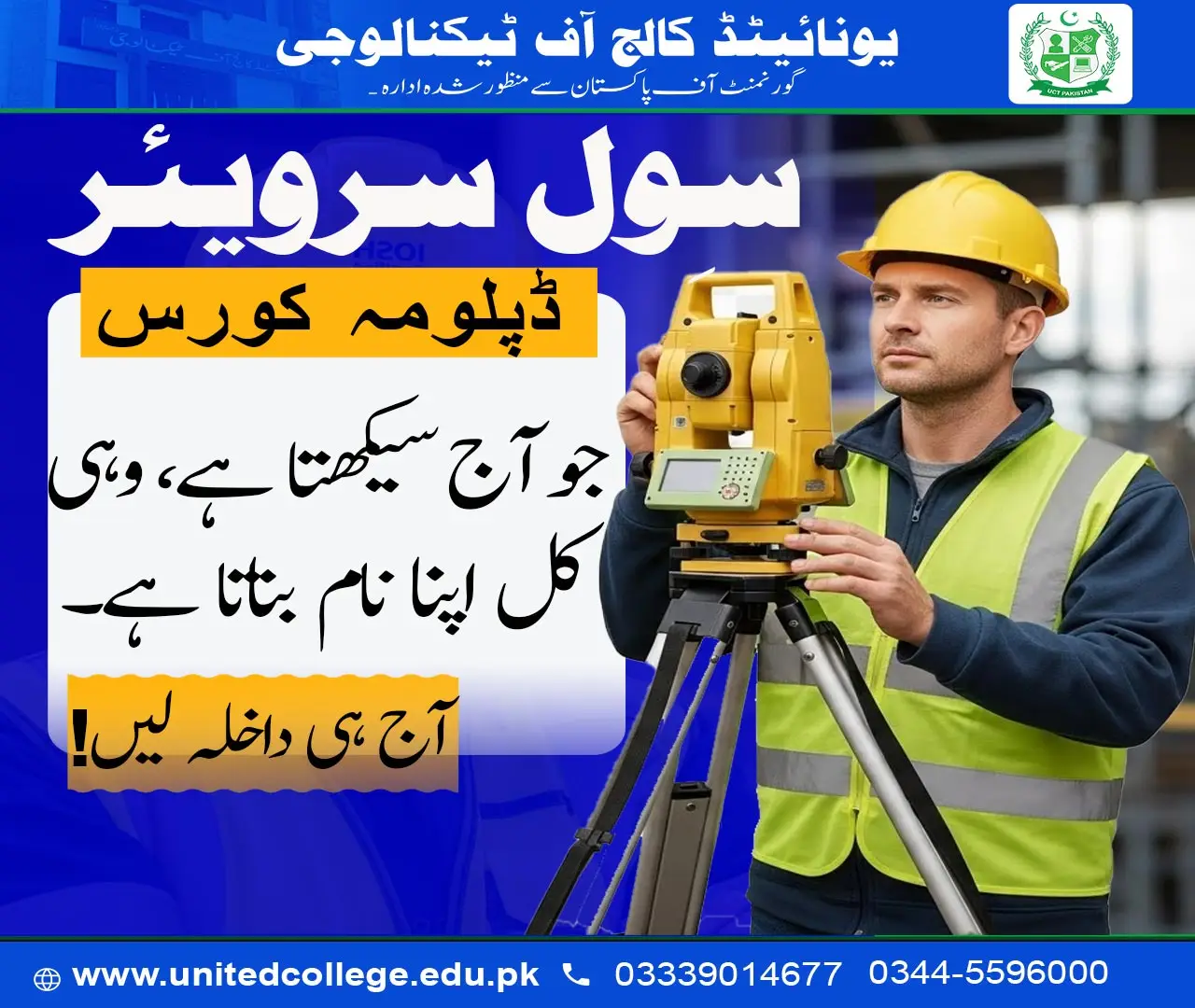
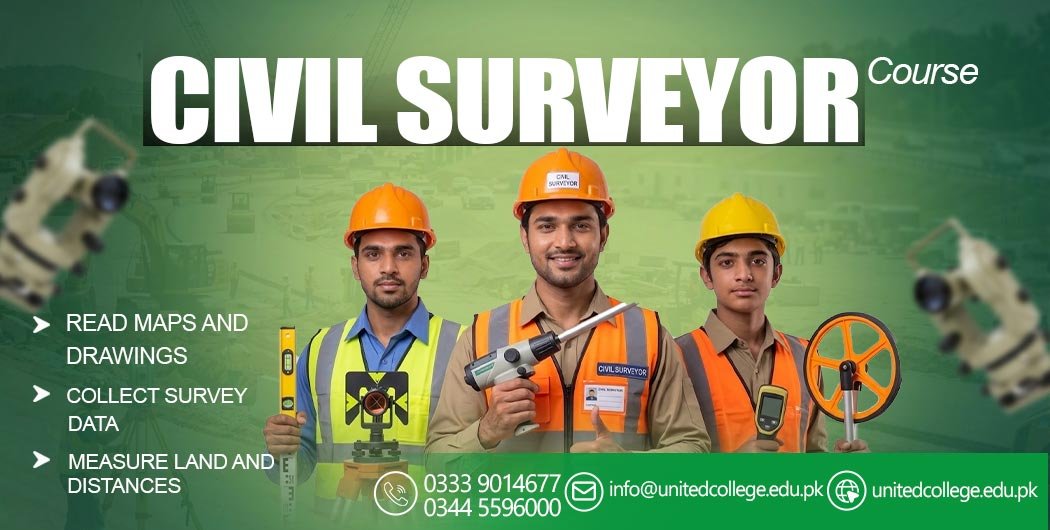
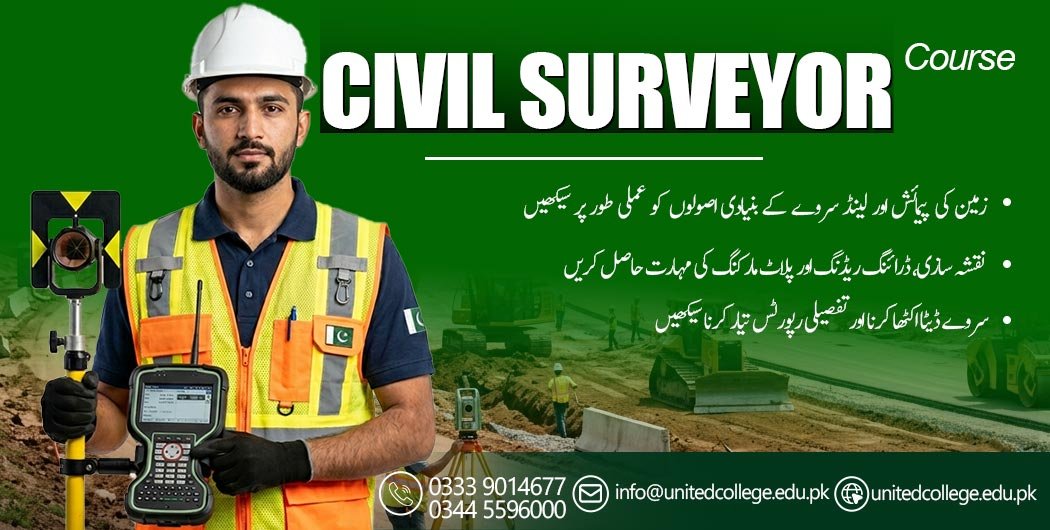
Textbooks alone won't make you a surveyor. This is a hands-on skill, and UCT treats it that way. During the Civil Surveying Course, you'll get real practice with tools like the total station, auto level, theodolite, and measuring tape. These aren't just names you memorize for an exam. You'll actually hold them, set them up, take readings, and record data the same way a working surveyor does.
You'll also learn leveling, which means finding the height difference between different points on a site. This skill is used constantly in road construction, drainage planning, and building foundations. Alongside this, you'll pick up basic plotting and drafting skills, so you can turn your field data into clean, professional drawings. Students who already have some interest in design often pair this training with our AutoCAD Course, since knowing how to draft digitally makes your survey reports even more useful to employers.
Study with Real Construction Site Examples
One thing that sets a good surveying course apart is whether it connects classroom learning to actual job situations. At UCT, we don't just explain surveying concepts in isolation. We show you how they apply to real construction projects happening right now in Islamabad and Rawalpindi.
You'll learn how surveyors work alongside civil engineers, architects, and site supervisors. Before a single brick is laid, surveyors mark out the exact position of walls, roads, and utility lines. If this step is done wrong, the whole project can face costly delays or legal disputes over property lines. That's why accuracy matters so much in this field, and why trained surveyors are paid well for getting it right.
We also cover contouring, which helps you understand how water will flow across a piece of land. This is especially useful for drainage design and preventing flooding issues in new housing projects, something that's become a bigger concern in Pakistan's growing cities.
Understand the Methods Used on Modern Projects
Surveying has changed a lot over the past decade. GPS-based tools and digital total stations have replaced a lot of old manual methods, though the basic principles remain the same. In this Land Survey Course in Islamabad, you'll learn both the traditional foundations and the modern techniques that today's construction companies actually expect.
You'll understand coordinate systems, which are used to pinpoint exact locations on a map. You'll also learn how GIS, or Geographic Information Systems, is used to store and analyze spatial data. While full GIS work is a specialized field on its own, having a basic understanding gives you an edge over surveyors who only know manual methods. Combined with practical fieldwork, this mix of old and new techniques means you graduate ready to work with whatever tools your employer already uses.
Who Should Join This Program?
This course welcomes a wide range of students, not just those from a technical background. If you fall into any of the categories below, this program is built with you in mind:
- Matric or Intermediate students looking for a practical, job-focused skill
- Diploma of Associate Engineering (DAE) holders in Civil Engineering wanting field experience
- Construction workers or site helpers who want to move into a supervisory role
- Anyone planning to work in the Gulf region as a certified land surveyor
There's no need to have prior surveying experience. Our instructors start from the basics and build up your skills step by step, so beginners and career-switchers both do well in this course.
Get Ready for Professional Site Work
By the time you finish this Surveyor Diploma in Islamabad, you should feel comfortable stepping onto an actual construction site and doing real work, not just passing a written test. That's the real goal of this training.
You'll practice recording measurements accurately, since even small errors can throw off an entire project. You'll also learn how to communicate your findings clearly, both in written survey reports and when explaining details to engineers or site managers. Good surveyors aren't just skilled with instruments. They also know how to document their work so others can trust and use it.
Field safety is part of this, too. Working on active construction sites comes with real risks, so we cover basic safety awareness during outdoor sessions. Some students later choose to strengthen this side of their profile further with our Safety Officer Course, especially if they're aiming for supervisory roles on larger projects.
Where This Skill Can Take You?
Once you complete your Civil Surveyor training, several career paths open up. Many graduates start as junior land surveyors or site assistants, working under senior surveyors or engineers to gain experience. From there, common roles include construction surveyor, road surveyor, and site supervisor.
In Pakistan, a civil surveyor typically earns between PKR 35,000 and PKR 60,000 per month, depending on experience and location. Those who move abroad, particularly to the UAE, Saudi Arabia, or Qatar, often earn considerably more, sometimes in the range of USD 1,200 to USD 2,500 monthly, thanks to the constant demand for skilled surveyors in Gulf construction projects. Government departments, private construction firms, and real estate developers all regularly hire trained surveyors, so job options aren't limited to one industry.
With a few years of field experience, some surveyors move into project coordination or estimating roles. This is a natural pairing with our Quantity Surveyor Course, since quantity surveyors handle cost estimation and material planning, building directly on the measurement skills you develop here.
Study Tools and Techniques That Employers Actually Ask For
Construction companies in Islamabad and Rawalpindi don't just want someone who memorized theory. They want someone who can walk onto a site and start working immediately. That's why our Civil Surveying Course focuses heavily on repetition and practice, not just one demonstration of each tool.
You'll repeatedly practice setting up equipment, taking readings, and recording data until it becomes routine. We also review common mistakes new surveyors make, like incorrect instrument leveling or misreading a staff, so you avoid these errors before they cost you a job opportunity. Small, consistent practice like this is what separates someone who "took a course" from someone who's genuinely job-ready.
Class sizes are kept manageable, so instructors can actually watch each student's technique and correct mistakes early. This personal attention matters a lot in a hands-on field like surveying, where bad habits are hard to unlearn once they are set in.
Build a Career That Doesn't Sit Behind a Desk All Day
If you're someone who doesn't enjoy being stuck all day indoors, surveying offers a nice balance. You'll spend time outdoors on active sites, and time indoors preparing reports and drawings. It's practical work with visible results. You can literally point to a road or building and say you helped make sure it was placed correctly.
This Survey Training in Islamabad is also a smart choice if you're thinking long-term. Land development isn't slowing down in Pakistan. New housing societies, highways, and commercial plazas keep appearing across Islamabad, Rawalpindi, and beyond. Every one of these projects needs surveyors before, during, and sometimes after construction. That steady demand is exactly why this skill remains valuable year after year.
Start Building Your Surveying Career with UCT
United College of Technology has trained students from Islamabad, Rawalpindi, and surrounding areas for years, and our Civil Surveyor Course reflects real industry needs, not just outdated textbook material. Our instructors bring genuine field experience, our equipment matches what you'll actually use on the job, and our certificate is recognized by employers across the construction and engineering sectors.
If you're ready to build a career that's practical, in-demand, and respected, don't wait. Contact United College of Technology today to check admission details, course fees, and upcoming batch timings. Our team is happy to answer your questions and help you take the first step toward becoming a certified civil surveyor.
Campus Gallery