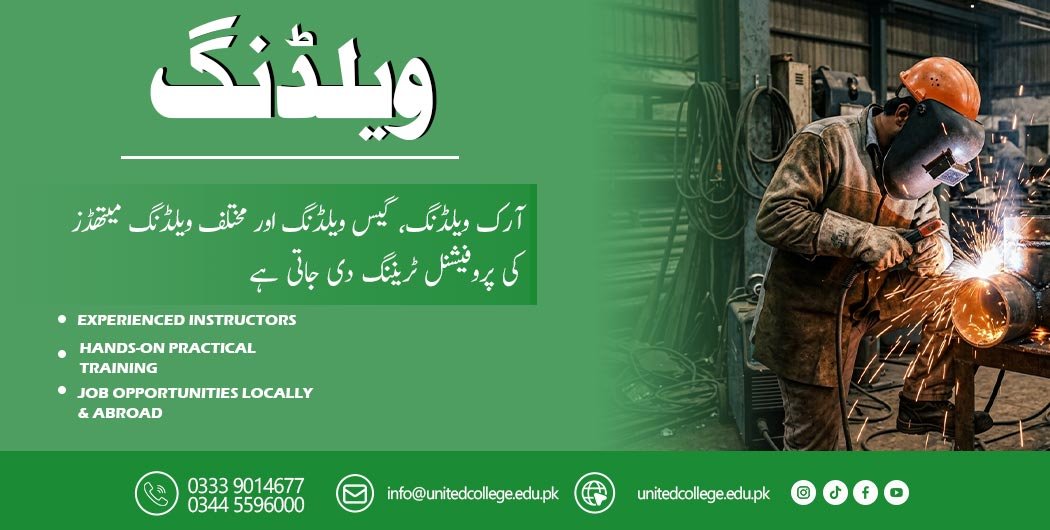


Welding Course in Islamabad – Build a Skilled Career Through Practical Learning
Learn Professional Welding Skills with Expert Training in Islamabad
Good welding skills can open doors to many industries, from construction and manufacturing to automotive and engineering fields. Many people want to learn a practical trade that can help them find employment opportunities in Pakistan and abroad. A Welding Course in Islamabad is designed for beginners and individuals who want to develop professional welding skills through proper training and practical work.
Welding is not only about joining two metal pieces together. It requires knowledge of different welding techniques, safety procedures, equipment handling, and accurate finishing. United College of Technology (UCT) provides practical-based training where students learn the fundamentals of welding and improve their skills through workshop practice.
This course is suitable for students, job seekers, and individuals who want to start a career as a professional welder. With the right training, learners can work in industries where skilled welders are always needed.
Welding Course in Islamabad Helps Students Learn Real Workplace Skills
A professional welder needs more than basic knowledge. Employers prefer workers who understand tools, materials, safety standards, and practical techniques. The Welding Course in Islamabad focuses on developing these essential abilities through a combination of classroom learning and hands-on practice.
During training, students learn how to operate welding machines safely, prepare metal surfaces, and create strong joints. They also understand how different metals react during welding and how to select suitable welding methods according to the project requirements.
For example, a welder working on construction structures needs different techniques compared to someone repairing automotive parts. Practical training helps students understand these real-world situations.
What Students Learn During Professional Welding Training?
Master Different Welding Course Techniques Step by Step. The course covers important welding methods that are commonly used in industries. Students get familiar with basic and advanced welding practices, including:
- Arc welding techniques
- Gas welding fundamentals
- Metal preparation methods
- Welding equipment handling
- Joint formation and finishing
- Welding safety practices
Learning these techniques allows students to perform different types of welding tasks with confidence. Moreover, students also learn how to identify common welding problems and improve the quality of their work. Proper training helps reduce mistakes and increases productivity in professional environments.
Safety Knowledge That Every Welder Needs
Safety is one of the most important parts of welding work. A small mistake can affect the quality of work and create workplace risks. Therefore, students are trained in protective equipment, safe machine operation, and proper workshop practices.
The training includes awareness about welding helmets, gloves, protective clothing, ventilation, and safe handling of welding tools. These safety habits help students work professionally in different industrial environments.
Practical Workshop Training Builds Strong Technical Confidence
Many students choose skill-based courses because they want practical experience instead of only theoretical knowledge. The welding training at United College of Technology (UCT) focuses on workshop practice so students can apply what they learn.
During practical sessions, learners work with welding machines, metal pieces, and different tools under professional guidance. This approach helps beginners understand the complete welding process from preparation to final finishing. In addition, practical training improves hand control, accuracy, and confidence. These qualities are highly valuable because welding requires attention to detail and patience.
Course Duration, Certificate, and Admission Information
The duration of a welding training program may vary depending on the institute and course structure. At United College of Technology (UCT), students receive practical training designed to develop job-ready skills within a suitable learning period.
After completing the training, students can receive a course completion certificate. A recognized certificate helps demonstrate their skills when applying for jobs or starting professional work.
The admission process is simple. Interested candidates can contact UCT, get information about available classes, submit required documents, and complete the registration process. People with basic education and beginners who want to learn a technical skill can apply.
Career Opportunities After Learning Professional Welding Skills
Skilled welders are needed in many sectors, including construction companies, factories, workshops, shipbuilding, and engineering projects. After completing training, students can explore opportunities as welders, fabrication workers, maintenance technicians, or workshop assistants.
A trained welder can also improve their career by gaining more experience and learning advanced techniques. Many professionals continue upgrading their skills because modern industries require workers who can handle different materials and equipment.
Moreover, welding is considered a valuable trade internationally. Skilled workers with proper experience and certification can explore employment opportunities in different countries where technical workers are in demand.
Why Practical Skills Matter More Than Just Theory?
A successful welding career depends on practical ability. Knowing definitions and processes is helpful, but employers need workers who can perform actual tasks correctly.
A student who practices welding regularly develops better control, understands equipment behavior, and learns how to complete projects efficiently. These practical skills create a strong foundation for long-term career growth. United College of Technology (UCT) focuses on practical learning so students can gain confidence before entering the professional market.
Develop Additional Technical Skills Along With Welding Knowledge
Many students prefer learning multiple technical skills to increase their career options. Along with welding, other professional courses can also help individuals build a stronger technical profile. For example, students interested in electrical work can explore the Building Electrician Course in Lahore to develop additional industry-related skills.
Moreover, learning different trades allows individuals to understand various workplace requirements and improve their employment opportunities in technical fields.
Small Professional Habits That Make Welders Successful
Professional welders are recognized not only for their welding ability but also for their workplace discipline. Attention to detail, proper measurement, equipment maintenance, teamwork, and following safety rules are important qualities.
A welder who maintains clean work, completes tasks on time, and follows instructions can build a strong reputation in the industry. These small habits often create a difference between an average worker and a skilled professional. Similarly, people who want to build skills in other technical fields also consider courses like the Plumbing Course in Islamabad to learn practical skills and improve their career opportunities in the construction and maintenance industry.
Start Your Professional Journey With Practical Welding Skills
Learning welding can be the first step toward building a stable technical career. A quality training program helps students understand modern welding methods, workplace safety, and practical skills required by employers. The Welding Course in Islamabad at United College of Technology (UCT) provides learners with the opportunity to develop useful skills through practical training and professional guidance. With dedication and regular practice, students can turn welding knowledge into valuable career opportunities.
Campus Gallery