


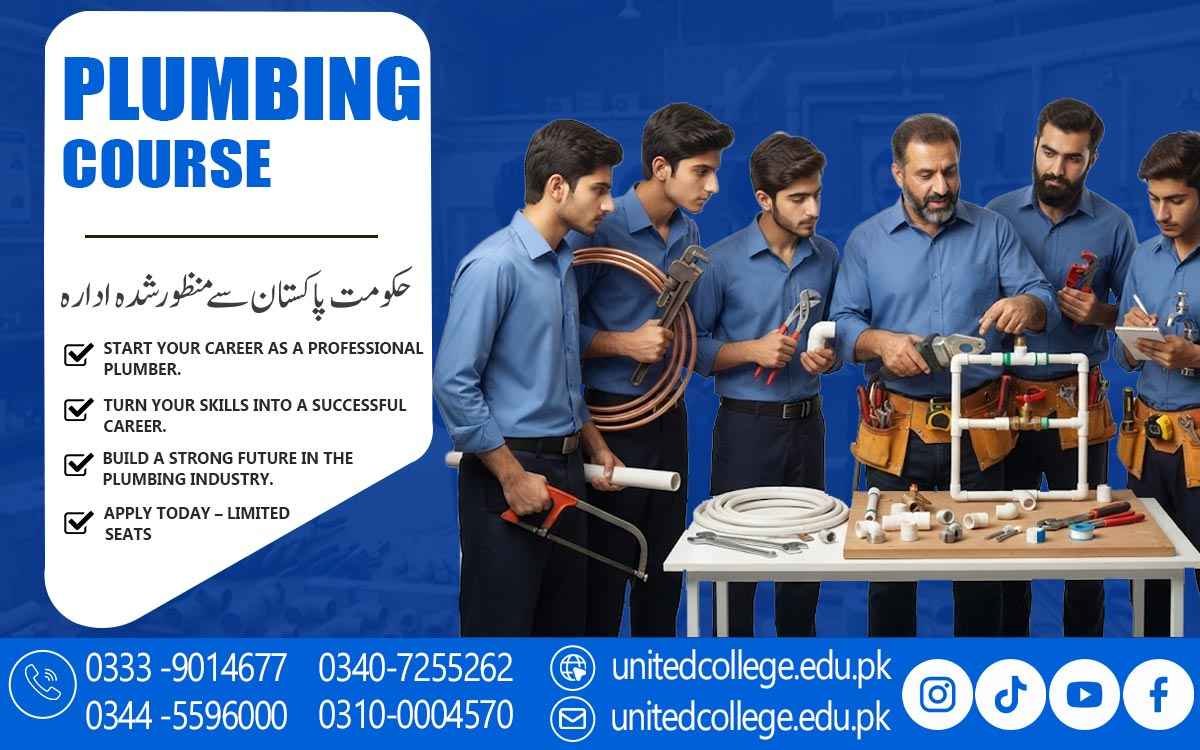

Plumbing Course in Khanewal – Build Professional Plumbing Skills
When Everyday Water Problems Show the Value of Skilled Plumbing
Turn on a tap, flush a toilet, or take a shower, and water seems to move through a building without any effort. Behind that simple experience, however, is a network of pipes, joints, valves, fixtures, drainage lines, tanks, and connections that must work together correctly. A small mistake in one connection can lead to leakage, low water pressure, blocked drainage, or damage to a wall or floor. This is why practical plumbing knowledge is useful for anyone who wants to understand how building water systems are installed and maintained
. A Plumbing Course in Vehari can introduce beginners to the practical side of plumbing and help them understand how different parts of a plumbing system fit together. Instead of learning only through explanations, students can gradually become familiar with tools, pipes, fittings, measuring methods, installation procedures, and basic repair work. For learners in Vehari, this knowledge can be relevant to residential construction, building maintenance, renovation, commercial properties, and other places where reliable water and drainage systems are required.
Understanding the Water Supply and Drainage Network
What happens between a water source and the tap in your kitchen? Understanding that journey is an important part of plumbing training because a building needs more than a few connected pipes to deliver water properly. During a Plumbing Course in Vehari, learners can study how water supply systems distribute water from a source, storage tank, or pumping arrangement toward different fixtures. They can become familiar with supply pipes, valves, connectors, water tanks, pumps, and the basic factors that influence water flow and pressure.
Students can learn why drainage pipes need suitable routes, slopes, joints, and connections to help wastewater move away from a building. Understanding both systems gives learners a better picture of how fresh water enters a property and how wastewater leaves it. Training can also introduce basic plumbing layouts so students can understand where pipes may need to run before installation begins. This type of knowledge is useful because good plumbing work depends on planning rather than simply connecting one pipe to another.
Learning to Work with Pipes, Fittings, Valves, and Joints
A pipe may look like a simple piece of material, but choosing, measuring, cutting, and connecting it correctly requires attention to detail. Practical plumber training can help learners recognize common plumbing materials and understand where different pipes, fittings, valves, joints, and connectors may be used. Depending on the installation, learners may encounter materials such as PVC, PPR, GI, or other commonly used plumbing pipes, with each requiring suitable joining and installation methods. Students can practice measuring pipe lengths before cutting them, preparing pipe ends, creating suitable joints, and checking connections for proper alignment.
Valves are particularly important because they can be used to control water flow and isolate sections of a system when maintenance is required. A Plumbing Course in Vehari can make these concepts easier to understand by connecting classroom explanations with practical tasks. When learners repeatedly measure, cut, join, and inspect materials, they begin to understand why even a small error in alignment or measurement can affect the rest of an installation. This practical approach can build careful working habits that are useful in both construction and maintenance situations.
Bathroom and Kitchen Plumbing Through Practical Installation
Walk into a bathroom or kitchen and almost every visible fixture has a plumbing connection behind it. Sinks, washbasins, toilets, showers, taps, and other sanitary fittings depend on appropriate water supply and drainage arrangements to function correctly. A Plumbing Course in Vehari can help learners understand how these fixtures are connected and how their installation affects the wider plumbing system. Bathroom plumbing often requires careful positioning of supply lines, waste pipes, valves, taps, and fixtures, while kitchen plumbing may involve sink connections, water supply lines, waste outlets, and other fittings.
They may also study how water supply and drainage points should be considered when preparing a new installation or carrying out renovation work. Practical training can introduce learners to the correct use of plumbing tools while working around sanitary fixtures and connections. This is particularly useful for beginners because a real installation involves several components working together rather than one isolated task. By practicing these arrangements step by step, learners can better understand how residential plumbing is planned, installed, inspected, and maintained.
Water Tanks, Pumps, and the Role of Pressure
Ever wondered why water reaches one fixture strongly while another may have weaker flow? Water pressure, pipe size, elevation, system layout, valves, and pumping arrangements can all influence how water moves through a building. During plumbing training, learners can study the basic relationship between water tanks, pumps, supply pipes, and fixtures without needing advanced engineering knowledge. They can understand how water may be stored in a tank and distributed through supply lines, as well as why connections need to be properly secured and arranged.
Learners can also become familiar with the role of pumps where additional pressure or water movement is required in a particular system. A Plumbing Course in Vehari can help students recognize common signs of water-supply problems, such as weak flow, unusual pressure changes, or leakage around connections, and understand how these issues may be inspected systematically. Rather than immediately replacing components, a developing plumbing technician can learn to examine the system, check visible connections, consider water flow, and identify where further inspection may be needed.
Bathroom and Kitchen Plumbing Through Practical Installation
Walk into a bathroom or kitchen and almost every visible fixture has a plumbing connection behind it. Sinks, washbasins, toilets, showers, taps, and other sanitary fittings depend on appropriate water supply and drainage arrangements to function correctly. A Plumbing Course in Vehari can help learners understand how these fixtures are connected and how their installation affects the wider plumbing system. Bathroom plumbing often requires careful positioning of supply lines, waste pipes, valves, taps, and fixtures, while kitchen plumbing may involve sink connections, water supply lines, waste outlets, and other fittings.
Students can learn how to plan pipe routes before installation so that connections remain accessible, unnecessary bends are avoided, and fixtures can operate properly. Practical training can also introduce learners to the correct use of plumbing tools while working around sanitary fixtures and connections. This hands-on approach helps beginners understand that successful plumbing installation depends on accurate measurements, suitable connections, proper alignment, and careful testing. By practicing these arrangements step by step, learners can develop greater confidence in handling common residential plumbing tasks and understand how individual fixtures connect with the larger water supply and drainage system.
Finding Leaks Before a Small Fault Becomes a Bigger Problem
A dripping connection may look harmless at first, but ignoring a small plumbing fault can sometimes allow moisture to damage surrounding surfaces or create a larger maintenance problem. This makes leak detection and timely repair important parts of practical plumbing work. During a Plumbing Course in Vehari, learners can study how common leaks are identified by inspecting joints, valves, fittings, taps, supply lines, and visible pipe sections. They can learn to look for signs such as dripping water, damp areas, unusual moisture, reduced water pressure, or visible damage around a connection.
Drainage problems also require careful inspection because slow drainage or repeated blockage can indicate an issue within the waste system. Students can learn basic methods for inspecting drainage lines and identifying possible causes rather than treating every blockage in exactly the same way. Plumbing maintenance also involves preventive checks, such as examining exposed connections, monitoring fixtures, checking valves, and addressing minor problems before they become more difficult. Learning this systematic approach helps beginners understand that a plumber’s work is not limited to installing new pipes; inspection, maintenance, and fault identification are equally important.
Plumbing Tools and Safe Working Methods
Good plumbing work depends not only on knowing what to do but also on knowing how to use the right tool safely. A learner may encounter pipe cutters, adjustable wrenches, pipe wrenches, measuring tools, threading equipment, pliers, sealants, joining materials, and other plumbing tools during practical training. A Plumbing Course in Vehari can introduce students to the purpose of these tools and help them understand why using the correct tool matters for accurate and safe work. For example, measuring carefully before cutting can reduce material waste, while using an appropriate wrench can help prevent unnecessary damage to fittings. Students can also practice keeping tools organized and checking equipment before starting a task.
Safety should remain part of every practical activity because plumbing work can involve wet surfaces, sharp materials, heavy equipment, confined areas, electrical connections near water, and construction environments. Learners can be introduced to protective equipment and safe working procedures, including keeping work areas organized, handling tools carefully, shutting off water where necessary, and taking appropriate precautions around other building services. These habits are valuable whether a person is working on a residential repair, commercial installation, renovation project, or construction site.
Hands-On Plumbing Training at United College of Technology
Reading about plumbing is useful, but holding a pipe, measuring it, making a joint, connecting a fitting, or inspecting a leak can make the learning experience much clearer. This is where practical training becomes especially valuable for beginners. At United College of Technology, the Plumbing Course in Vehari can provide learners with an opportunity to build their understanding of practical plumbing tasks, tools, materials, installation procedures, repair methods, and safe working practices. The learning process can help students become familiar with how plumbing components are handled and how different tasks are approached in a planned sequence.
Workshop-based practice can also help students become more comfortable with measuring, cutting, joining, aligning, testing, and inspecting their work. For someone starting without previous plumbing experience, repeated practice can make technical terms easier to understand because each concept becomes connected to a physical task. Learners can also develop better habits around tool handling, material selection, workplace organization, and fault inspection. The value of this type of training comes from building practical understanding step by step rather than expecting beginners to master every plumbing task immediately.
Building Useful Plumbing Skills for Homes, Buildings, and Construction Work
Where can plumbing knowledge actually be used? Almost any building that depends on water and drainage requires some form of plumbing installation or maintenance. In Vehari, plumbing skills can be relevant to homes, shops, offices, commercial buildings, workshops, construction projects, renovation work, and property maintenance. A person with practical training may understand how to approach tasks such as installing supply lines, fitting sanitary fixtures, connecting drainage pipes, checking leaks, maintaining valves, and inspecting common plumbing faults.
A Plumbing Course in Vehari can give beginners a foundation for understanding these different environments while helping them recognize that real-world proficiency develops through continued practice and field experience. Learners can use their training as a starting point and continue improving their pipe fitting, installation, repair, maintenance, measurement, and troubleshooting abilities as they gain experience. For someone interested in practical technical work, developing these skills can also create a foundation for further vocational learning and specialization.
Frequently Asked Questions (FAQs)
A Plumbing Course in Vehari teaches learners about pipe installation, fittings, water supply, drainage systems, sanitary fixtures, leak repair, and basic plumbing maintenance.
Yes, beginners can learn plumbing from the fundamentals, including common tools, pipe measurements, fittings, connections, water supply, drainage, and safe working practices.
Students can learn pipe cutting and fitting, joint making, water supply installation, drainage work, sanitary fittings, leak detection, basic repairs, and plumbing tool handling.
Practical training can help learners work with plumbing tools, pipes, fittings, valves, fixtures, and different installation tasks so they can better understand how plumbing systems work.
Plumbing skills can be useful in residential buildings, commercial properties, construction projects, maintenance work, renovation tasks, and other environments where water and drainage systems are installed.
Admission Open: Start Your Professional Journey Today!
Join United College of Technology and build a career with practical training, recognized certifications, and Gulf job support. Seats are limited.
Apply Now via WhatsAppContact Information
- Address: Rawalpindi: F-272 Main New Katarian Stop, Old IJP Road | Lahore Campus: Lahore, Pakistan
- Phone/WhatsApp: 0333-9014677 / 0344-5596000 / 0310-0004570 / 0301-5044340 / 0340-7255262
- Website: unitedcollege.edu.pk
















Leave a Comment