

Plumbing Course in Pakpattan for Water Supply System Basics
Introduction to Water Supply and Plumbing Services
Water supply and plumbing services are essential for the proper functioning of homes, offices, commercial buildings, and other structures. Plumbing systems provide water where it is needed and help remove wastewater through suitable drainage arrangements. Learning the fundamentals of these services can help beginners understand the plumbing profession.
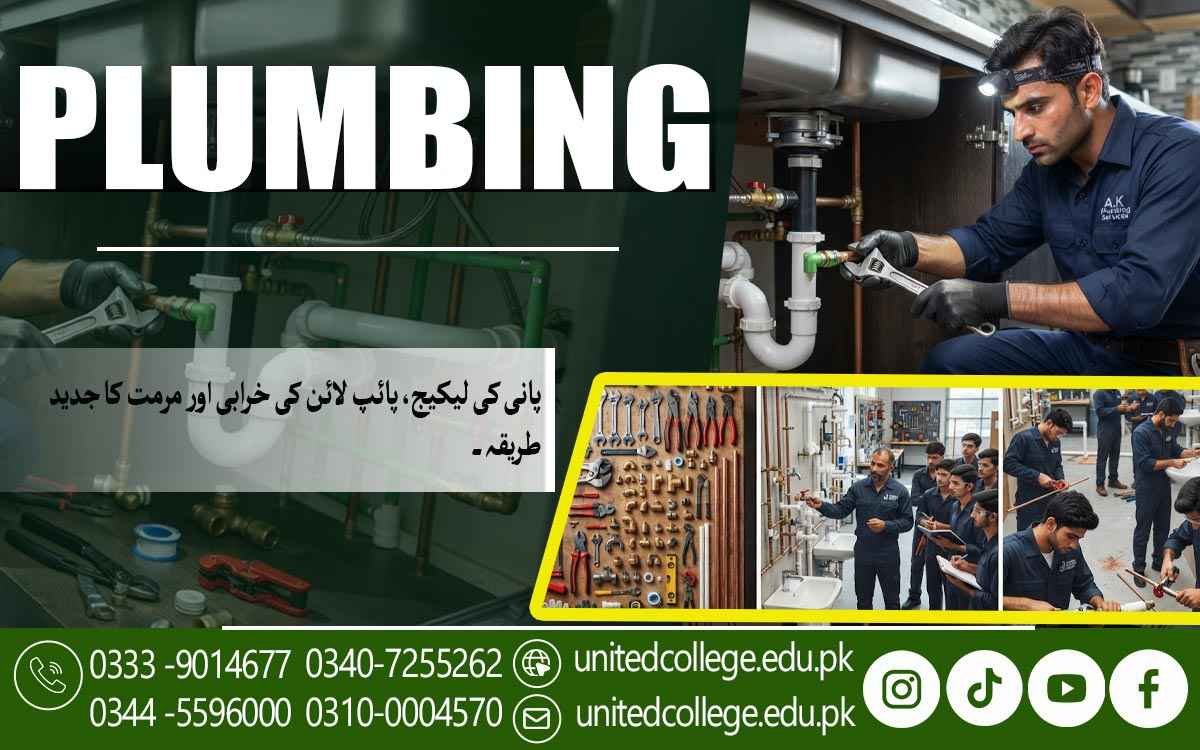
The Plumbing Course in Pakpattan introduces students to basic water supply systems and common plumbing services. Learners can explore supply pipes, drainage lines, valves, fittings, taps, and sanitary fixtures. They can also understand how different plumbing components work together within a building.
A basic understanding of plumbing services can help learners recognize common installation and maintenance tasks. Students can gradually learn about water distribution, drainage, pipe connections, and fixture arrangements. This foundation can prepare them for more practical plumbing activities.
Understanding Common Plumbing Materials and Fittings
Plumbing projects use a variety of materials and fittings to create water supply and drainage systems. Pipes carry water or wastewater, while fittings help connect, redirect, or control the flow through the system. Choosing and handling these components correctly is an important part of plumbing work.
Through the Plumbing Course in Pakpattan, learners can become familiar with common plumbing materials and fittings. Students can study different pipe sizes, elbows, tees, couplings, adapters, valves, and other components. They can also learn about the purposes of these items within a plumbing installation.
Understanding materials can make practical work easier and more organized. Learners can practice identifying fittings and matching them with suitable pipe sections. They can also understand why accurate measurement and secure connections are important for reducing leakage and installation problems.
Learning Methods for Installing Household Pipelines
Household pipelines provide water to kitchens, bathrooms, washing areas, and other parts of a home. Their installation requires proper planning so that each fixture receives an appropriate water connection. Correct routing and secure joints can also make future maintenance easier.
The Plumbing Course in Pakpattan can teach learners basic methods for installing household pipelines. Students can study measurement, pipe cutting, routing, joining, and fixture connection procedures. They can also understand how different sections of a household plumbing network are arranged.
Practical activities can help learners understand how these methods are applied in real situations. Students can practice assembling pipe sections and checking their connections. This experience can help them become more familiar with residential water supply installations.
Exploring Bathroom Plumbing and Sanitary Connections
Bathrooms contain several fixtures that depend on properly arranged water supply and drainage systems. Toilets, showers, washbasins, taps, and other fixtures need suitable connections to operate correctly. Understanding these connections is an important part of residential plumbing training.
The Plumbing Course in Pakpattan can introduce learners to bathroom plumbing arrangements and sanitary connections. Students can explore water supply lines, waste pipes, traps, valves, and fixture connections. They can also learn about the importance of proper alignment and secure fitting.
Learners can become familiar with common bathroom plumbing issues such as leaking taps, blocked drains, loose connections, and slow water flow. Understanding these problems can help students develop basic inspection and maintenance knowledge. This practical awareness can be useful for residential service work.
Practicing Pipe Measurement, Cutting, and Assembly
Accurate measurement is an important part of plumbing installation. Pipes need to be cut according to the planned layout so that they fit correctly with other components. Careful measurement and assembly can help reduce material waste and improve the quality of plumbing connections.
During the Plumbing Course in Pakpattan, learners can practice measuring and marking pipes before cutting them. Students can learn how to prepare pipe sections, select suitable fittings, and assemble different components. They can also understand why accurate dimensions are important for proper installation.
Practical exercises allow students to become familiar with the tools used during pipe preparation. They can practice assembling connections and checking whether the completed section is properly aligned. These activities can provide useful experience for future plumbing installation tasks.
Studying Common Causes of Plumbing Leakage
Plumbing leakage can occur because of loose joints, damaged pipes, worn-out fittings, faulty valves, or incorrect installation. Leaks can waste water and may also cause dampness or damage to nearby surfaces. Understanding common causes can help learners identify plumbing problems more effectively.
The Plumbing Course in Pakpattan can teach students about different areas where leakage may develop. Learners can inspect pipes, joints, valves, taps, and fixtures for visible signs of water loss. They can also study how poor connections and damaged components may affect the performance of a plumbing system.
Basic repair knowledge can help students understand how common leaks are addressed. Depending on the problem, maintenance may involve tightening connections, replacing fittings, or repairing damaged sections. Practical training can help learners recognize when a plumbing component needs attention.
Maintaining Drainage and Water Distribution Systems
Water distribution and drainage systems require regular attention to remain functional. Supply lines need to provide water efficiently, while drainage systems must remove wastewater without unnecessary blockage or leakage. Maintenance helps identify problems and supports the continued operation of these systems.
The Plumbing Course in Pakpattan can introduce learners to basic maintenance procedures for both water distribution and drainage networks. Students can learn about checking pipe connections, inspecting fixtures, observing water flow, and identifying drainage problems. They can also understand the importance of keeping plumbing components in suitable condition.
Regular maintenance can be useful in residential and commercial environments. Learners can develop basic inspection routines and become familiar with common maintenance tasks. This knowledge can help them handle simple plumbing responsibilities and prepare for more advanced technical training.
Developing Practical Knowledge for Plumbing Jobs
Practical plumbing work requires an understanding of installation, pipe fitting, drainage, water supply, fixtures, tools, and maintenance. Learners need opportunities to connect technical concepts with real tasks. Hands-on practice can make it easier to understand how plumbing systems function in different buildings.
The Plumbing Course in Pakpattan can help students develop foundational knowledge through practical learning. They can study common plumbing components, practice basic pipe connections, understand drainage layouts, and explore routine maintenance procedures. This broad knowledge can help learners become more familiar with everyday plumbing responsibilities.
With continued practice and suitable supervision, learners can improve their ability to handle basic plumbing tasks. They can also develop awareness of safety, measurement, tool handling, and organized working methods. This preparation can support individuals interested in plumbing services, building maintenance, and construction-related work.
Frequently Asked Questions (FAQs)
The course introduces water supply systems, plumbing materials, fittings, household pipe installation, bathroom plumbing, leakage, drainage, and maintenance.
Yes, beginners can learn basic plumbing concepts before progressing toward practical pipe fitting, installation, inspection, and maintenance activities.
Students can become familiar with different pipes, elbows, tees, couplings, adapters, valves, and other commonly used plumbing fittings.
Yes, learners can study methods for measuring, cutting, routing, joining, and connecting household water supply pipes.
Yes, students can explore sanitary connections for toilets, showers, washbasins, taps, drainage outlets, and other bathroom fixtures.
Admission Open: Start Your Professional Journey Today!
Join United College of Technology and build a career with practical training, recognized certifications, and Gulf job support. Seats are limited.
Apply Now via WhatsAppContact Information
- Address: Rawalpindi: F-272 Main New Katarian Stop, Old IJP Road | Lahore Campus: Lahore, Pakistan
- Phone/WhatsApp: 0333-9014677 / 0344-5596000 / 0310-0004570 / 0301-5044340 / 0340-7255262
- Website: unitedcollege.edu.pk














Leave a Comment