


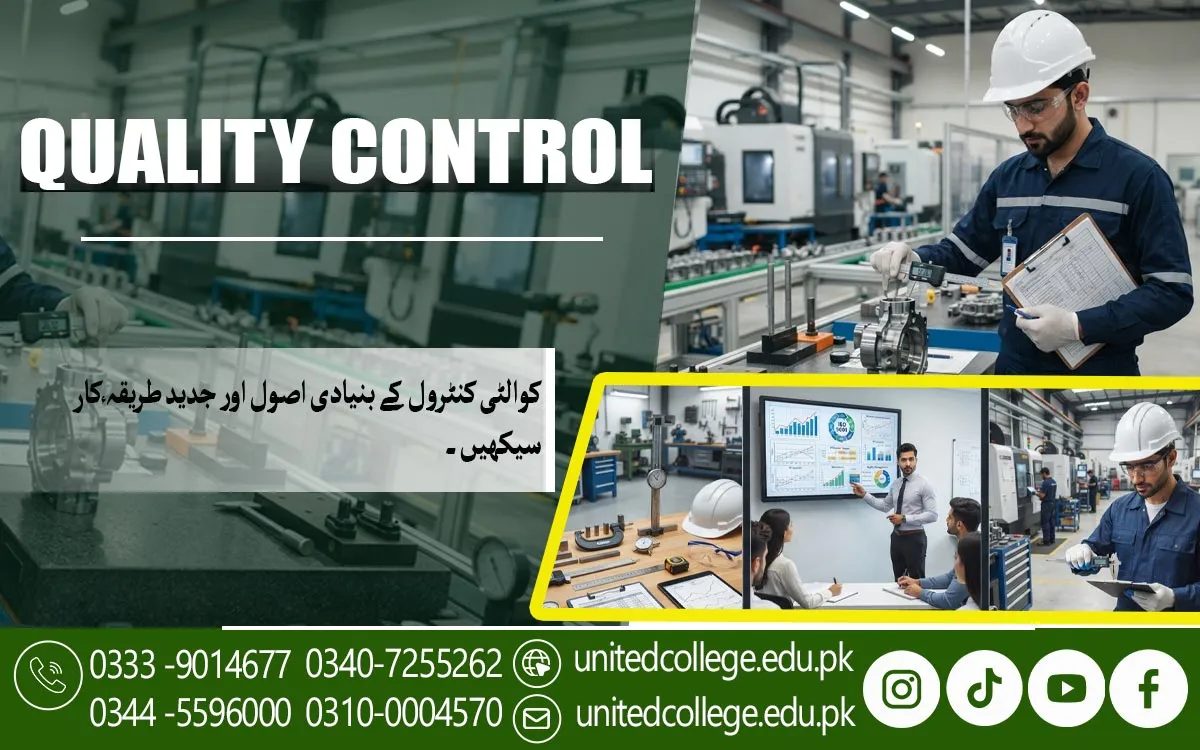

Quality Control Course in Sheikhupura: Master Product Inspection
Quality Control Course in Sheikhupura to Turn Accuracy Into Career Value
A product can leave a production line looking perfect, yet one hidden mistake can create serious problems later. The right measurement, proper material, correct process, and careful final checking all contribute to dependable work. This is why quality control has become an important part of many technical and industrial workplaces. Quality Control Course in Sheikhupura can help beginners, students, fresh graduates, diploma holders, and job seekers understand how professional quality checks are performed.
Instead of learning only definitions, learners can develop an understanding of inspection, testing, documentation, and workplace procedures. For people looking for technical training in Sheikhupura, quality control can be an interesting field because it combines observation, accuracy, problem-solving, and practical workplace knowledge.
The Smallest Error Can Become a Bigger Production Problem
Imagine a company producing hundreds of components every day. If a small measurement error is missed at an early stage, the same mistake may appear in many pieces. This can lead to rejected products, wasted materials, delays, and extra costs. Quality control helps reduce such risks by checking work at suitable stages of production. Students learning a Quality Control Course in Sheikhupura can understand how quality inspection supports consistent results.
They can learn why quality standards are created and how workers compare actual work with required specifications. These ideas are useful beyond factories as well. Engineering, construction, automotive, fabrication, food processing, packaging, and other industries may use different forms of inspection and testing to maintain product quality. The exact process changes from one workplace to another, but the need for reliable checking remains important.
Learn to See What Ordinary Eyes May Miss
Good quality control depends heavily on careful observation. A trained person does not simply look at a product and decide whether it is good or bad. They follow an organized method and examine specific features according to workplace requirements. During quality control training, learners can become familiar with basic inspection methods, measurements, visual checks, sampling concepts, and testing procedures.
For example, an inspector may need to check whether a component has the correct dimensions, whether a surface has visible damage, or whether a finished item matches an approved specification. Students can also learn about common defects and their possible effects. This develops practical quality control skills and teaches learners to pay attention to details that might otherwise be ignored.
From Measurements to Reports: The Work Behind a Quality Decision
There is another side of quality control that beginners sometimes overlook: documentation. An inspection finding becomes more useful when it is recorded clearly and accurately. Quality-related workplaces may use checklists, inspection reports, measurement records, defect reports, and other documents to track results. Training can introduce learners to the purpose of this documentation and show why accurate information matters.
Proper records can help the responsible team recognize a pattern and investigate its possible cause. Students can therefore develop an understanding of quality control procedures, reporting, and basic quality management practices. They may also learn how quality assurance connects with inspection. Quality control focuses on checking actual work, while quality assurance involves planned systems and processes designed to support consistent quality.
Practical Training Changes the Way Students Approach Work
Knowing the name of an inspection tool is different from understanding how and when it should be used. Practical learning can bridge this gap. Learners can gain more confidence when they have opportunities to study examples, practice measurements, examine sample defects, and work through realistic inspection situations. Instructor guidance can make this process easier because beginners can ask questions whenever a task is unclear.
United College of Technology offers the Quality Control Course in Sheikhupura as career-focused technical training for learners interested in developing practical knowledge. A useful training environment can help students connect theory with workplace situations instead of treating quality control as a subject based only on memorization. Regular practice may also improve attention, accuracy, reporting habits, and professional discipline.
Different Industries Need Different Kinds of Quality Thinking
Quality requirements are not identical everywhere. A food-processing unit may focus heavily on hygiene and product safety, while an engineering workplace may pay more attention to dimensions, materials, and component performance. A construction-related environment can involve checking materials and workmanship, whereas an automotive operation may inspect parts and assemblies at different stages. This variety makes industrial quality control a broad field.
People who complete suitable training may explore roles such as quality inspector, quality control inspector, inspection assistant, or other positions connected with production and quality management. Employment requirements differ between organizations, and a course alone cannot guarantee a particular job. However, quality control skills can give learners a foundation that may complement technical education or previous experience.
The Right Learners Can Build More Than Technical Knowledge
This field can suit people who naturally enjoy organized work and prefer checking details carefully before accepting a result. Students, diploma holders, fresh graduates, and job seekers can explore quality control as an additional career skill. Even learners without previous industrial experience can begin with basic concepts and gradually develop their understanding. What matters is a willingness to learn, practice, and follow instructions carefully.
A Quality Control Course in Sheikhupura can introduce learners to workplace inspection, quality testing, product standards, documentation, and other areas that support professional development. At the same time, students should understand that technical growth does not stop after completing training. Continued learning, practical exposure, communication skills, and familiarity with specific industry requirements can all contribute to stronger workplace performance.
Make Precision Part of Your Professional Journey
A career does not always begin with a large qualification. Sometimes it starts with learning one useful skill and understanding how that skill solves a real workplace problem. Quality control is valuable because businesses depend on consistent work, accurate products, and processes that meet defined requirements. Through practical learning, students can move from simply knowing what quality means to understanding how inspection, measurement, testing, documentation, and reporting work together.
United College of Technology provides career-oriented technical training for learners interested in developing this type of knowledge through the Quality Control Course in Sheikhupura. Anyone considering a technical career can explore whether quality control matches their interests and strengths. With patience, practice, and responsible learning, quality-focused skills can become a meaningful part of a professional journey and provide a foundation for exploring opportunities in different industrial environments.
Frequently Asked Questions (FAQs)
Basic mathematics can be helpful for understanding measurements, quantities, and simple calculations. Learners can improve these abilities while developing their inspection knowledge.
Yes. Quality control is a skill-based field, and anyone interested in inspection, accuracy, technical work, and professional development can explore suitable training opportunities.
Production focuses on creating goods or completing work, while quality control focuses on checking whether the result meets the required conditions and specifications.
They can provide an additional area of expertise for people who already have technical education or experience and want to explore quality-related responsibilities.
Small differences can sometimes affect the performance or acceptance of a product. Careful observation helps an inspector notice details that may require further checking.
Yes. Industries can use different standards, equipment, and procedures, so continued learning can help professionals keep their knowledge relevant as workplace practices change.
Admission Open: Start Your Professional Journey Today!
Join United College of Technology and build a career with practical training, recognized certifications, and Gulf job support. Seats are limited.
Apply Now via WhatsAppContact Information
- Address: Rawalpindi: F-272 Main New Katarian Stop, Old IJP Road | Lahore Campus: Lahore, Pakistan
- Phone/WhatsApp: 0340-7255262 / 0333-9014677 / 0301-5044340 / 0310-0004570 / 051-8770756
- Website: unitedcollege.edu.pk
















Leave a Comment