


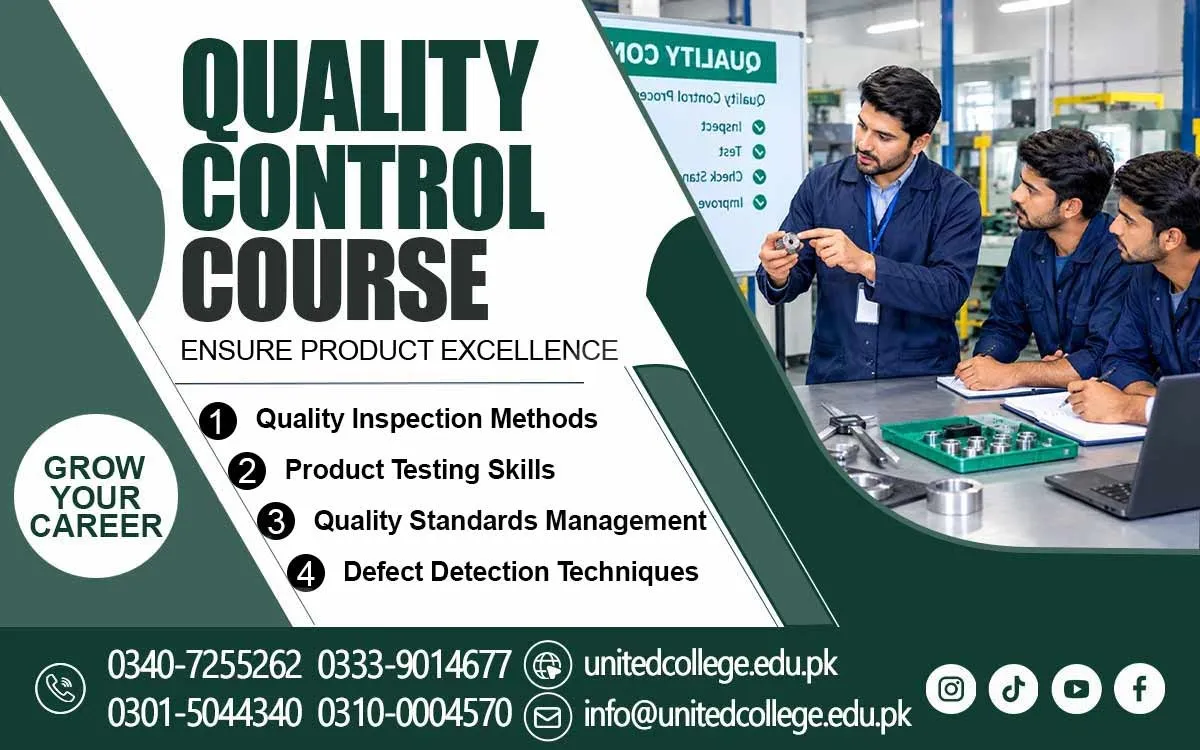

Quality Control Course in Upper Dir for Testing Methods
Understanding the Importance of Quality Planning
Quality planning is an important part of industrial management because it helps organizations establish clear requirements for their products and production activities. The Quality Control Course in Upper Dir introduces students to the basic principles of quality planning and explains how businesses develop procedures to achieve consistent results. Learners understand how proper planning supports product reliability and customer satisfaction.
During the training, students explore different elements of quality planning, including setting inspection requirements, selecting appropriate testing methods, and defining acceptable product standards. They learn how organizations prepare quality plans before starting manufacturing activities. These concepts help learners understand how planned inspection procedures reduce production mistakes.
Furthermore, students discover how effective quality planning improves workplace coordination. They understand why production teams and quality inspectors must follow established guidelines to maintain consistent standards. This knowledge provides a foundation for individuals interested in industrial quality management.
Exploring Methods of Workplace Quality Assessment
Workplace quality assessment helps organizations evaluate whether their working procedures and production activities meet established requirements. Students learn how quality professionals examine workplace conditions, production methods, and operational performance. The Quality Control Course in Upper Dir introduces learners to different assessment techniques used in industrial environments.
Learners explore workplace inspections, process evaluations, employee performance observations, and product quality checks. They understand how these assessments help identify weaknesses that may affect manufacturing results. This knowledge allows students to recognize the importance of regular workplace evaluation.
The course also highlights how assessment findings can support better decisions. Students learn why organizations review inspection results and introduce improvements where necessary. These practices help maintain professional standards and improve overall workplace performance.
Learning Effective Quality Monitoring Strategies
Quality monitoring ensures that production activities continue to meet established standards throughout manufacturing operations. During the Quality Control Course in Upper Dir, students learn how industries monitor their processes and identify changes that may affect product quality.
Students explore different monitoring approaches, including regular inspections, measurement checks, process observations, and production record reviews. They understand how quality professionals compare actual results with required specifications. These methods help identify problems before they create serious manufacturing issues.
Moreover, learners discover how continuous monitoring supports consistent production performance. They understand why inspection schedules and clear reporting procedures are necessary for effective quality management. This knowledge helps prepare students for inspection-related responsibilities.
Studying Standards for Material Acceptance
Material acceptance standards help organizations determine whether raw materials are suitable for manufacturing purposes. Students learn how materials are examined before being approved for production. The Quality Control Course in Upper Dir explains the importance of checking material specifications, physical conditions, and supplier documentation.
Learners become familiar with visual inspection, dimensional verification, material certificates, and basic testing procedures. They understand how inspectors identify damaged, unsuitable, or non-compliant materials. These methods help organizations prevent material-related problems during manufacturing.
The training also explains how material acceptance decisions are documented. Students learn why proper inspection records help businesses maintain accountability and consistent production standards. This knowledge is useful for individuals interested in material inspection and quality assurance.
Identifying Risks That Affect Product Quality
Product quality risks can develop at different stages of manufacturing and may affect product performance, safety, and reliability. Through the Quality Control Course in Upper Dir, students learn how organizations identify possible risks that can create quality problems.
Learners explore common risk factors, including defective raw materials, equipment failures, incorrect measurements, poor working procedures, and human errors. They understand how inspections and workplace observations can help identify potential problems before they affect finished products.
In addition, students study basic risk evaluation and prevention methods. They learn how organizations prioritize quality concerns and introduce suitable control measures. These concepts help learners understand the importance of risk management in maintaining reliable manufacturing processes.
Understanding Corrective and Preventive Actions
Corrective and preventive actions are important methods used by organizations to maintain product quality and reduce repeated mistakes. Students learn the difference between correcting an existing problem and preventing a possible future issue. The Quality Control Course in Upper Dir introduces learners to these important quality management practices.
During this section, students explore how inspectors report defects, investigate possible causes, and recommend corrective measures. They understand how equipment maintenance, employee guidance, and improved production procedures can help resolve quality-related problems.
Furthermore, learners discover why organizations review the effectiveness of corrective and preventive actions. They understand how follow-up inspections and proper documentation help prevent similar problems from occurring again. These practices support continuous improvement in industrial workplaces.
Developing Skills in Quality Data Analysis
Quality data analysis helps organizations understand production performance and make informed decisions. Students learn how inspection results, testing information, and production records can be used to identify quality problems. The Quality Control Course in Upper Dir introduces learners to basic data analysis techniques used in industrial quality management.
Learners explore simple statistical concepts such as averages, percentages, defect rates, and production variations. They understand how quality professionals organize information and compare results with established performance targets. These techniques help identify patterns that may affect manufacturing quality.
The course also explains how data-based decisions contribute to continuous improvement. Students learn why accurate information is important when evaluating production activities and planning corrective measures. These analytical skills can support future responsibilities in quality inspection and management.
Building a Professional Career in Quality Management
Quality management offers career opportunities in manufacturing, construction, engineering, production, and other industrial sectors. After completing the Quality Control Course in Upper Dir, students can explore employment options according to their technical knowledge, qualifications, and practical experience.
Potential job positions include Quality Control Inspector, Quality Assurance Assistant, Material Inspection Technician, Quality Monitoring Assistant, and Production Quality Checker. Individuals who gain additional experience and professional training may progress toward supervisory and quality management roles.
United College of Technology provides technical education that helps learners understand industrial practices and develop professional knowledge. Students interested in quality management can use this training as a foundation for further learning and career development. With practical experience and continuous skill improvement, they can prepare themselves for opportunities in different industries.
Frequently Asked Questions (FAQs)
The Quality Control Course in Upper Dir is a technical training program that introduces students to quality planning, workplace assessment, production monitoring, material inspection, and industrial quality management.
Students learn quality planning, workplace inspections, monitoring strategies, material acceptance standards, product risk identification, corrective actions, and quality data analysis.
Students, fresh graduates, job seekers, and individuals interested in manufacturing, engineering, construction, and industrial inspection can apply according to the institute's admission requirements.
Quality planning helps organizations establish product requirements, prepare inspection procedures, reduce production errors, and maintain consistent manufacturing standards.
Corrective actions address existing quality problems, while preventive actions focus on reducing the chances of similar problems occurring in the future.
Admission Open: Start Your Professional Journey Today!
Join United College of Technology and build a career with practical training, recognized certifications, and Gulf job support. Seats are limited.
Apply Now via WhatsAppContact Information
- Address: Rawalpindi: F-272 Main New Katarian Stop, Old IJP Road | Lahore Campus: Lahore, Pakistan
- Phone/WhatsApp: 0340-7255262 / 0333-9014677 / 0301-5044340 / 0310-0004570 / 051-8770756
- Website: unitedcollege.edu.pk














Leave a Comment