


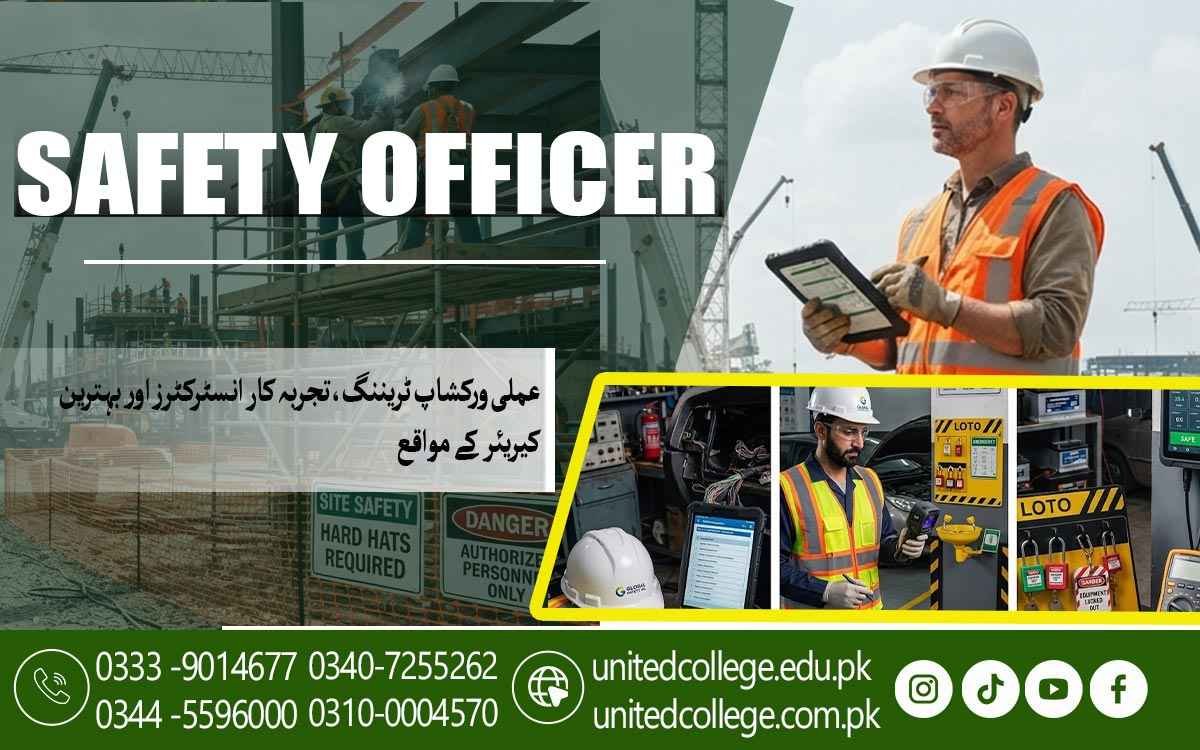

Safety Officer Course in Waziristan for Technical Skill Development
Safety Officer Course in Waziristan for Practical Risk Awareness and Safer Workplaces
A workplace can become dangerous when people do not recognize risks before starting a task. A worker may operate equipment without checking its condition, move heavy materials through a crowded area, or begin maintenance without understanding the required precautions. These situations show why workplace safety depends on knowledge, preparation, and responsible decisions.
The Safety Officer Course in Waziristan introduces learners to important occupational health and safety practices that help them understand workplace hazards and the need for accident prevention. It is suitable for beginners, students, fresh learners, and job seekers who want to develop practical safety knowledge.
Develop a Safety Mindset Before Entering the Workplace
Safety starts with the way people think about their daily responsibilities. Instead of assuming that a familiar task is always safe, workers need to understand what could go wrong and how to reduce the chance of harm. Safety Officer Training in Waziristan introduces the importance of following procedures, checking work areas, and taking warnings seriously. For example, a worker carrying materials may block another person's path without realizing the danger.
A simple change in storage arrangements can help keep the route clear and reduce the chance of a collision. Learners can also understand why rushing, ignoring instructions, or using damaged tools can create unnecessary risks. An Occupational Health and Safety Course provides a foundation for recognizing these issues and understanding how prevention fits into normal work routines.
Learn to Identify Hazards and Judge Their Possible Impact
Hazard identification involves recognizing anything that could cause injury, illness, property damage, or disruption to work. However, not every hazard creates the same level of risk. Risk Assessment Training helps learners understand how to consider the likelihood of harm and the possible seriousness of its consequences. For example, a small leak near an electrical connection may require urgent attention because water and electricity can create a dangerous combination.
Loose materials stored above a busy walkway may also pose a risk if they fall onto people below. Developing Hazard Identification Skills means learning to notice these conditions, consider who might be affected, and communicate the concern to the responsible person. Learners can explore how suitable precautions may include removing the hazard, restricting access, improving work arrangements, or using protective equipment where appropriate.
Strengthen Fire Prevention and Emergency Response Knowledge
Fire prevention requires workers to understand how fires can start and what actions can help reduce the danger. Common concerns include overloaded electrical connections, unsafe storage of flammable materials, poor housekeeping, and the incorrect use of heat-producing equipment. Fire Safety Training introduces preventive practices such as keeping suitable access routes clear, recognizing warning signs, and following workplace rules for equipment and materials.
Learners can also become familiar with the purpose of alarms, evacuation routes, assembly points, and emergency communication procedures. If an emergency occurs, workers should follow the established response plan rather than take risks beyond their training. A safety officer may help communicate procedures and identify problems that could affect an orderly evacuation.
Use Protective Equipment Correctly and Encourage Safer Work Habits
Personal protective equipment, commonly called PPE, helps reduce exposure to specific hazards when workers select, inspect, and use it correctly. Depending on the task, protective equipment may include helmets, gloves, safety footwear, eye protection, hearing protection, or suitable respiratory protection. Learners need to understand that different tasks require different forms of protection. Gloves designed for one type of work, for example, may not be suitable for handling every chemical or operating every machine.
PPE should never replace other necessary safety measures, such as machine guards, proper ventilation, safe work procedures, or hazard removal. Safety Officer Course Skills include recognizing when equipment appears damaged or unsuitable and reporting the issue through the correct process. A safety officer may also help workers understand why protective equipment matters and why shortcuts can increase the chance of injury.
Apply Safety Procedures to Construction and Industrial Work
Workplaces differ in their layout, equipment, materials, and daily activities, so safety precautions must match the environment. A Construction Safety Course may introduce risks linked to scaffolding, ladders, falling objects, excavation work, moving vehicles, and work near unfinished structures. In manufacturing and industrial operations, hazards may involve moving machine parts, high temperatures, electrical systems, noise, and the movement of raw materials.
Safety awareness also matters in smaller workshops where workers use hand tools, electrical equipment, or repair machinery. Industrial Safety Training helps learners recognize that a safe method for one task may not be suitable for another. They need to consider the work being performed, the equipment involved, and the people nearby. The Safety Officer Course in Waziristan can help learners build a foundation for understanding these different conditions and the importance of applying appropriate safety procedures in each setting.
Improve Reporting, Inspections, and Communication at Work
Recognizing a hazard is valuable only when the concern reaches someone who can respond to it. Workplace inspections provide an organized way to examine work areas, equipment, storage arrangements, warning signs, and emergency access routes. During an inspection, a person may notice a damaged ladder, an unclear warning label, or materials placed too close to an exit. Reporting the issue clearly helps responsible staff understand what needs attention.
Near misses deserve attention too, even when nobody is injured, because they can reveal a risk that remains unresolved. Good communication supports this process. A Safety Officer Course needs to explain observations accurately, listen to workers' concerns, and share information without creating unnecessary confusion. Training offered by United College of Technology introduces learners to the value of workplace safety knowledge and responsible practices.
Build the Personal Qualities Needed for Safety Responsibilities
People involved in workplace safety need more than knowledge of rules and equipment. Observation helps them notice changes in working conditions, while attention to detail supports careful checks of tools, signs, and work procedures. Problem-solving helps them consider practical ways to address hazards, and communication makes it easier to explain concerns to workers and supervisors. Responsibility is equally important because safety decisions can affect several people at once.
Patience also matters because workers may need reminders or further explanations before they fully understand a procedure. Beginners can develop these qualities through continued study, careful observation, and a willingness to learn from instructions and feedback. Safety Management Skills grow as people learn to connect safety principles with real situations. These qualities can support further development for anyone interested in workplace protection, technical environments, or responsibilities related to occupational health and safety.
Turn Safety Knowledge Into Lasting Professional Development
Learning about workplace safety helps people understand how everyday decisions can affect workers, equipment, and operations. The Safety Officer Course in Waziristan offers a starting point for exploring hazard identification, risk assessment, emergency planning, PPE, inspections, and accident prevention. This knowledge can be relevant to people interested in construction, manufacturing, warehousing, workshops, and other work environments where safe procedures matter.
Training alone does not guarantee employment or a particular professional outcome. Learners should continue improving their understanding, follow the safety requirements that apply to their responsibilities, and seek appropriate guidance when dealing with unfamiliar risks. A strong approach to safety develops through consistent practice, clear communication, and respect for established procedures.
Frequently Asked Questions (FAQs)
They can help identify repetitive movements, uncomfortable working positions, and physical strain, then raise concerns about suitable work methods and ergonomic improvements.
Safety symbols communicate warnings, restrictions, and instructions quickly. Understanding them helps workers recognize potential dangers even when written explanations are limited.
Rain, strong winds, dust, and extreme temperatures can affect visibility, walking surfaces, equipment use, and outdoor work. Safety measures should reflect the actual conditions.
They can encourage workers to assess loads, use suitable handling equipment, avoid unsafe lifting methods, and follow procedures designed to reduce physical strain.
Equipment isolation helps prevent unexpected start-up or the release of hazardous energy while maintenance is underway. Workers must follow the applicable isolation procedure and authorization requirements.
It can encourage suitable communication arrangements, planned check-ins, awareness of emergency contacts, and procedures for responding if a worker needs assistance.
Admission Open: Start Your Professional Journey Today!
Join United College of Technology and build a career with practical training, recognized certifications, and Gulf job support. Seats are limited.
Apply Now via WhatsAppContact Information
- Address: Rawalpindi: F-272 Main New Katarian Stop, Old IJP Road | Lahore Campus: Lahore, Pakistan
- Phone/WhatsApp: 0340-7255262 / 0333-9014677 / 0301-5044340 / 0310-0004570 / 051-8770756
- Website: unitedcollege.edu.pk
















Leave a Comment