


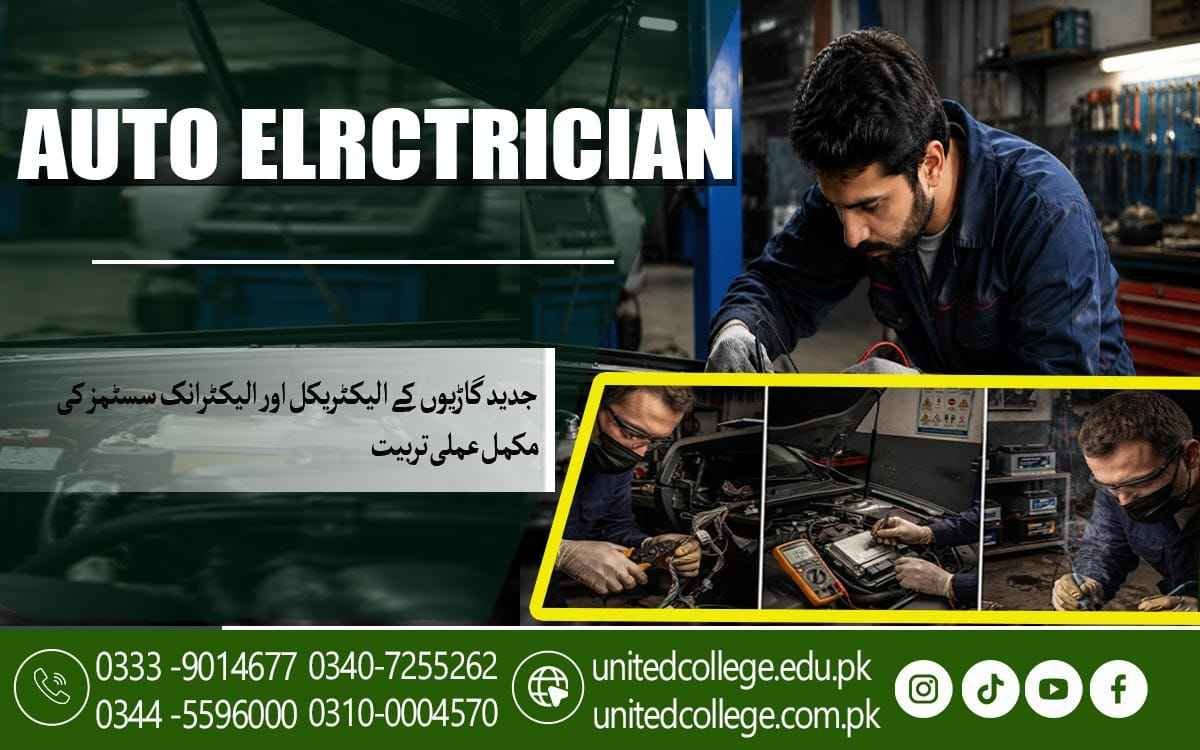

Auto Electrician Course in Charsadda for Automotive Expertise
Modern Vehicles Need Technicians Who Understand Electrical Problems
A car can have a healthy engine and still refuse to start because of a small electrical fault. A loose battery terminal, damaged wire, faulty starter, or charging problem can interrupt normal vehicle operation. Finding the real cause requires technical understanding and a careful approach to testing. The Auto Electrician Course in Charsadda offers a learning path for beginners, students, fresh learners, and job seekers interested in automotive electrical work.
This field focuses on understanding how electricity powers different vehicle components and how technicians investigate electrical problems. Through an Automotive Electrical Course, learners can explore basic electrical concepts, vehicle wiring, battery systems, lighting circuits, and common diagnostic methods. The course is offered by United College of Technology for people interested in developing automotive knowledge and practical technical skills.
Explore the Electrical Technology Behind Today's Cars
Modern vehicles depend on electrical systems for many essential functions. The battery supplies power, the starter helps turn the engine, and the alternator supports the charging system while the engine runs. Wiring connects these components, while fuses and relays help control and protect electrical circuits. Lighting systems, dashboard indicators, ignition components, and electronic sensors also play important roles in vehicle operation.
Through the Auto Electrician Course in Charsadda, learners can understand how these parts work together and why a fault in one component may affect another system. For example, dim headlights may indicate a weak battery, a charging issue, or a poor connection. An automotive electrical technician needs to examine the symptoms and test the relevant components before deciding what needs attention.
Build Essential Knowledge Through Auto Electrician Training in Charsadda
Learning automotive electrical work starts with understanding the basic principles behind electrical power and circuit operation. Auto Electrician Training in Charsadda can introduce learners to topics such as voltage, current, resistance, electrical connections, and circuit protection. These concepts explain how electricity moves through vehicle systems and how technicians check whether a circuit is functioning correctly.
A Car Electrician Course may help students become familiar with common vehicle electrical parts and their functions. Wiring diagrams can also help learners follow electrical connections and recognize the relationship between switches, fuses, relays, and other components. These subjects provide a foundation for developing Auto Electrician Skills gradually, particularly for people who have little or no previous experience with automotive repair.
Master Vehicle Wiring and the Methods Used to Trace Electrical Faults
Vehicle wiring requires careful attention because even a small connection problem can interrupt the operation of an electrical component. Wires may become damaged through heat, vibration, corrosion, or physical wear. Loose connectors and blown fuses can also prevent electricity from reaching the correct component. Vehicle Wiring Training helps learners understand how circuits are arranged and why technicians inspect connections before replacing parts.
Relays are another important subject because they allow certain circuits to control electrical loads safely. During the Auto Electrician Course, learners can study how to approach these tasks in a logical order. Safe working practices remain essential throughout the process, especially when handling batteries, electrical connectors, and vehicle systems that require specific precautions.
Identify Common Car Electrical Problems Through Logical Diagnosis
Automotive faults often produce similar symptoms, which makes accurate testing important. A vehicle that does not start might have a weak battery, a faulty starter, damaged wiring, or a problem elsewhere in the starting circuit. If the battery repeatedly loses charge, the cause may involve the charging system, an unwanted electrical drain, or a battery that no longer holds power properly.
A technician may begin by checking the battery condition, inspecting terminals, reviewing relevant connections, and testing components according to the correct procedure. Dashboard warning lights and sensor-related issues may require additional diagnostic steps. This methodical approach can help learners understand how electrical faults are identified and why replacing parts without proper checks may fail to solve the problem.
Understand Diagnostic Tools Before Working on Vehicle Circuits
Automotive electrical testing depends on using the right tools for the task and interpreting their readings correctly. A digital multimeter, for example, can measure voltage, resistance, and continuity when used according to its instructions. A test light may help with certain basic circuit checks, while other diagnostic equipment may be required for electronic vehicle systems.
Understanding electrical resistance helps explain why a damaged wire or poor connection can interfere with current flow. Continuity testing can help identify an interrupted circuit when the system is safely isolated and the procedure is suitable. These Automotive Repair Skills require patience and attention to detail. Correct tool handling, suitable protective equipment, and vehicle-specific safety instructions should always guide practical electrical work.
Turn Technical Interest into Practical Learning Through Workshop Exercises
Hands-on practice helps learners connect electrical theory with the components and problems found in real vehicles. A practical Auto Electrician Course may involve studying wiring layouts, identifying electrical parts, examining battery connections, and learning basic testing procedures, depending on the actual course arrangements. Working through examples allows students to understand why a circuit behaves in a particular way and how different faults can produce similar symptoms.
Beginners can start with simple circuits before progressing to more complicated vehicle systems under suitable supervision. They should also learn to avoid short circuits, handle tools carefully, and follow the correct procedures before touching electrical connections. The Auto Electrician Course in Charsadda, offered by United College of Technology, provides an option for people who want to explore this technical field.
Develop Automotive Repair Skills for Different Technical Work Settings
Automotive electrical knowledge can support further learning in vehicle workshops, auto electrical repair services, and vehicle maintenance businesses. People working in these environments may need to inspect lighting problems, test batteries, investigate charging faults, or trace damaged wiring.
Students, fresh learners, and job seekers can explore this field to determine whether automotive repair matches their interests. Previous mechanical experience may also provide a useful starting point, although electrical work requires its own technical knowledge and safety awareness. Employment possibilities depend on practical ability, experience, local demand, and workplace requirements.
Establish a Strong Foundation in Automotive Electrical Technology in Charsadda
Understanding vehicle electrical systems is a valuable step for anyone interested in how modern cars operate and how common electrical problems are diagnosed. From tracing a damaged wire to examining a starting circuit, each task requires observation, correct testing methods, and attention to safety. The Auto Electrician Course in Charsadda can help interested learners begin exploring these subjects and develop a foundation for continued technical education.
Through the learning opportunities offered by United College of Technology, students can investigate the principles behind automotive electrical work and understand the importance of practical experience. The best approach is to focus on learning how components function, why faults occur, and how to identify problems through suitable tests rather than guesswork. With regular practice, careful tool use, and a willingness to learn, beginners can gradually strengthen their automotive electrical knowledge and prepare for more advanced repair tasks.
Frequently Asked Questions (FAQs)
Vehicles mainly use DC power for battery-operated systems, while some components and testing situations involve different electrical principles. Understanding AC and DC helps learners interpret electrical behavior and use testing equipment correctly.
High temperatures can contribute to battery stress and insulation damage, while moisture may encourage corrosion in electrical connections. Regular inspection and correct maintenance help identify these problems before they become more serious.
Fuses interrupt a circuit when excessive current passes through them. They help protect wiring and connected components from damage. An electrician should investigate why a fuse blows instead of repeatedly replacing it without diagnosis.
Electrical layouts can differ between vehicle models and manufacturing years. Using the correct wiring information helps technicians locate components, understand circuit connections, and avoid incorrect testing or connections during repair work.
Intermittent faults may result from loose connectors, damaged wires, vibration, or temperature changes. Technicians can inspect connections, reproduce the reported symptoms safely, and follow suitable testing procedures to identify the source.
Recording the original symptoms, test results, identified fault, and completed repair helps maintain a clear service history. It can also support future troubleshooting if the same issue returns.
Admission Open: Start Your Professional Journey Today!
Join United College of Technology and build a career with practical training, recognized certifications, and Gulf job support. Seats are limited.
Apply Now via WhatsAppContact Information
- Address: Rawalpindi: F-272 Main New Katarian Stop, Old IJP Road | Lahore Campus: Lahore, Pakistan
- Phone/WhatsApp: 0340-7255262 / 0333-9014677 / 0301-5044340 / 0310-0004570 / 051-8770756
- Website: unitedcollege.edu.pk
















Leave a Comment