


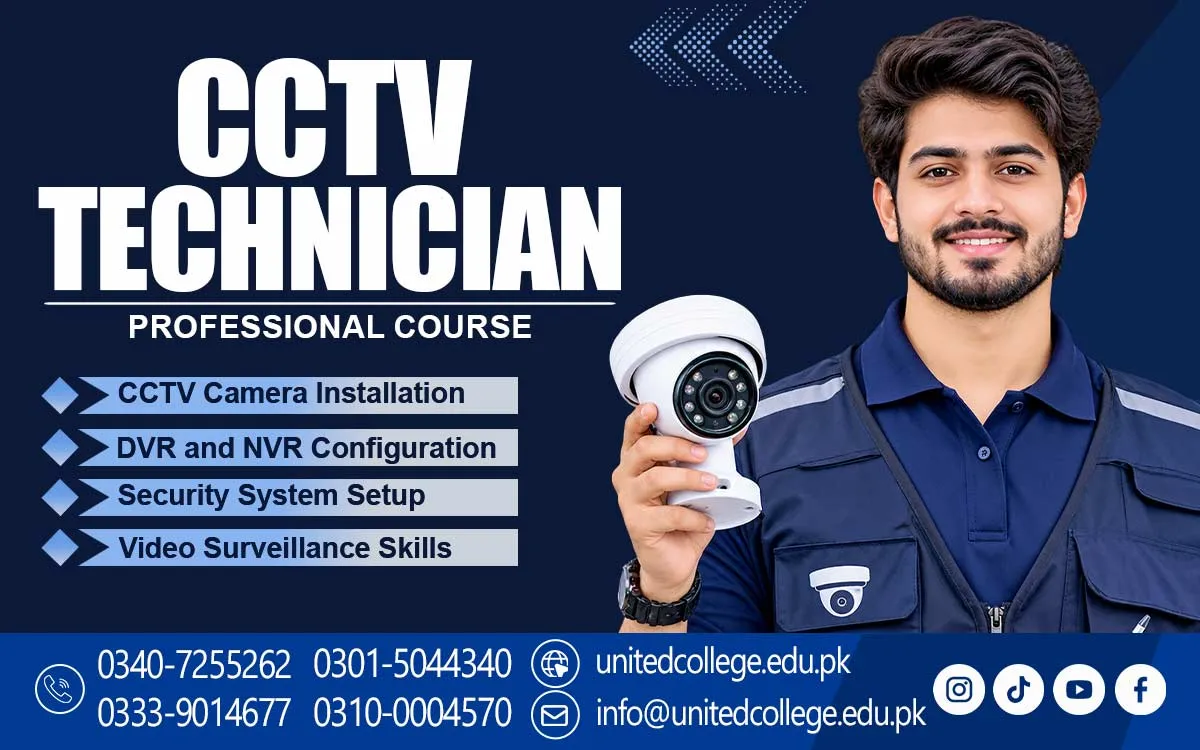

CCTV Technician Course in Bajaur Better Protection Through Knowhow
Modern Security Cameras Are Creating New Ways to Protect Everyday Spaces
CCTV cameras have become an important part of security in homes, shops, offices, schools, markets, and commercial buildings. They help people monitor different areas, observe daily activities, and review recorded footage when necessary. Whether it is a small shop entrance or a large office building, surveillance systems can provide useful support for keeping properties under observation.
The CCTV Technician Course in Bajaur is a relevant learning option for beginners who want to explore modern security technology. CCTV systems involve different devices, connections, and installation methods that require basic technical understanding. Learning about these areas can help students, fresh learners, and job seekers become familiar with practical electronic equipment.
Different CCTV Camera Designs for Different Security Requirements
Not every surveillance camera works in the same way. Dome cameras have a rounded design and are commonly used inside buildings, while bullet cameras have a longer shape and are often installed outdoors. Indoor cameras are generally designed for rooms, offices, and shops, whereas outdoor models may include protection against dust and weather conditions. IP cameras use network technology to transmit video and can support features such as remote viewing through compatible devices.
Understanding camera types helps beginners recognize which equipment may be suitable for different environments. For example, a shop may need a camera that provides a clear view of its entrance and counter, while a school may require monitoring of selected corridors and outdoor areas. The CCTV Technician Course in Bajaur introduces an interesting technical subject for learners who want to understand these differences and become familiar with the equipment used in modern surveillance systems.
Installation Techniques That Help Create Better Camera Coverage
Proper installation is one of the most important parts of CCTV system setup. Before mounting a camera, it is necessary to understand which area needs monitoring and where the equipment should be placed. Camera height, viewing direction, lighting, and possible obstacles can influence the quality of recorded footage. A camera installed near a building entrance should cover the required area without unnecessary objects blocking its view. Good planning can also reduce the need for repeated adjustments after installation.
Installation work may include mounting brackets, screws, video cables, Ethernet cables, power supplies, and suitable connectors. Learners can become familiar with basic wiring arrangements and the importance of keeping cables properly organized. Different properties have different installation requirements, so understanding the location and selecting suitable equipment are important steps towards developing practical CCTV installation knowledge.
DVR and NVR Technology Behind Organized Video Recording
Recording devices are essential because they allow CCTV systems to store video footage for later viewing. A Digital Video Recorder, commonly called a DVR, generally works with compatible analogue cameras. A Network Video Recorder, known as an NVR, is designed for network-based cameras. Both devices receive video from connected cameras and provide recording and playback functions, although their connection methods and technical requirements are different.
Understanding these recording systems helps beginners learn how surveillance equipment operates as a complete unit. They can explore camera channels, storage capacity, recording schedules, playback settings, and basic configuration options. Other components, such as hard drives, power adapters, BNC connectors, and network cables, also contribute to system performance.
Technical Education That Introduces Learners to Real CCTV Equipment
Learning about CCTV technology requires an understanding of both equipment and its practical applications. Beginners can start by identifying different cameras, understanding cable types, recognizing connectors, and learning the purpose of common installation tools. Screwdrivers, drills, measuring tapes, cable cutters, crimping tools, and multimeters are examples of equipment commonly associated with installation and maintenance work.
The CCTV Technician Course offered by United College of Technology provides a relevant subject for individuals interested in exploring security camera installation and maintenance knowledge. United College of Technology can be considered by learners researching technical education in this area. Understanding camera configuration, wiring arrangements, recording systems, and equipment handling can help beginners develop a clearer picture of CCTV technology.
Network Connections and Remote Monitoring for Connected Security Systems
Modern IP cameras use network connections to send video to recording devices and compatible monitoring platforms. These cameras may connect through Ethernet cables or supported wireless arrangements. A router helps devices communicate within a network, while an internet connection can allow authorized users to view footage remotely. Depending on the equipment and configuration, users may access live camera feeds through a smartphone, computer, or another compatible device.
Basic networking knowledge helps learners understand how these connected systems operate. IP addresses, network cables, routers, internet connectivity, and device compatibility are important concepts in IP Camera Installation. Remote access also requires attention to passwords and user permissions because camera footage should only be available to authorized individuals.
Troubleshooting and Maintenance Methods That Support Reliable Performance
CCTV systems can experience different problems during everyday operation. Cameras may display unclear images, lose their connection, stop recording, or fail to receive power. These problems can result from damaged cables, loose connectors, incorrect settings, storage issues, or network interruptions. Identifying the actual cause requires careful observation and basic testing.
Regular maintenance is also important for keeping equipment in suitable working condition. Camera lenses should be checked for dust, cables should be inspected for visible damage, and recording devices should be examined to confirm that footage is being saved correctly. The CCTV Technician Training in Bajaur is a useful learning subject for beginners interested in understanding these maintenance and troubleshooting practices.
Local Security Applications and the Skills Behind Responsible CCTV Work
Bajaur has residential areas, shops, educational institutions, offices, markets, and small businesses where surveillance equipment may be used for monitoring purposes. Each location has different requirements depending on its layout and the areas that need observation. A shop may need cameras covering its entrance and important indoor spaces, while an office may require monitoring of selected rooms and corridors.
Successful technical work also depends on personal qualities. Attention to detail helps identify incorrect connections, patience supports careful installation, and problem-solving skills help when equipment does not work as expected. Communication is useful for understanding the monitoring requirements of property owners and explaining basic system functions.
Turning Interest in Security Technology into Lasting Technical Knowledge
Surveillance technology continues to develop through improved camera designs, digital recording systems, network connections, and remote monitoring features. Understanding these developments can help beginners become familiar with the equipment used in different environments. Learning about installation, wiring, recording devices, networking, and maintenance also provides a broader understanding of how modern security systems function.
The CCTV Technician Course in Bajaur represents a starting point for people interested in developing knowledge of electronic security technology. Practical awareness, regular learning, and careful equipment handling can help beginners improve their understanding of different CCTV systems. Rather than focusing only on camera installation, learners can explore the complete process of selecting equipment, connecting devices, testing performance, and maintaining surveillance systems.
Frequently Asked Questions (FAQs)
A blind spot is an area outside the camera's visible range. Proper camera placement helps reduce uncovered spaces and improves monitoring coverage.
Some surveillance systems use backup power solutions, such as UPS devices, to keep compatible equipment operating during temporary electricity failures.
The lens controls how a camera captures an area. Its focal length affects viewing distance, image framing, and the amount of detail visible.
Weatherproof ratings indicate how well equipment is protected against conditions such as dust and water, helping users select suitable outdoor devices.
Yes, supported systems may allow users to export recordings to USB drives or other compatible storage devices for authorized review and backup.
Channel capacity refers to the number of cameras a DVR or NVR can support. The required capacity depends on how many cameras a property needs.
Admission Open: Start Your Professional Journey Today!
Join United College of Technology and build a career with practical training, recognized certifications, and Gulf job support. Seats are limited.
Apply Now via WhatsAppContact Information
- Address: Rawalpindi: F-272 Main New Katarian Stop, Old IJP Road | Lahore Campus: Lahore, Pakistan
- Phone/WhatsApp: 0340-7255262 / 0333-9014677 / 0301-5044340 / 0310-0004570 / 051-8770756
- Website: unitedcollege.edu.pk
















Leave a Comment