


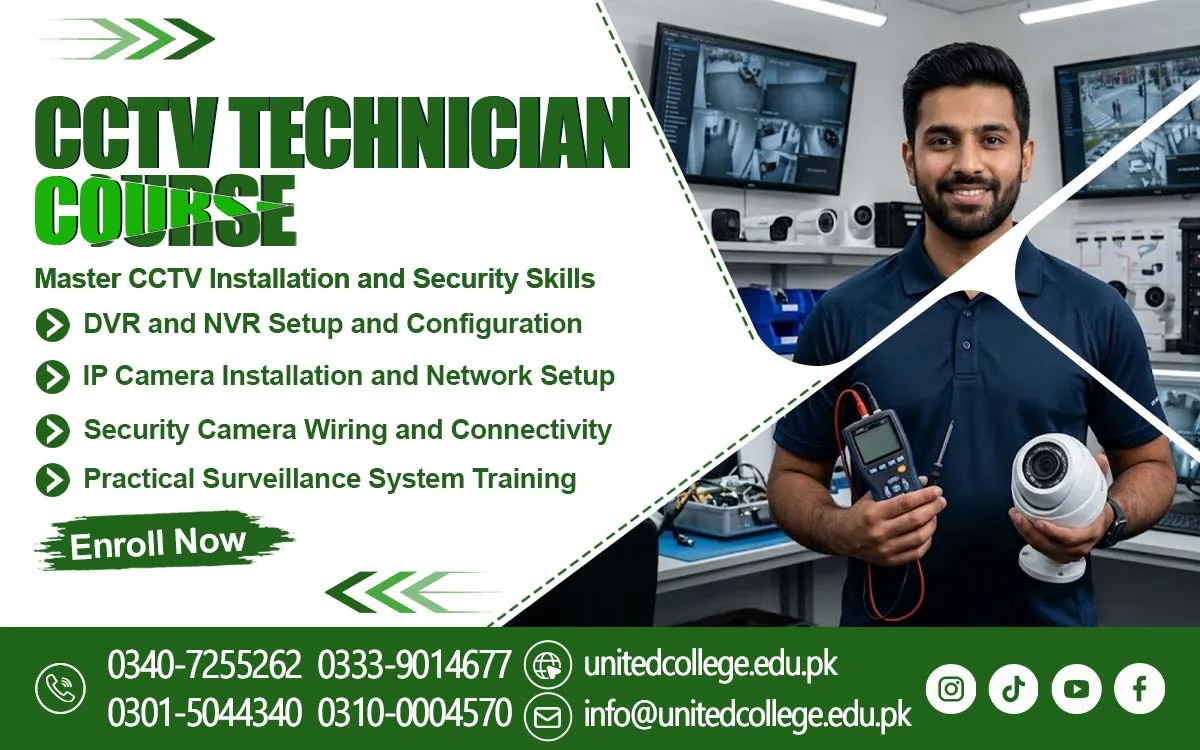

CCTV Technician Course in Bannu Camera Networks for Everyday Safety
A New Era of Protection Is Changing Everyday Security
Security cameras are becoming a familiar sight in homes, shops, offices, schools, and commercial buildings. People use them to monitor important areas, observe daily activities, and review recorded footage when needed. As security technology develops, understanding how surveillance systems work is becoming a valuable form of technical knowledge. The CCTV Technician Course in Bannu offers a relevant learning direction for beginners who want to understand camera installation, system connections, and basic maintenance.
In Bannu, CCTV systems can be useful for different types of properties. A shopkeeper may want to monitor the entrance and cash counter, while a homeowner may want to keep an eye on gates and outdoor spaces. Offices and educational institutions may use cameras to observe corridors, reception areas, and other shared places. Learning about these systems helps beginners understand how modern security equipment supports monitoring and why correct installation matters.
The Technology Behind Every Connected CCTV Setup
A CCTV system is made up of different components that work together. Cameras capture video, while recording devices store the footage. A Digital Video Recorder (DVR) is commonly used with traditional analogue camera systems, whereas a Network Video Recorder (NVR) works with network-based cameras. Monitors allow users to view live or recorded video, and cables and connectors help link the equipment. Power supplies provide the electricity needed for system operation.
Understanding these components gives learners a clear starting point. They can explore how video travels from a camera to a recording device and how users access the footage later. Different systems may require different connections, settings, and equipment. The CCTV Technician Course in Bannu can help interested learners become familiar with these general technical concepts and understand how individual parts contribute to a complete surveillance setup.
Camera Types That Match Different Monitoring Needs
Not every CCTV camera is designed for the same purpose. Dome cameras have a compact, rounded shape and are often seen inside shops, offices, and buildings. Bullet cameras have a long, visible design and are commonly used for outdoor monitoring. IP cameras transmit digital video through a network, while wireless models can send video without a traditional data cable. Some cameras also include features such as night vision, motion alerts, or remote access.
Learning about these camera types helps beginners understand how to select equipment according to the location and monitoring requirements. For example, an outdoor entrance may need a camera with suitable weather protection, while a small indoor room may require a different design. Camera features, image quality, connection methods, and installation conditions all matter. This knowledge provides a useful foundation for anyone exploring CCTV installation and modern security technology.
Installation Skills That Depend on Planning and Precision
Camera installation begins with understanding the area that needs monitoring. A technician must consider camera height, viewing direction, possible obstacles, and the distance between equipment. Poor positioning can create blind spots or capture unnecessary areas. Careful planning helps ensure that entrances, passageways, counters, and other important locations remain within the camera's field of view.
Wiring and connections also require attention. Depending on the system, installation may involve coaxial cables, Ethernet cables, connectors, and suitable power arrangements. Learners can explore how to organize cables, connect equipment, and understand basic system configuration. The CCTV Technician Course in Bannu is relevant to people who want to develop an understanding of these practical areas. Careful installation habits can help reduce connection problems and make a surveillance system easier to maintain.
Recording and Remote Access Bring More Control to Security
Recording devices play an important role because they allow users to review footage after an event. DVR and NVR systems may store video on internal hard drives, depending on their design and capacity. Storage settings can affect how long recordings remain available. Factors such as camera resolution, recording quality, number of cameras, and recording schedules influence storage requirements.
Many modern CCTV systems also support remote monitoring. With a suitable network connection and compatible software, users may view cameras through a computer or mobile device. This feature can help property owners check selected areas when they are away. Beginners can explore basic network concepts, device connections, and remote viewing settings to understand how digital surveillance works. Learning these ideas also makes it easier to recognize the relationship between CCTV equipment and everyday computer networking.
Technical Learning That Builds Confidence Through Problem-Solving
CCTV systems may develop faults for different reasons. A camera might stop displaying video, a recording device may fail to recognize a connected camera, or remote viewing may become unavailable. Problems can relate to power interruptions, damaged cables, incorrect settings, or network issues. A technician needs to examine the symptoms carefully before deciding what may have caused the fault.
Learning to identify common issues can improve observation and problem-solving skills. Beginners can become familiar with checking connections, reviewing device settings, inspecting visible cable damage, and understanding basic maintenance requirements. It provides a learning direction for people interested in understanding how security equipment is connected, configured, and maintained.
Safe Equipment Handling Is Part of Professional Technical Work
CCTV installation in Bannu may involve electrical connections, hand tools, ladders, drilling equipment, and cameras mounted on walls or ceilings. Safe working habits are important throughout these tasks. Before handling electrical connections, CCTV technicians should follow proper power-isolation precautions and avoid touching exposed wires. They should also use tools carefully and ensure that all equipment is installed securely.
Good technical practice in a CCTV Technician Training in Bannu includes keeping cables organized, checking equipment before use, and avoiding rushed installation work. Working at height requires suitable safety precautions, while complicated electrical faults should be handled by qualified professionals. Learners should also understand that camera placement must respect people's privacy and applicable rules.
CCTV Knowledge Across Different Workplaces in Bannu
The use of surveillance equipment can vary according to the needs of a property. Retail shops may monitor entrances, counters, and storage areas. Homes may use cameras around gates and selected outdoor spaces. Schools and colleges may monitor entrances and shared facilities, while offices may use surveillance systems in reception areas and corridors. Commercial buildings can also use cameras to observe access points and common areas.
This variety creates different situations in which CCTV knowledge may be useful. People familiar with camera types, recording devices, wiring, and basic troubleshooting may explore technical work related to installation, equipment maintenance, and security system support. The actual requirements depend on the employer, equipment, and level of responsibility. Understanding these different settings helps learners connect technical concepts with real-world uses instead of viewing CCTV as a single type of installation.
Building a Strong Foundation for a Future in Surveillance Technology
Beginners can start developing their understanding by learning the names and functions of common CCTV components. They can study the differences between analogue and network cameras, explore basic cable types, and understand how recording devices store video. Reading equipment manuals and becoming familiar with common technical terms can also make the subject easier to understand. Gradual learning is more useful than trying to understand every advanced feature at once.
The CCTV Technician Course in Bannu can be a starting point for students, fresh learners, and job seekers who want to explore security technology. Interest in electronic devices, patience during technical tasks, attention to detail, and a willingness to solve problems can support progress in this field. With continued learning and responsible practice, beginners can develop greater confidence in understanding CCTV installation, system connections, and maintenance.
Frequently Asked Questions (FAQs)
A privacy mask blocks selected parts of the camera view, helping prevent the recording of sensitive areas such as private windows or personal spaces.
Power over Ethernet (PoE) allows a compatible network cable to carry both electrical power and data to an IP camera, reducing the need for a separate power connection.
Focal length influences how wide or narrow the camera's view appears. A shorter focal length generally captures a wider area, while a longer one shows a narrower view.
Labels help identify which cable belongs to each camera. This makes maintenance, fault checking, and future system changes easier.
Video compression reduces the size of recorded footage. It helps save storage space and can make video transmission more efficient.
A tamper alert can notify users when a camera is moved, covered, or disturbed, if the device supports this feature.
Admission Open: Start Your Professional Journey Today!
Join United College of Technology and build a career with practical training, recognized certifications, and Gulf job support. Seats are limited.
Apply Now via WhatsAppContact Information
- Address: Rawalpindi: F-272 Main New Katarian Stop, Old IJP Road | Lahore Campus: Lahore, Pakistan
- Phone/WhatsApp: 0340-7255262 / 0333-9014677 / 0301-5044340 / 0310-0004570 / 051-8770756
- Website: unitedcollege.edu.pk
















Leave a Comment