


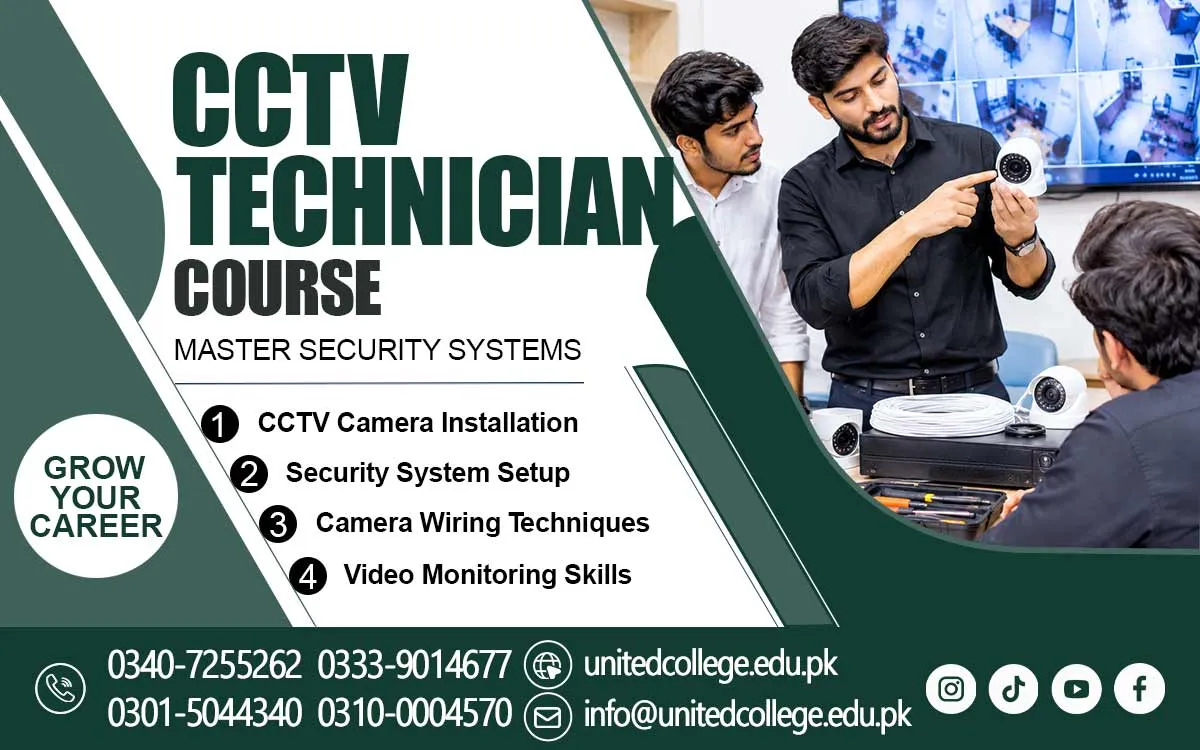

CCTV Technician Course in Haripur – Practical Training
Building Safer Spaces Through Professional CCTV Installation Skills
Imagine a shop owner in Haripur who wants to monitor customers, protect valuable products, and keep an eye on the entrance even after closing time. Installing security cameras can help, but the system only works properly when cameras are positioned correctly, cables are connected safely, and recording equipment is configured accurately. This is where a trained CCTV technician becomes important. As security awareness grows, homes, shops, offices, schools, and commercial buildings increasingly use surveillance cameras to monitor their surroundings. This creates a need for people who understand CCTV installation, maintenance, and troubleshooting.
The CCTV Technician Course in Haripur offered by United College of Technology (UCT) introduces learners to the technical skills used in modern security systems. Students can develop an understanding of different camera types, wiring methods, recording devices, and basic networking. The training is suitable for beginners who want to enter the technical field without requiring advanced computer or electrical knowledge. Learning these skills can also help individuals understand the equipment used in everyday security installations. With proper guidance and practical learning, students can gradually become familiar with the work involved in setting up and maintaining CCTV security systems.
Growing Use of CCTV Security Systems in Haripur
Security cameras have become a common feature in many residential and commercial places. In Haripur, shopkeepers may install cameras to monitor their shops, while homeowners use them to observe entrances, gates, parking areas, and outdoor spaces. Offices, warehouses, factories, hospitals, and other workplaces also use CCTV cameras to improve security and maintain records of activities. These systems can help property owners review recorded footage when an incident occurs. However, a CCTV system needs proper installation and configuration to work effectively. The CCTV Technician Course in Haripur helps learners understand camera installation, system configuration, and maintenance techniques required to work with modern security systems.
Camera placement, lighting conditions, recording settings, and cable connections all affect the quality of surveillance. A camera installed in the wrong direction may leave an important area outside its viewing range. Similarly, poor wiring can cause video interruptions or power problems. This is why CCTV technicians need practical knowledge of security equipment and installation methods. The CCTV Technician Course in Haripur introduces students to these requirements and explains the role of surveillance technology in different environments. Learners can understand how security cameras are used in real situations and develop the technical awareness needed to work with different CCTV setups.
Essential Technical Skills Developed During CCTV Technician Training
A CCTV technician needs several practical skills to install and maintain surveillance equipment. During CCTV Technician Training, learners become familiar with camera installation, cable connections, power supplies, recording devices, and basic system configuration. One important skill is camera positioning, which involves selecting suitable locations so cameras can cover the required areas. For example, a camera near a shop entrance should provide a clear view of people entering and leaving. Students also learn about connecting cameras to recording equipment and checking whether the video signal is working correctly. Understanding DVR and NVR configuration is another important part of CCTV installation.
A DVR is commonly used with compatible analog camera systems, while an NVR is designed for network-based IP cameras. Learners can also develop an understanding of camera resolution, recording schedules, storage settings, and motion detection features. These features help users manage how footage is recorded and stored. Basic knowledge of electrical connections and networking is also useful because CCTV equipment depends on reliable power and communication. Through a structured CCTV Camera Installation Course, beginners can gradually understand how individual components work together. These skills provide a useful starting point for anyone interested in becoming a security system technician.
Understanding CCTV Camera Types and Essential Installation Equipment
Different security environments require different types of cameras and recording equipment. Therefore, a CCTV technician should understand the common devices used in video surveillance systems. Analog CCTV cameras are traditional cameras that usually send video signals through compatible coaxial cables to a Digital Video Recorder (DVR). IP cameras, on the other hand, transmit video through a network and are commonly connected to a Network Video Recorder (NVR) or another compatible recording system. Dome cameras are often installed inside shops, offices, and commercial buildings because their rounded design can suit indoor environments. Bullet cameras have a longer body and are frequently used for outdoor monitoring, entrances, and boundary areas.
Other equipment includes power adapters, connectors, mounting brackets, network cables, storage devices, and camera housings. Students also become familiar with tools such as screwdrivers, pliers, cable cutters, crimping tools, and testing devices. Each tool has a specific purpose during installation and maintenance. For example, a crimping tool helps attach compatible connectors to network cables, while a cable tester can help identify wiring problems. The CCTV Technician Course in Haripur helps beginners recognise these components and understand their functions. Knowledge of equipment makes it easier to select suitable devices for different security requirements and complete installation work more carefully.
Practical CCTV Installation, Wiring, and Cable Management Techniques
Proper wiring and installation are essential for a reliable CCTV security system. Even good-quality cameras may not perform correctly if cables are damaged, connections are loose, or equipment is installed carelessly. During practical CCTV training, learners can study different cable types and their uses in surveillance installations. Coaxial cables are commonly used with traditional analog camera systems, while Ethernet cables such as Cat5e and Cat6 are widely used for IP camera networking. Students also learn about BNC connectors, which are commonly used in compatible analog CCTV connections, and RJ45 connectors, which are used with network cables.
Wires should be arranged neatly, protected from unnecessary damage, and kept away from unsuitable electrical conditions. Camera mounting also requires attention because cameras must be fixed securely and positioned according to the area being monitored. For example, outdoor cameras may need suitable weather protection, while indoor cameras should be positioned to reduce blind spots. Technicians should also check power connections before testing the complete system. Safe installation practices help reduce technical problems and improve equipment reliability. Through the CCTV Technician Course in Haripur, beginners can develop an understanding of these installation techniques and learn the importance of careful wiring, proper connections, and organised cable placement.
IP Camera Networking and Remote CCTV Monitoring Skills
Modern CCTV systems often include networking features that allow users to view camera footage from computers and mobile phones. IP camera installation requires an understanding of network connections, internet access, and compatible monitoring applications. An IP camera usually connects to a local network through an Ethernet cable or a supported wireless connection. Once the camera is configured correctly, authorised users may be able to access live footage through suitable software or a mobile application. Remote CCTV monitoring is particularly useful for shop owners, office managers, and homeowners who want to check their property while they are away. Students learning CCTV camera networking can become familiar with basic concepts such as IP addresses, routers, network cables, and connectivity testing.
They can also understand the difference between local monitoring and remote access. Local monitoring allows users to view cameras within the same network, while remote monitoring may require additional network configuration and secure access settings. Motion detection settings are another useful feature because they can notify users when movement is detected in selected areas. However, remote access should always be configured securely by using strong passwords, updated software, and appropriate access permissions. The CCTV Technician Course in Haripur introduces learners to these networking concepts and helps them understand the technology behind modern video surveillance systems.
CCTV Troubleshooting, Repairing, and Regular Maintenance Practices
Installing a CCTV system is only one part of a technician's work. Cameras and recording devices also require regular checking and maintenance to keep them functioning properly. A common issue is unclear video footage, which may result from a dirty camera lens, poor lighting, incorrect focus, or a damaged connection. Sometimes a camera stops showing video because its power supply is faulty or the cable has become loose. Recording problems may occur when storage devices are full, damaged, or incorrectly configured. A technician needs to inspect these issues step by step instead of replacing equipment without identifying the actual problem.
Students can also understand the importance of cleaning camera lenses, checking mounting brackets, and inspecting outdoor equipment for physical damage. DVR and NVR systems should be checked regularly to confirm that recording functions are working correctly. Another important task is testing playback to ensure recorded footage can be accessed when required. The CCTV Technician Course in Haripur helps beginners understand these common technical problems and the methods used to identify them. Developing troubleshooting skills can make technicians more confident when dealing with everyday installation and maintenance requirements.
Career Opportunities in CCTV Installation and Security Services in Haripur
Residential properties, retail shops, offices, educational institutions, warehouses, and commercial buildings may require security camera installation or maintenance from time to time. People with relevant technical knowledge can explore opportunities with CCTV installation companies, security system providers, electrical service businesses, and maintenance teams. Some experienced technicians also work independently by providing camera installation, system configuration, and troubleshooting services to local customers. In Haripur, understanding the requirements of different buildings can help technicians communicate more effectively with clients and suggest suitable camera placements.
For example, a small shop may need cameras covering its entrance and cash counter, while a warehouse may require wider outdoor coverage and additional recording capacity. These projects involve more than simply fixing cameras to walls. Technicians must understand wiring, equipment compatibility, recording settings, and customer requirements. Practical experience is important because real installations may involve different layouts and technical challenges. Completing a CCTV Technician Course in Haripur can help learners build foundational knowledge, but career development also depends on continued practice, responsible work, communication skills, and experience with different security systems.
Professional CCTV Technician Training at United College of Technology
Choosing suitable technical training is an important step for beginners who want to understand security camera systems. United College of Technology (UCT) offers the CCTV Technician Course for individuals interested in learning about camera installation, wiring, recording equipment, networking, and system maintenance. The course is relevant to students, fresh learners, job seekers, and individuals who want to develop practical technical skills in the security industry. Through structured learning, students can become familiar with analog and IP cameras, DVR and NVR systems, installation tools, cable connections, and common troubleshooting procedures.
It is also important to develop safe working habits, follow equipment instructions, and check connections carefully during installation. Beginners do not need to master every technical concept immediately. Regular practice and a willingness to learn can help them improve their understanding over time. For people in Haripur who are interested in CCTV installation and security technology, the CCTV Technician Course at United College of Technology provides an opportunity to explore this technical field and develop knowledge that can be useful in residential, commercial, and workplace security installations.
Frequently Asked Questions (FAQs)
The CCTV Technician Course teaches students how to install, configure, operate, and maintain security camera systems used in homes, offices, shops, and commercial buildings.
Students, beginners, job seekers, and individuals interested in CCTV installation and security technology can join this course. No advanced technical experience is necessary to start learning.
Students learn camera installation, CCTV wiring, DVR and NVR configuration, IP camera networking, remote monitoring, troubleshooting, and basic maintenance.
The course focuses on technical knowledge and practical installation skills, helping learners understand camera positioning, cable connections, equipment setup, and system testing.
A DVR (Digital Video Recorder) is generally used with analog CCTV cameras, while an NVR (Network Video Recorder) works with IP cameras that transmit video over a network.
Admission Open: Start Your Professional Journey Today!
Join United College of Technology and build a career with practical training, recognized certifications, and Gulf job support. Seats are limited.
Apply Now via WhatsAppContact Information
- Address: Rawalpindi: F-272 Main New Katarian Stop, Old IJP Road | Lahore Campus: Lahore, Pakistan
- Phone/WhatsApp: 0340-7255262 / 0333-9014677 / 0301-5044340 / 0310-0004570 / 051-8770756
- Website: unitedcollege.edu.pk
















Leave a Comment