


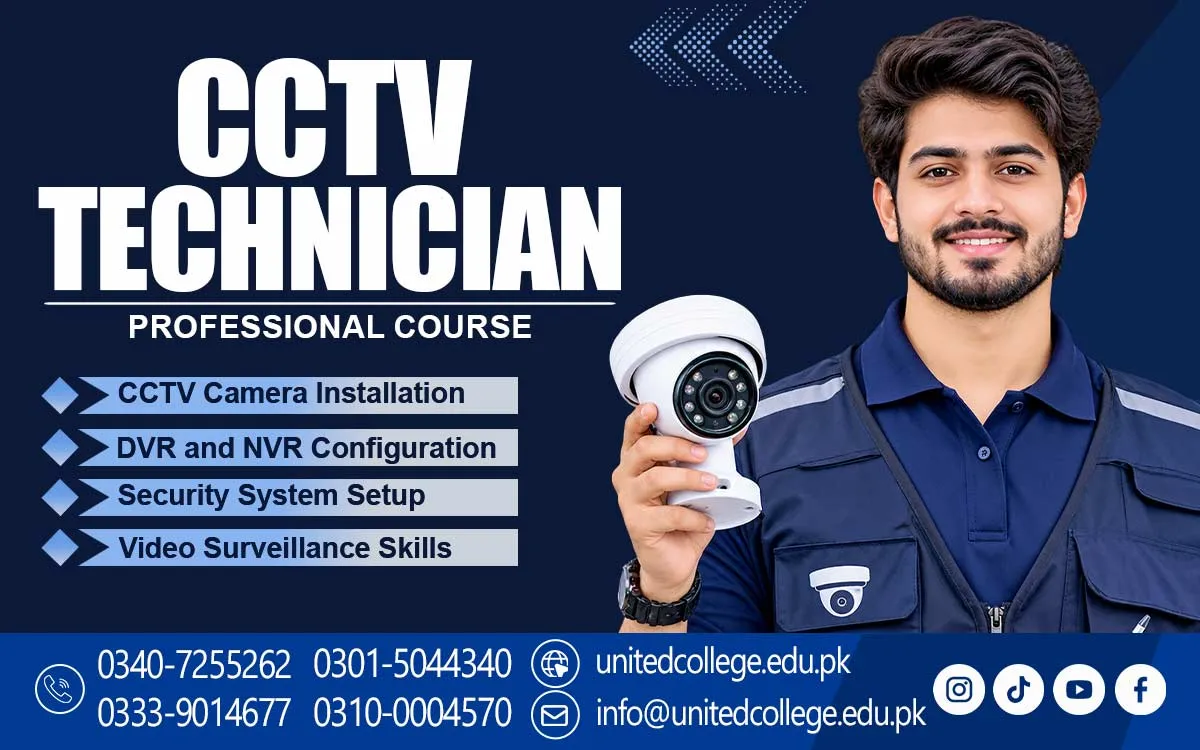

CCTV Technician Course in Karak for Camera Installation Techniques
Introduction to CCTV Technician Course in Karak
Security monitoring has become an important requirement for homes, offices, shops, educational institutions, and commercial buildings. CCTV systems help people observe activities, protect valuable property, and improve overall security. As the demand for surveillance technology increases, trained CCTV technicians are needed to install, configure, and maintain these systems.
The CCTV Technician Course in Karak provides students with an opportunity to understand modern electronic security equipment and its practical applications. Learners become familiar with camera components, installation methods, power connections, recording devices, and system maintenance. This knowledge helps them understand how different CCTV components work together.
United College of Technology offers technical learning opportunities for individuals interested in developing their knowledge of surveillance systems. The course is suitable for beginners who want to explore electronic security technology and prepare for technical work in this growing field.
Fundamentals of Electronic Security Monitoring
Electronic security monitoring involves using technological equipment to observe and protect different locations. CCTV cameras are commonly installed in houses, offices, shops, warehouses, and public buildings. Students learn how surveillance systems support security by recording activities and allowing users to monitor specific areas.
During the CCTV Technician Course in Karak, learners explore the basic functions of electronic monitoring equipment. They understand how cameras capture video, how recording devices store footage, and how monitoring screens display live activities. These fundamentals help students understand the complete working process of a surveillance system.
Students also learn why camera coverage, proper installation, and regular monitoring are important. Understanding these basic concepts prepares learners for more practical topics, including camera installation, wiring, and system configuration.
Understanding CCTV Camera Components
A CCTV camera consists of different components that work together to capture clear video footage. These may include the camera lens, image sensor, housing, infrared lights, mounting brackets, and connection ports. Each component performs a particular function within the surveillance system.
Students explore different camera designs and learn how their features affect performance. They become familiar with fixed cameras, dome cameras, bullet cameras, and other commonly used surveillance equipment. This knowledge helps learners understand which camera types are suitable for different environments.
The course also introduces basic camera specifications, including resolution, viewing angle, night vision, and image quality. Understanding these features helps students recognize equipment requirements before beginning an installation project.
Learning Indoor and Outdoor Camera Installation
Camera installation requires careful planning because every location has different monitoring requirements. Indoor cameras are commonly used in offices, shops, reception areas, and residential spaces. Outdoor cameras are generally installed near entrances, parking areas, building boundaries, and other exposed locations.
In this section, students learn how to select suitable installation positions. They explore mounting methods, camera angles, viewing coverage, and the importance of avoiding unnecessary blind spots. Proper positioning helps ensure that important areas remain visible.
Learners also understand the additional considerations involved in outdoor installations. Weather-resistant equipment, secure mounting, and suitable cable protection help maintain reliable camera operation. These installation concepts prepare students for practical surveillance projects.
Exploring Power Supply and Wiring Arrangements
CCTV cameras require an appropriate power source and reliable connections to operate correctly. Different surveillance systems use different power arrangements, depending on the camera type and installation requirements. Students learn about common power adapters, cables, connectors, and basic electrical safety precautions.
The CCTV Technician Course in Karak introduces learners to common wiring methods used in surveillance installations. They explore how cameras connect with recording devices, power supplies, and network equipment. Understanding these connections helps students recognize the role of each cable within a CCTV setup.
Students also learn how loose connections, damaged wires, or an unsuitable power supply can affect camera performance. This knowledge supports basic troubleshooting and helps learners understand how to maintain stable system operation.
Understanding DVR and NVR Configuration
DVR and NVR devices are important components of modern CCTV systems because they manage video recording and storage. A Digital Video Recorder (DVR) is generally used with analog camera systems, while a Network Video Recorder (NVR) works with network-based IP cameras.
Students learn about the basic functions of both recording devices. They explore camera connections, recording settings, storage options, playback features, and system menus. These concepts help learners understand how surveillance footage is organized and accessed.
The course also introduces basic configuration procedures, including setting recording schedules and checking connected cameras. By understanding DVR and NVR functions, students develop the technical foundation needed to work with different surveillance arrangements.
Managing Camera Connectivity and Live Footage
Modern CCTV systems often allow users to monitor camera footage through dedicated screens, computers, and mobile devices. This makes connectivity an important part of surveillance technology. Students learn how cameras communicate with recording equipment and network connections.
Learners explore basic network requirements, including IP addresses, internet connectivity, and device configuration. They also understand how authorized users can access live footage through compatible monitoring applications. These concepts introduce students to the growing use of network-based security systems.
The section also covers common connectivity problems, such as interrupted signals, incorrect network settings, and unavailable camera feeds. Students learn basic checking procedures that help identify possible connection issues and maintain reliable monitoring.
Practicing CCTV System Maintenance Procedures
Regular maintenance helps CCTV equipment remain functional and reduces the chances of unexpected system problems. Dust, loose connections, damaged cables, and outdated settings can affect camera performance. Students learn why routine inspection is an important responsibility for surveillance technicians.
During practical learning, students explore camera cleaning, cable inspection, power checking, and recording device maintenance. They also learn how to review video quality and identify common technical faults. These activities help learners understand the importance of keeping surveillance equipment in suitable working condition.
Another important part of maintenance is checking whether cameras provide the required coverage. Students learn to inspect camera positions, recording settings, and storage performance. This knowledge helps them understand the ongoing responsibilities involved in maintaining CCTV installations.
Discovering Professional Roles in Surveillance Technology
Surveillance technology offers different employment possibilities for individuals with relevant technical knowledge. Businesses, residential projects, educational institutions, factories, and security companies may require technicians to install and maintain CCTV equipment. Students completing the CCTV Technician Course in Karak can explore opportunities according to their knowledge and practical abilities.
Some possible professional roles include CCTV Installation Technician, Surveillance System Assistant, Security Equipment Technician, and CCTV Maintenance Worker. With additional experience, individuals may also consider working independently or providing installation services to local customers.
Professional development in this field depends on practical experience, technical understanding, and awareness of new security equipment. Learning about camera systems, wiring, networking, and troubleshooting can help students prepare for different responsibilities in the electronic security industry.
Frequently Asked Questions (FAQs)
The course introduces learners to CCTV equipment, camera installation, wiring, recording devices, and maintenance procedures used in electronic security systems.
Yes, beginners interested in electronic security technology can start by learning basic camera components, installation concepts, and system operations.
Indoor cameras are designed for interior monitoring, while outdoor cameras are generally built to handle environmental conditions such as dust, rain, and temperature changes.
They manage video recording and storage. DVR systems are commonly used with analog cameras, whereas NVR systems generally work with network-based IP cameras.
Basic networking knowledge is helpful because many modern surveillance systems use IP cameras, network connections, and remote monitoring applications.
Admission Open: Start Your Professional Journey Today!
Join United College of Technology and build a career with practical training, recognized certifications, and Gulf job support. Seats are limited.
Apply Now via WhatsAppContact Information
- Address: Rawalpindi: F-272 Main New Katarian Stop, Old IJP Road | Lahore Campus: Lahore, Pakistan
- Phone/WhatsApp: 0340-7255262 / 0333-9014677 / 0301-5044340 / 0310-0004570 / 051-8770756
- Website: unitedcollege.edu.pk
















Leave a Comment