


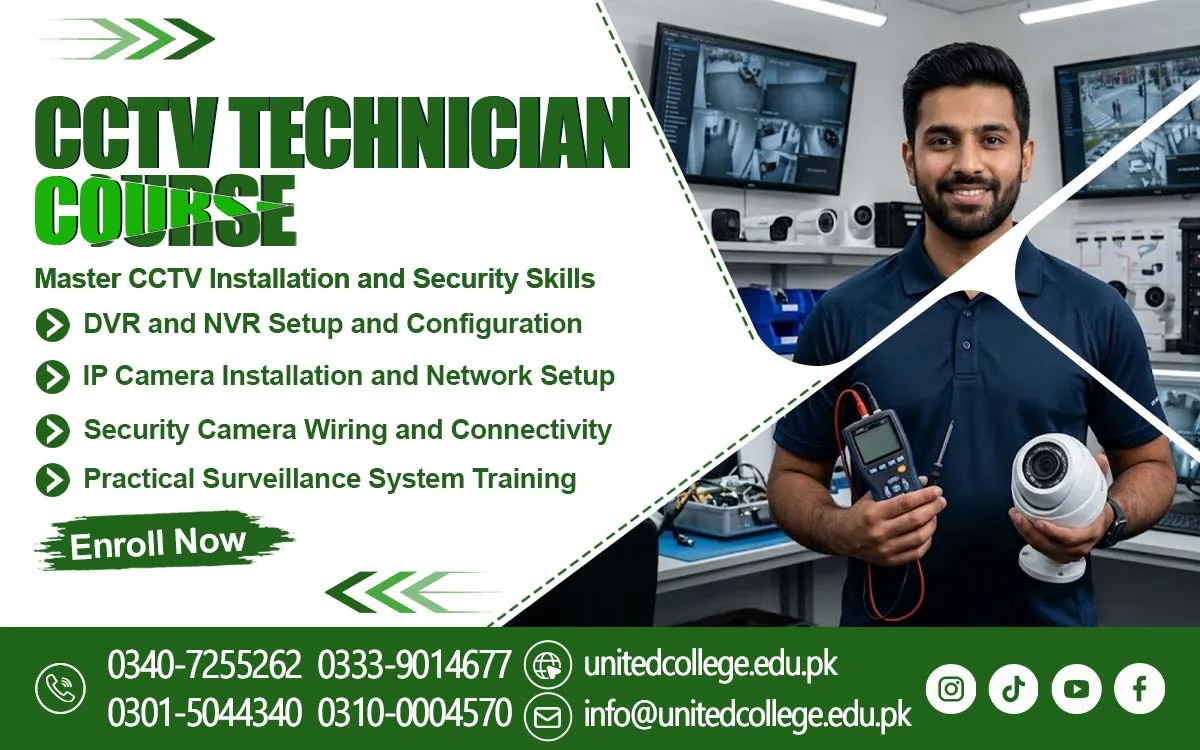

CCTV Technician Course in Malakand – Build Technical Skills
The Growing Demand for CCTV Security Systems in Modern Environments
Security has become an important consideration for homes, businesses, educational institutions, and workplaces. A shopkeeper may install cameras to monitor customer activity, while a school may use surveillance equipment to observe entrance areas, corridors, and other important locations. Similarly, offices, warehouses, factories, and residential buildings use CCTV systems to keep visual records of different activities. These systems can help property owners review recorded footage when an incident occurs and monitor selected areas through connected devices. In Malakand, local shops, markets, private schools, clinics, offices, and homes can also benefit from properly installed surveillance equipment.
It requires suitable equipment, correct wiring, proper configuration, and regular maintenance to work effectively. This creates a need for technicians who understand security camera systems and can handle installation tasks responsibly. A CCTV Technician Course in Malakand introduces learners to the technical side of video surveillance technology. Students can learn about camera selection, installation methods, recording systems, and common equipment problems. These skills are useful for anyone interested in electronic security systems. As more people consider CCTV installation for their properties, technical knowledge in this area can provide a practical starting point for learning about the security technology industry.
Essential CCTV Cameras and Surveillance Equipment
Before installing a surveillance system, a technician needs to understand the different cameras and devices used in CCTV setups. Analog cameras are commonly connected to a Digital Video Recorder (DVR) through coaxial cables. HD analog cameras provide clearer video than older standard-definition systems while using similar basic connections. IP cameras work through network connections and send digital video data to a Network Video Recorder (NVR) or another compatible recording platform. Camera design also affects where equipment is installed. Dome cameras are often used indoors because their compact shape makes them suitable for ceilings and reception areas. Bullet cameras have a long, visible design and are frequently used for outdoor monitoring.
A CCTV technician should also become familiar with power adapters, connectors, storage devices, monitors, network switches, and installation accessories. Each component has a specific purpose, and choosing compatible equipment is important for a reliable system. During the CCTV Technician Course in Malakand, beginners can develop an understanding of these components and their functions. Learning the difference between analog and IP camera systems also helps students understand modern surveillance technology. Instead of selecting equipment randomly, a trained technician considers the location, lighting conditions, coverage requirements, cable arrangement, and recording needs before recommending a suitable camera system.
Professional CCTV Camera Installation Techniques
Correct camera installation plays a major role in the performance of a security system. Even a good-quality camera may provide poor results if it is installed at the wrong angle or placed in an unsuitable location. For example, a camera facing direct sunlight may produce unclear footage during certain hours, while a camera installed too high may fail to capture useful details near an entrance. A CCTV technician first examines the property and identifies important areas that require monitoring. These may include doors, gates, reception desks, corridors, parking spaces, and storage rooms. After selecting suitable positions, the technician measures the mounting area, checks the available power supply, and plans the cable route.
Common installation tools include drills, screwdrivers, measuring tapes, wall plugs, cable cutters, crimping tools, and ladders. Cameras must be mounted securely, and outdoor equipment should have suitable protection against rain, dust, and other environmental conditions. During a CCTV Installation Course, students can learn the importance of camera positioning, mounting techniques, and safe tool handling. Practical exercises may include marking installation points, fixing camera brackets, connecting power cables, and adjusting viewing angles. In Malakand, these skills can be useful for installations in homes, shops, schools, and offices. A properly planned setup helps reduce blind spots and allows the camera to capture clearer footage of the selected area.
DVR and NVR Configuration for Reliable Video Recording
A surveillance camera needs a recording system if users want to save footage for later review. Two common devices used for this purpose are Digital Video Recorders (DVRs) and Network Video Recorders (NVRs). A DVR is generally used with compatible analog cameras and processes video signals received through connected cables. An NVR is designed for IP camera systems and records digital video received over a network. Although both devices perform recording functions, their connections and configuration methods are different. A technician needs to understand camera channels, storage capacity, recording schedules, video resolution, and playback settings.
For example, a small shop may require continuous recording throughout the day, while another property may use motion-based recording to capture footage when activity is detected. Hard drives are commonly used to store recorded video, and the available storage time depends on factors such as camera count, resolution, frame rate, and recording settings. During DVR and NVR Configuration training, learners can understand the process of connecting cameras, setting up recording options, checking live video, and searching saved footage. They can also learn basic system management, including setting passwords and adjusting date and time settings.
CCTV Cabling, Networking, and Remote Monitoring Skills
Cables and network connections allow different CCTV components to communicate and operate together. During a CCTV Technician Course, students learn about the different cables used in surveillance systems. In traditional analog systems, coaxial cables are commonly used to carry video signals from cameras to DVR devices. Ethernet cables, such as Cat5e and Cat6, are widely used in IP camera installations. Some IP cameras support Power over Ethernet (PoE), which allows compatible network equipment to provide both power and data through a single Ethernet cable. This can reduce the need for separate power connections near each camera.
After proper configuration, users may be able to view connected cameras through a mobile application or computer using an internet connection. This process may involve network settings, router configuration, device registration, and secure login details. Students learning through CCTV Camera Installation Training can become familiar with these basic networking tasks. They should also understand the importance of strong passwords and secure access because poorly protected systems may be exposed to unauthorised users. In Malakand, remote monitoring can be useful for business owners who want to check their shops or offices while away.
Common CCTV Faults and Practical Troubleshooting Methods
A CCTV system may work properly for several months and then develop a problem that affects its performance. A camera might stop displaying video, the recording device may fail to save footage, or the picture may become blurry. These issues can occur because of damaged cables, loose connectors, power supply faults, incorrect settings, or network interruptions. A technician should learn to identify the possible cause before replacing any equipment. For example, if a camera has no display, the first step may involve checking its power connection, cable condition, and input channel on the recording device. If the picture is unclear, the technician can inspect the camera lens, check its position, and review the video settings.
Recording failures may require checking the hard drive, storage settings, and recording schedule. CCTV Troubleshooting involves a step-by-step approach rather than changing different components without proper inspection. Regular CCTV Maintenance and Repair also help keep systems in working condition. Cleaning camera lenses, checking cable connections, inspecting outdoor camera housings, and testing recording functions are useful maintenance activities. During practical training, beginners can learn to recognise common faults and follow basic diagnostic procedures. They should also understand when a problem requires advanced repair or replacement by an experienced technician.
Hands-On CCTV Training and Technical Skill Development
Reading about cameras, cables, and recording devices is useful, but technical learning becomes more meaningful when students work with actual equipment. Practical training gives beginners an opportunity to understand how different components connect and how a complete CCTV system operates. A learning activity may begin with identifying camera types, checking power adapters, and recognising different connectors. Students can then practise connecting cameras to compatible recording devices, arranging cables, and checking live video on a monitor. Other exercises may include mounting a camera bracket, adjusting the viewing angle, configuring recording settings, and testing playback.
IP camera practice can introduce learners to network connections and basic device configuration. These activities help students become familiar with the tools and equipment used during real installation work. A good training approach also teaches safe working habits, including careful handling of electrical connections, proper ladder use, and responsible tool management. The CCTV Technician Course in Malakand can be a useful learning direction for people who prefer practical technical subjects. Beginners do not need to know everything about surveillance technology before starting, but they should be willing to practise, ask questions, and improve their understanding. Repeating installation and configuration tasks can help develop accuracy and confidence.
Career Opportunities in CCTV Installation and Security Services
CCTV technology is used in many different environments, creating a range of technical service requirements. Shops, schools, offices, factories, residential buildings, warehouses, and commercial properties may need new camera installations or maintenance of existing systems. People with relevant CCTV technician skills can explore entry-level opportunities with security system companies, electronic equipment businesses, installation teams, and technical maintenance services. Some may assist experienced technicians with cable installation, camera mounting, equipment testing, and basic troubleshooting. With additional experience, individuals may develop the ability to handle more complex installation projects and system configurations.
Independent technical work is another possible direction for people who gain suitable practical experience, understand customer requirements, and can manage installation responsibilities. However, starting such work requires more than completing a training course. Technicians need suitable tools, knowledge of compatible equipment, communication skills, and the ability to provide reliable service. In areas of Malakand, local businesses and homeowners may require assistance with surveillance camera installation, system upgrades, or routine maintenance. Understanding IP Camera Installation, DVR and NVR Configuration, and CCTV Wiring and Cabling can help learners prepare for different types of technical tasks. Career progress depends on practical ability, continued learning, work quality, and available opportunities.
Building Practical CCTV Expertise at United College of Technology
Choosing a suitable training provider is an important step for anyone who wants to learn a technical skill. Beginners often need guidance when they first encounter cameras, recording devices, network cables, and installation tools. United College of Technology (UCT) offers technical training opportunities for individuals interested in fields such as CCTV installation and security systems. Through a CCTV Technician Course in Malakand, learners can explore the knowledge required to understand surveillance equipment and basic installation procedures. The learning process should focus on recognising different camera types, understanding DVR and NVR functions, connecting cables, configuring equipment, and identifying common system problems.
Practical exposure is especially valuable because it allows students to connect theoretical information with real equipment. Individuals interested in this field should also develop good working habits, including careful planning, accurate connections, safe tool handling, and regular equipment testing. CCTV technology continues to develop, so technicians should remain willing to learn about newer IP cameras, network-based systems, and updated monitoring features. For students, fresh learners, and job seekers in Malakand, technical education can provide a starting point for exploring the surveillance industry. At UCT, learners interested in this field can take a step towards understanding the equipment and practical tasks involved in CCTV installation.
Frequently Asked Questions (FAQs)
Beginners can learn CCTV camera installation, wiring, DVR and NVR configuration, IP camera setup, remote monitoring, and basic troubleshooting.
No, beginners can start learning without previous experience. Basic computer knowledge and an interest in technical work can be helpful.
A DVR is generally used with analog CCTV cameras, while an NVR works with IP cameras and records digital video through a network.
Yes, compatible CCTV systems can be connected to mobile applications, allowing users to view live camera footage remotely through an internet connection.
Common tools include screwdrivers, drills, cable cutters, crimping tools, measuring tapes, testing devices, and connectors for CCTV installation.
Admission Open: Start Your Professional Journey Today!
Join United College of Technology and build a career with practical training, recognized certifications, and Gulf job support. Seats are limited.
Apply Now via WhatsAppContact Information
- Address: Rawalpindi: F-272 Main New Katarian Stop, Old IJP Road | Lahore Campus: Lahore, Pakistan
- Phone/WhatsApp: 0340-7255262 / 0333-9014677 / 0301-5044340 / 0310-0004570 / 051-8770756
- Website: unitedcollege.edu.pk
















Leave a Comment