


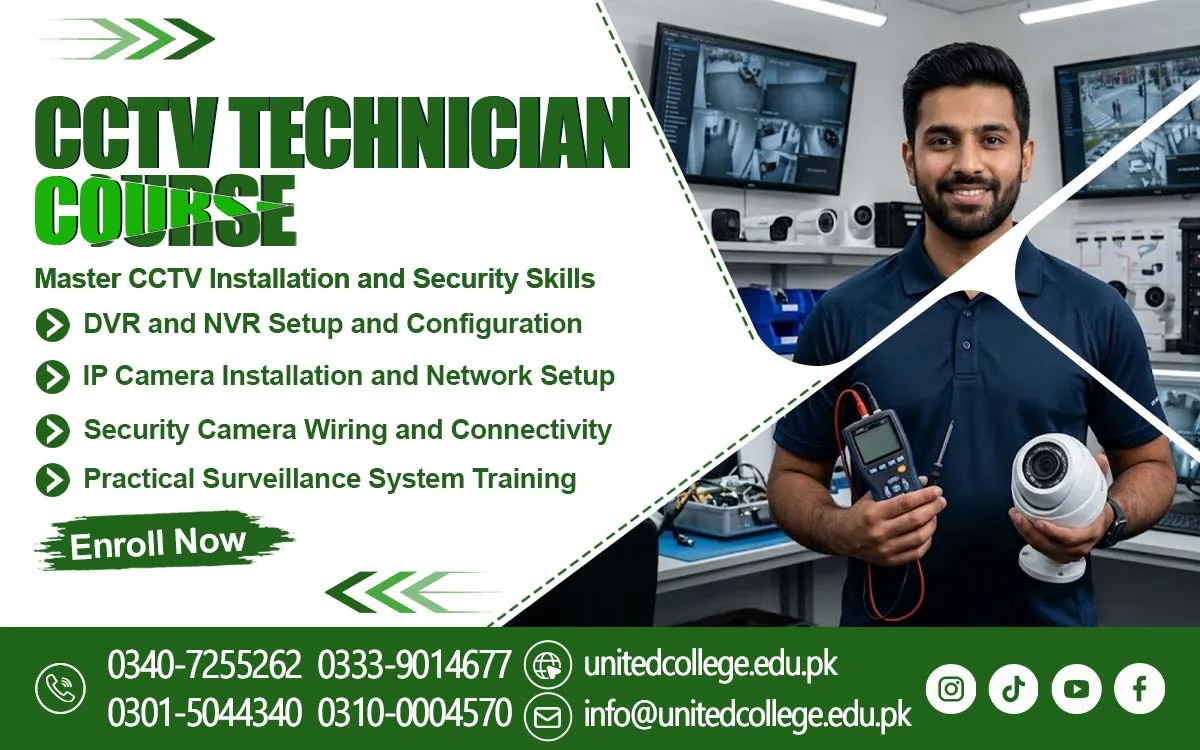

CCTV Technician Course in Shangla – Practical CCTV Training
Modern CCTV Security Systems and Their Role in Daily Life
CCTV cameras have become an important part of modern security systems because they help people monitor different locations and record activities. Homes, shops, schools, offices, hospitals, warehouses, and factories use video surveillance systems to observe important areas. For example, a shopkeeper may install cameras near the entrance, cash counter, and storage room to monitor daily activities. Similarly, school management may use CCTV cameras to observe corridors, gates, and common areas. CCTV systems can also help users review recorded footage when an incident needs to be investigated. During a CCTV Technician Course in Shangla, learners can understand the basic working principles of security cameras and the importance of selecting suitable equipment for different locations.
They can learn that every installation has different requirements depending on the building structure, lighting conditions, monitoring needs, and available network connections. A camera designed for indoor use may not be suitable for an outdoor location exposed to rain and dust. Understanding these differences helps technicians make better installation decisions. Students can also explore the importance of video quality, recording capacity, camera coverage, and reliable connections. This knowledge provides a useful starting point for understanding CCTV security systems and their role in protecting residential and commercial properties.
Different CCTV Camera Types and Their Practical Applications
Not every security camera works in the same way, and choosing the correct type is an important part of CCTV installation. Analog cameras are commonly connected to recording equipment through coaxial cables and are often used in traditional CCTV systems. IP cameras use network connections to transmit video and can offer advanced features such as higher image resolution and remote accessibility. Dome cameras have a rounded design and are frequently installed inside shops, offices, and buildings. Bullet cameras have a longer shape and are commonly used for outdoor monitoring because their design makes the direction of the camera easier to identify. PTZ cameras are more advanced systems that allow users to pan, tilt, and zoom through supported controls.
Wireless CCTV cameras use wireless network connections for video communication, although many models still require a power source. During the CCTV Technician Course, students can learn the differences between these camera types and their suitable applications. For instance, a small shop may require dome cameras for indoor monitoring, while a building entrance may need weather-resistant bullet cameras. A larger property might require PTZ cameras to monitor wider areas. Understanding camera specifications, resolution, night vision, viewing angles, and weather protection helps learners identify suitable equipment. These skills are useful for anyone interested in CCTV Camera Installation and modern video surveillance technology.
Practical CCTV Installation Techniques for Different Buildings
A successful CCTV installation starts with proper planning. Before mounting a camera, a technician needs to inspect the location and identify the areas that require monitoring. Camera placement should provide a clear view of entrances, corridors, parking areas, cash counters, and other important locations without leaving unnecessary blind spots. During the CCTV Technician Course in Shangla, students can learn about measuring installation areas, selecting mounting points, preparing surfaces, and arranging cables safely. For example, installing a camera near a shop entrance requires attention to its viewing angle so that people entering and leaving can be observed clearly.
Outdoor installations need additional care because cameras and cables may be exposed to sunlight, moisture, dust, and changing weather conditions. Learners can also understand drilling techniques, wall brackets, mounting screws, cable routes, and protective accessories. Proper CCTV Wiring and Cabling is another important skill because loose wires can affect camera performance and create installation problems. Cable management helps keep the setup organised and reduces the chances of accidental damage. Students should also understand the importance of using suitable power supplies and checking connections before completing an installation.
DVR and NVR Configuration for Reliable Video Recording
Recording equipment is an essential part of many CCTV security systems because cameras need a suitable method of storing video footage. Two common recording devices are DVR and NVR systems. DVR stands for Digital Video Recorder, which is generally used with analog CCTV cameras. These cameras send video signals through compatible cables to the recorder, where footage can be stored on a hard drive. NVR stands for Network Video Recorder and is commonly used with IP cameras that transmit video through a network connection. Both systems allow users to manage cameras, review recordings, and configure recording settings, although their connections and working methods are different.
In a CCTV Installation Course, learners can study DVR and NVR Configuration and understand the basic steps involved in connecting cameras, setting recording schedules, adjusting video quality, and managing storage. For example, a shop owner may want continuous recording throughout the day, while another property may use motion-based recording to capture footage when activity is detected. Students can also learn about hard drive capacity, playback options, date and time settings, and camera channel management. Understanding these functions is important because incorrect recording settings can result in missing footage or insufficient storage.
CCTV Networking and IP Camera Connectivity Skills
Modern CCTV systems increasingly use network technology to connect cameras with recording devices, computers, and mobile phones. IP cameras communicate through network connections and may use Ethernet cables or supported wireless connections. A router helps connect compatible devices to a local network, while IP addresses identify individual devices within that network. During the CCTV Technician Course at United College of Technology, learners can explore basic networking concepts and understand how cameras communicate with recording systems. For example, when several IP cameras are installed in an office building, each camera needs a suitable network configuration to communicate properly with the NVR or other monitoring equipment.
Students can become familiar with LAN cables, RJ45 connectors, Ethernet ports, network switches, and basic IP address settings. A CCTV system may continue recording locally even when the internet connection is unavailable, depending on its configuration and equipment. However, remote viewing may require a working internet connection and suitable network settings. Learning CCTV Networking can help beginners understand common connectivity problems, including incorrect IP addresses, loose Ethernet connections, router issues, and network configuration errors. These technical skills are useful when working with modern IP Camera Installation projects in homes, offices, shops, and commercial buildings.
Remote CCTV Monitoring Through Smartphones and Computers
Modern CCTV technology allows property owners to monitor their cameras without sitting directly in front of a recording screen. Through supported applications and network configurations, users can view live camera footage on smartphones, tablets, and computers. For example, a shop owner travelling outside Shangla may want to check the shop's entrance or counter through a mobile application. Similarly, a homeowner may want to see live footage from outdoor cameras while away from the property. During the CCTV Technician Course in Shangla, learners can explore the basic requirements for remote access and understand how compatible cameras and recording devices connect with monitoring applications.
They can study device configuration, internet connectivity, account settings, and camera viewing options. Students can also understand the difference between live viewing and recorded playback. However, remote monitoring requires proper configuration, secure access, and compatible equipment. A weak internet connection may affect video loading, while incorrect settings can prevent a user from accessing the system. Technicians should also understand the importance of strong passwords and secure account management. Learning these features helps students become familiar with modern CCTV System Configuration and the practical requirements of remote video surveillance.
CCTV Troubleshooting and Common Technical Problems
Even a properly installed CCTV system can develop problems over time. A camera may suddenly stop displaying video, recorded footage may become unavailable, or night vision may not work correctly. These issues can affect security monitoring and require proper troubleshooting. CCTV Troubleshooting is therefore an important part of technical learning. During a CCTV Technician Course, students can explore common faults and understand the basic methods used to identify their causes. For example, if a camera shows a black screen, the technician may need to inspect its power supply, cable connections, connectors, and recording device settings. Blurry footage may result from a dirty lens, incorrect focus, poor camera positioning, or unsuitable lighting.
If night vision is not working, the infrared LEDs, power supply, or camera settings may require inspection. Recording problems may be connected to hard drive faults, incorrect recording schedules, or storage configuration. Network-related issues can also prevent IP cameras from communicating with an NVR. Learners can practise following a step-by-step troubleshooting process instead of replacing equipment without identifying the actual fault. They should also understand basic electrical safety before inspecting connections or power supplies. This knowledge is useful for people interested in CCTV Technician Course training and helps them develop a systematic approach to identifying and resolving common security camera problems.
Essential CCTV Installation Tools and Equipment for Hands-On Learning
A CCTV technician needs different tools to complete installation, testing, and maintenance tasks. Using the correct equipment makes technical work more organised and helps reduce installation mistakes. Common CCTV Installation Tools include screwdrivers, electric drills, measuring tapes, pliers, wire strippers, crimping tools, and cable cutters. A drill is useful for making holes when installing camera brackets, while screwdrivers help secure mounting plates and equipment covers. Crimping tools are used to attach compatible connectors to cables, and cable testers help identify wiring problems. LAN testers are particularly useful for checking Ethernet cable connections in IP camera installations.
A multimeter can help technicians check electrical values, such as voltage and continuity, when used correctly and safely. At United College of Technology (UCT), practical learning can help students become familiar with the tools and equipment used in CCTV installation and maintenance. Learners should understand that tools must be selected according to the task and used with proper safety precautions. For example, checking a cable connection requires a different tool from mounting an outdoor camera. Developing familiarity with installation equipment helps beginners understand real technical tasks and prepares them to practise CCTV Camera Installation in different residential and commercial environments.
CCTV Maintenance Skills and Technical Learning Opportunities in Shangla
Installing a CCTV system is only one part of a technician's responsibilities because cameras and recording equipment also need regular maintenance. Dust can collect on camera lenses, outdoor cables may become damaged, and loose connections can interrupt video signals. Regular inspection helps identify these problems before they affect the complete system. CCTV Maintenance may include cleaning camera lenses, checking mounting brackets, inspecting cables, reviewing recording settings, testing night vision, and confirming that recording devices are working properly. Password protection and secure system configuration are also important because CCTV equipment can contain sensitive video footage.
Students interested in the CCTV Technician Course in Shangla can develop an understanding of these maintenance requirements through technical learning and practical exercises. United College of Technology (UCT) offers training that introduces learners to CCTV installation, configuration, networking, and troubleshooting concepts. These skills can be useful in different environments across Shangla, including homes, shops, schools, offices, markets, and commercial buildings. After developing practical experience, learners may explore different technical work areas, such as security camera installation, CCTV maintenance, equipment servicing, and support for residential or commercial security systems.
Frequently Asked Questions (FAQs)
The CCTV Technician Course teaches students how to install, configure, operate, and maintain security camera systems used in homes, shops, offices, and commercial buildings.
Students, beginners, job seekers, and individuals interested in security technology can join. Basic technical knowledge can be helpful but is not always necessary.
Students learn camera installation, wiring, DVR and NVR configuration, IP camera setup, networking, remote monitoring, and CCTV troubleshooting.
DVR systems generally work with analog cameras, while NVR systems are designed for IP cameras that transmit video through a network.
The training focuses on developing technical understanding and practical installation skills, including camera mounting, cable connections, and system configuration.
Admission Open: Start Your Professional Journey Today!
Join United College of Technology and build a career with practical training, recognized certifications, and Gulf job support. Seats are limited.
Apply Now via WhatsAppContact Information
- Address: Rawalpindi: F-272 Main New Katarian Stop, Old IJP Road | Lahore Campus: Lahore, Pakistan
- Phone/WhatsApp: 0340-7255262 / 0333-9014677 / 0301-5044340 / 0310-0004570 / 051-8770756
- Website: unitedcollege.edu.pk
















Leave a Comment