


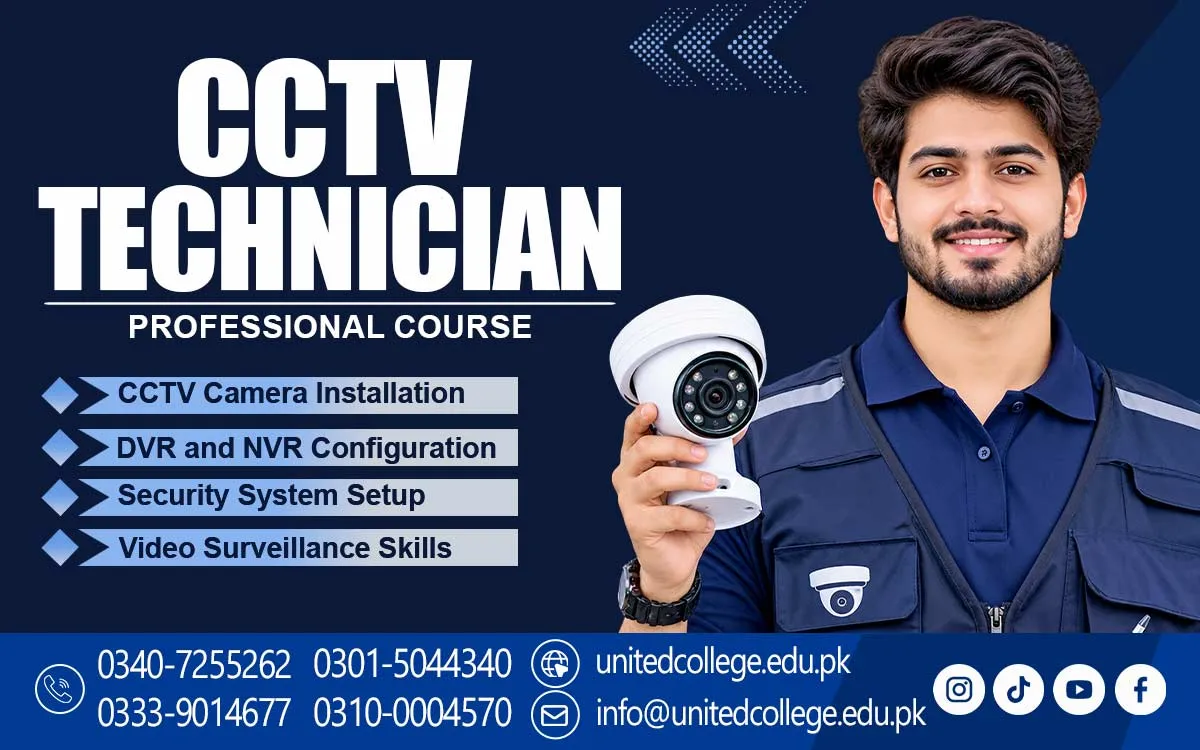

CCTV Technician Course in Waziristan Modern Monitoring Made Simple
Security Technology Is Becoming Part of Everyday Life
CCTV cameras are now widely used to monitor homes, shops, offices, schools, and other workplaces. They help people observe important areas, review recorded activities, and manage security more effectively. As technology develops, security systems are becoming more advanced and connected. The CCTV Technician Course in Waziristan offers an interesting learning direction for beginners who want to understand how these systems work and explore the technical skills involved in their installation and maintenance.
CCTV stands for Closed-Circuit Television. It is a surveillance system that captures video through cameras and sends it to a recording or monitoring device. Depending on the equipment, users can watch live footage, save recordings, and access selected cameras remotely. These systems can support different security needs, from monitoring a small shop to observing shared areas in a large building. Understanding their basic functions helps learners become familiar with modern surveillance technology.
The Different Camera Designs Behind Modern Surveillance
CCTV cameras come in several types, and each design has its own features. Dome cameras are commonly used indoors because their rounded shape makes them suitable for ceilings and covered spaces. Bullet cameras have a long body and are often installed outdoors. IP cameras transmit digital video through a network, while wireless models can send video without a traditional data cable. Some cameras also include night vision or motion detection features.
Learning about these camera types helps beginners understand why equipment selection matters. A camera for a shop entrance may have different requirements from one used in a home corridor or an outdoor parking area. The technician needs to consider the location, lighting, viewing angle, and connection method. The CCTV Technician Course in Waziristan can introduce learners to these general areas of CCTV installation training and help them understand how different cameras serve different monitoring purposes.
Installation Planning That Makes Every Camera Count
Installing a CCTV camera requires careful planning. Before fixing a camera in place, a technician should identify the area that needs monitoring and consider possible obstacles. Walls, doors, trees, lights, and other objects may affect the camera's view. Correct positioning can help reduce blind spots and provide clearer coverage of important areas.
For example, a shop owner may want to monitor the entrance and payment counter, while a homeowner may need coverage near a gate. These locations require different camera angles and mounting positions. Learners can explore how camera height, direction, and lighting conditions influence recorded footage. Good planning also helps avoid unnecessary camera movement or repeated installation work. This understanding forms an important part of learning how surveillance systems are arranged.
Understanding Cables and Connections Behind a Working System
A CCTV system needs suitable connections to transfer video and provide power. Traditional camera systems may use coaxial cables, while many IP cameras use Ethernet cables to communicate through a network. Connectors join cables to cameras and recording devices. Power supplies provide electricity, although some compatible IP cameras can receive power through Power over Ethernet technology.
Beginners can study how these connections work and why correct wiring is important. A loose connector or damaged cable may interrupt the video signal. Incorrect connections can also prevent a camera from working properly. Learning basic wiring concepts helps future technicians understand how different components communicate. Careful cable arrangement is useful too, as organized wiring makes inspection and maintenance easier.
DVR and NVR Systems That Keep Important Footage Accessible
Recording devices are essential parts of many CCTV setups in Waziristan. A Digital Video Recorder (DVR) commonly works with analogue cameras, while a Network Video Recorder (NVR) is designed for network-based cameras. Both systems can record video and allow users to review saved footage. Their features and storage arrangements depend on the model and system configuration. A CCTV Technician Course in Waziristan helps learners understand these recording devices and their practical uses.
Video storage is another important area to understand. Recording quality, camera resolution, number of cameras, and recording schedules can affect how much storage space a system needs. Users may also need to search for specific recordings or adjust playback settings. Learners exploring DVR and NVR setup can become familiar with these functions and understand how recording devices support everyday security monitoring in homes, shops, offices, and other locations across Waziristan.
Practical Learning Through System Configuration and Troubleshooting
A CCTV technician needs to understand more than camera installation. System configuration may involve adjusting camera settings, connecting devices, setting recording options, and checking whether all cameras appear correctly on the monitor. IP camera systems may also require basic networking knowledge so that devices can communicate through a local network or support remote viewing.
Technical problems can happen in different ways. A camera may show a blank screen, a recording device may not detect it, or a remote connection may stop working. These issues may result from power problems, damaged cables, incorrect settings, or network interruptions. The CCTV Technician Course offered by United College of Technology is relevant to people who want to explore these technical areas. A structured learning approach can help beginners understand equipment functions and develop a careful method for identifying common faults.
Security Awareness Across Homes and Workplaces in Waziristan
CCTV systems can serve different purposes in Waziristan's residential and commercial settings. Shopkeepers may use cameras to observe customer areas and entrances. Schools and educational institutions may monitor selected shared spaces, while offices may use cameras around reception areas and building entrances. Residential properties can also use surveillance equipment to monitor gates, outdoor spaces, and other important locations.
A CCTV Technician Training in Waziristan helps learners understand how to install and maintain these security systems according to different property requirements. These examples show how security requirements change from one place to another in Waziristan. A technician must understand the purpose of the system before suggesting camera positions or equipment. Privacy also matters, so cameras should be placed responsibly and should not unnecessarily record private spaces.
Safe Working Practices and the Skills Behind Reliable Installation
CCTV installation can involve electrical connections, ladders, drilling tools, cables, and equipment mounted at height. Safe handling is essential during installation and maintenance. Before working with electrical connections, a technician should follow appropriate power-isolation precautions and avoid touching exposed wires. Tools should be checked before use, and equipment must be mounted securely to reduce the risk of damage or injury.
Technical work also requires patience, observation, and problem-solving. A technician may need to inspect a cable, review a camera angle, or check a recording device before identifying a fault. Rushing through these tasks can lead to mistakes. Developing careful working habits helps beginners understand their responsibilities and build confidence while exploring CCTV camera technician skills.
Turning Technical Interest into a Strong Foundation for Future Learning
People interested in this field can begin by learning the names and functions of common CCTV components. Understanding camera types, cable connections, recording devices, and basic network concepts can make the subject easier to follow. They can also explore equipment manuals and learn how to recognize common system problems. Gradual learning allows beginners to develop their knowledge without becoming overwhelmed by advanced technical details.
The CCTV Technician Course in Waziristan can be a starting point for students, fresh learners, and job seekers who want to understand surveillance technology. CCTV-related knowledge may be useful in tasks involving camera installation, connection checking, recording setup, and basic system maintenance. The type of work depends on a person's knowledge, experience, and the requirements of each setting. With continued learning, safe practices, and attention to detail, beginners can build a useful foundation in modern security systems.
Frequently Asked Questions (FAQs)
A video balun allows video signals to travel through twisted-pair network cable instead of traditional coaxial cable in compatible CCTV setups.
Wide Dynamic Range (WDR) helps a camera handle scenes with both very bright and dark areas, making important details easier to see.
Proper grounding can help reduce electrical interference and protect compatible equipment from certain electrical faults.
Continuous recording saves footage throughout the selected period, while scheduled recording operates during specific times chosen by the user.
The technician should review the camera and recorder specifications, supported video formats, connection requirements, and compatibility information from their manufacturers.
A Pan-Tilt-Zoom (PTZ) camera can move horizontally, tilt vertically, and zoom in or out, allowing users to monitor different areas with one camera.
Admission Open: Start Your Professional Journey Today!
Join United College of Technology and build a career with practical training, recognized certifications, and Gulf job support. Seats are limited.
Apply Now via WhatsAppContact Information
- Address: Rawalpindi: F-272 Main New Katarian Stop, Old IJP Road | Lahore Campus: Lahore, Pakistan
- Phone/WhatsApp: 0340-7255262 / 0333-9014677 / 0301-5044340 / 0310-0004570 / 051-8770756
- Website: unitedcollege.edu.pk
















Leave a Comment